






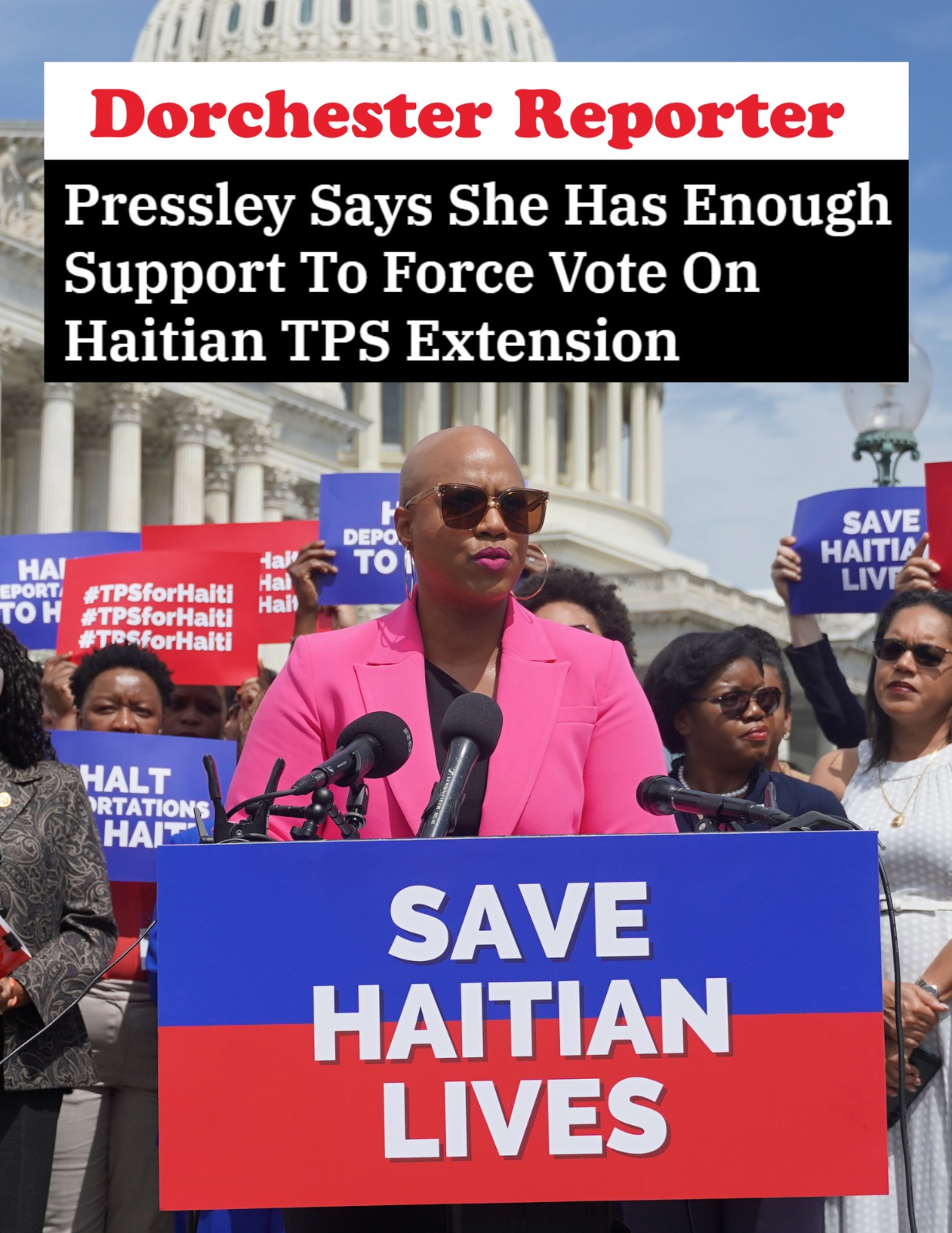
A high-profile congressional effort to extend Temporary Protected Status (TPS) for more than 350,000 Haitian nationals cleared a significant procedural hurdle on Friday, March 28, 2026, when a discharge petition led by Rep. Ayanna Pressley (D-MA) reached the 218-signature threshold required to force a vote on the House floor.
The petition, formally known as Discharge Petition No. 119-15, seeks to discharge the House Rules Committee from further consideration of H.Res. 965. That resolution would provide for immediate floor consideration of H.R. 1689, a bill that would require the Department of Homeland Security (DHS) to designate Haiti for TPS for an additional three years.
Pressley, who serves as co-chair of the House Haiti Caucus, celebrated the achievement in a statement:
“The success of this discharge petition is a testament to our collective organizing and the strength of our broad, diverse movement to affirm the humanity, dignity, and safety of our Haitian siblings.”
The petition secured signatures from nearly all House Democrats, along with support from at least four Republicans — a rare display of bipartisan procedural cooperation in a divided Congress. It was originally filed on January 22, 2026, and gained momentum through sustained advocacy by Haitian community organizations, labor unions, faith-based groups, and other allies.
Temporary Protected Status is a humanitarian program that allows nationals of designated countries facing extraordinary conditions — such as armed conflict, environmental disasters, or other temporary disruptions — to remain in the United States and work legally.
Haiti’s TPS designation originated after the devastating 2010 earthquake and has been periodically extended. The Trump administration moved to terminate the designation, with an original expiration date of February 3, 2026. In November 2025, DHS Secretary Kristi Noem announced the termination, citing improved country conditions, though critics pointed to ongoing violence, gang control, and humanitarian challenges in Haiti.
A federal district court in Washington, D.C., issued a stay blocking the termination just before the February 3 deadline. The D.C. Circuit upheld the ruling in March 2026, and the administration has since appealed to the U.S. Supreme Court, which is expected to hear arguments on related TPS cases later this spring. As a result, current TPS protections and employment authorization documents for Haitian beneficiaries remain in effect under the court order.
Advocates estimate that more than 350,000 Haitian nationals currently hold TPS, with many having built lives, families, and careers in the United States. Haitian TPS holders contribute significantly to sectors such as healthcare, caregiving, agriculture, and service industries, supporting local economies across the country.
What Happens Next in Congress
With the discharge petition now reaching the required majority, the House must bring it to the floor for a vote in the coming weeks. If the petition succeeds, lawmakers would then consider H.Res. 965 and, potentially, the underlying H.R. 1689 legislation itself.
However, even if the House approves the measure, the bill faces steep odds in the Republican-controlled Senate. It would also require presidential approval or a successful veto override to become law — challenges that highlight the procedural nature of this victory rather than a guaranteed policy outcome.
Haitian advocacy groups, including the Haitian Bridge Alliance, praised Rep. Pressley’s leadership and urged continued mobilization.
In a statement earlier this year, Haitian Bridge Alliance Executive Director Guerline Jozef emphasized the stakes:
“Haitian Bridge Alliance strongly commends Representative Pressley for her leadership in pursuing every viable legislative route… to ensure that Haitian TPS holders are not left in legal limbo and deported to a country that is facing one of the worst humanitarian crises in the world. Thousands of Haitian families are vital contributors to local economies, schools, churches, and communities across the United States.”
The push for a TPS extension comes amid ongoing instability in Haiti, where gang violence has displaced hundreds of thousands and created severe humanitarian conditions. Supporters argue that returning TPS holders to such an environment would be both unsafe and disruptive to U.S. communities that rely on their labor.
Opponents of the extension, including the Trump administration, maintain that TPS was intended as a temporary measure and that conditions in Haiti no longer warrant the designation. The legal battle over the termination is likely to continue regardless of congressional action.
This development marks a notable moment of cross-party procedural success on immigration in an otherwise polarized 119th Congress. As the House prepares to take up the discharge petition after the April recess, attention will turn to whether broader bipartisan support can translate into substantive progress on the bill.
Haitian community leaders and their allies say they will continue pressing for protections while monitoring both the legislative timeline and the parallel Supreme Court proceedings.
Stay tuned for updates as this story develops. For more information on TPS for Haiti, visit official USCIS resources or contact Haitian advocacy organizations working directly with affected families.








Add Comment