




In a high-stakes effort to help wrest Haiti from the grip of violent gangs, Canada has pledged $60 million in aid, but with a significant condition: most of the funds will only be released if the United Nations approves a U.S.-backed plan to overhaul Haiti’s struggling international police mission.
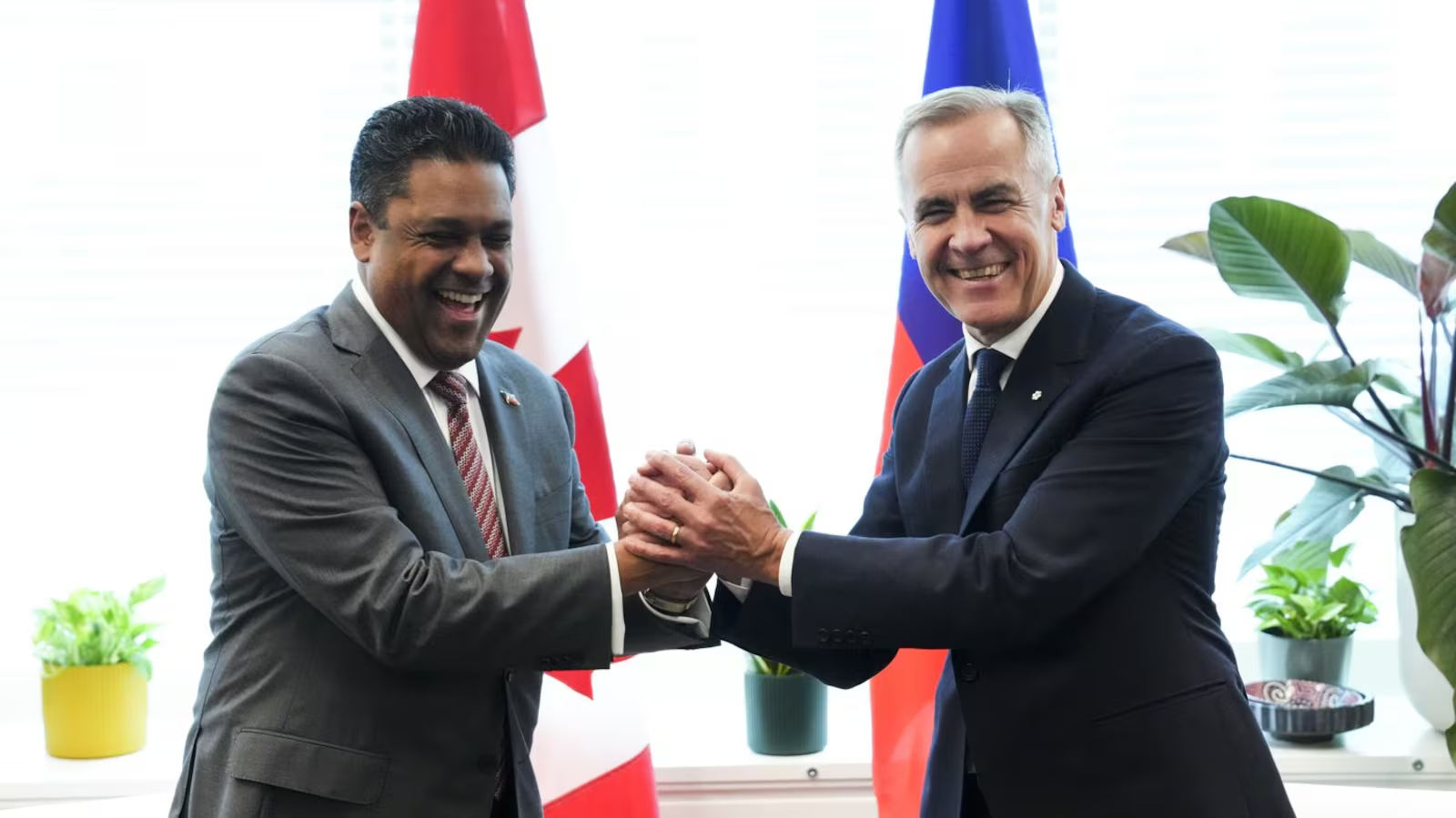
The announcement came Tuesday during a UN gathering in New York co-hosted by Canadian Foreign Affairs Minister Anita Anand and her Haitian counterpart. Framing the pledge as a call to collective action, Anand stressed that international partners must act decisively to prevent Haiti’s worsening crisis from spiraling further.
“We have to work collectively toward regional peace and regional security,” Anand said, calling the proposed ‘renewed and enhanced security mission’ essential not only for curbing gang violence but also for staving off a mounting humanitarian disaster.
Since June 2024, a UN-backed Multinational Security Support (MSS) mission, led by Kenya, has deployed police officers to reinforce Haiti’s National Police (HNP) and stabilize conditions ahead of planned elections. While Canada has contributed resources such as training, surveillance technology, and logistical support, the mission has so far struggled to contain Haiti’s powerful gangs.
This week, the Trump administration signaled a shift in strategy, pressing the UN Security Council to abandon the MSS in favor of a new Gang Suppression Force (GSF). The proposed force would nearly triple troop levels to about 5,550 personnel and expand their mandate to include drone surveillance, direct detention powers, and authority to target gang leaders. U.S. officials, including Secretary of State Marco Rubio, have made clear that American financial support will depend on passage of the resolution. Panama has also voiced its backing.
Canada’s $60 million package reflects this evolving international stance. Of the total, $20 million is allocated to humanitarian aid and strengthening maritime security in the Caribbean to curb the illicit flow of arms and narcotics that fuel Haiti’s gangs. The remaining $40 million, however, is contingent on UN approval of the GSF, which Anand characterized as a “smart investment” toward sustainable stability.
As Haiti faces escalating violence, food insecurity, and political paralysis, the outcome of the UN Security Council’s debate could determine not only the trajectory of international aid, but also whether the international community can muster the will and resources to reverse Haiti’s downward spiral.