


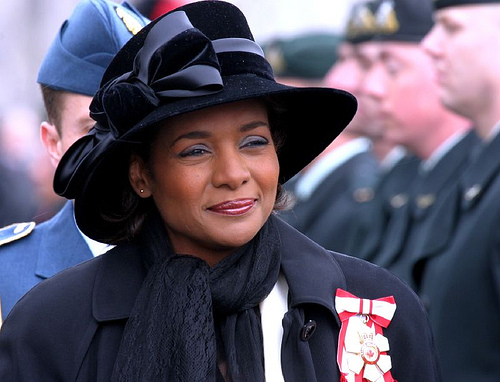
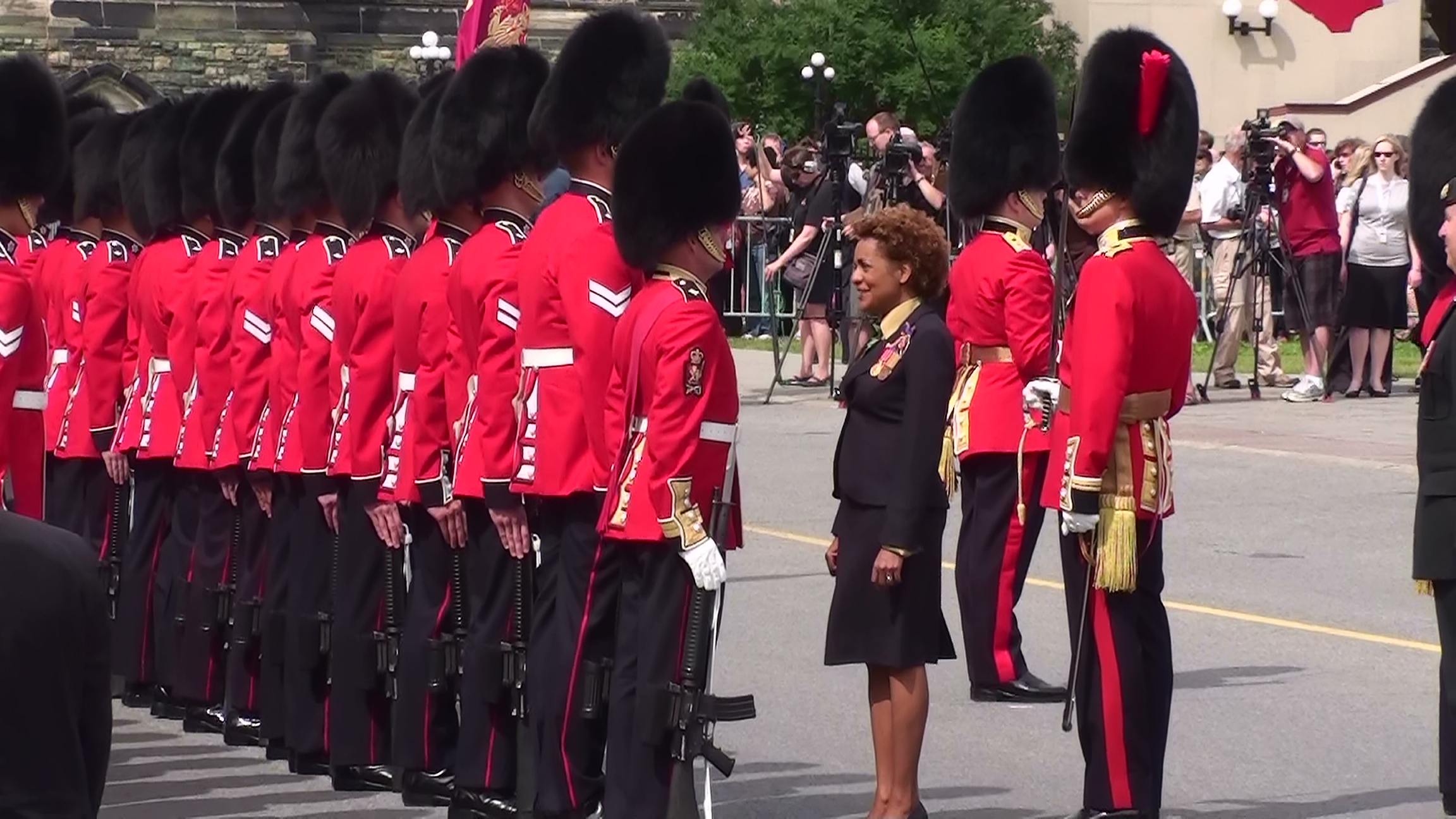
Michaëlle Jean, born September 6, 1957 in Port-au-Prince, Haiti, is a Canadian journalist and documentarian who was Canada’s 27th governor-general and the first person black person to hold that post. She later became the first woman to serve as secretary-general of the Organisation Internationale de la Francophonie.
Jean’s family was descended from slaves. Jean’s early years were spent in a middle-class neighbourhood in the Haitian capital, Port-au-Prince, where her father was principal and teacher of philosophy at an elite, Protestant preparatory school. She was educated at home because her parents, Roger and Luce, did not want her to attend school, where she would have to swear allegiance to dictator François “Papa Doc” Duvalier. In 1965, her father was arrested and tortured under the regime of François Duvalier, leading to the family’s flight to Canada when Jean was age 11. In 1967 her father fled to Canada; his wife and two daughters joined him the next year.
The family settled in Thetford Mines, a Québec mining town, where Roger taught at the local college. Jean later recalled that her father was, by this point, a “broken man,” increasingly prone to violence. Her parents’ marriage disintegrated, and Jean moved to Montréal with her mother and sister. They lived in a basement apartment, while their mother supported the family by w
orking first in a clothing factory and then as a night orderly in a psychiatric hospital.
Jean proved to be a brilliant student, studying languages and literature at the University of Montreal, where she earned a master’s degree in comparative literature. She also attended universities in Italy and France. – source
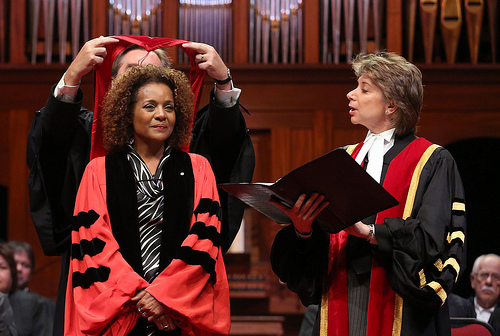
A social activist, Jean mixed freely in the diverse world of Montreal’s ethnic communities, honing a perfect command of French and English in the process. Embarking on a career in broadcast journalism, she became a popular commentator on the French-language network of the Canadian Broadcasting Corporation and also worked frequently on the English network.
In 1986, Jean returned to Haiti with a friend to conduct research for an article on the island’s women. The two arrived to witness the ouster of Jean-Claude “Baby Doc” Duvalier, the country’s dictator and son of the man whose regime Jean’s family had fled. Jean’s work caught the eye of a National Film Board producer, who invited her to return to Haiti as a researcher
and interviewer for a film on the 1987 Haitian elections, shown on Le Point, a news magazine program on Radio-Canada, the French language arm of the Canadian Broadcasting Corporation.
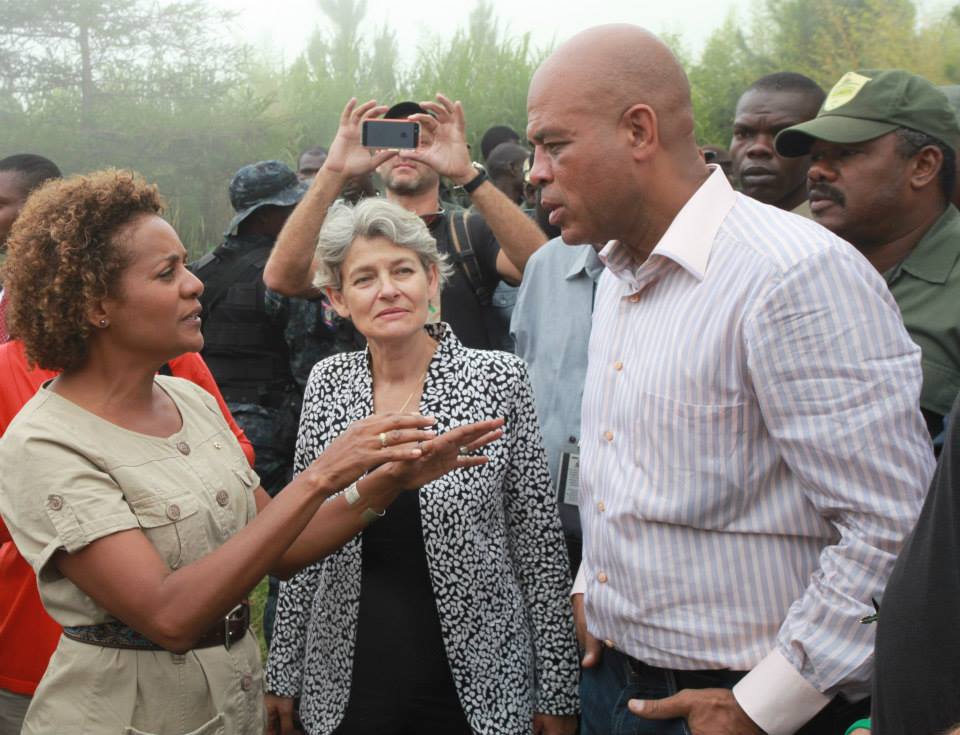
From 2001 Jean worked as an anchor for Radio-Canada’s Le Téléjournal, and in 2004 she began to host her own television interview show, Michaëlle. She won numerous awards for her journalism, including the Amnesty International Journalism Award. With her husband, French-born Canadian filmmaker Jean-Daniel Lafond, she also made several acclaimed documentaries, most notably Haïti dans tous nos rêves (1995; “Haiti in All Our Dreams”).
When Radio-Canada subsequently hired Jean, she became the first black person on French television news in Canada. She worked as a reporter or host for several of the network’s programs, including Actuel, Montréal ce soir, and Virages. In the mid-1990s, she moved to RDI, Radio-Canada’s all-news network, becoming host of le Journal RDI and other programs,
winning many awards along the way, including a Gemini. By 2004, she was well enough known among Francophone Canadians to launch her own current affairs show on RDI, entitled Michaëlle. In English Canada, she was familiar to viewers of CBC Newsworld’s documentary programs The Passionate Eye and Rough Cuts, both of which she had hosted since 1999.
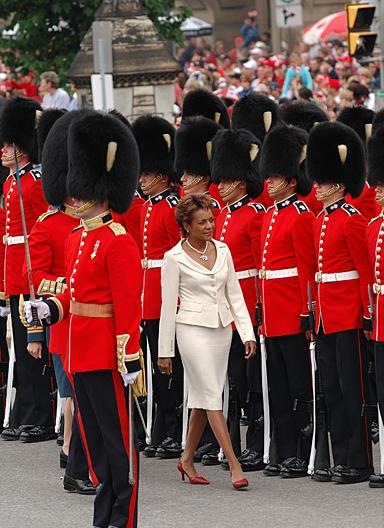
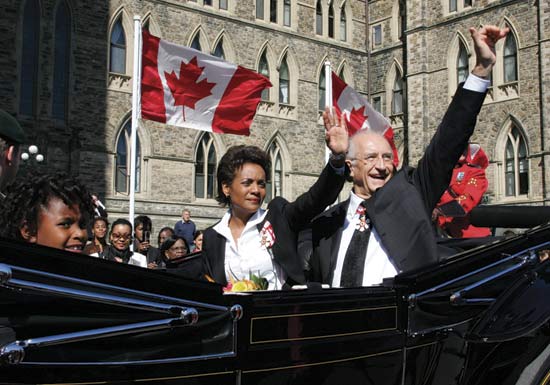
On Sept. 27, 2005, Jean was officially installed as Canada’s governor-general. She was th
e first black person and the first Haitian immigrant to hold the prestigious but mainly ceremonial post as the British monarch’s viceregal representative in Canada.
The appointment brought out, in a striking fashion, the changing nature of modern Canada: since World War II Canada had become a genuinely multicultural society, with attitudes influenced by the heavy flow of immigrants.
As governor-general, Jean called for increased communication between the Francophone and Anglophone communities in Canada, as well as between all the country’s cultural groups. She denied speculation that she had any leanings toward a sovereign Quebec by renouncing the dual French citizenship she had gained on marrying Lafond, a French national.
Though governor-generals are expected to avoid taking an active role in politics, in December 2008 Jean briefly suspended Parliament in order to save Prime Minister Stephen Harper from a no-confidence vote spurred by his government’s reaction to the international economic downturn. In 2010 she completed her term as governor-general and was succeeded by David Johnston.
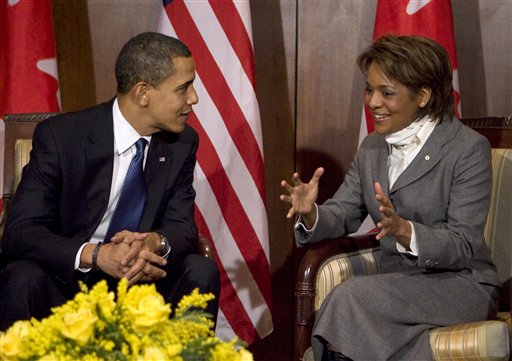
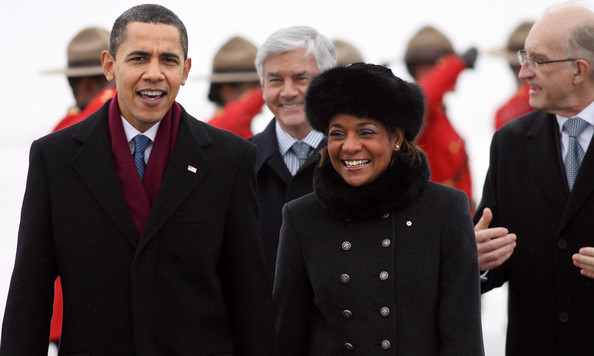
October 2010, Jean was replaced as governor general by David Johnston. She became UNESCO’s special envoy to Haiti and created the Michaëlle Jean Foundation to help underprivileged youth in rural and northern Canada. She later served as chancellor of the University of Ottawa before becoming head of the Organisation Internationale de la Francophonie.
November 2014, she was appointed secretary-general of the Organisation internationale de la Francophonie (International Organisation of La Francophonie) during the 15th summit of French-speaking nations in Dakar, Senegal. She is the first woman and the first Canadian to hold the position.









![Three of the Haitian music industry’s most recognizable names did not roll on Eastern Parkway for this year’s West Indian American Day Parade. The West Indian American Day Carnival Association says T-Vice, Tony Mix and SakPase Nation were barred because they failed to meet carnival rules. The bands tell a different story. T-Vice says it was not refused and chose to stay off the route. Tony Mix publicly announced he would not take part.
The annual parade stepped off Monday, Sept. 7, along Brooklyn’s Eastern Parkway. Days earlier, The Haitian Times reported that WIADCA had kept the three groups off the official lineup. As of that Thursday, five other Haitian groups had been approved to participate. Haitian flags, mas and music were still on the Parkway. The missing piece was the big konpa trucks that usually stop traffic.
Cecile Ford is WIADCA’s board secretary and chair of the Mas Committee. She said organizers had warned the groups that the rules would be enforced.
“We’ve tried to work with them and each year there was a promise… they just take it as a joke,” Ford said. Ford later pointed to overcrowding on trucks as a safety problem.“We have pictures & photos [they] were not compliant with the number of people they have on their trucks, which is a security issue & safety issue,” she said.
WIADCA’s written rules state only bands with a WIADCA permit can enter the parade. Participants must be costumed. Artist trucks, advertising trucks and “T-shirt bands” are excluded. Band leaders are required to put marshals on the route, keep vehicles insured and stay within height and safety limits set with police and the city. Failure to comply can mean removal from the parade.
T-Vice answered Ford by name. The band said it was not refused. T-Vice said the Parkway absence was its own choice, while the carnival association said the group was barred. Tony Mix also spoke with an official announcement circulated that he would not take part in the 2026 Labor Day carnival. SakPase Nation did not respond.
Haitian mas and music was still on the route, including Lespri Ayiti and RAM among groups carrying the Haitian presence.
#lunionsuite #haitianamerican](https://www.lunionsuite.com/wp-content/uploads/2026/09/809209156_18633930094023307_3630959692441275516_n-512x640.jpg)








![Three of the Haitian music industry’s most recognizable names did not roll on Eastern Parkway for this year’s West Indian American Day Parade. The West Indian American Day Carnival Association says T-Vice, Tony Mix and SakPase Nation were barred because they failed to meet carnival rules. The bands tell a different story. T-Vice says it was not refused and chose to stay off the route. Tony Mix publicly announced he would not take part.
The annual parade stepped off Monday, Sept. 7, along Brooklyn’s Eastern Parkway. Days earlier, The Haitian Times reported that WIADCA had kept the three groups off the official lineup. As of that Thursday, five other Haitian groups had been approved to participate. Haitian flags, mas and music were still on the Parkway. The missing piece was the big konpa trucks that usually stop traffic.
Cecile Ford is WIADCA’s board secretary and chair of the Mas Committee. She said organizers had warned the groups that the rules would be enforced.
“We’ve tried to work with them and each year there was a promise… they just take it as a joke,” Ford said. Ford later pointed to overcrowding on trucks as a safety problem.“We have pictures & photos [they] were not compliant with the number of people they have on their trucks, which is a security issue & safety issue,” she said.
WIADCA’s written rules state only bands with a WIADCA permit can enter the parade. Participants must be costumed. Artist trucks, advertising trucks and “T-shirt bands” are excluded. Band leaders are required to put marshals on the route, keep vehicles insured and stay within height and safety limits set with police and the city. Failure to comply can mean removal from the parade.
T-Vice answered Ford by name. The band said it was not refused. T-Vice said the Parkway absence was its own choice, while the carnival association said the group was barred. Tony Mix also spoke with an official announcement circulated that he would not take part in the 2026 Labor Day carnival. SakPase Nation did not respond.
Haitian mas and music was still on the route, including Lespri Ayiti and RAM among groups carrying the Haitian presence.
#lunionsuite #haitianamerican](https://scontent-yyz1-1.cdninstagram.com/v/t51.82787-15/809209156_18633930094023307_3630959692441275516_n.jpg?stp=dst-jpg_e35_tt6&_nc_cat=108&ccb=7-5&_nc_sid=18de74&efg=eyJlZmdfdGFnIjoiQ0FST1VTRUxfSVRFTS5iZXN0X2ltYWdlX3VybGdlbi5DMyJ9&_nc_ohc=x34GLS09I-MQ7kNvwFqHCNl&_nc_oc=AdowqDCN9YT1Ab6Xr9C2sg7ga-9vqDxpgpSPQVu_SMkTWY4MV-DSZ2lzrsiKmJkeEI4&_nc_zt=23&_nc_ht=scontent-yyz1-1.cdninstagram.com&edm=ANo9K5cEAAAA&_nc_gid=Lz9EipMU_gKsafHgo8qsQg&_nc_tpa=Q5bMBQKDKzE0CqaXaNTf9kYEI6aASUGdjqIXkI3wp9xZx3WD25yVgfMbqr7aLH3_R8CyTvaXinZpNnpL&oh=00_AQKB1m_Wab3cU0H6iC1bc-1aL9xAS_PDdk3oBR18ccspUQ&oe=6AB2AEDD)
![Three of the Haitian music industry’s most recognizable names did not roll on Eastern Parkway for this year’s West Indian American Day Parade. The West Indian American Day Carnival Association says T-Vice, Tony Mix and SakPase Nation were barred because they failed to meet carnival rules. The bands tell a different story. T-Vice says it was not refused and chose to stay off the route. Tony Mix publicly announced he would not take part.
The annual parade stepped off Monday, Sept. 7, along Brooklyn’s Eastern Parkway. Days earlier, The Haitian Times reported that WIADCA had kept the three groups off the official lineup. As of that Thursday, five other Haitian groups had been approved to participate. Haitian flags, mas and music were still on the Parkway. The missing piece was the big konpa trucks that usually stop traffic.
Cecile Ford is WIADCA’s board secretary and chair of the Mas Committee. She said organizers had warned the groups that the rules would be enforced.
“We’ve tried to work with them and each year there was a promise… they just take it as a joke,” Ford said. Ford later pointed to overcrowding on trucks as a safety problem.“We have pictures & photos [they] were not compliant with the number of people they have on their trucks, which is a security issue & safety issue,” she said.
WIADCA’s written rules state only bands with a WIADCA permit can enter the parade. Participants must be costumed. Artist trucks, advertising trucks and “T-shirt bands” are excluded. Band leaders are required to put marshals on the route, keep vehicles insured and stay within height and safety limits set with police and the city. Failure to comply can mean removal from the parade.
T-Vice answered Ford by name. The band said it was not refused. T-Vice said the Parkway absence was its own choice, while the carnival association said the group was barred. Tony Mix also spoke with an official announcement circulated that he would not take part in the 2026 Labor Day carnival. SakPase Nation did not respond.
Haitian mas and music was still on the route, including Lespri Ayiti and RAM among groups carrying the Haitian presence.
#lunionsuite #haitianamerican](https://scontent-yyz1-1.cdninstagram.com/v/t51.82787-15/788924694_18633930097023307_3043638025784358712_n.jpg?stp=dst-jpg_e35_tt6&_nc_cat=110&ccb=7-5&_nc_sid=18de74&efg=eyJlZmdfdGFnIjoiQ0FST1VTRUxfSVRFTS5iZXN0X2ltYWdlX3VybGdlbi5DMyJ9&_nc_ohc=2C7Wl-aKuL0Q7kNvwF0SU-y&_nc_oc=AdqS67UJ5kM67AfhglIGf79iRqaHlSsnp0FyZd7KoG7qEtb5unEgcDoOFORhGwog7BI&_nc_zt=23&_nc_ht=scontent-yyz1-1.cdninstagram.com&edm=ANo9K5cEAAAA&_nc_gid=Lz9EipMU_gKsafHgo8qsQg&_nc_tpa=Q5bMBQIrkBx9Q7mxEIhWJ6Y19Z-yM28ZaQjDpY43SGae3KZ6MKAWs_OCZWiB0ObeNQzBAnQZn6SD0mHb&oh=00_AQIj1j7NBmi8UykibbpTeawLkf9j0CEnFwrZ5RN4QPXFGQ&oe=6AB29B46)
![Three of the Haitian music industry’s most recognizable names did not roll on Eastern Parkway for this year’s West Indian American Day Parade. The West Indian American Day Carnival Association says T-Vice, Tony Mix and SakPase Nation were barred because they failed to meet carnival rules. The bands tell a different story. T-Vice says it was not refused and chose to stay off the route. Tony Mix publicly announced he would not take part.
The annual parade stepped off Monday, Sept. 7, along Brooklyn’s Eastern Parkway. Days earlier, The Haitian Times reported that WIADCA had kept the three groups off the official lineup. As of that Thursday, five other Haitian groups had been approved to participate. Haitian flags, mas and music were still on the Parkway. The missing piece was the big konpa trucks that usually stop traffic.
Cecile Ford is WIADCA’s board secretary and chair of the Mas Committee. She said organizers had warned the groups that the rules would be enforced.
“We’ve tried to work with them and each year there was a promise… they just take it as a joke,” Ford said. Ford later pointed to overcrowding on trucks as a safety problem.“We have pictures & photos [they] were not compliant with the number of people they have on their trucks, which is a security issue & safety issue,” she said.
WIADCA’s written rules state only bands with a WIADCA permit can enter the parade. Participants must be costumed. Artist trucks, advertising trucks and “T-shirt bands” are excluded. Band leaders are required to put marshals on the route, keep vehicles insured and stay within height and safety limits set with police and the city. Failure to comply can mean removal from the parade.
T-Vice answered Ford by name. The band said it was not refused. T-Vice said the Parkway absence was its own choice, while the carnival association said the group was barred. Tony Mix also spoke with an official announcement circulated that he would not take part in the 2026 Labor Day carnival. SakPase Nation did not respond.
Haitian mas and music was still on the route, including Lespri Ayiti and RAM among groups carrying the Haitian presence.
#lunionsuite #haitianamerican](https://scontent-yyz1-1.cdninstagram.com/v/t51.82787-15/793639979_18633930061023307_6775081790007234048_n.jpg?stp=dst-jpg_e35_tt6&_nc_cat=103&ccb=7-5&_nc_sid=18de74&efg=eyJlZmdfdGFnIjoiQ0FST1VTRUxfSVRFTS5iZXN0X2ltYWdlX3VybGdlbi5DMyJ9&_nc_ohc=959UMb3qNvsQ7kNvwH6rJK5&_nc_oc=AdoHvjiCVJ4RZCft2Zf1MqTKYnS3MeeZCdOl2uaqrtKnTljvUZTVU0tPPq5vVVaaMfI&_nc_zt=23&_nc_ht=scontent-yyz1-1.cdninstagram.com&edm=ANo9K5cEAAAA&_nc_gid=Lz9EipMU_gKsafHgo8qsQg&_nc_tpa=Q5bMBQJYWDIfjAB3vOsovwjH2YGume1iqDtrahqTtXszfuw45tSPTOC7dUJN5kCRLT-BOlvXC35kibtA&oh=00_AQI0x4MKhx9fB7drUdiUvShF7gN4D-jUGxE-ZFzOowII7Q&oe=6AB2B4D4)
![Three of the Haitian music industry’s most recognizable names did not roll on Eastern Parkway for this year’s West Indian American Day Parade. The West Indian American Day Carnival Association says T-Vice, Tony Mix and SakPase Nation were barred because they failed to meet carnival rules. The bands tell a different story. T-Vice says it was not refused and chose to stay off the route. Tony Mix publicly announced he would not take part.
The annual parade stepped off Monday, Sept. 7, along Brooklyn’s Eastern Parkway. Days earlier, The Haitian Times reported that WIADCA had kept the three groups off the official lineup. As of that Thursday, five other Haitian groups had been approved to participate. Haitian flags, mas and music were still on the Parkway. The missing piece was the big konpa trucks that usually stop traffic.
Cecile Ford is WIADCA’s board secretary and chair of the Mas Committee. She said organizers had warned the groups that the rules would be enforced.
“We’ve tried to work with them and each year there was a promise… they just take it as a joke,” Ford said. Ford later pointed to overcrowding on trucks as a safety problem.“We have pictures & photos [they] were not compliant with the number of people they have on their trucks, which is a security issue & safety issue,” she said.
WIADCA’s written rules state only bands with a WIADCA permit can enter the parade. Participants must be costumed. Artist trucks, advertising trucks and “T-shirt bands” are excluded. Band leaders are required to put marshals on the route, keep vehicles insured and stay within height and safety limits set with police and the city. Failure to comply can mean removal from the parade.
T-Vice answered Ford by name. The band said it was not refused. T-Vice said the Parkway absence was its own choice, while the carnival association said the group was barred. Tony Mix also spoke with an official announcement circulated that he would not take part in the 2026 Labor Day carnival. SakPase Nation did not respond.
Haitian mas and music was still on the route, including Lespri Ayiti and RAM among groups carrying the Haitian presence.
#lunionsuite #haitianamerican](https://scontent-yyz1-1.cdninstagram.com/v/t51.82787-15/809209149_18633930070023307_3587221757907574561_n.jpg?stp=dst-jpg_e35_tt6&_nc_cat=107&ccb=7-5&_nc_sid=18de74&efg=eyJlZmdfdGFnIjoiQ0FST1VTRUxfSVRFTS5iZXN0X2ltYWdlX3VybGdlbi5DMyJ9&_nc_ohc=cDkcXmtXmgUQ7kNvwG7_XWE&_nc_oc=AdqUNRkUmiI2HDlMNYW2RKlBoNeNg1nBz8vDkWeMc4a-QdkiQcmzu3lNwHbR-qzwvNY&_nc_zt=23&_nc_ht=scontent-yyz1-1.cdninstagram.com&edm=ANo9K5cEAAAA&_nc_gid=Lz9EipMU_gKsafHgo8qsQg&_nc_tpa=Q5bMBQJrBJHZzFLKKWCCRRGXPd1q3KSCyGj-WTMOivC1NWB3YADSTTa8RR9yFYr5Y1GpYt6fkjVI6DFm&oh=00_AQKut9RjELuQWd1nD4P0ogfFDJi0gWyEZkN9U9qYyKHcpg&oe=6AB2AAFE)
![Three of the Haitian music industry’s most recognizable names did not roll on Eastern Parkway for this year’s West Indian American Day Parade. The West Indian American Day Carnival Association says T-Vice, Tony Mix and SakPase Nation were barred because they failed to meet carnival rules. The bands tell a different story. T-Vice says it was not refused and chose to stay off the route. Tony Mix publicly announced he would not take part.
The annual parade stepped off Monday, Sept. 7, along Brooklyn’s Eastern Parkway. Days earlier, The Haitian Times reported that WIADCA had kept the three groups off the official lineup. As of that Thursday, five other Haitian groups had been approved to participate. Haitian flags, mas and music were still on the Parkway. The missing piece was the big konpa trucks that usually stop traffic.
Cecile Ford is WIADCA’s board secretary and chair of the Mas Committee. She said organizers had warned the groups that the rules would be enforced.
“We’ve tried to work with them and each year there was a promise… they just take it as a joke,” Ford said. Ford later pointed to overcrowding on trucks as a safety problem.“We have pictures & photos [they] were not compliant with the number of people they have on their trucks, which is a security issue & safety issue,” she said.
WIADCA’s written rules state only bands with a WIADCA permit can enter the parade. Participants must be costumed. Artist trucks, advertising trucks and “T-shirt bands” are excluded. Band leaders are required to put marshals on the route, keep vehicles insured and stay within height and safety limits set with police and the city. Failure to comply can mean removal from the parade.
T-Vice answered Ford by name. The band said it was not refused. T-Vice said the Parkway absence was its own choice, while the carnival association said the group was barred. Tony Mix also spoke with an official announcement circulated that he would not take part in the 2026 Labor Day carnival. SakPase Nation did not respond.
Haitian mas and music was still on the route, including Lespri Ayiti and RAM among groups carrying the Haitian presence.
#lunionsuite #haitianamerican](https://scontent-yyz1-1.cdninstagram.com/v/t51.82787-15/806298814_18633930079023307_5240743489890819950_n.jpg?stp=dst-jpg_e35_tt6&_nc_cat=110&ccb=7-5&_nc_sid=18de74&efg=eyJlZmdfdGFnIjoiQ0FST1VTRUxfSVRFTS5iZXN0X2ltYWdlX3VybGdlbi5DMyJ9&_nc_ohc=JU6IDP_NkRAQ7kNvwGfn0dr&_nc_oc=AdodvcfcPm44koOpzSTOCErsPDONaFZ_QLfgYMtozzJNRqpTvybWCeMMsYnm2J9cuiU&_nc_zt=23&_nc_ht=scontent-yyz1-1.cdninstagram.com&edm=ANo9K5cEAAAA&_nc_gid=Lz9EipMU_gKsafHgo8qsQg&_nc_tpa=Q5bMBQK1NFfa9hYi5jqAzRDPEyrGgTunj3iBKuHtrm1sEFztmA38zPSbly6_DpiXGvEtyKEpwbD4Dumw&oh=00_AQLC-zzxKyF0-YkqKsmQR28qe9ieyDAiVNu9cGajHubUIQ&oe=6AB2BCB9)
![Three of the Haitian music industry’s most recognizable names did not roll on Eastern Parkway for this year’s West Indian American Day Parade. The West Indian American Day Carnival Association says T-Vice, Tony Mix and SakPase Nation were barred because they failed to meet carnival rules. The bands tell a different story. T-Vice says it was not refused and chose to stay off the route. Tony Mix publicly announced he would not take part.
The annual parade stepped off Monday, Sept. 7, along Brooklyn’s Eastern Parkway. Days earlier, The Haitian Times reported that WIADCA had kept the three groups off the official lineup. As of that Thursday, five other Haitian groups had been approved to participate. Haitian flags, mas and music were still on the Parkway. The missing piece was the big konpa trucks that usually stop traffic.
Cecile Ford is WIADCA’s board secretary and chair of the Mas Committee. She said organizers had warned the groups that the rules would be enforced.
“We’ve tried to work with them and each year there was a promise… they just take it as a joke,” Ford said. Ford later pointed to overcrowding on trucks as a safety problem.“We have pictures & photos [they] were not compliant with the number of people they have on their trucks, which is a security issue & safety issue,” she said.
WIADCA’s written rules state only bands with a WIADCA permit can enter the parade. Participants must be costumed. Artist trucks, advertising trucks and “T-shirt bands” are excluded. Band leaders are required to put marshals on the route, keep vehicles insured and stay within height and safety limits set with police and the city. Failure to comply can mean removal from the parade.
T-Vice answered Ford by name. The band said it was not refused. T-Vice said the Parkway absence was its own choice, while the carnival association said the group was barred. Tony Mix also spoke with an official announcement circulated that he would not take part in the 2026 Labor Day carnival. SakPase Nation did not respond.
Haitian mas and music was still on the route, including Lespri Ayiti and RAM among groups carrying the Haitian presence.
#lunionsuite #haitianamerican](https://scontent-yyz1-1.cdninstagram.com/v/t51.82787-15/806298829_18633930142023307_1624406619840916561_n.jpg?stp=dst-jpg_e35_tt6&_nc_cat=107&ccb=7-5&_nc_sid=18de74&efg=eyJlZmdfdGFnIjoiQ0FST1VTRUxfSVRFTS5iZXN0X2ltYWdlX3VybGdlbi5DMyJ9&_nc_ohc=DE1aFJcvdYoQ7kNvwGMRE4Y&_nc_oc=AdrbSY8j7ijpV3E193emKk-Sf2zlSBMkLFgVx-mlruFEt57U2WROiBFUjBEcGlb2Jcs&_nc_zt=23&_nc_ht=scontent-yyz1-1.cdninstagram.com&edm=ANo9K5cEAAAA&_nc_gid=Lz9EipMU_gKsafHgo8qsQg&_nc_tpa=Q5bMBQLGul6Cp0YZIaXYqS97InQzHB5LK3ZtH3w6zQR1Sax-hnTH7E6Rn-hUdKa0y8hrlTZGE8fKHU1z&oh=00_AQJ4aWcMSAOCMEy0fz3JCCxLf1W2vLTi4WnIkEUemBItXQ&oe=6AB28672)