




As Haiti spirals deeper into chaos under the grip of violent gangs, a senior U.S. diplomat at the United Nations has issued a stark warning: the United States cannot continue to carry the burden of the international response alone.
Dorothy Camille Shea, the interim chargé d’affaires for the U.S. mission to the UN, called on global powers to step up during a critical UN Security Council meeting this week. According to reporting by the Miami Herald, Shea emphasized that while the U.S. has already pledged more than $600 million to support the Kenya-led Multinational Security Support (MSS) mission in Haiti, the costs are rising—and the returns remain limited.
“Haiti is facing one of the worst humanitarian disasters in the Western Hemisphere,” Shea stated, urging other nations to increase their financial and logistical support to the mission tasked with stabilizing the country.
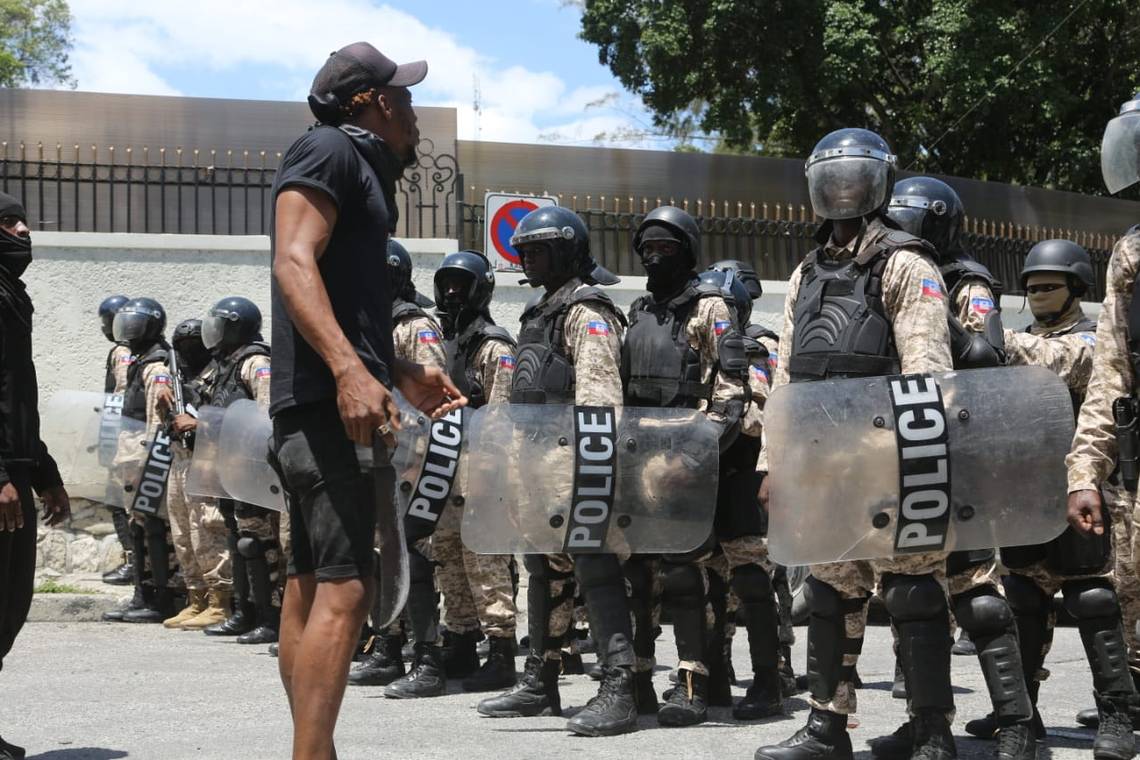
The crisis on the ground is worsening by the day. Port-au-Prince, the capital, is on the brink of full gang control. According to UN data, over 1,100 people were killed in February and March alone, contributing to more than 1,700 deaths caused by armed violence since the start of 2025. Waves of attacks have forced the closure of schools, crippled medical services, and displaced over a million people.
Maria Isabel Salvador, the UN Secretary-General’s special representative in Haiti, painted an even more dire picture during the meeting. She warned that once-safe neighborhoods in the capital are now war zones, and the violence is rapidly spreading beyond the western regions. “Haiti is approaching a point of no return,” Salvador told Council members, pressing the urgency of immediate, coordinated action.
Kenya, which is leading the MSS initiative, has also sounded the alarm over resource shortfalls. Kenyan Interior Minister Monica Juma revealed that fewer than 40% of the planned 2,500 personnel have been deployed due to a lack of equipment and funding. While hundreds of officers are reportedly ready to be deployed, they remain grounded without adequate support.
To date, only $110 million has been raised through voluntary contributions to the UN trust fund—far short of what is needed to make the mission operational at full capacity.
As Haiti teeters on collapse, the international community faces a critical crossroads: either increase support to the MSS mission or risk watching the country fall entirely into the hands of armed criminal networks.