




Haiti Haiti News Sports

Complete Results of Haiti’s 16th Participation in the Olympics

tumblr_obhfsy3iA21s6znb0o1_1280

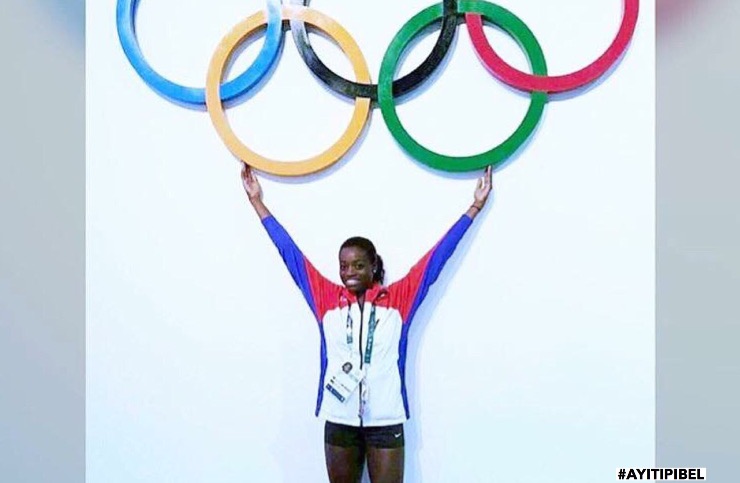
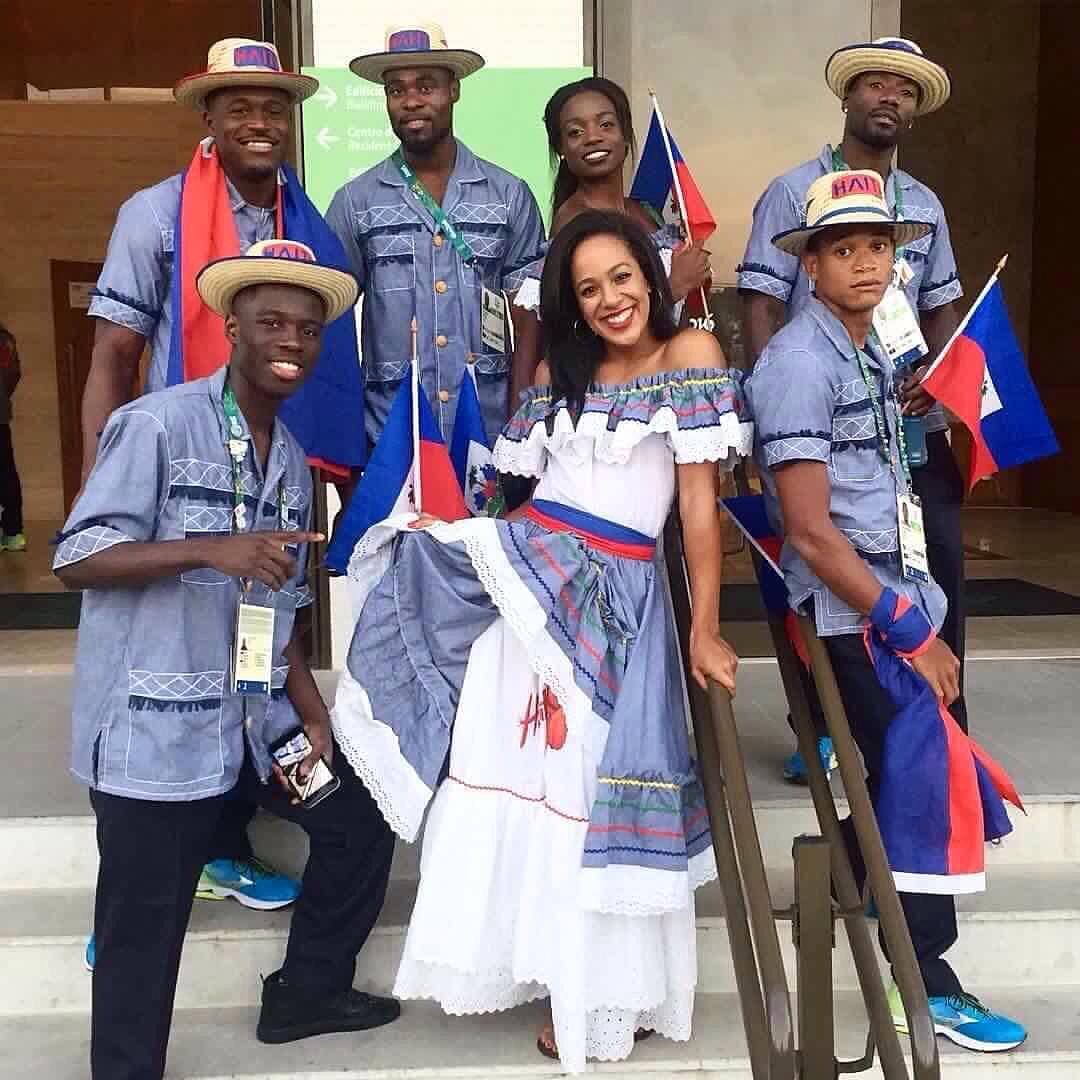
Last night was the closing ceremony of the 2016 Summer Olympics held  at the Maracanã Stadium, Rio de Janeiro.  Gymnast Simone Biles was the American closing ceremony flag bearer and Haitian Hurdler Jeffrey Julmis was Haiti’s flag bearer.

As per traditional protocol, the ceremony featured cultural presentations from Brazil and Japan, as well as closing remarks by International Olympic Committee President Thomas Bach and the leader of the Games’ organizing committee Carlos Arthur Nuzman, the official handover of the Olympic flag from Rio de Janeiro mayor Eduardo Paes to Tokyo governor Yuriko Koike, whose city will play host to the 2020 Summer Olympics, and the extinguishing of the Olympic flame.

If you followed our social networks, we posted daily updates and results of all our Haitian Olympic athlete but we wanted to provide a complete list of results for all 10 of our athletes in one place. Here are the results from Haiti’s 16th participation in the Olympics since 1924.
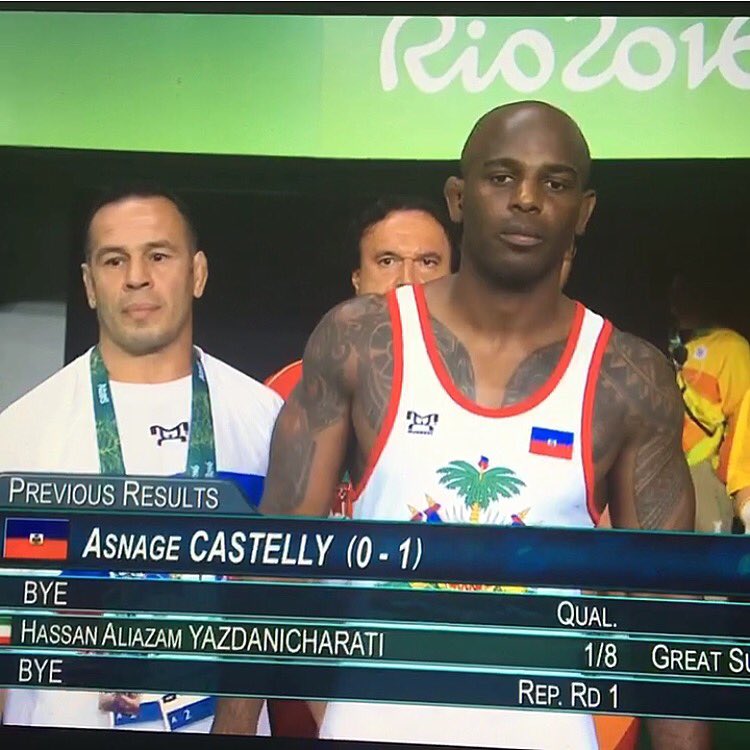
Asnage Castelly in Quaterfinals
Asnage Castelly in Quarterfinals

Asnage Castelly
March 29, 1978 (Age 38)
Wrestling Men’s Freestyle 74 kg

Wrestler Asnage Castelly 1.82m for 74kg and flag bearer of the Haitian delegation to the Olympics opening, faced in a combat the Iranian Hassan Aliazam Yazdanicharati 1.81m for 74kg, during the 1/8 Finals/Repechage Round 1 of the Men’s Freestyle 74 kg. 

Castelly qualified and advanced to the quarterfinal once his opponent Hassan Yazdani Cherati advanced.

Later in the same day. Castelly  faced Turkish wrestler Soner Demirtas and after a few minutes of combat, the Haitian Olympian was defeated in Great Superiority 12-0.

Asnage Castelly is the first Haitian to represent Haiti in wrestling and also made also by qualifying and competing in the quarterfinal.  

France's Haby Niare (L) competes against Haiti's Aniya Necol Louissaint during their womens taekwondo qualifying bout in the -67kg category as part of the Rio 2016 Olympic Games, on August 19, 2016, at the Carioca Arena 3, in Rio de Janeiro. / AFP / Kirill KUDRYAVTSEV (Photo credit should read KIRILL KUDRYAVTSEV/AFP/Getty Images)
France’s Haby Niare (L) competes against Haiti’s Aniya Necol Louissaint during their women’s taekwondo qualifying bout in the -67kg category as part of the Rio 2016 Olympic Games, on August 19, 2016, at the Carioca Arena 3, in Rio de Janeiro. / AFP / Kirill KUDRYAVTSEV (Photo credit should read KIRILL KUDRYAVTSEV/AFP/Getty Images)

Aniya Necol Louissaint 
September 09, 1998 (Age 17)
Taekwondo Women -67kg

Sentinel.ht reports, Haiti’s 17-year old, Aniya Necol Louissaint (red), had the odds stacked against her. For one, the high school junior seemed to, only by chance, find herself selected by the Olympic committee to be featured on the world stage for the first time in Rio. Her first fight was against the number 1 taekwondo fighter in the world, the reigning World and European Gold Medalist Haby Niaré (blue) of France.Louissaint left fight fans and commentators mouth gaped as she nearly beat Niare. She ended up losing 4-5 and nearly won if she hadn’t missed a last-second round house to the head by just inches.

Aniya Necol Louissaint’s earned an opportunity to still keep her Olympic medal dreams alive with a second fight against the Ivory Coast’s Ruth Marie Christelle Gbagbi. By winning that match and two other subsequent fights, she would have taken home a Bronze medal for Haiti. Louissaint lost to Gbabi 7-2.

daren

Darrell Wesh
January 21, 1992 (Age 24)
Athletics Men’s 100m

Haitian sprinter Darrell Wesh participated in the first round of the men’s 100 meters. The competition consisted of 8 heats of 8-9 runners hoping to qualify to the semi -finals.  Darrell Wesh was in the 3rd heat  and placed 8th in his heat with a time of 10.39 seconds ( Chinese Zhenye Wie with a time of 10.08 came in first in his heat ) Darell did not qualify and ranked 54th out of 69 runners. Unfortunately for Darrell , competition, and the Olympic experience ended there.

Edouard Joseph
Edouard Joseph

Edouard Joseph
December 24, 1989 (Age 26)
Weightlifting Men’s 62kg

Loop Haiti reports, The reality of international high-level competition is cruel for some athletes. For reasons that remain to be clarified , the Haitian weightlifter Edward Joseph , 26, was eliminated from the competition.  Just a few minutes of Riocentro Pavilion 2 , the Haitian had experienced great difficulties in the 62 kg category. Edward passed its first test in extremis with a we

buy levitra soft online in the best USA pharmacy https://simpsonmedical.com/wp-content/uploads/2025/07/png/buy-levitra-soft.html no prescription with fast delivery drugstore

ight of 102 kg , and its second at 107 kilograms. On his third attempt , he tried to lift 112 kg , but it failed , ending this wave with a score of 107. Edward Joseph failed to participate in the wave of the shoulder jerk ending its Olympic competition. The next competitor to which an athlete of the Haitian team is scheduled to attend next Wednesday.
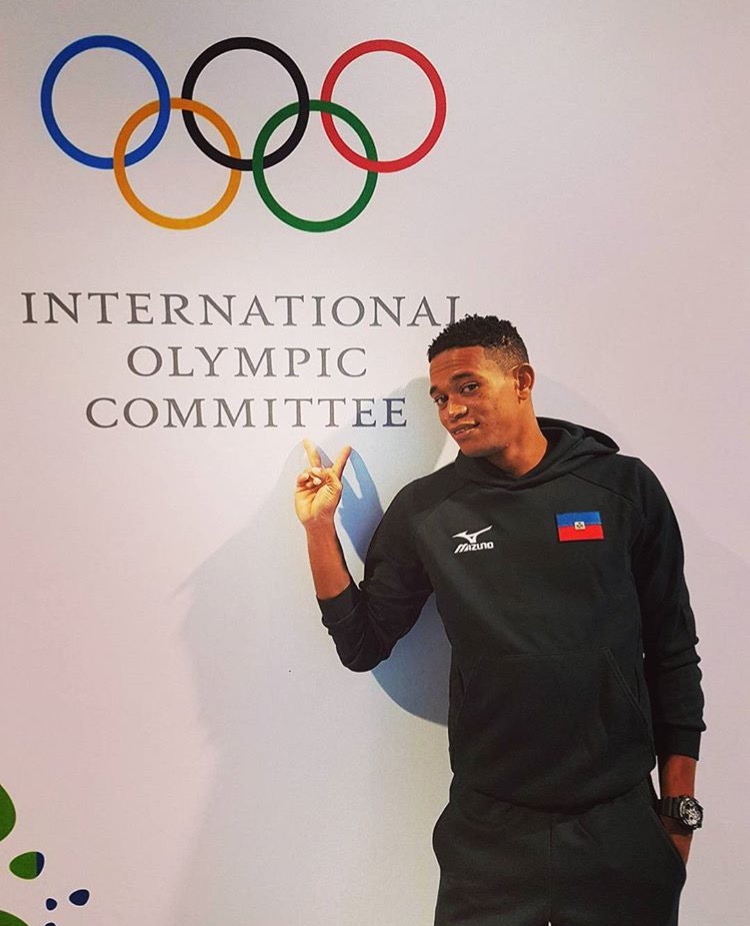
 

Frantz Dorsainvil
Frantz Dorsainvil

Frantz Dorsainvil
July 02, 1991 (Age 25)
Swimming Men’s 50m Freestyle
Haitian Swimmer Frantz Dorsainvil who dreamed of bringing an Olympic medal to Haiti at the 2016 Summer Olympics in Rio de Janeiro Brazil was eliminated. Frantz competed in the Men’s 50m freestyle. There were 11 heats and Frantz placed 6th in his heat and finished 84th out of 85 athletes.

CpYvXvnUEAwXvdK

Josue Deprez
October 30, 1981 (Age 34)
Judo Men -73 kg

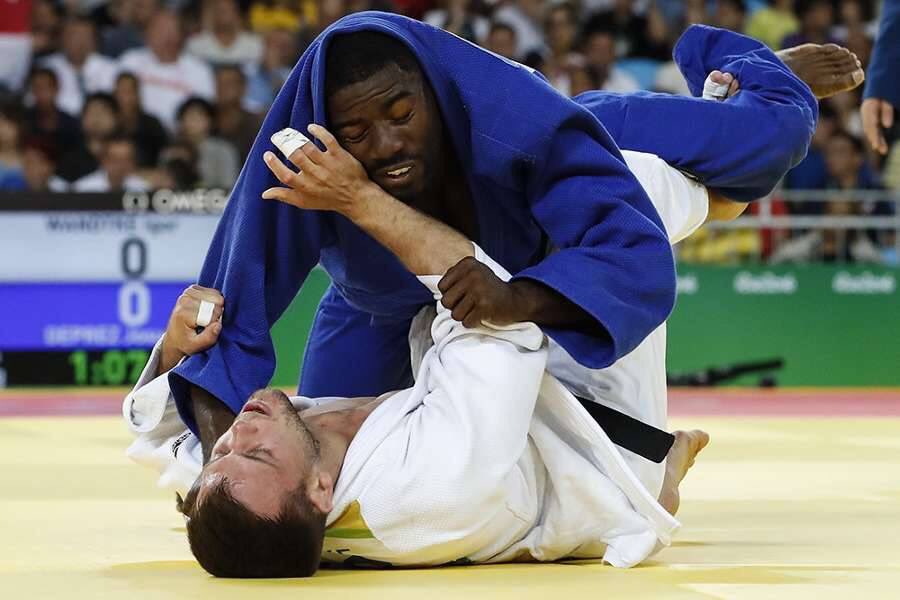
Josue Deprez, 34, (73 kg)  was eliminated in the semifinals by the German Igor Wandtke after five minutes of fighting. The Haitian Olympian was penalized one Shido (warning for slight negligence) by the arbitrators and lost a duel. Overall the game was zero, but the fact that the German had no Shido, he was declared the winner. After the duel, coach Variotho Tibert, former judoka said that Joshua was a victim of lack of preparation because it has made all the strategies to win the game. “He was not stressed. He had all the strategies to combat his opponent. But he was the victim of lack of preparation. This is why he could not develop all his reflexes. These are the training that allows athletes to win this kind of game “, said the coach Variotho while announcing that it is the last international competition of the veteran Josue Deprez.

“It’s hard for him because it’s his last international competition. Now let’s get to work to prepare a new generation of judo, “he informed while noting that it is finalizing a work plan to enable the judo to resume his place in sports Haitian.

Josue Deprez thanked all those who supported while asking for forgiveness because he has not had the opportunity to bring the medal as expected by the people of Haiti. The Olympian said that his performance against the German Igor is “an open door to the next generation because the Germans did not expect such opposition. It took a penalty for them (Germans) enable to win the game. That was my last meeting for Haiti. “

160817112652-haitian-hurdler-continues-race-exlarge-169

Jeffrey Julmis
September 30, 1987 (Age 28)
Athletics Men’s 110m Hurdles

Jeffrey Julmis placed 3rd and moved on to semifinals with a time of 13.66. The following day, competing in the semifinals of the men’s 110-meter hurdles, the 28-year-old took a nasty tumble as he ran through the first hurdle disappointment for Julmis, who was competing in his second Olympics and has yet to reach a final bu

buy iversun online in the best USA pharmacy https://overcomecovid.org/favicons/ico/buy-iversun.html no prescription with fast delivery drugstore

t instead og giving up for what was an embarrassing moment for him, in true Olympic spirit, he got up again to finish the race to huge cheers from the crowd. Julmis finished in a time of 25.56 seconds, 13 seconds behind race winner Orlando Ortega of Spain but was disqualified for going under instead of over one of the hurdles.

As unfortunate as the race,  Julmis’s Rio 2016 moment didn’t go unnoticed on social media, within minutes of airing the race, Julmis was a trending topic and joke throughout the night. Hoping to  some positivity to what many people feel was a failure on the athlete’s part, we immediately posted our clip of Julmis completing the race on all our social networks and within hours of our video going viral, NBC and many other publications had published their stories also congratulating the Haitian Hurdler for finishing his race.

FullSizeRender 96

Mulern Jean
September 25, 1992 (Age 23)
Athletics Women’s 100m Hurdles

Mulern Jean participated in the first round of the 100m hurdles women with 47 other athletes in 6 heats. Mulern Jean was disqualified in her heat  under IAAF rule 168.7b (deliberately knocking down a hurdle). The competition for  the 23-year-old Haitian athlete stopped there.

At 23, the young athlete plans to continue her studies to earn a master’s degree in criminology. She is enrolled in Master program of the FSU.

FullSizeRender 97

Naomy Grand Pierre
April 16, 1997 (Age 19)
Swimming Women’s 50m Freestyle

On Friday (Aug. 12), Naomy Grand’Pierre, a college student at the University Of Chicago made history as the first woman swimmer from Haiti to compete in the Olympics. Grand’Pierre commenced her historic appearance  in the women’s 50-meter women’s freestyle, where she took 2nd place in heat 5. History was made and my dream came true!

Naomy did not qualify for the semifinals  but Grand’Pierre still left the pool with Olympic-sized aspirations. She wants to use her moment to motivate other Haitian girls to swim, according to federation officials, In Haiti  only 1 percent of children know how.

pic.twitter.com/F2HIpJN7MI

0cf071ad5de74a0c84d05572effda34c

Richardson Hitchins
September 26, 1997 (Age 18)
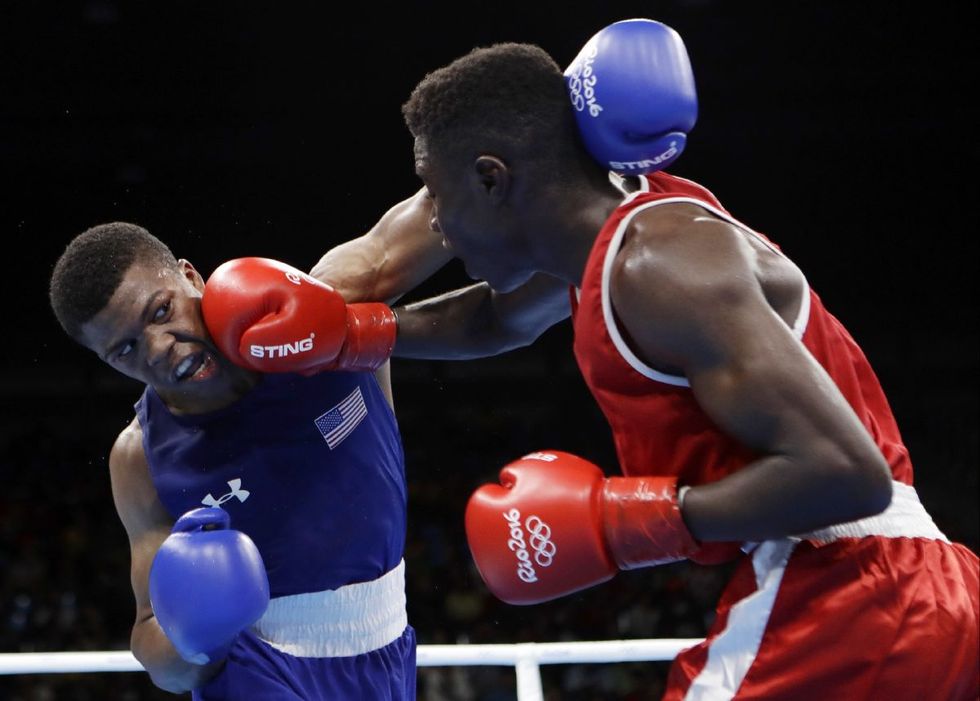
Boxing Men’s Light Welter (64kg)

Boxer Richardson who hoped to bring a gold home for his county  was eliminated by American boxer Gary Russell. After a disappointing defeat, Richardson Hitchins took Facebook to express his gratitude and what’s next for him.

I want to start of by thanking God For this amazing Life experience .This is the end For This amazing chapter of my life , Had A Great Fight Tonight With My home Country USA In the Olympic Games I lost A fight I felt the scoring was totally off From what the judges Had It I feel Like I landed The cleaner and more effective punches but it is what it is Russell is A Great fighter and A cool person We are both Young and hungry fighters and I can see this fight happening again in the pro ranks Somewhere in the future. I will be rooting for Russell to bring the Gold back To our Country God bless him and his family , this Part of my life has been amazing Making it to the Olympic Games at 18 and sharing this world stage With the best in the world and knowing I’m apart of that Elite group at a young age Was Such a tremendous Accomplishment for me But I’m done with amature Boxing And Will be looking to start my professional Career I can’t deal with amature boxing Anymore it’s time for me start a new chapter in My life and this One will be Legendary ??? #TeamHitchins #2016olympian ????? #Rio2017 – Richardson Hitchins

Before the fight, Haitian-American professional boxer, Andre Berto who assisted Hitchins in getting to Rio  posted the following message on his Facebook page. “Win lose or draw, u made us proud my man. Your the new generation of this ?? blood line, ya future is bright. Now it’s time to get this money.” Berto represented Haiti in 2004 Olympic, but lost in the first-round. This shows This shows Berto sees himself in Richardson and proud of him. This is only the beginning for the young boxer, who’s already thinking of becoming pro.


Facebook Comments

ADVERTISE WITH US

Categories

Featured In:


Instagram

@lunionsuite
#1 Haitian-American Platform®️

@lunionsuite

🇭🇹𝗖𝗼𝘂𝗻𝘁𝗿𝘆.𝗣𝗲𝗼𝗽𝗹𝗲.𝗖𝘂𝗹𝘁𝘂𝗿𝗲 👩🏽‍💻𝗘𝘀𝘁 2011 𝗯𝘆:@mrswanda ⌨️𝗙𝗕𝗼𝗼𝗸:#TheHaitianAmerican 𝗙𝗲𝗮𝘁:@forbes @bet @blackenterprise @nbcnews @nytimes @miamiherald +
  • Another U.S. deportation flight landed in northern Haiti on Thursday, the latest in a rapid series of ICE Air charters sending Haitian nationals back to a country still gripped by gang violence and political instability.⁠
⁠
The Global X Immigration and Customs Enforcement Air charter originated in Alexandria, Louisiana, and departed Opa-locka Executive Airport at 11 a.m. IHaitian authorities were told as many as 78 people could be aboard.⁠
⁠
Department of Homeland Security Secretary Markwayne Mullin announced the flight in a post on X about an hour before the aircraft departed the Miami area. “Good morning, America. Today’s deportation destination: HAITI,” he said with a photo of shackled deportees walking in a straight line toward the aircraft. The image is the latest in which the agency has turned Haitian deportations into theater.⁠
⁠
Last week, DHS posted a grainy video of Haitian deportees in shackles and chains boarding a plane in the rain  days after gangs carried out a massacre set to an upbeat Haitian song. The clip drew outrage from Haitians in the diaspora and immigrant-rights advocates.⁠
⁠
Thursday’s operation is the third U.S. removal flight to Haiti in three weeks, after the Supreme Court cleared the way for the Trump administration to end Temporary Protected Status for more than 300,000 Haitians, even as litigation over that termination continues. Until recently, flights to Haiti averaged about once a month. U.S. officials have previously signaled they want to move toward two flights a week.⁠
⁠
The planes now land in Cap-Haïtien because commercial service into Port-au-Prince remains restricted. Gangs control much of the capital and have expanded into other regions. Last week, dozens of people were shot and burned inside their homes in Kenscoff, and more than 50 were abducted. Two weeks earlier, gangs attacked Fort Dimanche in Cité Soleil.⁠
⁠
As Thursday’s U.S. flight headed toward Cap-Haïtien, Bahamian immigration officials said a vessel carrying Haitian migrants had been interdicted off Great Inagua the night before. Those passengers, they said, will eventually be repatriated through Cap-Haïtien as well. #lunionsuite
  • For the first time, three Haitian players will compete in the same UEFA Women’s Champions League campaign. 🇭🇹⚽️🇭🇹 ⁠
⁠
Melchie Dumornay of OL Lyonnes, Brittany Raphino of Inter Milan, and Océane Toussaint of Paris Saint-Germain are all entered in the 2026–27 Women’s Champions League. Three Grenadières. Three major European clubs. One historic first for Haitian women’s football.⁠
⁠
Dumornay is already a star at the highest level. Born in Mirebalais, she has become one of OL Lyonnes’ most important players, scored five goals in last season’s Champions League, helped the club reach the 2026 final in Oslo, and was named to UEFA’s Team of the Season. She was also the first Haitian nominated for the Ballon d’Or.⁠
⁠
Raphino arrived in Italy this summer. Born in Randolph, Massachusetts, to a Haitian father, the former Brown University standout signed a three-year deal with Inter Milan in July after two and a half seasons at Sporting CP in Portugal. She received her first Haiti call-up in April 2026 for World Cup qualifying. Inter are in Women’s Champions League qualifying this season, and the forward has already featured in the third round.⁠
⁠
Toussaint is the newest piece. The 22-year-old goalkeeper, born in Bagnolet, France, came through the PSG academy, chose Haiti in April 2026, and made her senior debut on June 5 in a 2–1 win over New Zealand. She extended her PSG contract through 2028 and is in the Parisians’ Women’s Champions League squad as they contest qualifying against Eintracht Frankfurt.⁠
⁠
Haiti, the U.S. diaspora, and France, three different roads to the same competition.⁠
⁠
Whether all three reach the league phase or stay in qualifying, their presence in the same edition is already a landmark. From a first World Cup in 2023 to players at Lyon, Inter, and PSG in Europe’s biggest club tournament in the same season, Les Grenadières keep writing new pages.⁠
⁠
📸 @caleb_jephte⁠
#lunionsuite #haitianamerican #haitian
  • About 100 people gathered outside Columbus City Hall on Wednesday evening, candles in hand, to remember Pierre Damas Bel as more than a headline. The 20-year-old Haitian student, soccer player, JROTC member, and Wright State University freshman was described by those who knew him as joyful, driven, and full of promise “one of the brightest lights” in a community that has watched too many young lives dim under the weight of immigration policy.
Bel died Aug. 31 after walking into westbound traffic on Interstate 70 in Clark County and being struck by a tractor-trailer, according to the Ohio State Highway Patrol. His family and advocates say he died by suicide after weeks of shame and bullying over an ICE ankle monitor placed on him in late July, following the end of Temporary Protected Status for Haitians.
He had called his father that morning at 8:03 a.m. “Dad, I’m not feeling okay mentally because of the bullying,” he asked his son to come home so they could talk. Hours later, police arrived at the family’s door.
At the vigil, friends and coworkers stood with elected officials and Haitian community leaders. They refused to let Bel be reduced to a policy debate. They named him: oldest of three sons, Springfield High School honors graduate, National Honor Society member, varsity soccer player for the Wildcats, and a Texas Roadhouse teammate who showed up, worked hard, and made people laugh.
Coworkers from the restaurant attended the vigil and spoke about working alongside him. They described a young man who was reliable on the floor, kind to guests and staff, and proud of the hours he put in while juggling school, soccer, and JROTC. @Iamyola.marj who knew Bel as a close friend and mentee, condemned the way Haitian migrants have been painted as criminals. 
ICE has rejected claims that the agency is responsible, stating that “any attempts to blame ICE for the death of Pierre Damas Bel are false” and repeating that people without legal status are not required to remain in the country wearing a monitor. 
Funeral arrangements remain pending. His parents had hoped to bury him in Haiti; that request has not been granted. 
#lunionsuite #haitianamerican
  • Economist, author, and public figure @EtzerEmile registered Thursday as a voter at the Lycée National de Pétion-Ville, one of the official voter registration centers in the Ouest department.⁠
⁠
Emile arrived with a large group of supporters, described by local media as hundreds of young people and close associates. The visit comes as Haiti’s Provisional Electoral Council (CEP) continues the voter registration drive ahead of general elections scheduled for December 13, the country’s first national vote in a decade.⁠
⁠
While some early social media posts described the crowd shouting “Viv Prezidan,” major reports focused on Emile’s remarks rather than chants. He expressed concern about the current state of the electoral process and called for the security conditions necessary to hold a credible and transparent election.⁠
⁠
Voter registration at the Lycée National de Pétion-Ville has already drawn high-profile figures, including Prime Minister Alix Didier Fils-Aimé in early August and Economy and Finance Minister Serge Gabriel Collin this week. Officials have repeatedly urged citizens with a valid national identification card to register.⁠
⁠
Emile, known for his bestselling book Haïti a choisi de devenir un pays pauvre and his work on entrepreneurship and civic education through Haiti Efficace and Fondation Avenir, has not formally declared a presidential candidacy. His appearance at the registration center has nevertheless fueled speculation about his political intentions.⁠
⁠
Haiti’s electoral calendar remains contingent on improved security. Gangs still control large parts of the Port-au-Prince metropolitan area, and both the CEP and government have acknowledged that the December date will hold only if conditions allow.⁠
⁠
The registration process continues across designated centers in Pétion-Ville, Delmas, and Tabarre. Citizens must present a valid Carte d’identification nationale to enroll.⁠
⁠
🎥 Tripotay Lakay⁠
#lunionsuite #haitianamerican #haitian
  • Carla Jeffery, the actress best known as Bree in Disney’s Zombies films and as the Haitian-American teen at the center of the 2016 Disney Channel short Exchange, died on Tuesday, September 1. She was 33. Her longtime management team at Alexanders Talent Management confirmed the news. No cause of death has been released.
Jeffery was born July 10, 1993, in Houston and began working as a child. At 12 she appeared in Phat Girlz opposite Mo’Nique. She built a two-decade career across Disney Channel, Nickelodeon, and adult television, including a 10-episode run as Keysha Black on Curb Your Enthusiasm, plus roles on Southland, iCarly, Shake It Up, Good Luck Charlie, Best Friends Whenever, and American Vandal. She is survived by her twin brother, actor Carlon Jeffery of A.N.T. Farm.
To a generation of Disney viewers she was Bree, the loyal, high-energy Seabrook High cheerleader and best friend to Addison in Zombies (2018), Zombies 2 (2020), and Zombies 3 (2022). She later voiced the same character on Zombies: The Re-Animated Series.
Ten years ago, filmmaker Daheli Hall, Haitian-Jamaican, Miami-raised cast Jeffery as the lead in Exchange, one of a slate of Disney Channel shorts. After a class trip to Paris is canceled, Jeffery’s character, Brijitte, a Haitian-American teenager who moves between English, French, and Kreyòl, proposes a different kind of exchange: classmates spend time in each other’s homes. At her house, her granmè (played by Haitian actress Karina Bonnefil) slips between French and Kreyol.
L’Union Suite covered the short when it dropped in August 2016, noting how rare it was then, and still is to hear Kreyòl in a kids’ program built for a global audience. For many young Haitian viewers, it was one of the first times a girl who sounded like home was the one driving the plot.
Hall posted a tribute this week that she could not finish on camera. “Yesterday I was in a high. Today I’m so low. We lost Carla Jeffrey far too soon,” she wrote. “Ten years ago, I cast Carla as the lead in my short film for Disney Channel… I love you, Carla. Thank you so much for your light.” Our condolences to her family, friends and fans. 
🎥 @daheliofficial
#lunionsuite
  • A Department of Homeland Security video showing Black men in shackles and chains boarding a deportation flight to Haiti has drawn sharp condemnation from Haitian community leaders in South Florida.⁠
⁠
The video was posted by DHS the day after the first deportation flight following the end of Temporary Protected Status for Haitians left on August 27. It shows men being led onto a plane in the rain while restrained and is set to an upbeat Haitian song.⁠
⁠
In an @NBC6 Miami news piece reported by Ari Odzer, community leaders described the footage as dehumanizing. “This video is absolutely reprehensible, this video is basically dehumanizing us,” said Paul Namphy of the Family Action Network. He connected the imagery to the painful history of how Black people have been treated in this country.⁠
⁠
L’Union Suite founder Wanda Tima was featured in the NBC 6 report and expressed shock at the decision to release the video. “I was in utter shock that they had even released something like this,” she said. “And then you’re creating this sickening messaging around Haitians on TPS, that they are all criminals. People that are on TPS were here legally.”⁠
⁠
The flight landed in Cap-Haïtien. Separate arrival footage showed deportees stepping off the plane without shackles. When asked for comment, DHS stated that Temporary Protected Status is temporary by design, compared the moment to “closing time,” and pointed to a $2,600 payment plus a free flight for those who leave voluntarily.⁠
⁠
Advocates questioned the purpose of the video, noting that Haitians who held TPS already knew their status had ended and that Haiti remains so dangerous commercial airlines will not fly into the capital. ⁠
⁠
Namphy said his group is asking Florida’s senators to support legislation restoring TPS for Haitians for three more years.⁠
⁠
VIdeo Source: NBC6 Miami⁠
#lunionsuite #haitianamerican #haitian
  • Miss World Haiti Marie Kemlyne Félix (@mariekemlynefelix) took the stage at "Dances of the World" in Nha Trang, Vietnam. Performing before a crowd of more than 10,000 spectators, she showcased Haiti's national costume and danced to the rhythms of her homeland, dedicating her performance to the working women of Haiti who never stop hustling.⁠
⁠
Following her performance, part of the cultural showcase ahead of the 73rd Miss World Final on September 5, Félix shared a tribute dedicated to her grandmother and the everyday women who inspired her journey:⁠
⁠
"For my grandmother 'Aunt Sarah.' For the culture. For all Mrs. Sara who never stops hustling in life. For all those living in bad conditions. A representation worth a thousand words. Our origin cannot condemn us! Honor and respect for Mrs. Sara, the strength of our country's economy."⁠
⁠
In Haiti, "Madan Sara" is the name given to the market women often grandmothers, mothers, and aunts who carry goods across the country to sell in markets, forming the backbone of the nation's informal economy. By dedicating her performance to "Aunt Sarah," Félix wasn't just honoring her own grandmother; she was paying tribute to generations of Haitian women whose relentless work has sustained families and communities through hardship.⁠
⁠
Her words "Our origin cannot condemn us!" struck a chord with viewers, framing her presence on one of the world's biggest pageant stages as more than a personal achievement. It became a statement about resilience, representation, and the refusal to let circumstance define destiny.⁠
⁠
The "Dances of the World" segment grouped Miss World 2026's 111 contestants into four regions the Americas and Caribbean, Africa, Europe, and Asia-Oceania  each showcasing traditional dress and dance rooted in their home countries. Félix's performance stood out as a vivid expression of Haitian culture, color, and pride, reinforcing why national costume moments remain some of the most anticipated segments of the competition.⁠
⁠
📸 @missworld @ricardo.siviero @kiengcanpro⁠
#lunionsuite #haitianamerican #haitian #caribbean
  • The U.S. Department of Justice is expanding what states are required to report to federal immigration authorities.
Under a new legal opinion issued by the DOJ’s Office of Legal Counsel, states that participate in federal programs such as Temporary Assistance for Needy Families (TANF) and Supplemental Security Income (SSI) must report people they know are not lawfully present in the United States to the Department of Homeland Security (DHS).
The change affects all agencies within a participating state, not just the agencies that directly manage TANF or SSI programs. The DOJ says states that fail to follow the reporting requirement could face serious consequences, including the loss of federal program funding.
The new opinion reverses a 1998 Office of Legal Counsel interpretation that had taken a narrower approach. Under that earlier interpretation, only the specific state agencies administering TANF or SSI were required to report information to federal immigration authorities.
The DOJ says the new interpretation does not create a new law or new reporting requirement. Instead, the department argues that it is restoring what it believes Congress already required under the 1996 welfare reform law. The opinion applies going forward, meaning states will not face retroactive penalties for following the older 1998 interpretation.
The financial stakes are significant. The DOJ says all 50 states, Washington, D.C., and several U.S. territories currently participate in TANF and SSI, while federal TANF grants total more than $16.4 billion annually.
The change could also mean more state agencies may have to review what information they have about a person’s immigration status and determine when they are legally required to share it with DHS.
For immigrant communities, the policy adds another layer to the federal government’s ongoing immigration enforcement efforts. However, the DOJ opinion itself does not say that every undocumented person will automatically be reported. The requirement applies to people a state knows are not lawfully present and is tied to the federal reporting rules outlined in the law.
#lunionsuite #haitianamerican
  • The U.S. has extended restrictions on certain flights over Haiti through March 2, 2027, as security concerns continue around Port-au-Prince.⁠
⁠
The Federal Aviation Administration (FAA) restriction prevents U.S. airlines, commercial operators and certain U.S.-registered civilian aircraft from flying below 10,000 feet in designated areas of Haiti, including the airspace around Port-au-Prince.⁠
⁠
The restriction was first put in place after gunfire targeted a Spirit Airlines flight approaching Toussaint Louverture International Airport in November 2025. A flight attendant suffered minor injuries, and other aircraft were also damaged.⁠
⁠
The latest extension comes as gangs continue to control large parts of Port-au-Prince, keeping the capital's airspace under heightened security restrictions.⁠
⁠
For Haitians and travelers, the decision is another sign of how the country's ongoing security crisis continues to affect transportation in and out of the capital.⁠
⁠
#lunionsuite #haitianamerican
  • #LunionSuiteExcellence 🇭🇹 
Haitian-American soprano Melissa Joseph is heading to one of the most prestigious music schools in the world. The Brooklyn-based lyric soprano announced she has been accepted into The Juilliard School’s Artist Diploma program in Opera Studies, one of only four singers selected, and the spot is fully funded.
“One of four singers, and it’s fully funded. God is INCREDIBLE! I’m overjoyed!” @Meli_joe posted, tagging the school.
The Artist Diploma in Opera Studies is Juilliard’s most advanced, highly selective two-year pre-professional program. It is designed for already accomplished singers and focuses on intensive acting, vocal technique, coaching, and career placement at the highest level. Acceptance is rare. Fully funded spots are rarer still.
Music was never optional in Joseph’s house. Her father played in the church band. Her mother sang in Haiti. Both of her sisters played the violin. Her godfather and pastor had been a member of the well-known Haitian group Le Souffle Divin. At age 4, she was already singing Haitian hymns in church.
Her parents, who immigrated from Haiti to Pennsylvania in the early 1980s, had a more cautious vision. Like many immigrant families, they hoped she would choose a “safe” profession, doctor, nurse, or lawyer. Joseph grew up between Haitian church communities in Pennsylvania and New Jersey. The house was filled with music, including her father’s recordings of Mozart, Bach, and Beethoven.
She received a full-ride scholarship to Georgia State University to study music and later returned for her Master of Music in Vocal Performance. Those years, she has said, taught her how the opera world actually works and connected her with artists who poured into her.
The path after that was long: competitions, young artist programs, cover roles, and mainstage debuts. Joseph made her Opera Philadelphia debut as Musetta in La Bohème; The Washington Post called the performance “show-stopping.” She appeared with Opera Theatre of St. Louis as Lily in the world premiere of Tobias Picker’s Awakenings, sang Mrs. Gleaton in Susannah, and covered the title role in Treemonisha. 
📸 @jjfecik 
#lunionsuite #haitianamerican
  • September is National S**cide Prevention Month. It is a reminder that looking out for each other is not extra work. It is part of how a community stays alive. All month, mental health advocates, prevention organizations, survivors of s**cide loss, people with lived experience, and ordinary community members come together to talk about something too many families still keep behind closed doors. The goal is not to scare people. The goal is to make help visible, make the signs easier to recognize, and make it normal to reach for support before the pain becomes unbearable.
This matters in the Haitian community. Many of us were raised to be strong, to pray, to work, and to handle family business inside the house. Struggle gets called weakness. Depression can many times gets called everything else but what. it is. Pain can gets explained as a spiritual attack or something only God should carry. That silence can leave people isolated when they needed a hand, a call, or a safe place to say they were not okay.
S**cide is preventable when people know what to watch for and where to turn. What this month is asking of us.
It is asking us to do small things that save lives:
- Check on the people who look fine.
- Ask how someone is doing and wait for the real answer.
- Listen without lecturing, comparing pain, or saying prayer is the only option.
- Share resources instead of rumors.
- Take talk of hopelessness, being a burden, or wanting to disappear seriously.
Signs someone may be in danger
- Pulling away from family, church, or friends
- Hopelessness about money, immigration status, or the future
- Talking as if other people would be better off without them
- Sudden calm after a long stretch of distress
- Giving away important belongings
- Not sleeping, not eating, or not caring about appearance
- Increased drinking or risky behavior
If someone says they want to die, believe them. 
Asking directly does not plant the idea. It can open the door.
If you or someone else is in crisis: Call or text 988. It is free, confidential, & available 24 hours a day. Ask for a Haitian Creole interpreter if you need one. You can also text HOME to 741741. 
#lunionsuite
  • Before she took Arthur Ashe Stadium on Monday night, the four-time Grand Slam champion had already given Flushing Meadows a full fashion week: sculptural white bags, orange tulle, ruched caramel minis, fuzzy blue mules, money-print Timberlands, distressed Evisu denim, and a custom Who Decides War hoodie-gown stitched with her own newspaper clippings. Then she walked out looking like Allen Iverson’s tennis cousin cornrows, red headband, one black sleeve, one red wristband and still needed two tiebreaks to beat world No. 101 Anastasia Zakharova 7-6(6), 7-6(3).
Style first. Steel second. Both required.
Match night was the one built to travel. Styled by Law Roach and made by Who Decides War in about 30 hours, Osaka walked out in a distressed gray sleeveless hoodie with a white tulle train. Newspaper clippings from her own career were sewn into the fabric her name, her photos, “Osaka showed strength.” Cornrows. Red headband. One black compression sleeve. One red wristband. Allen Iverson.
The Manhattan Bridge photos of that same look hoodie up, hoodie down, tulle against the skyline made the entrance feel like a fashion film, not just a walk-on. The clothes got the gasps. The match almost got away.
Osaka, the No. 13 seed and two-time US Open champion, beat Anastasia Zakharova 7-6(6), 7-6(3) on Monday night in just over two hours. She led both sets. Zakharova, ranked 101, kept coming. Two tiebreaks. Eleven aces from Osaka, including one on match point. A lot of rust.
She had not played since Toronto, where Elena Rybakina beat her in three sets in the quarterfinals.  First rounds in New York always make her nervous, she said, because she wants to do well, and because she wants to show more outfits. That next match is Kateřina Siniaková in the second round. Osaka leads the head-to-head 2-1. After that the draw gets serious: a possible Mertens meeting, then maybe Rybakina again in a brutal section of the bracket.
She is 26-10 this season, 10-2 at the slams, still hunting her first title since the 2021 Australian Open. Last year she made the US Open semifinals.
📸 @NaomiOsaka
#lunionsuite #haitianamerican #haitian
Another U.S. deportation flight landed in northern Haiti on Thursday, the latest in a rapid series of ICE Air charters sending Haitian nationals back to a country still gripped by gang violence and political instability.⁠
⁠
The Global X Immigration and Customs Enforcement Air charter originated in Alexandria, Louisiana, and departed Opa-locka Executive Airport at 11 a.m. IHaitian authorities were told as many as 78 people could be aboard.⁠
⁠
Department of Homeland Security Secretary Markwayne Mullin announced the flight in a post on X about an hour before the aircraft departed the Miami area. “Good morning, America. Today’s deportation destination: HAITI,” he said with a photo of shackled deportees walking in a straight line toward the aircraft. The image is the latest in which the agency has turned Haitian deportations into theater.⁠
⁠
Last week, DHS posted a grainy video of Haitian deportees in shackles and chains boarding a plane in the rain  days after gangs carried out a massacre set to an upbeat Haitian song. The clip drew outrage from Haitians in the diaspora and immigrant-rights advocates.⁠
⁠
Thursday’s operation is the third U.S. removal flight to Haiti in three weeks, after the Supreme Court cleared the way for the Trump administration to end Temporary Protected Status for more than 300,000 Haitians, even as litigation over that termination continues. Until recently, flights to Haiti averaged about once a month. U.S. officials have previously signaled they want to move toward two flights a week.⁠
⁠
The planes now land in Cap-Haïtien because commercial service into Port-au-Prince remains restricted. Gangs control much of the capital and have expanded into other regions. Last week, dozens of people were shot and burned inside their homes in Kenscoff, and more than 50 were abducted. Two weeks earlier, gangs attacked Fort Dimanche in Cité Soleil.⁠
⁠
As Thursday’s U.S. flight headed toward Cap-Haïtien, Bahamian immigration officials said a vessel carrying Haitian migrants had been interdicted off Great Inagua the night before. Those passengers, they said, will eventually be repatriated through Cap-Haïtien as well. #lunionsuite
Another U.S. deportation flight landed in northern Haiti on Thursday, the latest in a rapid series of ICE Air charters sending Haitian nationals back to a country still gripped by gang violence and political instability.⁠
⁠
The Global X Immigration and Customs Enforcement Air charter originated in Alexandria, Louisiana, and departed Opa-locka Executive Airport at 11 a.m. IHaitian authorities were told as many as 78 people could be aboard.⁠
⁠
Department of Homeland Security Secretary Markwayne Mullin announced the flight in a post on X about an hour before the aircraft departed the Miami area. “Good morning, America. Today’s deportation destination: HAITI,” he said with a photo of shackled deportees walking in a straight line toward the aircraft. The image is the latest in which the agency has turned Haitian deportations into theater.⁠
⁠
Last week, DHS posted a grainy video of Haitian deportees in shackles and chains boarding a plane in the rain  days after gangs carried out a massacre set to an upbeat Haitian song. The clip drew outrage from Haitians in the diaspora and immigrant-rights advocates.⁠
⁠
Thursday’s operation is the third U.S. removal flight to Haiti in three weeks, after the Supreme Court cleared the way for the Trump administration to end Temporary Protected Status for more than 300,000 Haitians, even as litigation over that termination continues. Until recently, flights to Haiti averaged about once a month. U.S. officials have previously signaled they want to move toward two flights a week.⁠
⁠
The planes now land in Cap-Haïtien because commercial service into Port-au-Prince remains restricted. Gangs control much of the capital and have expanded into other regions. Last week, dozens of people were shot and burned inside their homes in Kenscoff, and more than 50 were abducted. Two weeks earlier, gangs attacked Fort Dimanche in Cité Soleil.⁠
⁠
As Thursday’s U.S. flight headed toward Cap-Haïtien, Bahamian immigration officials said a vessel carrying Haitian migrants had been interdicted off Great Inagua the night before. Those passengers, they said, will eventually be repatriated through Cap-Haïtien as well. #lunionsuite
Another U.S. deportation flight landed in northern Haiti on Thursday, the latest in a rapid series of ICE Air charters sending Haitian nationals back to a country still gripped by gang violence and political instability.⁠ ⁠ The Global X Immigration and Customs Enforcement Air charter originated in Alexandria, Louisiana, and departed Opa-locka Executive Airport at 11 a.m. IHaitian authorities were told as many as 78 people could be aboard.⁠ ⁠ Department of Homeland Security Secretary Markwayne Mullin announced the flight in a post on X about an hour before the aircraft departed the Miami area. “Good morning, America. Today’s deportation destination: HAITI,” he said with a photo of shackled deportees walking in a straight line toward the aircraft. The image is the latest in which the agency has turned Haitian deportations into theater.⁠ ⁠ Last week, DHS posted a grainy video of Haitian deportees in shackles and chains boarding a plane in the rain days after gangs carried out a massacre set to an upbeat Haitian song. The clip drew outrage from Haitians in the diaspora and immigrant-rights advocates.⁠ ⁠ Thursday’s operation is the third U.S. removal flight to Haiti in three weeks, after the Supreme Court cleared the way for the Trump administration to end Temporary Protected Status for more than 300,000 Haitians, even as litigation over that termination continues. Until recently, flights to Haiti averaged about once a month. U.S. officials have previously signaled they want to move toward two flights a week.⁠ ⁠ The planes now land in Cap-Haïtien because commercial service into Port-au-Prince remains restricted. Gangs control much of the capital and have expanded into other regions. Last week, dozens of people were shot and burned inside their homes in Kenscoff, and more than 50 were abducted. Two weeks earlier, gangs attacked Fort Dimanche in Cité Soleil.⁠ ⁠ As Thursday’s U.S. flight headed toward Cap-Haïtien, Bahamian immigration officials said a vessel carrying Haitian migrants had been interdicted off Great Inagua the night before. Those passengers, they said, will eventually be repatriated through Cap-Haïtien as well. #lunionsuite
2 hours ago
View on Instagram |
1/12
For the first time, three Haitian players will compete in the same UEFA Women’s Champions League campaign. 🇭🇹⚽️🇭🇹 ⁠
⁠
Melchie Dumornay of OL Lyonnes, Brittany Raphino of Inter Milan, and Océane Toussaint of Paris Saint-Germain are all entered in the 2026–27 Women’s Champions League. Three Grenadières. Three major European clubs. One historic first for Haitian women’s football.⁠
⁠
Dumornay is already a star at the highest level. Born in Mirebalais, she has become one of OL Lyonnes’ most important players, scored five goals in last season’s Champions League, helped the club reach the 2026 final in Oslo, and was named to UEFA’s Team of the Season. She was also the first Haitian nominated for the Ballon d’Or.⁠
⁠
Raphino arrived in Italy this summer. Born in Randolph, Massachusetts, to a Haitian father, the former Brown University standout signed a three-year deal with Inter Milan in July after two and a half seasons at Sporting CP in Portugal. She received her first Haiti call-up in April 2026 for World Cup qualifying. Inter are in Women’s Champions League qualifying this season, and the forward has already featured in the third round.⁠
⁠
Toussaint is the newest piece. The 22-year-old goalkeeper, born in Bagnolet, France, came through the PSG academy, chose Haiti in April 2026, and made her senior debut on June 5 in a 2–1 win over New Zealand. She extended her PSG contract through 2028 and is in the Parisians’ Women’s Champions League squad as they contest qualifying against Eintracht Frankfurt.⁠
⁠
Haiti, the U.S. diaspora, and France, three different roads to the same competition.⁠
⁠
Whether all three reach the league phase or stay in qualifying, their presence in the same edition is already a landmark. From a first World Cup in 2023 to players at Lyon, Inter, and PSG in Europe’s biggest club tournament in the same season, Les Grenadières keep writing new pages.⁠
⁠
📸 @caleb_jephte⁠
#lunionsuite #haitianamerican #haitian
For the first time, three Haitian players will compete in the same UEFA Women’s Champions League campaign. 🇭🇹⚽️🇭🇹 ⁠
⁠
Melchie Dumornay of OL Lyonnes, Brittany Raphino of Inter Milan, and Océane Toussaint of Paris Saint-Germain are all entered in the 2026–27 Women’s Champions League. Three Grenadières. Three major European clubs. One historic first for Haitian women’s football.⁠
⁠
Dumornay is already a star at the highest level. Born in Mirebalais, she has become one of OL Lyonnes’ most important players, scored five goals in last season’s Champions League, helped the club reach the 2026 final in Oslo, and was named to UEFA’s Team of the Season. She was also the first Haitian nominated for the Ballon d’Or.⁠
⁠
Raphino arrived in Italy this summer. Born in Randolph, Massachusetts, to a Haitian father, the former Brown University standout signed a three-year deal with Inter Milan in July after two and a half seasons at Sporting CP in Portugal. She received her first Haiti call-up in April 2026 for World Cup qualifying. Inter are in Women’s Champions League qualifying this season, and the forward has already featured in the third round.⁠
⁠
Toussaint is the newest piece. The 22-year-old goalkeeper, born in Bagnolet, France, came through the PSG academy, chose Haiti in April 2026, and made her senior debut on June 5 in a 2–1 win over New Zealand. She extended her PSG contract through 2028 and is in the Parisians’ Women’s Champions League squad as they contest qualifying against Eintracht Frankfurt.⁠
⁠
Haiti, the U.S. diaspora, and France, three different roads to the same competition.⁠
⁠
Whether all three reach the league phase or stay in qualifying, their presence in the same edition is already a landmark. From a first World Cup in 2023 to players at Lyon, Inter, and PSG in Europe’s biggest club tournament in the same season, Les Grenadières keep writing new pages.⁠
⁠
📸 @caleb_jephte⁠
#lunionsuite #haitianamerican #haitian
For the first time, three Haitian players will compete in the same UEFA Women’s Champions League campaign. 🇭🇹⚽️🇭🇹 ⁠ ⁠ Melchie Dumornay of OL Lyonnes, Brittany Raphino of Inter Milan, and Océane Toussaint of Paris Saint-Germain are all entered in the 2026–27 Women’s Champions League. Three Grenadières. Three major European clubs. One historic first for Haitian women’s football.⁠ ⁠ Dumornay is already a star at the highest level. Born in Mirebalais, she has become one of OL Lyonnes’ most important players, scored five goals in last season’s Champions League, helped the club reach the 2026 final in Oslo, and was named to UEFA’s Team of the Season. She was also the first Haitian nominated for the Ballon d’Or.⁠ ⁠ Raphino arrived in Italy this summer. Born in Randolph, Massachusetts, to a Haitian father, the former Brown University standout signed a three-year deal with Inter Milan in July after two and a half seasons at Sporting CP in Portugal. She received her first Haiti call-up in April 2026 for World Cup qualifying. Inter are in Women’s Champions League qualifying this season, and the forward has already featured in the third round.⁠ ⁠ Toussaint is the newest piece. The 22-year-old goalkeeper, born in Bagnolet, France, came through the PSG academy, chose Haiti in April 2026, and made her senior debut on June 5 in a 2–1 win over New Zealand. She extended her PSG contract through 2028 and is in the Parisians’ Women’s Champions League squad as they contest qualifying against Eintracht Frankfurt.⁠ ⁠ Haiti, the U.S. diaspora, and France, three different roads to the same competition.⁠ ⁠ Whether all three reach the league phase or stay in qualifying, their presence in the same edition is already a landmark. From a first World Cup in 2023 to players at Lyon, Inter, and PSG in Europe’s biggest club tournament in the same season, Les Grenadières keep writing new pages.⁠ ⁠ 📸 @caleb_jephte⁠ #lunionsuite #haitianamerican #haitian
4 hours ago
View on Instagram |
2/12
About 100 people gathered outside Columbus City Hall on Wednesday evening, candles in hand, to remember Pierre Damas Bel as more than a headline. The 20-year-old Haitian student, soccer player, JROTC member, and Wright State University freshman was described by those who knew him as joyful, driven, and full of promise “one of the brightest lights” in a community that has watched too many young lives dim under the weight of immigration policy.
Bel died Aug. 31 after walking into westbound traffic on Interstate 70 in Clark County and being struck by a tractor-trailer, according to the Ohio State Highway Patrol. His family and advocates say he died by suicide after weeks of shame and bullying over an ICE ankle monitor placed on him in late July, following the end of Temporary Protected Status for Haitians.
He had called his father that morning at 8:03 a.m. “Dad, I’m not feeling okay mentally because of the bullying,” he asked his son to come home so they could talk. Hours later, police arrived at the family’s door.
At the vigil, friends and coworkers stood with elected officials and Haitian community leaders. They refused to let Bel be reduced to a policy debate. They named him: oldest of three sons, Springfield High School honors graduate, National Honor Society member, varsity soccer player for the Wildcats, and a Texas Roadhouse teammate who showed up, worked hard, and made people laugh.
Coworkers from the restaurant attended the vigil and spoke about working alongside him. They described a young man who was reliable on the floor, kind to guests and staff, and proud of the hours he put in while juggling school, soccer, and JROTC. @Iamyola.marj who knew Bel as a close friend and mentee, condemned the way Haitian migrants have been painted as criminals. 
ICE has rejected claims that the agency is responsible, stating that “any attempts to blame ICE for the death of Pierre Damas Bel are false” and repeating that people without legal status are not required to remain in the country wearing a monitor. 
Funeral arrangements remain pending. His parents had hoped to bury him in Haiti; that request has not been granted. 
#lunionsuite #haitianamerican
About 100 people gathered outside Columbus City Hall on Wednesday evening, candles in hand, to remember Pierre Damas Bel as more than a headline. The 20-year-old Haitian student, soccer player, JROTC member, and Wright State University freshman was described by those who knew him as joyful, driven, and full of promise “one of the brightest lights” in a community that has watched too many young lives dim under the weight of immigration policy.
Bel died Aug. 31 after walking into westbound traffic on Interstate 70 in Clark County and being struck by a tractor-trailer, according to the Ohio State Highway Patrol. His family and advocates say he died by suicide after weeks of shame and bullying over an ICE ankle monitor placed on him in late July, following the end of Temporary Protected Status for Haitians.
He had called his father that morning at 8:03 a.m. “Dad, I’m not feeling okay mentally because of the bullying,” he asked his son to come home so they could talk. Hours later, police arrived at the family’s door.
At the vigil, friends and coworkers stood with elected officials and Haitian community leaders. They refused to let Bel be reduced to a policy debate. They named him: oldest of three sons, Springfield High School honors graduate, National Honor Society member, varsity soccer player for the Wildcats, and a Texas Roadhouse teammate who showed up, worked hard, and made people laugh.
Coworkers from the restaurant attended the vigil and spoke about working alongside him. They described a young man who was reliable on the floor, kind to guests and staff, and proud of the hours he put in while juggling school, soccer, and JROTC. @Iamyola.marj who knew Bel as a close friend and mentee, condemned the way Haitian migrants have been painted as criminals. 
ICE has rejected claims that the agency is responsible, stating that “any attempts to blame ICE for the death of Pierre Damas Bel are false” and repeating that people without legal status are not required to remain in the country wearing a monitor. 
Funeral arrangements remain pending. His parents had hoped to bury him in Haiti; that request has not been granted. 
#lunionsuite #haitianamerican
About 100 people gathered outside Columbus City Hall on Wednesday evening, candles in hand, to remember Pierre Damas Bel as more than a headline. The 20-year-old Haitian student, soccer player, JROTC member, and Wright State University freshman was described by those who knew him as joyful, driven, and full of promise “one of the brightest lights” in a community that has watched too many young lives dim under the weight of immigration policy.
Bel died Aug. 31 after walking into westbound traffic on Interstate 70 in Clark County and being struck by a tractor-trailer, according to the Ohio State Highway Patrol. His family and advocates say he died by suicide after weeks of shame and bullying over an ICE ankle monitor placed on him in late July, following the end of Temporary Protected Status for Haitians.
He had called his father that morning at 8:03 a.m. “Dad, I’m not feeling okay mentally because of the bullying,” he asked his son to come home so they could talk. Hours later, police arrived at the family’s door.
At the vigil, friends and coworkers stood with elected officials and Haitian community leaders. They refused to let Bel be reduced to a policy debate. They named him: oldest of three sons, Springfield High School honors graduate, National Honor Society member, varsity soccer player for the Wildcats, and a Texas Roadhouse teammate who showed up, worked hard, and made people laugh.
Coworkers from the restaurant attended the vigil and spoke about working alongside him. They described a young man who was reliable on the floor, kind to guests and staff, and proud of the hours he put in while juggling school, soccer, and JROTC. @Iamyola.marj who knew Bel as a close friend and mentee, condemned the way Haitian migrants have been painted as criminals. 
ICE has rejected claims that the agency is responsible, stating that “any attempts to blame ICE for the death of Pierre Damas Bel are false” and repeating that people without legal status are not required to remain in the country wearing a monitor. 
Funeral arrangements remain pending. His parents had hoped to bury him in Haiti; that request has not been granted. 
#lunionsuite #haitianamerican
About 100 people gathered outside Columbus City Hall on Wednesday evening, candles in hand, to remember Pierre Damas Bel as more than a headline. The 20-year-old Haitian student, soccer player, JROTC member, and Wright State University freshman was described by those who knew him as joyful, driven, and full of promise “one of the brightest lights” in a community that has watched too many young lives dim under the weight of immigration policy.
Bel died Aug. 31 after walking into westbound traffic on Interstate 70 in Clark County and being struck by a tractor-trailer, according to the Ohio State Highway Patrol. His family and advocates say he died by suicide after weeks of shame and bullying over an ICE ankle monitor placed on him in late July, following the end of Temporary Protected Status for Haitians.
He had called his father that morning at 8:03 a.m. “Dad, I’m not feeling okay mentally because of the bullying,” he asked his son to come home so they could talk. Hours later, police arrived at the family’s door.
At the vigil, friends and coworkers stood with elected officials and Haitian community leaders. They refused to let Bel be reduced to a policy debate. They named him: oldest of three sons, Springfield High School honors graduate, National Honor Society member, varsity soccer player for the Wildcats, and a Texas Roadhouse teammate who showed up, worked hard, and made people laugh.
Coworkers from the restaurant attended the vigil and spoke about working alongside him. They described a young man who was reliable on the floor, kind to guests and staff, and proud of the hours he put in while juggling school, soccer, and JROTC. @Iamyola.marj who knew Bel as a close friend and mentee, condemned the way Haitian migrants have been painted as criminals. 
ICE has rejected claims that the agency is responsible, stating that “any attempts to blame ICE for the death of Pierre Damas Bel are false” and repeating that people without legal status are not required to remain in the country wearing a monitor. 
Funeral arrangements remain pending. His parents had hoped to bury him in Haiti; that request has not been granted. 
#lunionsuite #haitianamerican
About 100 people gathered outside Columbus City Hall on Wednesday evening, candles in hand, to remember Pierre Damas Bel as more than a headline. The 20-year-old Haitian student, soccer player, JROTC member, and Wright State University freshman was described by those who knew him as joyful, driven, and full of promise “one of the brightest lights” in a community that has watched too many young lives dim under the weight of immigration policy.
Bel died Aug. 31 after walking into westbound traffic on Interstate 70 in Clark County and being struck by a tractor-trailer, according to the Ohio State Highway Patrol. His family and advocates say he died by suicide after weeks of shame and bullying over an ICE ankle monitor placed on him in late July, following the end of Temporary Protected Status for Haitians.
He had called his father that morning at 8:03 a.m. “Dad, I’m not feeling okay mentally because of the bullying,” he asked his son to come home so they could talk. Hours later, police arrived at the family’s door.
At the vigil, friends and coworkers stood with elected officials and Haitian community leaders. They refused to let Bel be reduced to a policy debate. They named him: oldest of three sons, Springfield High School honors graduate, National Honor Society member, varsity soccer player for the Wildcats, and a Texas Roadhouse teammate who showed up, worked hard, and made people laugh.
Coworkers from the restaurant attended the vigil and spoke about working alongside him. They described a young man who was reliable on the floor, kind to guests and staff, and proud of the hours he put in while juggling school, soccer, and JROTC. @Iamyola.marj who knew Bel as a close friend and mentee, condemned the way Haitian migrants have been painted as criminals. 
ICE has rejected claims that the agency is responsible, stating that “any attempts to blame ICE for the death of Pierre Damas Bel are false” and repeating that people without legal status are not required to remain in the country wearing a monitor. 
Funeral arrangements remain pending. His parents had hoped to bury him in Haiti; that request has not been granted. 
#lunionsuite #haitianamerican
About 100 people gathered outside Columbus City Hall on Wednesday evening, candles in hand, to remember Pierre Damas Bel as more than a headline. The 20-year-old Haitian student, soccer player, JROTC member, and Wright State University freshman was described by those who knew him as joyful, driven, and full of promise “one of the brightest lights” in a community that has watched too many young lives dim under the weight of immigration policy. Bel died Aug. 31 after walking into westbound traffic on Interstate 70 in Clark County and being struck by a tractor-trailer, according to the Ohio State Highway Patrol. His family and advocates say he died by suicide after weeks of shame and bullying over an ICE ankle monitor placed on him in late July, following the end of Temporary Protected Status for Haitians. He had called his father that morning at 8:03 a.m. “Dad, I’m not feeling okay mentally because of the bullying,” he asked his son to come home so they could talk. Hours later, police arrived at the family’s door. At the vigil, friends and coworkers stood with elected officials and Haitian community leaders. They refused to let Bel be reduced to a policy debate. They named him: oldest of three sons, Springfield High School honors graduate, National Honor Society member, varsity soccer player for the Wildcats, and a Texas Roadhouse teammate who showed up, worked hard, and made people laugh. Coworkers from the restaurant attended the vigil and spoke about working alongside him. They described a young man who was reliable on the floor, kind to guests and staff, and proud of the hours he put in while juggling school, soccer, and JROTC. @Iamyola.marj who knew Bel as a close friend and mentee, condemned the way Haitian migrants have been painted as criminals. ICE has rejected claims that the agency is responsible, stating that “any attempts to blame ICE for the death of Pierre Damas Bel are false” and repeating that people without legal status are not required to remain in the country wearing a monitor. Funeral arrangements remain pending. His parents had hoped to bury him in Haiti; that request has not been granted. #lunionsuite #haitianamerican
22 hours ago
View on Instagram |
3/12
Economist, author, and public figure @EtzerEmile registered Thursday as a voter at the Lycée National de Pétion-Ville, one of the official voter registration centers in the Ouest department.⁠ ⁠ Emile arrived with a large group of supporters, described by local media as hundreds of young people and close associates. The visit comes as Haiti’s Provisional Electoral Council (CEP) continues the voter registration drive ahead of general elections scheduled for December 13, the country’s first national vote in a decade.⁠ ⁠ While some early social media posts described the crowd shouting “Viv Prezidan,” major reports focused on Emile’s remarks rather than chants. He expressed concern about the current state of the electoral process and called for the security conditions necessary to hold a credible and transparent election.⁠ ⁠ Voter registration at the Lycée National de Pétion-Ville has already drawn high-profile figures, including Prime Minister Alix Didier Fils-Aimé in early August and Economy and Finance Minister Serge Gabriel Collin this week. Officials have repeatedly urged citizens with a valid national identification card to register.⁠ ⁠ Emile, known for his bestselling book Haïti a choisi de devenir un pays pauvre and his work on entrepreneurship and civic education through Haiti Efficace and Fondation Avenir, has not formally declared a presidential candidacy. His appearance at the registration center has nevertheless fueled speculation about his political intentions.⁠ ⁠ Haiti’s electoral calendar remains contingent on improved security. Gangs still control large parts of the Port-au-Prince metropolitan area, and both the CEP and government have acknowledged that the December date will hold only if conditions allow.⁠ ⁠ The registration process continues across designated centers in Pétion-Ville, Delmas, and Tabarre. Citizens must present a valid Carte d’identification nationale to enroll.⁠ ⁠ 🎥 Tripotay Lakay⁠ #lunionsuite #haitianamerican #haitian
23 hours ago
View on Instagram |
4/12
Carla Jeffery, the actress best known as Bree in Disney’s Zombies films and as the Haitian-American teen at the center of the 2016 Disney Channel short Exchange, died on Tuesday, September 1. She was 33. Her longtime management team at Alexanders Talent Management confirmed the news. No cause of death has been released.
Jeffery was born July 10, 1993, in Houston and began working as a child. At 12 she appeared in Phat Girlz opposite Mo’Nique. She built a two-decade career across Disney Channel, Nickelodeon, and adult television, including a 10-episode run as Keysha Black on Curb Your Enthusiasm, plus roles on Southland, iCarly, Shake It Up, Good Luck Charlie, Best Friends Whenever, and American Vandal. She is survived by her twin brother, actor Carlon Jeffery of A.N.T. Farm.
To a generation of Disney viewers she was Bree, the loyal, high-energy Seabrook High cheerleader and best friend to Addison in Zombies (2018), Zombies 2 (2020), and Zombies 3 (2022). She later voiced the same character on Zombies: The Re-Animated Series.
Ten years ago, filmmaker Daheli Hall, Haitian-Jamaican, Miami-raised cast Jeffery as the lead in Exchange, one of a slate of Disney Channel shorts. After a class trip to Paris is canceled, Jeffery’s character, Brijitte, a Haitian-American teenager who moves between English, French, and Kreyòl, proposes a different kind of exchange: classmates spend time in each other’s homes. At her house, her granmè (played by Haitian actress Karina Bonnefil) slips between French and Kreyol.
L’Union Suite covered the short when it dropped in August 2016, noting how rare it was then, and still is to hear Kreyòl in a kids’ program built for a global audience. For many young Haitian viewers, it was one of the first times a girl who sounded like home was the one driving the plot.
Hall posted a tribute this week that she could not finish on camera. “Yesterday I was in a high. Today I’m so low. We lost Carla Jeffrey far too soon,” she wrote. “Ten years ago, I cast Carla as the lead in my short film for Disney Channel… I love you, Carla. Thank you so much for your light.” Our condolences to her family, friends and fans. 
🎥 @daheliofficial
#lunionsuite
Carla Jeffery, the actress best known as Bree in Disney’s Zombies films and as the Haitian-American teen at the center of the 2016 Disney Channel short Exchange, died on Tuesday, September 1. She was 33. Her longtime management team at Alexanders Talent Management confirmed the news. No cause of death has been released.
Jeffery was born July 10, 1993, in Houston and began working as a child. At 12 she appeared in Phat Girlz opposite Mo’Nique. She built a two-decade career across Disney Channel, Nickelodeon, and adult television, including a 10-episode run as Keysha Black on Curb Your Enthusiasm, plus roles on Southland, iCarly, Shake It Up, Good Luck Charlie, Best Friends Whenever, and American Vandal. She is survived by her twin brother, actor Carlon Jeffery of A.N.T. Farm.
To a generation of Disney viewers she was Bree, the loyal, high-energy Seabrook High cheerleader and best friend to Addison in Zombies (2018), Zombies 2 (2020), and Zombies 3 (2022). She later voiced the same character on Zombies: The Re-Animated Series.
Ten years ago, filmmaker Daheli Hall, Haitian-Jamaican, Miami-raised cast Jeffery as the lead in Exchange, one of a slate of Disney Channel shorts. After a class trip to Paris is canceled, Jeffery’s character, Brijitte, a Haitian-American teenager who moves between English, French, and Kreyòl, proposes a different kind of exchange: classmates spend time in each other’s homes. At her house, her granmè (played by Haitian actress Karina Bonnefil) slips between French and Kreyol.
L’Union Suite covered the short when it dropped in August 2016, noting how rare it was then, and still is to hear Kreyòl in a kids’ program built for a global audience. For many young Haitian viewers, it was one of the first times a girl who sounded like home was the one driving the plot.
Hall posted a tribute this week that she could not finish on camera. “Yesterday I was in a high. Today I’m so low. We lost Carla Jeffrey far too soon,” she wrote. “Ten years ago, I cast Carla as the lead in my short film for Disney Channel… I love you, Carla. Thank you so much for your light.” Our condolences to her family, friends and fans. 
🎥 @daheliofficial
#lunionsuite
Carla Jeffery, the actress best known as Bree in Disney’s Zombies films and as the Haitian-American teen at the center of the 2016 Disney Channel short Exchange, died on Tuesday, September 1. She was 33. Her longtime management team at Alexanders Talent Management confirmed the news. No cause of death has been released.
Jeffery was born July 10, 1993, in Houston and began working as a child. At 12 she appeared in Phat Girlz opposite Mo’Nique. She built a two-decade career across Disney Channel, Nickelodeon, and adult television, including a 10-episode run as Keysha Black on Curb Your Enthusiasm, plus roles on Southland, iCarly, Shake It Up, Good Luck Charlie, Best Friends Whenever, and American Vandal. She is survived by her twin brother, actor Carlon Jeffery of A.N.T. Farm.
To a generation of Disney viewers she was Bree, the loyal, high-energy Seabrook High cheerleader and best friend to Addison in Zombies (2018), Zombies 2 (2020), and Zombies 3 (2022). She later voiced the same character on Zombies: The Re-Animated Series.
Ten years ago, filmmaker Daheli Hall, Haitian-Jamaican, Miami-raised cast Jeffery as the lead in Exchange, one of a slate of Disney Channel shorts. After a class trip to Paris is canceled, Jeffery’s character, Brijitte, a Haitian-American teenager who moves between English, French, and Kreyòl, proposes a different kind of exchange: classmates spend time in each other’s homes. At her house, her granmè (played by Haitian actress Karina Bonnefil) slips between French and Kreyol.
L’Union Suite covered the short when it dropped in August 2016, noting how rare it was then, and still is to hear Kreyòl in a kids’ program built for a global audience. For many young Haitian viewers, it was one of the first times a girl who sounded like home was the one driving the plot.
Hall posted a tribute this week that she could not finish on camera. “Yesterday I was in a high. Today I’m so low. We lost Carla Jeffrey far too soon,” she wrote. “Ten years ago, I cast Carla as the lead in my short film for Disney Channel… I love you, Carla. Thank you so much for your light.” Our condolences to her family, friends and fans. 
🎥 @daheliofficial
#lunionsuite
Carla Jeffery, the actress best known as Bree in Disney’s Zombies films and as the Haitian-American teen at the center of the 2016 Disney Channel short Exchange, died on Tuesday, September 1. She was 33. Her longtime management team at Alexanders Talent Management confirmed the news. No cause of death has been released. Jeffery was born July 10, 1993, in Houston and began working as a child. At 12 she appeared in Phat Girlz opposite Mo’Nique. She built a two-decade career across Disney Channel, Nickelodeon, and adult television, including a 10-episode run as Keysha Black on Curb Your Enthusiasm, plus roles on Southland, iCarly, Shake It Up, Good Luck Charlie, Best Friends Whenever, and American Vandal. She is survived by her twin brother, actor Carlon Jeffery of A.N.T. Farm. To a generation of Disney viewers she was Bree, the loyal, high-energy Seabrook High cheerleader and best friend to Addison in Zombies (2018), Zombies 2 (2020), and Zombies 3 (2022). She later voiced the same character on Zombies: The Re-Animated Series. Ten years ago, filmmaker Daheli Hall, Haitian-Jamaican, Miami-raised cast Jeffery as the lead in Exchange, one of a slate of Disney Channel shorts. After a class trip to Paris is canceled, Jeffery’s character, Brijitte, a Haitian-American teenager who moves between English, French, and Kreyòl, proposes a different kind of exchange: classmates spend time in each other’s homes. At her house, her granmè (played by Haitian actress Karina Bonnefil) slips between French and Kreyol. L’Union Suite covered the short when it dropped in August 2016, noting how rare it was then, and still is to hear Kreyòl in a kids’ program built for a global audience. For many young Haitian viewers, it was one of the first times a girl who sounded like home was the one driving the plot. Hall posted a tribute this week that she could not finish on camera. “Yesterday I was in a high. Today I’m so low. We lost Carla Jeffrey far too soon,” she wrote. “Ten years ago, I cast Carla as the lead in my short film for Disney Channel… I love you, Carla. Thank you so much for your light.” Our condolences to her family, friends and fans. 🎥 @daheliofficial #lunionsuite
1 day ago
View on Instagram |
5/12
A Department of Homeland Security video showing Black men in shackles and chains boarding a deportation flight to Haiti has drawn sharp condemnation from Haitian community leaders in South Florida.⁠ ⁠ The video was posted by DHS the day after the first deportation flight following the end of Temporary Protected Status for Haitians left on August 27. It shows men being led onto a plane in the rain while restrained and is set to an upbeat Haitian song.⁠ ⁠ In an @NBC6 Miami news piece reported by Ari Odzer, community leaders described the footage as dehumanizing. “This video is absolutely reprehensible, this video is basically dehumanizing us,” said Paul Namphy of the Family Action Network. He connected the imagery to the painful history of how Black people have been treated in this country.⁠ ⁠ L’Union Suite founder Wanda Tima was featured in the NBC 6 report and expressed shock at the decision to release the video. “I was in utter shock that they had even released something like this,” she said. “And then you’re creating this sickening messaging around Haitians on TPS, that they are all criminals. People that are on TPS were here legally.”⁠ ⁠ The flight landed in Cap-Haïtien. Separate arrival footage showed deportees stepping off the plane without shackles. When asked for comment, DHS stated that Temporary Protected Status is temporary by design, compared the moment to “closing time,” and pointed to a $2,600 payment plus a free flight for those who leave voluntarily.⁠ ⁠ Advocates questioned the purpose of the video, noting that Haitians who held TPS already knew their status had ended and that Haiti remains so dangerous commercial airlines will not fly into the capital. ⁠ ⁠ Namphy said his group is asking Florida’s senators to support legislation restoring TPS for Haitians for three more years.⁠ ⁠ VIdeo Source: NBC6 Miami⁠ #lunionsuite #haitianamerican #haitian
1 day ago
View on Instagram |
6/12
Miss World Haiti Marie Kemlyne Félix (@mariekemlynefelix) took the stage at "Dances of the World" in Nha Trang, Vietnam. Performing before a crowd of more than 10,000 spectators, she showcased Haiti's national costume and danced to the rhythms of her homeland, dedicating her performance to the working women of Haiti who never stop hustling.⁠
⁠
Following her performance, part of the cultural showcase ahead of the 73rd Miss World Final on September 5, Félix shared a tribute dedicated to her grandmother and the everyday women who inspired her journey:⁠
⁠
"For my grandmother 'Aunt Sarah.' For the culture. For all Mrs. Sara who never stops hustling in life. For all those living in bad conditions. A representation worth a thousand words. Our origin cannot condemn us! Honor and respect for Mrs. Sara, the strength of our country's economy."⁠
⁠
In Haiti, "Madan Sara" is the name given to the market women often grandmothers, mothers, and aunts who carry goods across the country to sell in markets, forming the backbone of the nation's informal economy. By dedicating her performance to "Aunt Sarah," Félix wasn't just honoring her own grandmother; she was paying tribute to generations of Haitian women whose relentless work has sustained families and communities through hardship.⁠
⁠
Her words "Our origin cannot condemn us!" struck a chord with viewers, framing her presence on one of the world's biggest pageant stages as more than a personal achievement. It became a statement about resilience, representation, and the refusal to let circumstance define destiny.⁠
⁠
The "Dances of the World" segment grouped Miss World 2026's 111 contestants into four regions the Americas and Caribbean, Africa, Europe, and Asia-Oceania  each showcasing traditional dress and dance rooted in their home countries. Félix's performance stood out as a vivid expression of Haitian culture, color, and pride, reinforcing why national costume moments remain some of the most anticipated segments of the competition.⁠
⁠
📸 @missworld @ricardo.siviero @kiengcanpro⁠
#lunionsuite #haitianamerican #haitian #caribbean
Miss World Haiti Marie Kemlyne Félix (@mariekemlynefelix) took the stage at "Dances of the World" in Nha Trang, Vietnam. Performing before a crowd of more than 10,000 spectators, she showcased Haiti's national costume and danced to the rhythms of her homeland, dedicating her performance to the working women of Haiti who never stop hustling.⁠
⁠
Following her performance, part of the cultural showcase ahead of the 73rd Miss World Final on September 5, Félix shared a tribute dedicated to her grandmother and the everyday women who inspired her journey:⁠
⁠
"For my grandmother 'Aunt Sarah.' For the culture. For all Mrs. Sara who never stops hustling in life. For all those living in bad conditions. A representation worth a thousand words. Our origin cannot condemn us! Honor and respect for Mrs. Sara, the strength of our country's economy."⁠
⁠
In Haiti, "Madan Sara" is the name given to the market women often grandmothers, mothers, and aunts who carry goods across the country to sell in markets, forming the backbone of the nation's informal economy. By dedicating her performance to "Aunt Sarah," Félix wasn't just honoring her own grandmother; she was paying tribute to generations of Haitian women whose relentless work has sustained families and communities through hardship.⁠
⁠
Her words "Our origin cannot condemn us!" struck a chord with viewers, framing her presence on one of the world's biggest pageant stages as more than a personal achievement. It became a statement about resilience, representation, and the refusal to let circumstance define destiny.⁠
⁠
The "Dances of the World" segment grouped Miss World 2026's 111 contestants into four regions the Americas and Caribbean, Africa, Europe, and Asia-Oceania  each showcasing traditional dress and dance rooted in their home countries. Félix's performance stood out as a vivid expression of Haitian culture, color, and pride, reinforcing why national costume moments remain some of the most anticipated segments of the competition.⁠
⁠
📸 @missworld @ricardo.siviero @kiengcanpro⁠
#lunionsuite #haitianamerican #haitian #caribbean
Miss World Haiti Marie Kemlyne Félix (@mariekemlynefelix) took the stage at "Dances of the World" in Nha Trang, Vietnam. Performing before a crowd of more than 10,000 spectators, she showcased Haiti's national costume and danced to the rhythms of her homeland, dedicating her performance to the working women of Haiti who never stop hustling.⁠
⁠
Following her performance, part of the cultural showcase ahead of the 73rd Miss World Final on September 5, Félix shared a tribute dedicated to her grandmother and the everyday women who inspired her journey:⁠
⁠
"For my grandmother 'Aunt Sarah.' For the culture. For all Mrs. Sara who never stops hustling in life. For all those living in bad conditions. A representation worth a thousand words. Our origin cannot condemn us! Honor and respect for Mrs. Sara, the strength of our country's economy."⁠
⁠
In Haiti, "Madan Sara" is the name given to the market women often grandmothers, mothers, and aunts who carry goods across the country to sell in markets, forming the backbone of the nation's informal economy. By dedicating her performance to "Aunt Sarah," Félix wasn't just honoring her own grandmother; she was paying tribute to generations of Haitian women whose relentless work has sustained families and communities through hardship.⁠
⁠
Her words "Our origin cannot condemn us!" struck a chord with viewers, framing her presence on one of the world's biggest pageant stages as more than a personal achievement. It became a statement about resilience, representation, and the refusal to let circumstance define destiny.⁠
⁠
The "Dances of the World" segment grouped Miss World 2026's 111 contestants into four regions the Americas and Caribbean, Africa, Europe, and Asia-Oceania  each showcasing traditional dress and dance rooted in their home countries. Félix's performance stood out as a vivid expression of Haitian culture, color, and pride, reinforcing why national costume moments remain some of the most anticipated segments of the competition.⁠
⁠
📸 @missworld @ricardo.siviero @kiengcanpro⁠
#lunionsuite #haitianamerican #haitian #caribbean
Miss World Haiti Marie Kemlyne Félix (@mariekemlynefelix) took the stage at "Dances of the World" in Nha Trang, Vietnam. Performing before a crowd of more than 10,000 spectators, she showcased Haiti's national costume and danced to the rhythms of her homeland, dedicating her performance to the working women of Haiti who never stop hustling.⁠
⁠
Following her performance, part of the cultural showcase ahead of the 73rd Miss World Final on September 5, Félix shared a tribute dedicated to her grandmother and the everyday women who inspired her journey:⁠
⁠
"For my grandmother 'Aunt Sarah.' For the culture. For all Mrs. Sara who never stops hustling in life. For all those living in bad conditions. A representation worth a thousand words. Our origin cannot condemn us! Honor and respect for Mrs. Sara, the strength of our country's economy."⁠
⁠
In Haiti, "Madan Sara" is the name given to the market women often grandmothers, mothers, and aunts who carry goods across the country to sell in markets, forming the backbone of the nation's informal economy. By dedicating her performance to "Aunt Sarah," Félix wasn't just honoring her own grandmother; she was paying tribute to generations of Haitian women whose relentless work has sustained families and communities through hardship.⁠
⁠
Her words "Our origin cannot condemn us!" struck a chord with viewers, framing her presence on one of the world's biggest pageant stages as more than a personal achievement. It became a statement about resilience, representation, and the refusal to let circumstance define destiny.⁠
⁠
The "Dances of the World" segment grouped Miss World 2026's 111 contestants into four regions the Americas and Caribbean, Africa, Europe, and Asia-Oceania  each showcasing traditional dress and dance rooted in their home countries. Félix's performance stood out as a vivid expression of Haitian culture, color, and pride, reinforcing why national costume moments remain some of the most anticipated segments of the competition.⁠
⁠
📸 @missworld @ricardo.siviero @kiengcanpro⁠
#lunionsuite #haitianamerican #haitian #caribbean
Miss World Haiti Marie Kemlyne Félix (@mariekemlynefelix) took the stage at "Dances of the World" in Nha Trang, Vietnam. Performing before a crowd of more than 10,000 spectators, she showcased Haiti's national costume and danced to the rhythms of her homeland, dedicating her performance to the working women of Haiti who never stop hustling.⁠ ⁠ Following her performance, part of the cultural showcase ahead of the 73rd Miss World Final on September 5, Félix shared a tribute dedicated to her grandmother and the everyday women who inspired her journey:⁠ ⁠ "For my grandmother 'Aunt Sarah.' For the culture. For all Mrs. Sara who never stops hustling in life. For all those living in bad conditions. A representation worth a thousand words. Our origin cannot condemn us! Honor and respect for Mrs. Sara, the strength of our country's economy."⁠ ⁠ In Haiti, "Madan Sara" is the name given to the market women often grandmothers, mothers, and aunts who carry goods across the country to sell in markets, forming the backbone of the nation's informal economy. By dedicating her performance to "Aunt Sarah," Félix wasn't just honoring her own grandmother; she was paying tribute to generations of Haitian women whose relentless work has sustained families and communities through hardship.⁠ ⁠ Her words "Our origin cannot condemn us!" struck a chord with viewers, framing her presence on one of the world's biggest pageant stages as more than a personal achievement. It became a statement about resilience, representation, and the refusal to let circumstance define destiny.⁠ ⁠ The "Dances of the World" segment grouped Miss World 2026's 111 contestants into four regions the Americas and Caribbean, Africa, Europe, and Asia-Oceania each showcasing traditional dress and dance rooted in their home countries. Félix's performance stood out as a vivid expression of Haitian culture, color, and pride, reinforcing why national costume moments remain some of the most anticipated segments of the competition.⁠ ⁠ 📸 @missworld @ricardo.siviero @kiengcanpro⁠ #lunionsuite #haitianamerican #haitian #caribbean
1 day ago
View on Instagram |
7/12
The U.S. Department of Justice is expanding what states are required to report to federal immigration authorities.
Under a new legal opinion issued by the DOJ’s Office of Legal Counsel, states that participate in federal programs such as Temporary Assistance for Needy Families (TANF) and Supplemental Security Income (SSI) must report people they know are not lawfully present in the United States to the Department of Homeland Security (DHS).
The change affects all agencies within a participating state, not just the agencies that directly manage TANF or SSI programs. The DOJ says states that fail to follow the reporting requirement could face serious consequences, including the loss of federal program funding.
The new opinion reverses a 1998 Office of Legal Counsel interpretation that had taken a narrower approach. Under that earlier interpretation, only the specific state agencies administering TANF or SSI were required to report information to federal immigration authorities.
The DOJ says the new interpretation does not create a new law or new reporting requirement. Instead, the department argues that it is restoring what it believes Congress already required under the 1996 welfare reform law. The opinion applies going forward, meaning states will not face retroactive penalties for following the older 1998 interpretation.
The financial stakes are significant. The DOJ says all 50 states, Washington, D.C., and several U.S. territories currently participate in TANF and SSI, while federal TANF grants total more than $16.4 billion annually.
The change could also mean more state agencies may have to review what information they have about a person’s immigration status and determine when they are legally required to share it with DHS.
For immigrant communities, the policy adds another layer to the federal government’s ongoing immigration enforcement efforts. However, the DOJ opinion itself does not say that every undocumented person will automatically be reported. The requirement applies to people a state knows are not lawfully present and is tied to the federal reporting rules outlined in the law.
#lunionsuite #haitianamerican
The U.S. Department of Justice is expanding what states are required to report to federal immigration authorities. Under a new legal opinion issued by the DOJ’s Office of Legal Counsel, states that participate in federal programs such as Temporary Assistance for Needy Families (TANF) and Supplemental Security Income (SSI) must report people they know are not lawfully present in the United States to the Department of Homeland Security (DHS). The change affects all agencies within a participating state, not just the agencies that directly manage TANF or SSI programs. The DOJ says states that fail to follow the reporting requirement could face serious consequences, including the loss of federal program funding. The new opinion reverses a 1998 Office of Legal Counsel interpretation that had taken a narrower approach. Under that earlier interpretation, only the specific state agencies administering TANF or SSI were required to report information to federal immigration authorities. The DOJ says the new interpretation does not create a new law or new reporting requirement. Instead, the department argues that it is restoring what it believes Congress already required under the 1996 welfare reform law. The opinion applies going forward, meaning states will not face retroactive penalties for following the older 1998 interpretation. The financial stakes are significant. The DOJ says all 50 states, Washington, D.C., and several U.S. territories currently participate in TANF and SSI, while federal TANF grants total more than $16.4 billion annually. The change could also mean more state agencies may have to review what information they have about a person’s immigration status and determine when they are legally required to share it with DHS. For immigrant communities, the policy adds another layer to the federal government’s ongoing immigration enforcement efforts. However, the DOJ opinion itself does not say that every undocumented person will automatically be reported. The requirement applies to people a state knows are not lawfully present and is tied to the federal reporting rules outlined in the law. #lunionsuite #haitianamerican
2 days ago
View on Instagram |
8/12
The U.S. has extended restrictions on certain flights over Haiti through March 2, 2027, as security concerns continue around Port-au-Prince.⁠
⁠
The Federal Aviation Administration (FAA) restriction prevents U.S. airlines, commercial operators and certain U.S.-registered civilian aircraft from flying below 10,000 feet in designated areas of Haiti, including the airspace around Port-au-Prince.⁠
⁠
The restriction was first put in place after gunfire targeted a Spirit Airlines flight approaching Toussaint Louverture International Airport in November 2025. A flight attendant suffered minor injuries, and other aircraft were also damaged.⁠
⁠
The latest extension comes as gangs continue to control large parts of Port-au-Prince, keeping the capital's airspace under heightened security restrictions.⁠
⁠
For Haitians and travelers, the decision is another sign of how the country's ongoing security crisis continues to affect transportation in and out of the capital.⁠
⁠
#lunionsuite #haitianamerican
The U.S. has extended restrictions on certain flights over Haiti through March 2, 2027, as security concerns continue around Port-au-Prince.⁠ ⁠ The Federal Aviation Administration (FAA) restriction prevents U.S. airlines, commercial operators and certain U.S.-registered civilian aircraft from flying below 10,000 feet in designated areas of Haiti, including the airspace around Port-au-Prince.⁠ ⁠ The restriction was first put in place after gunfire targeted a Spirit Airlines flight approaching Toussaint Louverture International Airport in November 2025. A flight attendant suffered minor injuries, and other aircraft were also damaged.⁠ ⁠ The latest extension comes as gangs continue to control large parts of Port-au-Prince, keeping the capital's airspace under heightened security restrictions.⁠ ⁠ For Haitians and travelers, the decision is another sign of how the country's ongoing security crisis continues to affect transportation in and out of the capital.⁠ ⁠ #lunionsuite #haitianamerican
2 days ago
View on Instagram |
9/12
#LunionSuiteExcellence 🇭🇹 
Haitian-American soprano Melissa Joseph is heading to one of the most prestigious music schools in the world. The Brooklyn-based lyric soprano announced she has been accepted into The Juilliard School’s Artist Diploma program in Opera Studies, one of only four singers selected, and the spot is fully funded.
“One of four singers, and it’s fully funded. God is INCREDIBLE! I’m overjoyed!” @Meli_joe posted, tagging the school.
The Artist Diploma in Opera Studies is Juilliard’s most advanced, highly selective two-year pre-professional program. It is designed for already accomplished singers and focuses on intensive acting, vocal technique, coaching, and career placement at the highest level. Acceptance is rare. Fully funded spots are rarer still.
Music was never optional in Joseph’s house. Her father played in the church band. Her mother sang in Haiti. Both of her sisters played the violin. Her godfather and pastor had been a member of the well-known Haitian group Le Souffle Divin. At age 4, she was already singing Haitian hymns in church.
Her parents, who immigrated from Haiti to Pennsylvania in the early 1980s, had a more cautious vision. Like many immigrant families, they hoped she would choose a “safe” profession, doctor, nurse, or lawyer. Joseph grew up between Haitian church communities in Pennsylvania and New Jersey. The house was filled with music, including her father’s recordings of Mozart, Bach, and Beethoven.
She received a full-ride scholarship to Georgia State University to study music and later returned for her Master of Music in Vocal Performance. Those years, she has said, taught her how the opera world actually works and connected her with artists who poured into her.
The path after that was long: competitions, young artist programs, cover roles, and mainstage debuts. Joseph made her Opera Philadelphia debut as Musetta in La Bohème; The Washington Post called the performance “show-stopping.” She appeared with Opera Theatre of St. Louis as Lily in the world premiere of Tobias Picker’s Awakenings, sang Mrs. Gleaton in Susannah, and covered the title role in Treemonisha. 
📸 @jjfecik 
#lunionsuite #haitianamerican
#LunionSuiteExcellence 🇭🇹 
Haitian-American soprano Melissa Joseph is heading to one of the most prestigious music schools in the world. The Brooklyn-based lyric soprano announced she has been accepted into The Juilliard School’s Artist Diploma program in Opera Studies, one of only four singers selected, and the spot is fully funded.
“One of four singers, and it’s fully funded. God is INCREDIBLE! I’m overjoyed!” @Meli_joe posted, tagging the school.
The Artist Diploma in Opera Studies is Juilliard’s most advanced, highly selective two-year pre-professional program. It is designed for already accomplished singers and focuses on intensive acting, vocal technique, coaching, and career placement at the highest level. Acceptance is rare. Fully funded spots are rarer still.
Music was never optional in Joseph’s house. Her father played in the church band. Her mother sang in Haiti. Both of her sisters played the violin. Her godfather and pastor had been a member of the well-known Haitian group Le Souffle Divin. At age 4, she was already singing Haitian hymns in church.
Her parents, who immigrated from Haiti to Pennsylvania in the early 1980s, had a more cautious vision. Like many immigrant families, they hoped she would choose a “safe” profession, doctor, nurse, or lawyer. Joseph grew up between Haitian church communities in Pennsylvania and New Jersey. The house was filled with music, including her father’s recordings of Mozart, Bach, and Beethoven.
She received a full-ride scholarship to Georgia State University to study music and later returned for her Master of Music in Vocal Performance. Those years, she has said, taught her how the opera world actually works and connected her with artists who poured into her.
The path after that was long: competitions, young artist programs, cover roles, and mainstage debuts. Joseph made her Opera Philadelphia debut as Musetta in La Bohème; The Washington Post called the performance “show-stopping.” She appeared with Opera Theatre of St. Louis as Lily in the world premiere of Tobias Picker’s Awakenings, sang Mrs. Gleaton in Susannah, and covered the title role in Treemonisha. 
📸 @jjfecik 
#lunionsuite #haitianamerican
#LunionSuiteExcellence 🇭🇹 
Haitian-American soprano Melissa Joseph is heading to one of the most prestigious music schools in the world. The Brooklyn-based lyric soprano announced she has been accepted into The Juilliard School’s Artist Diploma program in Opera Studies, one of only four singers selected, and the spot is fully funded.
“One of four singers, and it’s fully funded. God is INCREDIBLE! I’m overjoyed!” @Meli_joe posted, tagging the school.
The Artist Diploma in Opera Studies is Juilliard’s most advanced, highly selective two-year pre-professional program. It is designed for already accomplished singers and focuses on intensive acting, vocal technique, coaching, and career placement at the highest level. Acceptance is rare. Fully funded spots are rarer still.
Music was never optional in Joseph’s house. Her father played in the church band. Her mother sang in Haiti. Both of her sisters played the violin. Her godfather and pastor had been a member of the well-known Haitian group Le Souffle Divin. At age 4, she was already singing Haitian hymns in church.
Her parents, who immigrated from Haiti to Pennsylvania in the early 1980s, had a more cautious vision. Like many immigrant families, they hoped she would choose a “safe” profession, doctor, nurse, or lawyer. Joseph grew up between Haitian church communities in Pennsylvania and New Jersey. The house was filled with music, including her father’s recordings of Mozart, Bach, and Beethoven.
She received a full-ride scholarship to Georgia State University to study music and later returned for her Master of Music in Vocal Performance. Those years, she has said, taught her how the opera world actually works and connected her with artists who poured into her.
The path after that was long: competitions, young artist programs, cover roles, and mainstage debuts. Joseph made her Opera Philadelphia debut as Musetta in La Bohème; The Washington Post called the performance “show-stopping.” She appeared with Opera Theatre of St. Louis as Lily in the world premiere of Tobias Picker’s Awakenings, sang Mrs. Gleaton in Susannah, and covered the title role in Treemonisha. 
📸 @jjfecik 
#lunionsuite #haitianamerican
#LunionSuiteExcellence 🇭🇹 
Haitian-American soprano Melissa Joseph is heading to one of the most prestigious music schools in the world. The Brooklyn-based lyric soprano announced she has been accepted into The Juilliard School’s Artist Diploma program in Opera Studies, one of only four singers selected, and the spot is fully funded.
“One of four singers, and it’s fully funded. God is INCREDIBLE! I’m overjoyed!” @Meli_joe posted, tagging the school.
The Artist Diploma in Opera Studies is Juilliard’s most advanced, highly selective two-year pre-professional program. It is designed for already accomplished singers and focuses on intensive acting, vocal technique, coaching, and career placement at the highest level. Acceptance is rare. Fully funded spots are rarer still.
Music was never optional in Joseph’s house. Her father played in the church band. Her mother sang in Haiti. Both of her sisters played the violin. Her godfather and pastor had been a member of the well-known Haitian group Le Souffle Divin. At age 4, she was already singing Haitian hymns in church.
Her parents, who immigrated from Haiti to Pennsylvania in the early 1980s, had a more cautious vision. Like many immigrant families, they hoped she would choose a “safe” profession, doctor, nurse, or lawyer. Joseph grew up between Haitian church communities in Pennsylvania and New Jersey. The house was filled with music, including her father’s recordings of Mozart, Bach, and Beethoven.
She received a full-ride scholarship to Georgia State University to study music and later returned for her Master of Music in Vocal Performance. Those years, she has said, taught her how the opera world actually works and connected her with artists who poured into her.
The path after that was long: competitions, young artist programs, cover roles, and mainstage debuts. Joseph made her Opera Philadelphia debut as Musetta in La Bohème; The Washington Post called the performance “show-stopping.” She appeared with Opera Theatre of St. Louis as Lily in the world premiere of Tobias Picker’s Awakenings, sang Mrs. Gleaton in Susannah, and covered the title role in Treemonisha. 
📸 @jjfecik 
#lunionsuite #haitianamerican
#LunionSuiteExcellence 🇭🇹 
Haitian-American soprano Melissa Joseph is heading to one of the most prestigious music schools in the world. The Brooklyn-based lyric soprano announced she has been accepted into The Juilliard School’s Artist Diploma program in Opera Studies, one of only four singers selected, and the spot is fully funded.
“One of four singers, and it’s fully funded. God is INCREDIBLE! I’m overjoyed!” @Meli_joe posted, tagging the school.
The Artist Diploma in Opera Studies is Juilliard’s most advanced, highly selective two-year pre-professional program. It is designed for already accomplished singers and focuses on intensive acting, vocal technique, coaching, and career placement at the highest level. Acceptance is rare. Fully funded spots are rarer still.
Music was never optional in Joseph’s house. Her father played in the church band. Her mother sang in Haiti. Both of her sisters played the violin. Her godfather and pastor had been a member of the well-known Haitian group Le Souffle Divin. At age 4, she was already singing Haitian hymns in church.
Her parents, who immigrated from Haiti to Pennsylvania in the early 1980s, had a more cautious vision. Like many immigrant families, they hoped she would choose a “safe” profession, doctor, nurse, or lawyer. Joseph grew up between Haitian church communities in Pennsylvania and New Jersey. The house was filled with music, including her father’s recordings of Mozart, Bach, and Beethoven.
She received a full-ride scholarship to Georgia State University to study music and later returned for her Master of Music in Vocal Performance. Those years, she has said, taught her how the opera world actually works and connected her with artists who poured into her.
The path after that was long: competitions, young artist programs, cover roles, and mainstage debuts. Joseph made her Opera Philadelphia debut as Musetta in La Bohème; The Washington Post called the performance “show-stopping.” She appeared with Opera Theatre of St. Louis as Lily in the world premiere of Tobias Picker’s Awakenings, sang Mrs. Gleaton in Susannah, and covered the title role in Treemonisha. 
📸 @jjfecik 
#lunionsuite #haitianamerican
#LunionSuiteExcellence 🇭🇹 Haitian-American soprano Melissa Joseph is heading to one of the most prestigious music schools in the world. The Brooklyn-based lyric soprano announced she has been accepted into The Juilliard School’s Artist Diploma program in Opera Studies, one of only four singers selected, and the spot is fully funded. “One of four singers, and it’s fully funded. God is INCREDIBLE! I’m overjoyed!” @Meli_joe posted, tagging the school. The Artist Diploma in Opera Studies is Juilliard’s most advanced, highly selective two-year pre-professional program. It is designed for already accomplished singers and focuses on intensive acting, vocal technique, coaching, and career placement at the highest level. Acceptance is rare. Fully funded spots are rarer still. Music was never optional in Joseph’s house. Her father played in the church band. Her mother sang in Haiti. Both of her sisters played the violin. Her godfather and pastor had been a member of the well-known Haitian group Le Souffle Divin. At age 4, she was already singing Haitian hymns in church. Her parents, who immigrated from Haiti to Pennsylvania in the early 1980s, had a more cautious vision. Like many immigrant families, they hoped she would choose a “safe” profession, doctor, nurse, or lawyer. Joseph grew up between Haitian church communities in Pennsylvania and New Jersey. The house was filled with music, including her father’s recordings of Mozart, Bach, and Beethoven. She received a full-ride scholarship to Georgia State University to study music and later returned for her Master of Music in Vocal Performance. Those years, she has said, taught her how the opera world actually works and connected her with artists who poured into her. The path after that was long: competitions, young artist programs, cover roles, and mainstage debuts. Joseph made her Opera Philadelphia debut as Musetta in La Bohème; The Washington Post called the performance “show-stopping.” She appeared with Opera Theatre of St. Louis as Lily in the world premiere of Tobias Picker’s Awakenings, sang Mrs. Gleaton in Susannah, and covered the title role in Treemonisha. 📸 @jjfecik #lunionsuite #haitianamerican
3 days ago
View on Instagram |
10/12
September is National S**cide Prevention Month. It is a reminder that looking out for each other is not extra work. It is part of how a community stays alive. All month, mental health advocates, prevention organizations, survivors of s**cide loss, people with lived experience, and ordinary community members come together to talk about something too many families still keep behind closed doors. The goal is not to scare people. The goal is to make help visible, make the signs easier to recognize, and make it normal to reach for support before the pain becomes unbearable.
This matters in the Haitian community. Many of us were raised to be strong, to pray, to work, and to handle family business inside the house. Struggle gets called weakness. Depression can many times gets called everything else but what. it is. Pain can gets explained as a spiritual attack or something only God should carry. That silence can leave people isolated when they needed a hand, a call, or a safe place to say they were not okay.
S**cide is preventable when people know what to watch for and where to turn. What this month is asking of us.
It is asking us to do small things that save lives:
- Check on the people who look fine.
- Ask how someone is doing and wait for the real answer.
- Listen without lecturing, comparing pain, or saying prayer is the only option.
- Share resources instead of rumors.
- Take talk of hopelessness, being a burden, or wanting to disappear seriously.
Signs someone may be in danger
- Pulling away from family, church, or friends
- Hopelessness about money, immigration status, or the future
- Talking as if other people would be better off without them
- Sudden calm after a long stretch of distress
- Giving away important belongings
- Not sleeping, not eating, or not caring about appearance
- Increased drinking or risky behavior
If someone says they want to die, believe them. 
Asking directly does not plant the idea. It can open the door.
If you or someone else is in crisis: Call or text 988. It is free, confidential, & available 24 hours a day. Ask for a Haitian Creole interpreter if you need one. You can also text HOME to 741741. 
#lunionsuite
September is National S**cide Prevention Month. It is a reminder that looking out for each other is not extra work. It is part of how a community stays alive. All month, mental health advocates, prevention organizations, survivors of s**cide loss, people with lived experience, and ordinary community members come together to talk about something too many families still keep behind closed doors. The goal is not to scare people. The goal is to make help visible, make the signs easier to recognize, and make it normal to reach for support before the pain becomes unbearable.
This matters in the Haitian community. Many of us were raised to be strong, to pray, to work, and to handle family business inside the house. Struggle gets called weakness. Depression can many times gets called everything else but what. it is. Pain can gets explained as a spiritual attack or something only God should carry. That silence can leave people isolated when they needed a hand, a call, or a safe place to say they were not okay.
S**cide is preventable when people know what to watch for and where to turn. What this month is asking of us.
It is asking us to do small things that save lives:
- Check on the people who look fine.
- Ask how someone is doing and wait for the real answer.
- Listen without lecturing, comparing pain, or saying prayer is the only option.
- Share resources instead of rumors.
- Take talk of hopelessness, being a burden, or wanting to disappear seriously.
Signs someone may be in danger
- Pulling away from family, church, or friends
- Hopelessness about money, immigration status, or the future
- Talking as if other people would be better off without them
- Sudden calm after a long stretch of distress
- Giving away important belongings
- Not sleeping, not eating, or not caring about appearance
- Increased drinking or risky behavior
If someone says they want to die, believe them. 
Asking directly does not plant the idea. It can open the door.
If you or someone else is in crisis: Call or text 988. It is free, confidential, & available 24 hours a day. Ask for a Haitian Creole interpreter if you need one. You can also text HOME to 741741. 
#lunionsuite
September is National S**cide Prevention Month. It is a reminder that looking out for each other is not extra work. It is part of how a community stays alive. All month, mental health advocates, prevention organizations, survivors of s**cide loss, people with lived experience, and ordinary community members come together to talk about something too many families still keep behind closed doors. The goal is not to scare people. The goal is to make help visible, make the signs easier to recognize, and make it normal to reach for support before the pain becomes unbearable.
This matters in the Haitian community. Many of us were raised to be strong, to pray, to work, and to handle family business inside the house. Struggle gets called weakness. Depression can many times gets called everything else but what. it is. Pain can gets explained as a spiritual attack or something only God should carry. That silence can leave people isolated when they needed a hand, a call, or a safe place to say they were not okay.
S**cide is preventable when people know what to watch for and where to turn. What this month is asking of us.
It is asking us to do small things that save lives:
- Check on the people who look fine.
- Ask how someone is doing and wait for the real answer.
- Listen without lecturing, comparing pain, or saying prayer is the only option.
- Share resources instead of rumors.
- Take talk of hopelessness, being a burden, or wanting to disappear seriously.
Signs someone may be in danger
- Pulling away from family, church, or friends
- Hopelessness about money, immigration status, or the future
- Talking as if other people would be better off without them
- Sudden calm after a long stretch of distress
- Giving away important belongings
- Not sleeping, not eating, or not caring about appearance
- Increased drinking or risky behavior
If someone says they want to die, believe them. 
Asking directly does not plant the idea. It can open the door.
If you or someone else is in crisis: Call or text 988. It is free, confidential, & available 24 hours a day. Ask for a Haitian Creole interpreter if you need one. You can also text HOME to 741741. 
#lunionsuite
September is National S**cide Prevention Month. It is a reminder that looking out for each other is not extra work. It is part of how a community stays alive. All month, mental health advocates, prevention organizations, survivors of s**cide loss, people with lived experience, and ordinary community members come together to talk about something too many families still keep behind closed doors. The goal is not to scare people. The goal is to make help visible, make the signs easier to recognize, and make it normal to reach for support before the pain becomes unbearable.
This matters in the Haitian community. Many of us were raised to be strong, to pray, to work, and to handle family business inside the house. Struggle gets called weakness. Depression can many times gets called everything else but what. it is. Pain can gets explained as a spiritual attack or something only God should carry. That silence can leave people isolated when they needed a hand, a call, or a safe place to say they were not okay.
S**cide is preventable when people know what to watch for and where to turn. What this month is asking of us.
It is asking us to do small things that save lives:
- Check on the people who look fine.
- Ask how someone is doing and wait for the real answer.
- Listen without lecturing, comparing pain, or saying prayer is the only option.
- Share resources instead of rumors.
- Take talk of hopelessness, being a burden, or wanting to disappear seriously.
Signs someone may be in danger
- Pulling away from family, church, or friends
- Hopelessness about money, immigration status, or the future
- Talking as if other people would be better off without them
- Sudden calm after a long stretch of distress
- Giving away important belongings
- Not sleeping, not eating, or not caring about appearance
- Increased drinking or risky behavior
If someone says they want to die, believe them. 
Asking directly does not plant the idea. It can open the door.
If you or someone else is in crisis: Call or text 988. It is free, confidential, & available 24 hours a day. Ask for a Haitian Creole interpreter if you need one. You can also text HOME to 741741. 
#lunionsuite
September is National S**cide Prevention Month. It is a reminder that looking out for each other is not extra work. It is part of how a community stays alive. All month, mental health advocates, prevention organizations, survivors of s**cide loss, people with lived experience, and ordinary community members come together to talk about something too many families still keep behind closed doors. The goal is not to scare people. The goal is to make help visible, make the signs easier to recognize, and make it normal to reach for support before the pain becomes unbearable.
This matters in the Haitian community. Many of us were raised to be strong, to pray, to work, and to handle family business inside the house. Struggle gets called weakness. Depression can many times gets called everything else but what. it is. Pain can gets explained as a spiritual attack or something only God should carry. That silence can leave people isolated when they needed a hand, a call, or a safe place to say they were not okay.
S**cide is preventable when people know what to watch for and where to turn. What this month is asking of us.
It is asking us to do small things that save lives:
- Check on the people who look fine.
- Ask how someone is doing and wait for the real answer.
- Listen without lecturing, comparing pain, or saying prayer is the only option.
- Share resources instead of rumors.
- Take talk of hopelessness, being a burden, or wanting to disappear seriously.
Signs someone may be in danger
- Pulling away from family, church, or friends
- Hopelessness about money, immigration status, or the future
- Talking as if other people would be better off without them
- Sudden calm after a long stretch of distress
- Giving away important belongings
- Not sleeping, not eating, or not caring about appearance
- Increased drinking or risky behavior
If someone says they want to die, believe them. 
Asking directly does not plant the idea. It can open the door.
If you or someone else is in crisis: Call or text 988. It is free, confidential, & available 24 hours a day. Ask for a Haitian Creole interpreter if you need one. You can also text HOME to 741741. 
#lunionsuite
September is National S**cide Prevention Month. It is a reminder that looking out for each other is not extra work. It is part of how a community stays alive. All month, mental health advocates, prevention organizations, survivors of s**cide loss, people with lived experience, and ordinary community members come together to talk about something too many families still keep behind closed doors. The goal is not to scare people. The goal is to make help visible, make the signs easier to recognize, and make it normal to reach for support before the pain becomes unbearable.
This matters in the Haitian community. Many of us were raised to be strong, to pray, to work, and to handle family business inside the house. Struggle gets called weakness. Depression can many times gets called everything else but what. it is. Pain can gets explained as a spiritual attack or something only God should carry. That silence can leave people isolated when they needed a hand, a call, or a safe place to say they were not okay.
S**cide is preventable when people know what to watch for and where to turn. What this month is asking of us.
It is asking us to do small things that save lives:
- Check on the people who look fine.
- Ask how someone is doing and wait for the real answer.
- Listen without lecturing, comparing pain, or saying prayer is the only option.
- Share resources instead of rumors.
- Take talk of hopelessness, being a burden, or wanting to disappear seriously.
Signs someone may be in danger
- Pulling away from family, church, or friends
- Hopelessness about money, immigration status, or the future
- Talking as if other people would be better off without them
- Sudden calm after a long stretch of distress
- Giving away important belongings
- Not sleeping, not eating, or not caring about appearance
- Increased drinking or risky behavior
If someone says they want to die, believe them. 
Asking directly does not plant the idea. It can open the door.
If you or someone else is in crisis: Call or text 988. It is free, confidential, & available 24 hours a day. Ask for a Haitian Creole interpreter if you need one. You can also text HOME to 741741. 
#lunionsuite
September is National S**cide Prevention Month. It is a reminder that looking out for each other is not extra work. It is part of how a community stays alive. All month, mental health advocates, prevention organizations, survivors of s**cide loss, people with lived experience, and ordinary community members come together to talk about something too many families still keep behind closed doors. The goal is not to scare people. The goal is to make help visible, make the signs easier to recognize, and make it normal to reach for support before the pain becomes unbearable.
This matters in the Haitian community. Many of us were raised to be strong, to pray, to work, and to handle family business inside the house. Struggle gets called weakness. Depression can many times gets called everything else but what. it is. Pain can gets explained as a spiritual attack or something only God should carry. That silence can leave people isolated when they needed a hand, a call, or a safe place to say they were not okay.
S**cide is preventable when people know what to watch for and where to turn. What this month is asking of us.
It is asking us to do small things that save lives:
- Check on the people who look fine.
- Ask how someone is doing and wait for the real answer.
- Listen without lecturing, comparing pain, or saying prayer is the only option.
- Share resources instead of rumors.
- Take talk of hopelessness, being a burden, or wanting to disappear seriously.
Signs someone may be in danger
- Pulling away from family, church, or friends
- Hopelessness about money, immigration status, or the future
- Talking as if other people would be better off without them
- Sudden calm after a long stretch of distress
- Giving away important belongings
- Not sleeping, not eating, or not caring about appearance
- Increased drinking or risky behavior
If someone says they want to die, believe them. 
Asking directly does not plant the idea. It can open the door.
If you or someone else is in crisis: Call or text 988. It is free, confidential, & available 24 hours a day. Ask for a Haitian Creole interpreter if you need one. You can also text HOME to 741741. 
#lunionsuite
September is National S**cide Prevention Month. It is a reminder that looking out for each other is not extra work. It is part of how a community stays alive. All month, mental health advocates, prevention organizations, survivors of s**cide loss, people with lived experience, and ordinary community members come together to talk about something too many families still keep behind closed doors. The goal is not to scare people. The goal is to make help visible, make the signs easier to recognize, and make it normal to reach for support before the pain becomes unbearable.
This matters in the Haitian community. Many of us were raised to be strong, to pray, to work, and to handle family business inside the house. Struggle gets called weakness. Depression can many times gets called everything else but what. it is. Pain can gets explained as a spiritual attack or something only God should carry. That silence can leave people isolated when they needed a hand, a call, or a safe place to say they were not okay.
S**cide is preventable when people know what to watch for and where to turn. What this month is asking of us.
It is asking us to do small things that save lives:
- Check on the people who look fine.
- Ask how someone is doing and wait for the real answer.
- Listen without lecturing, comparing pain, or saying prayer is the only option.
- Share resources instead of rumors.
- Take talk of hopelessness, being a burden, or wanting to disappear seriously.
Signs someone may be in danger
- Pulling away from family, church, or friends
- Hopelessness about money, immigration status, or the future
- Talking as if other people would be better off without them
- Sudden calm after a long stretch of distress
- Giving away important belongings
- Not sleeping, not eating, or not caring about appearance
- Increased drinking or risky behavior
If someone says they want to die, believe them. 
Asking directly does not plant the idea. It can open the door.
If you or someone else is in crisis: Call or text 988. It is free, confidential, & available 24 hours a day. Ask for a Haitian Creole interpreter if you need one. You can also text HOME to 741741. 
#lunionsuite
September is National S**cide Prevention Month. It is a reminder that looking out for each other is not extra work. It is part of how a community stays alive. All month, mental health advocates, prevention organizations, survivors of s**cide loss, people with lived experience, and ordinary community members come together to talk about something too many families still keep behind closed doors. The goal is not to scare people. The goal is to make help visible, make the signs easier to recognize, and make it normal to reach for support before the pain becomes unbearable.
This matters in the Haitian community. Many of us were raised to be strong, to pray, to work, and to handle family business inside the house. Struggle gets called weakness. Depression can many times gets called everything else but what. it is. Pain can gets explained as a spiritual attack or something only God should carry. That silence can leave people isolated when they needed a hand, a call, or a safe place to say they were not okay.
S**cide is preventable when people know what to watch for and where to turn. What this month is asking of us.
It is asking us to do small things that save lives:
- Check on the people who look fine.
- Ask how someone is doing and wait for the real answer.
- Listen without lecturing, comparing pain, or saying prayer is the only option.
- Share resources instead of rumors.
- Take talk of hopelessness, being a burden, or wanting to disappear seriously.
Signs someone may be in danger
- Pulling away from family, church, or friends
- Hopelessness about money, immigration status, or the future
- Talking as if other people would be better off without them
- Sudden calm after a long stretch of distress
- Giving away important belongings
- Not sleeping, not eating, or not caring about appearance
- Increased drinking or risky behavior
If someone says they want to die, believe them. 
Asking directly does not plant the idea. It can open the door.
If you or someone else is in crisis: Call or text 988. It is free, confidential, & available 24 hours a day. Ask for a Haitian Creole interpreter if you need one. You can also text HOME to 741741. 
#lunionsuite
September is National S**cide Prevention Month. It is a reminder that looking out for each other is not extra work. It is part of how a community stays alive. All month, mental health advocates, prevention organizations, survivors of s**cide loss, people with lived experience, and ordinary community members come together to talk about something too many families still keep behind closed doors. The goal is not to scare people. The goal is to make help visible, make the signs easier to recognize, and make it normal to reach for support before the pain becomes unbearable. This matters in the Haitian community. Many of us were raised to be strong, to pray, to work, and to handle family business inside the house. Struggle gets called weakness. Depression can many times gets called everything else but what. it is. Pain can gets explained as a spiritual attack or something only God should carry. That silence can leave people isolated when they needed a hand, a call, or a safe place to say they were not okay. S**cide is preventable when people know what to watch for and where to turn. What this month is asking of us. It is asking us to do small things that save lives: - Check on the people who look fine. - Ask how someone is doing and wait for the real answer. - Listen without lecturing, comparing pain, or saying prayer is the only option. - Share resources instead of rumors. - Take talk of hopelessness, being a burden, or wanting to disappear seriously. Signs someone may be in danger - Pulling away from family, church, or friends - Hopelessness about money, immigration status, or the future - Talking as if other people would be better off without them - Sudden calm after a long stretch of distress - Giving away important belongings - Not sleeping, not eating, or not caring about appearance - Increased drinking or risky behavior If someone says they want to die, believe them. Asking directly does not plant the idea. It can open the door. If you or someone else is in crisis: Call or text 988. It is free, confidential, & available 24 hours a day. Ask for a Haitian Creole interpreter if you need one. You can also text HOME to 741741. #lunionsuite
3 days ago
View on Instagram |
11/12
Before she took Arthur Ashe Stadium on Monday night, the four-time Grand Slam champion had already given Flushing Meadows a full fashion week: sculptural white bags, orange tulle, ruched caramel minis, fuzzy blue mules, money-print Timberlands, distressed Evisu denim, and a custom Who Decides War hoodie-gown stitched with her own newspaper clippings. Then she walked out looking like Allen Iverson’s tennis cousin cornrows, red headband, one black sleeve, one red wristband and still needed two tiebreaks to beat world No. 101 Anastasia Zakharova 7-6(6), 7-6(3).
Style first. Steel second. Both required.
Match night was the one built to travel. Styled by Law Roach and made by Who Decides War in about 30 hours, Osaka walked out in a distressed gray sleeveless hoodie with a white tulle train. Newspaper clippings from her own career were sewn into the fabric her name, her photos, “Osaka showed strength.” Cornrows. Red headband. One black compression sleeve. One red wristband. Allen Iverson.
The Manhattan Bridge photos of that same look hoodie up, hoodie down, tulle against the skyline made the entrance feel like a fashion film, not just a walk-on. The clothes got the gasps. The match almost got away.
Osaka, the No. 13 seed and two-time US Open champion, beat Anastasia Zakharova 7-6(6), 7-6(3) on Monday night in just over two hours. She led both sets. Zakharova, ranked 101, kept coming. Two tiebreaks. Eleven aces from Osaka, including one on match point. A lot of rust.
She had not played since Toronto, where Elena Rybakina beat her in three sets in the quarterfinals.  First rounds in New York always make her nervous, she said, because she wants to do well, and because she wants to show more outfits. That next match is Kateřina Siniaková in the second round. Osaka leads the head-to-head 2-1. After that the draw gets serious: a possible Mertens meeting, then maybe Rybakina again in a brutal section of the bracket.
She is 26-10 this season, 10-2 at the slams, still hunting her first title since the 2021 Australian Open. Last year she made the US Open semifinals.
📸 @NaomiOsaka
#lunionsuite #haitianamerican #haitian
Before she took Arthur Ashe Stadium on Monday night, the four-time Grand Slam champion had already given Flushing Meadows a full fashion week: sculptural white bags, orange tulle, ruched caramel minis, fuzzy blue mules, money-print Timberlands, distressed Evisu denim, and a custom Who Decides War hoodie-gown stitched with her own newspaper clippings. Then she walked out looking like Allen Iverson’s tennis cousin cornrows, red headband, one black sleeve, one red wristband and still needed two tiebreaks to beat world No. 101 Anastasia Zakharova 7-6(6), 7-6(3).
Style first. Steel second. Both required.
Match night was the one built to travel. Styled by Law Roach and made by Who Decides War in about 30 hours, Osaka walked out in a distressed gray sleeveless hoodie with a white tulle train. Newspaper clippings from her own career were sewn into the fabric her name, her photos, “Osaka showed strength.” Cornrows. Red headband. One black compression sleeve. One red wristband. Allen Iverson.
The Manhattan Bridge photos of that same look hoodie up, hoodie down, tulle against the skyline made the entrance feel like a fashion film, not just a walk-on. The clothes got the gasps. The match almost got away.
Osaka, the No. 13 seed and two-time US Open champion, beat Anastasia Zakharova 7-6(6), 7-6(3) on Monday night in just over two hours. She led both sets. Zakharova, ranked 101, kept coming. Two tiebreaks. Eleven aces from Osaka, including one on match point. A lot of rust.
She had not played since Toronto, where Elena Rybakina beat her in three sets in the quarterfinals.  First rounds in New York always make her nervous, she said, because she wants to do well, and because she wants to show more outfits. That next match is Kateřina Siniaková in the second round. Osaka leads the head-to-head 2-1. After that the draw gets serious: a possible Mertens meeting, then maybe Rybakina again in a brutal section of the bracket.
She is 26-10 this season, 10-2 at the slams, still hunting her first title since the 2021 Australian Open. Last year she made the US Open semifinals.
📸 @NaomiOsaka
#lunionsuite #haitianamerican #haitian
Before she took Arthur Ashe Stadium on Monday night, the four-time Grand Slam champion had already given Flushing Meadows a full fashion week: sculptural white bags, orange tulle, ruched caramel minis, fuzzy blue mules, money-print Timberlands, distressed Evisu denim, and a custom Who Decides War hoodie-gown stitched with her own newspaper clippings. Then she walked out looking like Allen Iverson’s tennis cousin cornrows, red headband, one black sleeve, one red wristband and still needed two tiebreaks to beat world No. 101 Anastasia Zakharova 7-6(6), 7-6(3).
Style first. Steel second. Both required.
Match night was the one built to travel. Styled by Law Roach and made by Who Decides War in about 30 hours, Osaka walked out in a distressed gray sleeveless hoodie with a white tulle train. Newspaper clippings from her own career were sewn into the fabric her name, her photos, “Osaka showed strength.” Cornrows. Red headband. One black compression sleeve. One red wristband. Allen Iverson.
The Manhattan Bridge photos of that same look hoodie up, hoodie down, tulle against the skyline made the entrance feel like a fashion film, not just a walk-on. The clothes got the gasps. The match almost got away.
Osaka, the No. 13 seed and two-time US Open champion, beat Anastasia Zakharova 7-6(6), 7-6(3) on Monday night in just over two hours. She led both sets. Zakharova, ranked 101, kept coming. Two tiebreaks. Eleven aces from Osaka, including one on match point. A lot of rust.
She had not played since Toronto, where Elena Rybakina beat her in three sets in the quarterfinals.  First rounds in New York always make her nervous, she said, because she wants to do well, and because she wants to show more outfits. That next match is Kateřina Siniaková in the second round. Osaka leads the head-to-head 2-1. After that the draw gets serious: a possible Mertens meeting, then maybe Rybakina again in a brutal section of the bracket.
She is 26-10 this season, 10-2 at the slams, still hunting her first title since the 2021 Australian Open. Last year she made the US Open semifinals.
📸 @NaomiOsaka
#lunionsuite #haitianamerican #haitian
Before she took Arthur Ashe Stadium on Monday night, the four-time Grand Slam champion had already given Flushing Meadows a full fashion week: sculptural white bags, orange tulle, ruched caramel minis, fuzzy blue mules, money-print Timberlands, distressed Evisu denim, and a custom Who Decides War hoodie-gown stitched with her own newspaper clippings. Then she walked out looking like Allen Iverson’s tennis cousin cornrows, red headband, one black sleeve, one red wristband and still needed two tiebreaks to beat world No. 101 Anastasia Zakharova 7-6(6), 7-6(3).
Style first. Steel second. Both required.
Match night was the one built to travel. Styled by Law Roach and made by Who Decides War in about 30 hours, Osaka walked out in a distressed gray sleeveless hoodie with a white tulle train. Newspaper clippings from her own career were sewn into the fabric her name, her photos, “Osaka showed strength.” Cornrows. Red headband. One black compression sleeve. One red wristband. Allen Iverson.
The Manhattan Bridge photos of that same look hoodie up, hoodie down, tulle against the skyline made the entrance feel like a fashion film, not just a walk-on. The clothes got the gasps. The match almost got away.
Osaka, the No. 13 seed and two-time US Open champion, beat Anastasia Zakharova 7-6(6), 7-6(3) on Monday night in just over two hours. She led both sets. Zakharova, ranked 101, kept coming. Two tiebreaks. Eleven aces from Osaka, including one on match point. A lot of rust.
She had not played since Toronto, where Elena Rybakina beat her in three sets in the quarterfinals.  First rounds in New York always make her nervous, she said, because she wants to do well, and because she wants to show more outfits. That next match is Kateřina Siniaková in the second round. Osaka leads the head-to-head 2-1. After that the draw gets serious: a possible Mertens meeting, then maybe Rybakina again in a brutal section of the bracket.
She is 26-10 this season, 10-2 at the slams, still hunting her first title since the 2021 Australian Open. Last year she made the US Open semifinals.
📸 @NaomiOsaka
#lunionsuite #haitianamerican #haitian
Before she took Arthur Ashe Stadium on Monday night, the four-time Grand Slam champion had already given Flushing Meadows a full fashion week: sculptural white bags, orange tulle, ruched caramel minis, fuzzy blue mules, money-print Timberlands, distressed Evisu denim, and a custom Who Decides War hoodie-gown stitched with her own newspaper clippings. Then she walked out looking like Allen Iverson’s tennis cousin cornrows, red headband, one black sleeve, one red wristband and still needed two tiebreaks to beat world No. 101 Anastasia Zakharova 7-6(6), 7-6(3).
Style first. Steel second. Both required.
Match night was the one built to travel. Styled by Law Roach and made by Who Decides War in about 30 hours, Osaka walked out in a distressed gray sleeveless hoodie with a white tulle train. Newspaper clippings from her own career were sewn into the fabric her name, her photos, “Osaka showed strength.” Cornrows. Red headband. One black compression sleeve. One red wristband. Allen Iverson.
The Manhattan Bridge photos of that same look hoodie up, hoodie down, tulle against the skyline made the entrance feel like a fashion film, not just a walk-on. The clothes got the gasps. The match almost got away.
Osaka, the No. 13 seed and two-time US Open champion, beat Anastasia Zakharova 7-6(6), 7-6(3) on Monday night in just over two hours. She led both sets. Zakharova, ranked 101, kept coming. Two tiebreaks. Eleven aces from Osaka, including one on match point. A lot of rust.
She had not played since Toronto, where Elena Rybakina beat her in three sets in the quarterfinals.  First rounds in New York always make her nervous, she said, because she wants to do well, and because she wants to show more outfits. That next match is Kateřina Siniaková in the second round. Osaka leads the head-to-head 2-1. After that the draw gets serious: a possible Mertens meeting, then maybe Rybakina again in a brutal section of the bracket.
She is 26-10 this season, 10-2 at the slams, still hunting her first title since the 2021 Australian Open. Last year she made the US Open semifinals.
📸 @NaomiOsaka
#lunionsuite #haitianamerican #haitian
Before she took Arthur Ashe Stadium on Monday night, the four-time Grand Slam champion had already given Flushing Meadows a full fashion week: sculptural white bags, orange tulle, ruched caramel minis, fuzzy blue mules, money-print Timberlands, distressed Evisu denim, and a custom Who Decides War hoodie-gown stitched with her own newspaper clippings. Then she walked out looking like Allen Iverson’s tennis cousin cornrows, red headband, one black sleeve, one red wristband and still needed two tiebreaks to beat world No. 101 Anastasia Zakharova 7-6(6), 7-6(3).
Style first. Steel second. Both required.
Match night was the one built to travel. Styled by Law Roach and made by Who Decides War in about 30 hours, Osaka walked out in a distressed gray sleeveless hoodie with a white tulle train. Newspaper clippings from her own career were sewn into the fabric her name, her photos, “Osaka showed strength.” Cornrows. Red headband. One black compression sleeve. One red wristband. Allen Iverson.
The Manhattan Bridge photos of that same look hoodie up, hoodie down, tulle against the skyline made the entrance feel like a fashion film, not just a walk-on. The clothes got the gasps. The match almost got away.
Osaka, the No. 13 seed and two-time US Open champion, beat Anastasia Zakharova 7-6(6), 7-6(3) on Monday night in just over two hours. She led both sets. Zakharova, ranked 101, kept coming. Two tiebreaks. Eleven aces from Osaka, including one on match point. A lot of rust.
She had not played since Toronto, where Elena Rybakina beat her in three sets in the quarterfinals.  First rounds in New York always make her nervous, she said, because she wants to do well, and because she wants to show more outfits. That next match is Kateřina Siniaková in the second round. Osaka leads the head-to-head 2-1. After that the draw gets serious: a possible Mertens meeting, then maybe Rybakina again in a brutal section of the bracket.
She is 26-10 this season, 10-2 at the slams, still hunting her first title since the 2021 Australian Open. Last year she made the US Open semifinals.
📸 @NaomiOsaka
#lunionsuite #haitianamerican #haitian
Before she took Arthur Ashe Stadium on Monday night, the four-time Grand Slam champion had already given Flushing Meadows a full fashion week: sculptural white bags, orange tulle, ruched caramel minis, fuzzy blue mules, money-print Timberlands, distressed Evisu denim, and a custom Who Decides War hoodie-gown stitched with her own newspaper clippings. Then she walked out looking like Allen Iverson’s tennis cousin cornrows, red headband, one black sleeve, one red wristband and still needed two tiebreaks to beat world No. 101 Anastasia Zakharova 7-6(6), 7-6(3).
Style first. Steel second. Both required.
Match night was the one built to travel. Styled by Law Roach and made by Who Decides War in about 30 hours, Osaka walked out in a distressed gray sleeveless hoodie with a white tulle train. Newspaper clippings from her own career were sewn into the fabric her name, her photos, “Osaka showed strength.” Cornrows. Red headband. One black compression sleeve. One red wristband. Allen Iverson.
The Manhattan Bridge photos of that same look hoodie up, hoodie down, tulle against the skyline made the entrance feel like a fashion film, not just a walk-on. The clothes got the gasps. The match almost got away.
Osaka, the No. 13 seed and two-time US Open champion, beat Anastasia Zakharova 7-6(6), 7-6(3) on Monday night in just over two hours. She led both sets. Zakharova, ranked 101, kept coming. Two tiebreaks. Eleven aces from Osaka, including one on match point. A lot of rust.
She had not played since Toronto, where Elena Rybakina beat her in three sets in the quarterfinals.  First rounds in New York always make her nervous, she said, because she wants to do well, and because she wants to show more outfits. That next match is Kateřina Siniaková in the second round. Osaka leads the head-to-head 2-1. After that the draw gets serious: a possible Mertens meeting, then maybe Rybakina again in a brutal section of the bracket.
She is 26-10 this season, 10-2 at the slams, still hunting her first title since the 2021 Australian Open. Last year she made the US Open semifinals.
📸 @NaomiOsaka
#lunionsuite #haitianamerican #haitian
Before she took Arthur Ashe Stadium on Monday night, the four-time Grand Slam champion had already given Flushing Meadows a full fashion week: sculptural white bags, orange tulle, ruched caramel minis, fuzzy blue mules, money-print Timberlands, distressed Evisu denim, and a custom Who Decides War hoodie-gown stitched with her own newspaper clippings. Then she walked out looking like Allen Iverson’s tennis cousin cornrows, red headband, one black sleeve, one red wristband and still needed two tiebreaks to beat world No. 101 Anastasia Zakharova 7-6(6), 7-6(3).
Style first. Steel second. Both required.
Match night was the one built to travel. Styled by Law Roach and made by Who Decides War in about 30 hours, Osaka walked out in a distressed gray sleeveless hoodie with a white tulle train. Newspaper clippings from her own career were sewn into the fabric her name, her photos, “Osaka showed strength.” Cornrows. Red headband. One black compression sleeve. One red wristband. Allen Iverson.
The Manhattan Bridge photos of that same look hoodie up, hoodie down, tulle against the skyline made the entrance feel like a fashion film, not just a walk-on. The clothes got the gasps. The match almost got away.
Osaka, the No. 13 seed and two-time US Open champion, beat Anastasia Zakharova 7-6(6), 7-6(3) on Monday night in just over two hours. She led both sets. Zakharova, ranked 101, kept coming. Two tiebreaks. Eleven aces from Osaka, including one on match point. A lot of rust.
She had not played since Toronto, where Elena Rybakina beat her in three sets in the quarterfinals.  First rounds in New York always make her nervous, she said, because she wants to do well, and because she wants to show more outfits. That next match is Kateřina Siniaková in the second round. Osaka leads the head-to-head 2-1. After that the draw gets serious: a possible Mertens meeting, then maybe Rybakina again in a brutal section of the bracket.
She is 26-10 this season, 10-2 at the slams, still hunting her first title since the 2021 Australian Open. Last year she made the US Open semifinals.
📸 @NaomiOsaka
#lunionsuite #haitianamerican #haitian
Before she took Arthur Ashe Stadium on Monday night, the four-time Grand Slam champion had already given Flushing Meadows a full fashion week: sculptural white bags, orange tulle, ruched caramel minis, fuzzy blue mules, money-print Timberlands, distressed Evisu denim, and a custom Who Decides War hoodie-gown stitched with her own newspaper clippings. Then she walked out looking like Allen Iverson’s tennis cousin cornrows, red headband, one black sleeve, one red wristband and still needed two tiebreaks to beat world No. 101 Anastasia Zakharova 7-6(6), 7-6(3).
Style first. Steel second. Both required.
Match night was the one built to travel. Styled by Law Roach and made by Who Decides War in about 30 hours, Osaka walked out in a distressed gray sleeveless hoodie with a white tulle train. Newspaper clippings from her own career were sewn into the fabric her name, her photos, “Osaka showed strength.” Cornrows. Red headband. One black compression sleeve. One red wristband. Allen Iverson.
The Manhattan Bridge photos of that same look hoodie up, hoodie down, tulle against the skyline made the entrance feel like a fashion film, not just a walk-on. The clothes got the gasps. The match almost got away.
Osaka, the No. 13 seed and two-time US Open champion, beat Anastasia Zakharova 7-6(6), 7-6(3) on Monday night in just over two hours. She led both sets. Zakharova, ranked 101, kept coming. Two tiebreaks. Eleven aces from Osaka, including one on match point. A lot of rust.
She had not played since Toronto, where Elena Rybakina beat her in three sets in the quarterfinals.  First rounds in New York always make her nervous, she said, because she wants to do well, and because she wants to show more outfits. That next match is Kateřina Siniaková in the second round. Osaka leads the head-to-head 2-1. After that the draw gets serious: a possible Mertens meeting, then maybe Rybakina again in a brutal section of the bracket.
She is 26-10 this season, 10-2 at the slams, still hunting her first title since the 2021 Australian Open. Last year she made the US Open semifinals.
📸 @NaomiOsaka
#lunionsuite #haitianamerican #haitian
Before she took Arthur Ashe Stadium on Monday night, the four-time Grand Slam champion had already given Flushing Meadows a full fashion week: sculptural white bags, orange tulle, ruched caramel minis, fuzzy blue mules, money-print Timberlands, distressed Evisu denim, and a custom Who Decides War hoodie-gown stitched with her own newspaper clippings. Then she walked out looking like Allen Iverson’s tennis cousin cornrows, red headband, one black sleeve, one red wristband and still needed two tiebreaks to beat world No. 101 Anastasia Zakharova 7-6(6), 7-6(3).
Style first. Steel second. Both required.
Match night was the one built to travel. Styled by Law Roach and made by Who Decides War in about 30 hours, Osaka walked out in a distressed gray sleeveless hoodie with a white tulle train. Newspaper clippings from her own career were sewn into the fabric her name, her photos, “Osaka showed strength.” Cornrows. Red headband. One black compression sleeve. One red wristband. Allen Iverson.
The Manhattan Bridge photos of that same look hoodie up, hoodie down, tulle against the skyline made the entrance feel like a fashion film, not just a walk-on. The clothes got the gasps. The match almost got away.
Osaka, the No. 13 seed and two-time US Open champion, beat Anastasia Zakharova 7-6(6), 7-6(3) on Monday night in just over two hours. She led both sets. Zakharova, ranked 101, kept coming. Two tiebreaks. Eleven aces from Osaka, including one on match point. A lot of rust.
She had not played since Toronto, where Elena Rybakina beat her in three sets in the quarterfinals.  First rounds in New York always make her nervous, she said, because she wants to do well, and because she wants to show more outfits. That next match is Kateřina Siniaková in the second round. Osaka leads the head-to-head 2-1. After that the draw gets serious: a possible Mertens meeting, then maybe Rybakina again in a brutal section of the bracket.
She is 26-10 this season, 10-2 at the slams, still hunting her first title since the 2021 Australian Open. Last year she made the US Open semifinals.
📸 @NaomiOsaka
#lunionsuite #haitianamerican #haitian
Before she took Arthur Ashe Stadium on Monday night, the four-time Grand Slam champion had already given Flushing Meadows a full fashion week: sculptural white bags, orange tulle, ruched caramel minis, fuzzy blue mules, money-print Timberlands, distressed Evisu denim, and a custom Who Decides War hoodie-gown stitched with her own newspaper clippings. Then she walked out looking like Allen Iverson’s tennis cousin cornrows, red headband, one black sleeve, one red wristband and still needed two tiebreaks to beat world No. 101 Anastasia Zakharova 7-6(6), 7-6(3).
Style first. Steel second. Both required.
Match night was the one built to travel. Styled by Law Roach and made by Who Decides War in about 30 hours, Osaka walked out in a distressed gray sleeveless hoodie with a white tulle train. Newspaper clippings from her own career were sewn into the fabric her name, her photos, “Osaka showed strength.” Cornrows. Red headband. One black compression sleeve. One red wristband. Allen Iverson.
The Manhattan Bridge photos of that same look hoodie up, hoodie down, tulle against the skyline made the entrance feel like a fashion film, not just a walk-on. The clothes got the gasps. The match almost got away.
Osaka, the No. 13 seed and two-time US Open champion, beat Anastasia Zakharova 7-6(6), 7-6(3) on Monday night in just over two hours. She led both sets. Zakharova, ranked 101, kept coming. Two tiebreaks. Eleven aces from Osaka, including one on match point. A lot of rust.
She had not played since Toronto, where Elena Rybakina beat her in three sets in the quarterfinals.  First rounds in New York always make her nervous, she said, because she wants to do well, and because she wants to show more outfits. That next match is Kateřina Siniaková in the second round. Osaka leads the head-to-head 2-1. After that the draw gets serious: a possible Mertens meeting, then maybe Rybakina again in a brutal section of the bracket.
She is 26-10 this season, 10-2 at the slams, still hunting her first title since the 2021 Australian Open. Last year she made the US Open semifinals.
📸 @NaomiOsaka
#lunionsuite #haitianamerican #haitian
Before she took Arthur Ashe Stadium on Monday night, the four-time Grand Slam champion had already given Flushing Meadows a full fashion week: sculptural white bags, orange tulle, ruched caramel minis, fuzzy blue mules, money-print Timberlands, distressed Evisu denim, and a custom Who Decides War hoodie-gown stitched with her own newspaper clippings. Then she walked out looking like Allen Iverson’s tennis cousin cornrows, red headband, one black sleeve, one red wristband and still needed two tiebreaks to beat world No. 101 Anastasia Zakharova 7-6(6), 7-6(3).
Style first. Steel second. Both required.
Match night was the one built to travel. Styled by Law Roach and made by Who Decides War in about 30 hours, Osaka walked out in a distressed gray sleeveless hoodie with a white tulle train. Newspaper clippings from her own career were sewn into the fabric her name, her photos, “Osaka showed strength.” Cornrows. Red headband. One black compression sleeve. One red wristband. Allen Iverson.
The Manhattan Bridge photos of that same look hoodie up, hoodie down, tulle against the skyline made the entrance feel like a fashion film, not just a walk-on. The clothes got the gasps. The match almost got away.
Osaka, the No. 13 seed and two-time US Open champion, beat Anastasia Zakharova 7-6(6), 7-6(3) on Monday night in just over two hours. She led both sets. Zakharova, ranked 101, kept coming. Two tiebreaks. Eleven aces from Osaka, including one on match point. A lot of rust.
She had not played since Toronto, where Elena Rybakina beat her in three sets in the quarterfinals.  First rounds in New York always make her nervous, she said, because she wants to do well, and because she wants to show more outfits. That next match is Kateřina Siniaková in the second round. Osaka leads the head-to-head 2-1. After that the draw gets serious: a possible Mertens meeting, then maybe Rybakina again in a brutal section of the bracket.
She is 26-10 this season, 10-2 at the slams, still hunting her first title since the 2021 Australian Open. Last year she made the US Open semifinals.
📸 @NaomiOsaka
#lunionsuite #haitianamerican #haitian
Before she took Arthur Ashe Stadium on Monday night, the four-time Grand Slam champion had already given Flushing Meadows a full fashion week: sculptural white bags, orange tulle, ruched caramel minis, fuzzy blue mules, money-print Timberlands, distressed Evisu denim, and a custom Who Decides War hoodie-gown stitched with her own newspaper clippings. Then she walked out looking like Allen Iverson’s tennis cousin cornrows, red headband, one black sleeve, one red wristband and still needed two tiebreaks to beat world No. 101 Anastasia Zakharova 7-6(6), 7-6(3).
Style first. Steel second. Both required.
Match night was the one built to travel. Styled by Law Roach and made by Who Decides War in about 30 hours, Osaka walked out in a distressed gray sleeveless hoodie with a white tulle train. Newspaper clippings from her own career were sewn into the fabric her name, her photos, “Osaka showed strength.” Cornrows. Red headband. One black compression sleeve. One red wristband. Allen Iverson.
The Manhattan Bridge photos of that same look hoodie up, hoodie down, tulle against the skyline made the entrance feel like a fashion film, not just a walk-on. The clothes got the gasps. The match almost got away.
Osaka, the No. 13 seed and two-time US Open champion, beat Anastasia Zakharova 7-6(6), 7-6(3) on Monday night in just over two hours. She led both sets. Zakharova, ranked 101, kept coming. Two tiebreaks. Eleven aces from Osaka, including one on match point. A lot of rust.
She had not played since Toronto, where Elena Rybakina beat her in three sets in the quarterfinals.  First rounds in New York always make her nervous, she said, because she wants to do well, and because she wants to show more outfits. That next match is Kateřina Siniaková in the second round. Osaka leads the head-to-head 2-1. After that the draw gets serious: a possible Mertens meeting, then maybe Rybakina again in a brutal section of the bracket.
She is 26-10 this season, 10-2 at the slams, still hunting her first title since the 2021 Australian Open. Last year she made the US Open semifinals.
📸 @NaomiOsaka
#lunionsuite #haitianamerican #haitian
Before she took Arthur Ashe Stadium on Monday night, the four-time Grand Slam champion had already given Flushing Meadows a full fashion week: sculptural white bags, orange tulle, ruched caramel minis, fuzzy blue mules, money-print Timberlands, distressed Evisu denim, and a custom Who Decides War hoodie-gown stitched with her own newspaper clippings. Then she walked out looking like Allen Iverson’s tennis cousin cornrows, red headband, one black sleeve, one red wristband and still needed two tiebreaks to beat world No. 101 Anastasia Zakharova 7-6(6), 7-6(3).
Style first. Steel second. Both required.
Match night was the one built to travel. Styled by Law Roach and made by Who Decides War in about 30 hours, Osaka walked out in a distressed gray sleeveless hoodie with a white tulle train. Newspaper clippings from her own career were sewn into the fabric her name, her photos, “Osaka showed strength.” Cornrows. Red headband. One black compression sleeve. One red wristband. Allen Iverson.
The Manhattan Bridge photos of that same look hoodie up, hoodie down, tulle against the skyline made the entrance feel like a fashion film, not just a walk-on. The clothes got the gasps. The match almost got away.
Osaka, the No. 13 seed and two-time US Open champion, beat Anastasia Zakharova 7-6(6), 7-6(3) on Monday night in just over two hours. She led both sets. Zakharova, ranked 101, kept coming. Two tiebreaks. Eleven aces from Osaka, including one on match point. A lot of rust.
She had not played since Toronto, where Elena Rybakina beat her in three sets in the quarterfinals.  First rounds in New York always make her nervous, she said, because she wants to do well, and because she wants to show more outfits. That next match is Kateřina Siniaková in the second round. Osaka leads the head-to-head 2-1. After that the draw gets serious: a possible Mertens meeting, then maybe Rybakina again in a brutal section of the bracket.
She is 26-10 this season, 10-2 at the slams, still hunting her first title since the 2021 Australian Open. Last year she made the US Open semifinals.
📸 @NaomiOsaka
#lunionsuite #haitianamerican #haitian
Before she took Arthur Ashe Stadium on Monday night, the four-time Grand Slam champion had already given Flushing Meadows a full fashion week: sculptural white bags, orange tulle, ruched caramel minis, fuzzy blue mules, money-print Timberlands, distressed Evisu denim, and a custom Who Decides War hoodie-gown stitched with her own newspaper clippings. Then she walked out looking like Allen Iverson’s tennis cousin cornrows, red headband, one black sleeve, one red wristband and still needed two tiebreaks to beat world No. 101 Anastasia Zakharova 7-6(6), 7-6(3).
Style first. Steel second. Both required.
Match night was the one built to travel. Styled by Law Roach and made by Who Decides War in about 30 hours, Osaka walked out in a distressed gray sleeveless hoodie with a white tulle train. Newspaper clippings from her own career were sewn into the fabric her name, her photos, “Osaka showed strength.” Cornrows. Red headband. One black compression sleeve. One red wristband. Allen Iverson.
The Manhattan Bridge photos of that same look hoodie up, hoodie down, tulle against the skyline made the entrance feel like a fashion film, not just a walk-on. The clothes got the gasps. The match almost got away.
Osaka, the No. 13 seed and two-time US Open champion, beat Anastasia Zakharova 7-6(6), 7-6(3) on Monday night in just over two hours. She led both sets. Zakharova, ranked 101, kept coming. Two tiebreaks. Eleven aces from Osaka, including one on match point. A lot of rust.
She had not played since Toronto, where Elena Rybakina beat her in three sets in the quarterfinals.  First rounds in New York always make her nervous, she said, because she wants to do well, and because she wants to show more outfits. That next match is Kateřina Siniaková in the second round. Osaka leads the head-to-head 2-1. After that the draw gets serious: a possible Mertens meeting, then maybe Rybakina again in a brutal section of the bracket.
She is 26-10 this season, 10-2 at the slams, still hunting her first title since the 2021 Australian Open. Last year she made the US Open semifinals.
📸 @NaomiOsaka
#lunionsuite #haitianamerican #haitian
Before she took Arthur Ashe Stadium on Monday night, the four-time Grand Slam champion had already given Flushing Meadows a full fashion week: sculptural white bags, orange tulle, ruched caramel minis, fuzzy blue mules, money-print Timberlands, distressed Evisu denim, and a custom Who Decides War hoodie-gown stitched with her own newspaper clippings. Then she walked out looking like Allen Iverson’s tennis cousin cornrows, red headband, one black sleeve, one red wristband and still needed two tiebreaks to beat world No. 101 Anastasia Zakharova 7-6(6), 7-6(3).
Style first. Steel second. Both required.
Match night was the one built to travel. Styled by Law Roach and made by Who Decides War in about 30 hours, Osaka walked out in a distressed gray sleeveless hoodie with a white tulle train. Newspaper clippings from her own career were sewn into the fabric her name, her photos, “Osaka showed strength.” Cornrows. Red headband. One black compression sleeve. One red wristband. Allen Iverson.
The Manhattan Bridge photos of that same look hoodie up, hoodie down, tulle against the skyline made the entrance feel like a fashion film, not just a walk-on. The clothes got the gasps. The match almost got away.
Osaka, the No. 13 seed and two-time US Open champion, beat Anastasia Zakharova 7-6(6), 7-6(3) on Monday night in just over two hours. She led both sets. Zakharova, ranked 101, kept coming. Two tiebreaks. Eleven aces from Osaka, including one on match point. A lot of rust.
She had not played since Toronto, where Elena Rybakina beat her in three sets in the quarterfinals.  First rounds in New York always make her nervous, she said, because she wants to do well, and because she wants to show more outfits. That next match is Kateřina Siniaková in the second round. Osaka leads the head-to-head 2-1. After that the draw gets serious: a possible Mertens meeting, then maybe Rybakina again in a brutal section of the bracket.
She is 26-10 this season, 10-2 at the slams, still hunting her first title since the 2021 Australian Open. Last year she made the US Open semifinals.
📸 @NaomiOsaka
#lunionsuite #haitianamerican #haitian
Before she took Arthur Ashe Stadium on Monday night, the four-time Grand Slam champion had already given Flushing Meadows a full fashion week: sculptural white bags, orange tulle, ruched caramel minis, fuzzy blue mules, money-print Timberlands, distressed Evisu denim, and a custom Who Decides War hoodie-gown stitched with her own newspaper clippings. Then she walked out looking like Allen Iverson’s tennis cousin cornrows, red headband, one black sleeve, one red wristband and still needed two tiebreaks to beat world No. 101 Anastasia Zakharova 7-6(6), 7-6(3).
Style first. Steel second. Both required.
Match night was the one built to travel. Styled by Law Roach and made by Who Decides War in about 30 hours, Osaka walked out in a distressed gray sleeveless hoodie with a white tulle train. Newspaper clippings from her own career were sewn into the fabric her name, her photos, “Osaka showed strength.” Cornrows. Red headband. One black compression sleeve. One red wristband. Allen Iverson.
The Manhattan Bridge photos of that same look hoodie up, hoodie down, tulle against the skyline made the entrance feel like a fashion film, not just a walk-on. The clothes got the gasps. The match almost got away.
Osaka, the No. 13 seed and two-time US Open champion, beat Anastasia Zakharova 7-6(6), 7-6(3) on Monday night in just over two hours. She led both sets. Zakharova, ranked 101, kept coming. Two tiebreaks. Eleven aces from Osaka, including one on match point. A lot of rust.
She had not played since Toronto, where Elena Rybakina beat her in three sets in the quarterfinals.  First rounds in New York always make her nervous, she said, because she wants to do well, and because she wants to show more outfits. That next match is Kateřina Siniaková in the second round. Osaka leads the head-to-head 2-1. After that the draw gets serious: a possible Mertens meeting, then maybe Rybakina again in a brutal section of the bracket.
She is 26-10 this season, 10-2 at the slams, still hunting her first title since the 2021 Australian Open. Last year she made the US Open semifinals.
📸 @NaomiOsaka
#lunionsuite #haitianamerican #haitian
Before she took Arthur Ashe Stadium on Monday night, the four-time Grand Slam champion had already given Flushing Meadows a full fashion week: sculptural white bags, orange tulle, ruched caramel minis, fuzzy blue mules, money-print Timberlands, distressed Evisu denim, and a custom Who Decides War hoodie-gown stitched with her own newspaper clippings. Then she walked out looking like Allen Iverson’s tennis cousin cornrows, red headband, one black sleeve, one red wristband and still needed two tiebreaks to beat world No. 101 Anastasia Zakharova 7-6(6), 7-6(3).
Style first. Steel second. Both required.
Match night was the one built to travel. Styled by Law Roach and made by Who Decides War in about 30 hours, Osaka walked out in a distressed gray sleeveless hoodie with a white tulle train. Newspaper clippings from her own career were sewn into the fabric her name, her photos, “Osaka showed strength.” Cornrows. Red headband. One black compression sleeve. One red wristband. Allen Iverson.
The Manhattan Bridge photos of that same look hoodie up, hoodie down, tulle against the skyline made the entrance feel like a fashion film, not just a walk-on. The clothes got the gasps. The match almost got away.
Osaka, the No. 13 seed and two-time US Open champion, beat Anastasia Zakharova 7-6(6), 7-6(3) on Monday night in just over two hours. She led both sets. Zakharova, ranked 101, kept coming. Two tiebreaks. Eleven aces from Osaka, including one on match point. A lot of rust.
She had not played since Toronto, where Elena Rybakina beat her in three sets in the quarterfinals.  First rounds in New York always make her nervous, she said, because she wants to do well, and because she wants to show more outfits. That next match is Kateřina Siniaková in the second round. Osaka leads the head-to-head 2-1. After that the draw gets serious: a possible Mertens meeting, then maybe Rybakina again in a brutal section of the bracket.
She is 26-10 this season, 10-2 at the slams, still hunting her first title since the 2021 Australian Open. Last year she made the US Open semifinals.
📸 @NaomiOsaka
#lunionsuite #haitianamerican #haitian
Before she took Arthur Ashe Stadium on Monday night, the four-time Grand Slam champion had already given Flushing Meadows a full fashion week: sculptural white bags, orange tulle, ruched caramel minis, fuzzy blue mules, money-print Timberlands, distressed Evisu denim, and a custom Who Decides War hoodie-gown stitched with her own newspaper clippings. Then she walked out looking like Allen Iverson’s tennis cousin cornrows, red headband, one black sleeve, one red wristband and still needed two tiebreaks to beat world No. 101 Anastasia Zakharova 7-6(6), 7-6(3).
Style first. Steel second. Both required.
Match night was the one built to travel. Styled by Law Roach and made by Who Decides War in about 30 hours, Osaka walked out in a distressed gray sleeveless hoodie with a white tulle train. Newspaper clippings from her own career were sewn into the fabric her name, her photos, “Osaka showed strength.” Cornrows. Red headband. One black compression sleeve. One red wristband. Allen Iverson.
The Manhattan Bridge photos of that same look hoodie up, hoodie down, tulle against the skyline made the entrance feel like a fashion film, not just a walk-on. The clothes got the gasps. The match almost got away.
Osaka, the No. 13 seed and two-time US Open champion, beat Anastasia Zakharova 7-6(6), 7-6(3) on Monday night in just over two hours. She led both sets. Zakharova, ranked 101, kept coming. Two tiebreaks. Eleven aces from Osaka, including one on match point. A lot of rust.
She had not played since Toronto, where Elena Rybakina beat her in three sets in the quarterfinals.  First rounds in New York always make her nervous, she said, because she wants to do well, and because she wants to show more outfits. That next match is Kateřina Siniaková in the second round. Osaka leads the head-to-head 2-1. After that the draw gets serious: a possible Mertens meeting, then maybe Rybakina again in a brutal section of the bracket.
She is 26-10 this season, 10-2 at the slams, still hunting her first title since the 2021 Australian Open. Last year she made the US Open semifinals.
📸 @NaomiOsaka
#lunionsuite #haitianamerican #haitian
Before she took Arthur Ashe Stadium on Monday night, the four-time Grand Slam champion had already given Flushing Meadows a full fashion week: sculptural white bags, orange tulle, ruched caramel minis, fuzzy blue mules, money-print Timberlands, distressed Evisu denim, and a custom Who Decides War hoodie-gown stitched with her own newspaper clippings. Then she walked out looking like Allen Iverson’s tennis cousin cornrows, red headband, one black sleeve, one red wristband and still needed two tiebreaks to beat world No. 101 Anastasia Zakharova 7-6(6), 7-6(3).
Style first. Steel second. Both required.
Match night was the one built to travel. Styled by Law Roach and made by Who Decides War in about 30 hours, Osaka walked out in a distressed gray sleeveless hoodie with a white tulle train. Newspaper clippings from her own career were sewn into the fabric her name, her photos, “Osaka showed strength.” Cornrows. Red headband. One black compression sleeve. One red wristband. Allen Iverson.
The Manhattan Bridge photos of that same look hoodie up, hoodie down, tulle against the skyline made the entrance feel like a fashion film, not just a walk-on. The clothes got the gasps. The match almost got away.
Osaka, the No. 13 seed and two-time US Open champion, beat Anastasia Zakharova 7-6(6), 7-6(3) on Monday night in just over two hours. She led both sets. Zakharova, ranked 101, kept coming. Two tiebreaks. Eleven aces from Osaka, including one on match point. A lot of rust.
She had not played since Toronto, where Elena Rybakina beat her in three sets in the quarterfinals.  First rounds in New York always make her nervous, she said, because she wants to do well, and because she wants to show more outfits. That next match is Kateřina Siniaková in the second round. Osaka leads the head-to-head 2-1. After that the draw gets serious: a possible Mertens meeting, then maybe Rybakina again in a brutal section of the bracket.
She is 26-10 this season, 10-2 at the slams, still hunting her first title since the 2021 Australian Open. Last year she made the US Open semifinals.
📸 @NaomiOsaka
#lunionsuite #haitianamerican #haitian
Before she took Arthur Ashe Stadium on Monday night, the four-time Grand Slam champion had already given Flushing Meadows a full fashion week: sculptural white bags, orange tulle, ruched caramel minis, fuzzy blue mules, money-print Timberlands, distressed Evisu denim, and a custom Who Decides War hoodie-gown stitched with her own newspaper clippings. Then she walked out looking like Allen Iverson’s tennis cousin cornrows, red headband, one black sleeve, one red wristband and still needed two tiebreaks to beat world No. 101 Anastasia Zakharova 7-6(6), 7-6(3). Style first. Steel second. Both required. Match night was the one built to travel. Styled by Law Roach and made by Who Decides War in about 30 hours, Osaka walked out in a distressed gray sleeveless hoodie with a white tulle train. Newspaper clippings from her own career were sewn into the fabric her name, her photos, “Osaka showed strength.” Cornrows. Red headband. One black compression sleeve. One red wristband. Allen Iverson. The Manhattan Bridge photos of that same look hoodie up, hoodie down, tulle against the skyline made the entrance feel like a fashion film, not just a walk-on. The clothes got the gasps. The match almost got away. Osaka, the No. 13 seed and two-time US Open champion, beat Anastasia Zakharova 7-6(6), 7-6(3) on Monday night in just over two hours. She led both sets. Zakharova, ranked 101, kept coming. Two tiebreaks. Eleven aces from Osaka, including one on match point. A lot of rust. She had not played since Toronto, where Elena Rybakina beat her in three sets in the quarterfinals. First rounds in New York always make her nervous, she said, because she wants to do well, and because she wants to show more outfits. That next match is Kateřina Siniaková in the second round. Osaka leads the head-to-head 2-1. After that the draw gets serious: a possible Mertens meeting, then maybe Rybakina again in a brutal section of the bracket. She is 26-10 this season, 10-2 at the slams, still hunting her first title since the 2021 Australian Open. Last year she made the US Open semifinals. 📸 @NaomiOsaka #lunionsuite #haitianamerican #haitian
3 days ago
View on Instagram |
12/12