






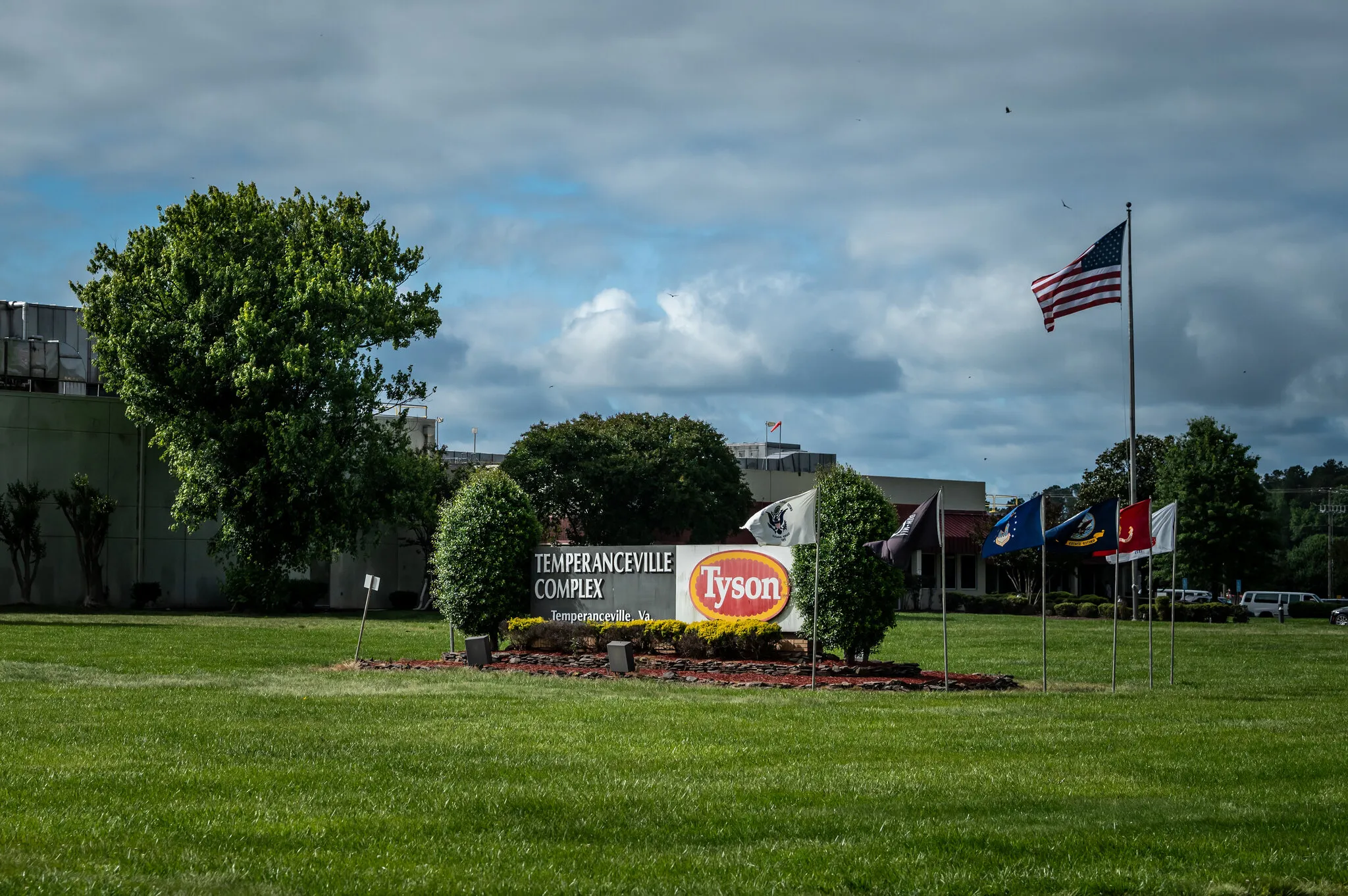
The arrest of a Haitian immigrant outside a poultry processing plant in Virginia has left many workers afraid to return to their jobs, raising concerns about how immigration enforcement could affect the businesses responsible for supplying chicken to grocery stores across the United States.
According to reporting by The New York Times, federal immigration agents arrested Frandrich Pierre, a Haitian asylum seeker, outside a Tyson Foods processing facility in Temperanceville, Virginia, on August 18, 2026.
Pierre had worked at the facility for approximately two years, earning $21 an hour sorting chicken parts. He reportedly held a valid work permit at the time of his arrest.
The incident was recorded by coworkers and quickly spread among Haitian workers at the plant, many of whom began questioning whether they could safely continue reporting to work.
Although Pierre was later released from immigration custody and has an upcoming asylum hearing, his arrest has had a lasting impact on workers who fear they could be detained despite having previously received permission to work in the United States.
The Tyson facility is located on Virginia’s Eastern Shore, part of the Delmarva Peninsula, which includes portions of Delaware, Maryland and Virginia.
The region is one of the country’s major poultry production centers, with large processing operations run by companies including Tyson Foods, Perdue Farms and Mountaire Farms.
For years, Haitian immigrants have been an important part of the workforce at these facilities, taking on demanding jobs that help keep poultry production moving.
Many workers came to the United States seeking safety and economic opportunities. Some have lived in the region for years, raising families and becoming part of the local community.
Now, increased immigration enforcement has created uncertainty for workers whose legal situations may be affected by changes to federal immigration policies.
Haiti’s Temporary Protected Status (TPS) designation has been the subject of efforts to terminate protections and ongoing legal challenges. Those developments have raised concerns among Haitian immigrants who previously relied on TPS to live and work in the United States.
However, TPS and asylum are different immigration processes. Holding a valid work permit does not automatically prevent someone from being detained by immigration authorities, and a person’s eligibility for removal depends on their individual circumstances and applicable court orders.
According to The New York Times, ICE agents have not conducted raids inside the poultry plants themselves. Instead, arrests outside workplaces and increased enforcement activity in surrounding communities have contributed to fear among employees.
Some Haitian workers have stopped reporting to work, while others are reportedly staying home or avoiding public places because they worry about being detained.
The situation has also created staffing concerns for poultry companies that depend on a steady workforce to process and distribute chicken.
Workers told the newspaper that businesses have been trying to recruit and train replacements as employees stop showing up.
Tyson has reportedly provided some employees with letters identifying them as essential workers and asking law enforcement to allow them to continue traveling to work.
One of the letters described employees’ work as important to the company’s continued operations.
However, such letters do not provide legal protection from immigration enforcement.
The newspaper reported that Tyson, Perdue and Mountaire did not respond to questions about how the enforcement activity was affecting their operations.
The concerns extend beyond Virginia.
A coalition of agricultural and food industry organizations recently warned President Donald Trump’s administration that immigration enforcement operations could disrupt the country’s food supply.
Food production depends on workers at every stage, from farms and processing facilities to transportation and distribution.
When companies struggle to maintain enough employees, they can face production delays, higher operating costs and disruptions that may eventually affect consumers.
However, the extent to which immigration enforcement is currently affecting national poultry production or grocery prices has not been established.
In Salisbury, Maryland, community members also gathered to protest immigration enforcement and express support for immigrant workers.
Residents argued that companies benefiting from immigrant labor should do more to support employees who have spent years helping those businesses operate.
For Haitian families, the situation is especially difficult because many workers are also worried about the possibility of being deported to Haiti, where armed gang violence and political instability continue to threaten communities.
The arrest of Frandrich Pierre has become more than an individual immigration case. It has brought attention to the uncertainty facing immigrant workers who play an important role in the country’s food industry.
While Pierre has been released, his immigration proceedings are not over, and many of his coworkers remain concerned about their own futures.
The situation also raises a larger question about how immigration enforcement will affect industries that have long depended on immigrant workers.
As the federal government continues its immigration operations, Haitian workers across the Delmarva Peninsula are facing difficult decisions about their safety, their jobs and their ability to support their families.




























Add Comment