




Add Comment

Click here to post a comment

Add a Comment

ADVERTISE WITH US

Categories

Featured In:


Instagram

@lunionsuite
#1 Haitian-American Platform®️

@lunionsuite

🇭🇹𝗖𝗼𝘂𝗻𝘁𝗿𝘆.𝗣𝗲𝗼𝗽𝗹𝗲.𝗖𝘂𝗹𝘁𝘂𝗿𝗲 👩🏽‍💻𝗘𝘀𝘁 2011 𝗯𝘆:@mrswanda ⌨️𝗙𝗕𝗼𝗼𝗸:#TheHaitianAmerican 𝗙𝗲𝗮𝘁:@forbes @bet @blackenterprise @nbcnews @nytimes @miamiherald +
  • For The Culture 🇭🇹🇭🇹 
When Grand Theft Auto VI launched on November 19, Haitian and Haitian-American players celebrated something more intentional than surface-level representation in La Perle, Vice City’s version of Little Haiti. The neighborhood doesn’t just borrow the name La Perle des Antilles. It carries the cultural identity of the real place through flags, murals featuring the map of Haiti and the national coat of arms, Creole text such as “Ayisyen fyè,” and businesses that echo the Caribbean Marketplace, cultural centers, and everyday spots that define Little Haiti.
That authenticity extends into how the world sounds and who helped shape it. Haitian-American rapper Kodak Black appears as himself and hosts the unlockable playlist The Sniper of La Perle. Haitian producer and DJ Michaël Brun presented and helped curate the program, which spans generations of Haitian music,  konpa classics from artists like Alan Cavé, Carimi, and Emeline Michel alongside contemporary voices, Haitian rap, and tracks from Kodak’s own catalog, including his collaboration with Brun. Brun has described the project as years in the making, aimed at giving players a genuine feel for the culture rather than a generic Caribbean mix. Rockstar also supported the real-world side by funding the free BAYO 10th-anniversary event in actual Little Haiti.
Haitian influence shows up in performance as well. Kreyol appears in ambient dialogue across the neighborhood, and Haitian and Haitian-American creative talent contributed to the game’s voices and music. The result is a neighborhood that feels considered rather than observed from the outside. Earlier entries in the series sometimes leaned on stereotypes that frustrated the community. La Perle lands differently because the cultural details, the soundtrack, and the involvement of Haitian creators run deeper than decoration.
For Haitian gamers, the excitement comes from that distinction. It’s not only that Little Haiti exists in one of the biggest games in the world. It’s that the version of it players encounter was shaped with Haitian voices, music, and the lived texture of the place.
#lunionsuite #haitianamerican #littlehaiti #GTA6
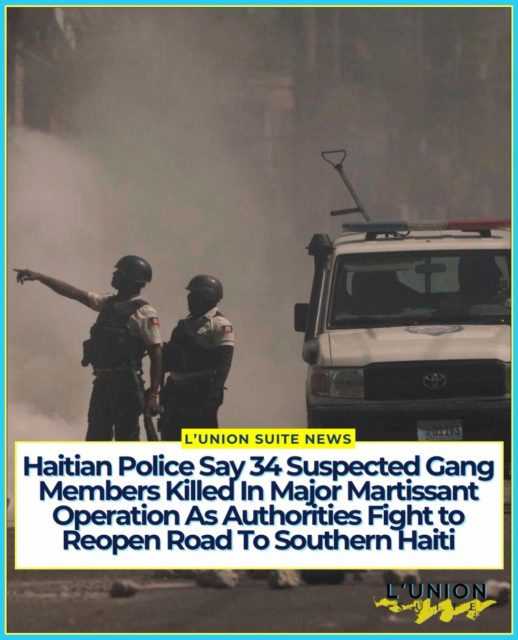
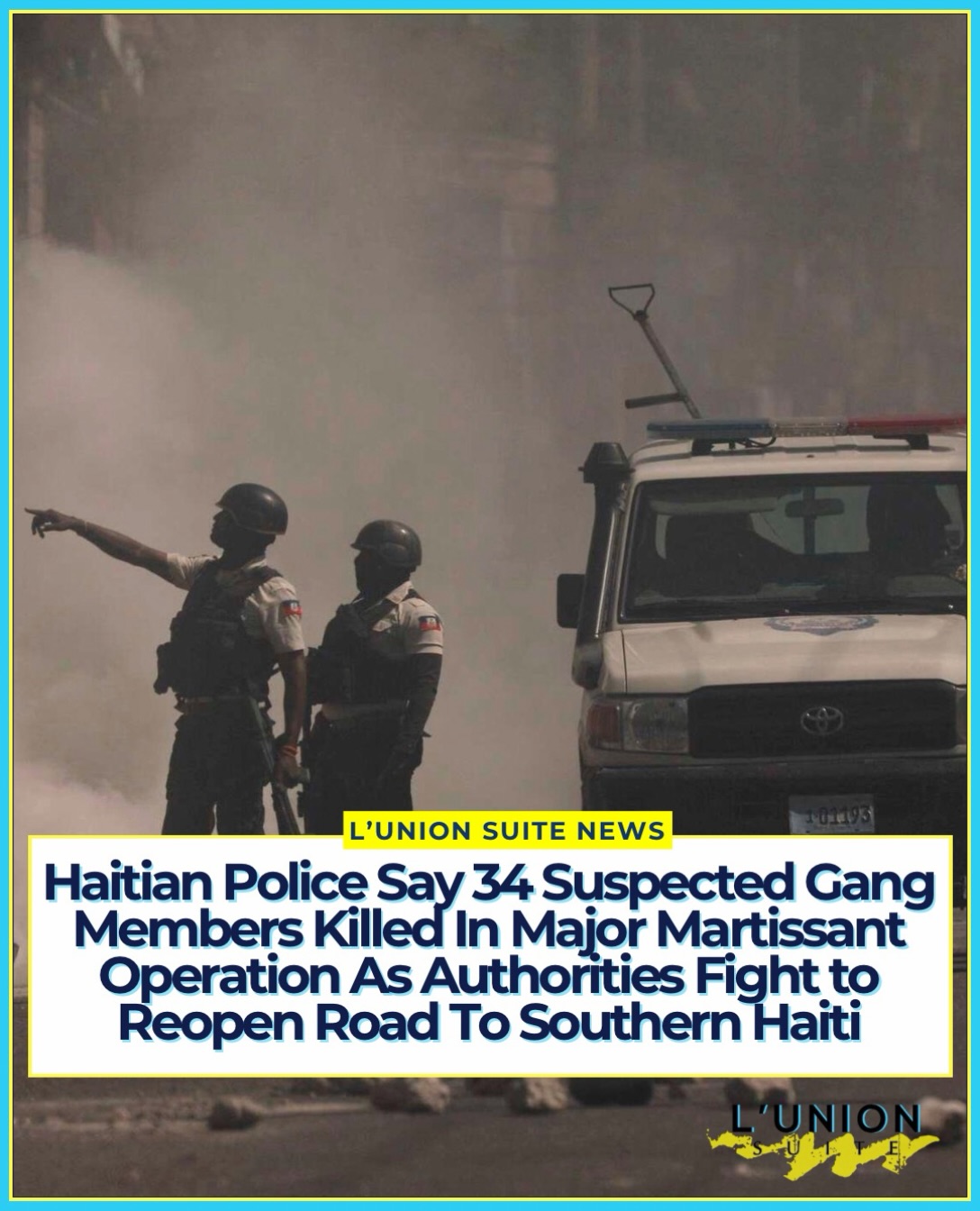
  • Haitian police say at least 34 suspected gang members were killed Thursday, November 19, during a major security operation in Martissant, an area of Port-au-Prince that has been under gang control for more than five years.
According to Reuters and the Associated Press, the Haitian National Police (PNH), working alongside a government anti-gang task force, launched the operation as part of efforts to regain control of the area and reopen one of Haiti’s most important roads.
Police say the operation targeted a hideout linked to Renel Destina, better known as Ti Lapli, leader of the Grand Ravine gang.
Footage released by the PNH shows armored vehicles moving through Martissant and a building collapsing following a large explosion. Reuters independently verified that the footage was filmed in Martissant.
Police reported that no officers or civilians were injured during the operation. However, the reported death toll and the absence of civilian casualties have not been independently verified.
Martissant is more than just another neighborhood affected by gang violence. It sits along National Route 2, a major road connecting Port-au-Prince to southern Haiti.
Since armed groups took control of the area in 2021, thousands of residents have been forced from their homes. Travelers have faced shootings, illegal toll checkpoints, and dangerous road conditions, making it difficult for families, businesses, and goods to move between the capital and the south.
The operation comes as Haitian authorities continue efforts to push armed groups out of communities and restore access to important roads.
Although police have reported significant casualties among suspected gang members, officials have not confirmed that Martissant has been fully secured or that National Route 2 has reopened.
For the thousands of Haitians who depend on this road, the hope is that these operations will eventually bring back something many have been without for years: the freedom to travel safely.
#lunionsuite #haitianamerican
  • Elon Musk is distancing himself from the MAGA movement and expressing regret over his massive political spending after Republicans suffered heavy losses in the 2026 midterm elections.⁠
⁠
Speaking via video from China at the New York Times DealBook Summit on November 18, Musk told interviewer Andrew Ross Sorkin, “I’m not MAGA.” He added, “I’m not sure what MAGA means, but if that means sort of blind adherence to a set of policies by the Republican Party, then I certainly don’t have that.”⁠
⁠
The comments mark a sharp contrast with Musk’s earlier posture. In 2024 he repeatedly called himself “dark MAGA” or “dark, gothic MAGA,” wore MAGA hats on the campaign trail, and spent hundreds of millions of dollars helping Donald Trump win reelection. He later ran the Department of Government Efficiency (DOGE) in the Trump administration.⁠
⁠
On his midterm spending, Musk was direct: “I feel pretty foolish about having spent so much money and not seeing much for it.” He said that if he could rewind the clock he would have spent less, while noting that elections “are not just about money” and that the outcome might have been worse for Republicans without his contributions.⁠
⁠
Musk was the cycle’s largest individual donor, contributing roughly $446–474 million (reports vary slightly) to Republican candidates and groups, including heavy spending in Texas races such as the Senate contest won by Democrat James Talarico over Republican Ken Paxton. Democrats captured both the House and Senate in a broad blue wave.⁠
⁠
Musk described his goal as preserving some checks and balances rather than securing a Republican supermajority, and he portrayed himself as “ideologically quite moderate” with “positives and negatives in both parties.” The remarks have drawn widespread attention and skepticism given his well-documented history of supporting Trump and the MAGA movement. The interview took place while Musk was accompanying President Trump on a trip to Asia for the APEC summit.⁠
⁠
\Video Source: @NYTImes⁠
#lunionsuite #haitianamerican #haitian
  • A piece of Haitian history that has been out of public view for more than a century is finally getting the attention it deserves.⁠
⁠
The Yale Peabody Museum in New Haven, Connecticut, has opened a new exhibition featuring historic portraits of the men who helped shape Haiti's independence and its early years as a nation.⁠
⁠
The exhibition, titled “Haiti in the Age of Revolutions: Lafargue Rigaud’s Portraits of Independence,” opened November 10, 2026. It features paintings created between 1877 and 1881 by Haitian artist Faustin Lafargue Rigaud.⁠
⁠
Among the historical figures represented are Jean-Jacques Dessalines, Toussaint Louverture, Henri Christophe, Alexandre Pétion, and Jean-Pierre Boyer.⁠
⁠
What makes this exhibition especially meaningful is the journey these paintings have taken.⁠
⁠
The portraits were last publicly exhibited at the World's Industrial and Cotton Centennial in New Orleans in 1884–1885. Instead of returning to Haiti, they eventually became part of the Smithsonian Institution's collection before being transferred to Yale.⁠
⁠
For decades, these important pieces of Haitian history remained largely unseen. At one point, Smithsonian curators even dismissed them as having no artistic or cultural value.⁠
⁠
Following Haiti's devastating 2010 earthquake, preservation specialists worked alongside Haitian conservators to restore the paintings and protect an important part of the country's cultural heritage.⁠
⁠
Now, more than 140 years after their last public exhibition, the portraits are being introduced to a new generation.⁠
⁠
The exhibition tells a story that goes beyond Haiti's revolution. It shows how Haitian leaders wanted their country to be recognized as a strong, independent nation at a time when much of the world still practiced slavery.⁠
⁠
For Haitians at home and throughout the diaspora, this is another opportunity to see our history represented beyond the headlines about violence, poverty, and political instability.⁠
⁠
Our history is also one of leadership, art, independence, and people who changed the world.⁠
⁠
Source: Yale Peabody Museum⁠
⁠
#lunionsuite #haitianamerican
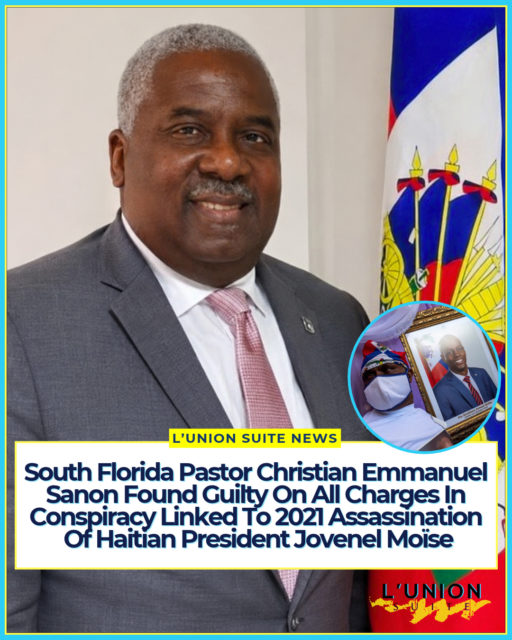
  • A federal jury in Miami convicted Haitian-American pastor Christian Emmanuel Sanon on Wednesday of all eight charges arising from the 2021 assassination of Haitian President Jovenel Moïse. The nearly 8-week trial ended with a guilty verdict after one day of deliberations, making Sanon the fifth defendant convicted in the sprawling U.S. case.⁠
⁠
Sanon, a dual Haitian-U.S. citizen in his late 60s who described himself as a doctor and pastor and who worked with churches in Haitian communities in Florida and the Midwest, faces a possible life sentence. Sentencing is scheduled for February 10. He remains in federal custody. His attorneys said they were disappointed, that he maintains his innocence, and that they plan to seek a new trial and appeal.⁠
⁠
Federal prosecutors described South Florida as a central hub for planning and financing the plot to remove Moïse and install a successor chosen by the conspirators. They said Sanon was the group’s initial candidate to replace the president. According to the government, he helped raise money for the operation, arranged travel and lodging in Haiti, and remained involved even after others decided he lacked the constitutional qualifications and popular support needed. Prosecutors also linked the plot to Florida-based security companies whose owners and associates were convicted in May, and to financing that included pandemic-related funds. Colombian former soldiers were hired and later carried out the attack.⁠
⁠
Moïse was killed in the early hours of July 7, 2021, when armed men, mostly retired Colombian soldiers, raided his home near Port-au-Prince. U.S. authorities have charged more than 40 people in connection with the case; earlier convictions include four South Florida men tied to CTU and financing. ⁠
⁠
In his own testimony, Sanon acknowledged communicating with people who wanted to replace Moïse but said the group had already shifted to another candidate long before the killing and that he had no knowledge of any plan to assassinate the president. Defense lawyers argued he was not part of a conspiracy to kill or kidnap Moïse and did not provide material support for such a plan. ⁠
⁠
#lunionsuite #haitianamerican
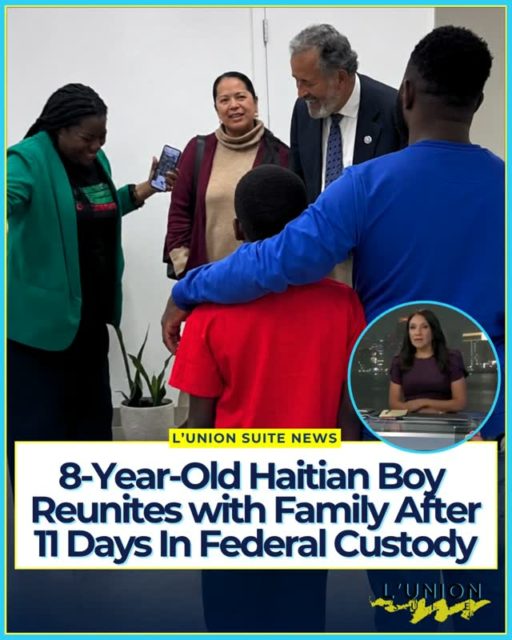
  • An 8-year-old Haitian boy is finally home. Nearly two weeks after he was taken into federal custody during a routine immigration check-in in San Diego, the third-grader has been reunited with his family, according to the Haitian Bridge Alliance.
The boy, a student at Fay Elementary School in City Heights, was taken into ICE custody on November 4 while attending the appointment with his uncle. He had been living with his uncle and cousins since his father was deported to Mexico in March 2025. Federal officials said the uncle could not immediately prove legal guardianship under the Trafficking Victims Protection Reauthorization Act, so ICE designated the child an unaccompanied minor and transferred him to Office of Refugee Resettlement care in Texas “out of an abundance of caution.”
After 11 days, he was released on November 16 once guardianship was established. The Haitian Bridge Alliance, which worked closely with the family and advocates to secure his return, confirmed the reunion. New “welcome home” signs now decorate the organization’s office.
The boy, his family, and the advocates who supported them all expressed relief and happiness after the difficult separation. Speaking with NBC 7, the boy shared that he loves Haitian food and hoped to have it for dinner the night he returned home. He also said he’s looking forward to going back to school this week, his favorite class is P.E.
Guerline Jozef, executive director of the Haitian Bridge Alliance, previously stated that an eight-year-old “belongs in a classroom, on a playground and surrounded by love, not in immigration detention,” adding that no child should face such trauma. Rep. Juan Vargas, who met the family during the reunion, described the emotional moment of pure joy as the boy and his relatives embraced.
While the family is grateful to have him home, advocates continue to call for answers about how the case was handled and for stronger protections so no other child endures a similar experience.
For now, one little boy is back where he belongs, with his family, looking forward to Haitian food, school, and simply being a kid again.
Video Source: @nbcsandiego
#lunionsuite #haitianamerican #haitian
  • Grand Theft Auto VI has given Haitian music a dedicated presence on the airwaves of its fictional Miami. The game features a secret, unlockable radio station and playlist called “The Sniper of La Perle,” hosted by Haitian-American rapper Kodak Black and presented by Haitian producer and DJ Michaël Brun. The station focuses on Haitian and Haitian-American artists.⁠
⁠
The station is one of the secret stations players must unlock through an in-game puzzle. Players can unlock “The Sniper of La Perle” by scanning four posters located in Vice City’s La Perle and Crosstown areas. Once unlocked, the station can be played in vehicles or through headphones.⁠
⁠
La Perle is the Haitian neighborhood in Vice City, Rockstar’s version of Miami. The name is a direct reference to Haiti’s historic nickname, La Perle des Antilles. Kodak Black serves as the host. He also appears as a non-playable character in the game. Rockstar featured a clear look-alike of the Pompano Beach rapper in official promotional screenshots at the Jack of Hearts nightclub, and Kodak Black publicly confirmed his involvement in the game on social media.⁠
⁠
Michaël Brun’s involvement centers on the Haitian music programming. In a conversation with our CEO ahead of the game’s release, Brun confirmed he had been working with Rockstar Games on the project for years and said a mixtape connected to the collaboration appears both in the game and as part of his Bayo events. Rockstar also supported Brun’s Bayo series by purchasing all the tickets for the free 10th-anniversary Bayo show in Little Haiti.⁠
“The Sniper of La Perle” features a multi-generational lineup of Haitian and Haitian-rooted artists. The playlist includes Wyclef Jean, Carimi, T-Vice, Emeline Michel, Zenglen, Alan Cavé, Djakout, Barikad Crew, Naïka, Zoey Dollaz, Roody Roodboy, Kodak Black, Michaël Brun, J Perry, John Wicks, King Posse, Top Adlerman, Black Dada, Billy Blue, DJ Platinum D, TonyMix, R Dydy, and 5Lan. Full official tracklists from Rockstar continue to emerge.
⁠
The station marks one of the most direct representations of Haitian music and culture in a major mainstream video game to date.⁠
⁠
#lunionsuite #haitianamerican
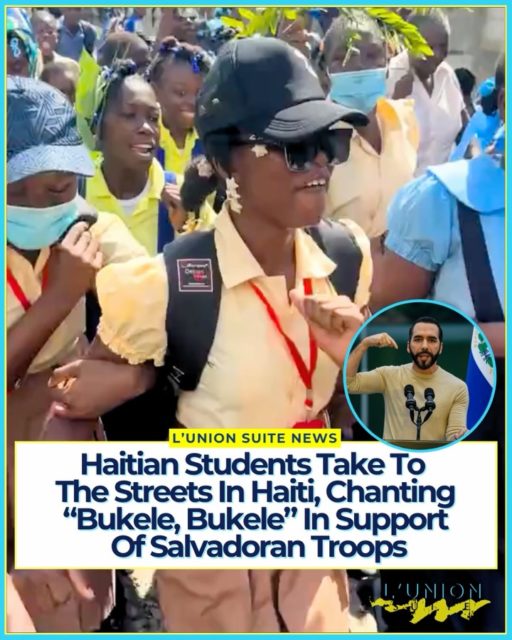
  • In a striking show of public support, hundreds of Haitian students in their school uniforms have joined marches across Port-au-Prince, Jacmel, Jérémie, and other cities this month, chanting “Bukele, Bukele” and “Viva Bukele” while waving flags and holding signs thanking Salvadoran President Nayib Bukele.
The demonstrations come after Bukele deployed more than 2,000 Salvadoran troops to Haiti following the disappearance of four Salvadoran aviation technicians in mid-October. Residents, including students who had been unable to attend school safely because of gang violence, have taken to the streets in successive days of marches to thank the Salvadoran forces and demand that they continue operations against the armed groups controlling large parts of the capital and surrounding areas.
Videos and images circulating widely show students in white or blue uniforms marching with Haitian flags, some carrying posters of Bukele, and chanting alongside adults. In Jacmel and other towns, students joined larger crowds waving branches and signs calling for continued action against the gangs. One viral clip captured students inside a school courtyard enthusiastically shouting Bukele’s name.
For many of the young participants, the marches represent a rare moment of hope after years of living under constant threat. Gangs have disrupted schooling, forced families from their homes, and left students unable to walk freely in their neighborhoods. Demonstrators of all ages have described the Salvadoran deployment as bringing a sense of relief that previous international missions had not delivered.
Bukele has publicly acknowledged the support, posting videos of the marches and responding in Haitian Creole that he hears the people clearly and that “we will triumph.” The energy from the students in the streets has become one of the most visible symbols of the popular backing for the anti-gang effort.
#lunionsuite #haitianamerican #haitian
  • New reports of explosive drone strikes in Martissant are raising questions about the latest security operations targeting armed gangs in Haiti's capital.⁠
⁠
According to Haitian news outlets Juno7 and Radio Télé Confiance, Haitian National Police (PNH) and a security task force have reportedly carried out operations in Martissant, an area that has been under the influence of armed groups for years.⁠
⁠
Radio Télé Confiance reports that explosions targeted Martissant 23 and surrounding areas, including territory associated with the armed group led by Johnson André, better known as Izo 5 Segond.⁠
⁠
A police source cited by the outlet claims that the PNH and Task Force, with support from Salvadoran troops, are working to target suspected gang hideouts and illegal toll checkpoints established in the area.⁠
⁠
These checkpoints have made travel increasingly difficult for residents who depend on roads connecting Port-au-Prince to southern Haiti.⁠
⁠
Juno7 also reported an operation in Martissant on November 19 involving the possible use of explosive drones. However, authorities have not released an official casualty count or confirmed whether any gang-controlled territory has been recovered.⁠
⁠
For years, families and businesses in Martissant and surrounding communities have faced violence, displacement, and restrictions on movement. The latest reported operations come amid continued efforts to restore security and reopen important roads.⁠
⁠
It remains unclear how much progress has been made or whether civilians were affected by the reported strikes.⁠
⁠
#lunionsuite #haitianamerican
  • Haiti has been living under the weight of armed gang violence for years, territory lost, roads blocked, families displaced, and daily life upended. In March 2025, the transitional government brought in Vectus Global, the private security firm run by Erik Prince (founder of the controversial Blackwater). The company has operated through a government-linked Task Force using drones, helicopters, and contractors under what has been described as a secretive multi-year arrangement that also included plans to eventually collect Haiti’s border taxes.⁠
⁠
Prince publicly set a benchmark: within about a year, Haitians should be able to drive from Port-au-Prince to Cap-Haïtien in an ordinary vehicle without being stopped by gangs. A March 2026 investigative report by Haiti’s anti-corruption organization FJKL put the one-year security commitment at approximately $52 million. The same report identified roughly $35.4 million in documented disbursements and flagged about $16.6 million that remained unaccounted for in the payment records reviewed.⁠
⁠
Nearly 20 months later, that road is still not freely passable. Gangs continue to control large parts of the capital region, major leaders have not been neutralized by the drone campaign, and violence has expanded into other departments. Human Rights Watch and UN reports have documented civilian deaths and injuries from drone strikes linked to these operations, including children. CNN’s October 17, reporting noted that more than 2,000 drone strikes had been conducted since the operation began in March 2025.⁠
⁠
In the last several weeks the picture has shifted. President Nayib Bukele rapidly deployed roughly 2,000 Salvadoran special forces troops, Black Hawks, and other assets, mostly under a bilateral arrangement outside the formal GSF structure and largely self-funded. They have conducted operations, helped recapture sites and other key locations.⁠
⁠
In a widely shared video, commentator Nicky (@Nickysaysyolo) put it bluntly: Haiti is sitting on some of the world’s most expensive receipts and may want to check the return policy. She asked whether the Haitian government should be demanding a refund from Erik Prince. ⁠
⁠
#lunionsuite
  • On the occasion of the 233rd anniversary of the Battle of Vertières, Prime Minister His Excellency Alix Didier Fils-Aimé presided this Wednesday at the National Palace over a solemn ceremony in tribute to the heroes of Haitian independence.⁠
⁠
In the presence of members of the Government, the diplomatic and consular corps, representatives of republican institutions, and senior officials of the Haitian National Police (PNH) and the Armed Forces of Haiti (FAd’H), the Head of Government paid tribute to the courage and sacrifice of the women and men who conquered freedom and established the nation’s sovereignty.⁠
⁠
In his address, he recalled the universal significance of Vertières as a symbol of the rejection of oppression and the triumph of human dignity. He particularly paid homage to Toussaint Louverture and the heroes of the Haitian Revolution.⁠
⁠
On the security front, the Prime Minister reaffirmed his Government’s determination to strengthen the operational capacities of the PNH and to rebuild a modern, professional, and republican army, announcing the training of 15,000 new soldiers over three years.⁠
⁠
He also renewed his commitment to restoring democratic order through the organization of elections, emphasizing that the legitimacy of future leaders must derive from popular suffrage.⁠
⁠
“I dream of a Haiti where our children study in peace, where our peasants cultivate their land without fear, where our young people build their future here, without being forced into exile. This dream is not a utopia; it is a national imperative,” concluded the Head of Government.⁠
⁠
Through this commemoration, the Government reaffirms its determination to restore the authority of the State, defend national sovereignty, and build strong institutions worthy of the legacy of Vertières and the aspirations of the Haitian people.⁠
⁠
#lunionsuite #haitianaerican #haitian
  • Caribbean literature takes center stage at the 2026 Miami Book Fair! 📚🌴⁠
⁠
On November 21–22, ReadCaribbean will bring together celebrated Caribbean authors for a weekend of conversations about culture, identity, family, grief, and storytelling at Miami Dade College’s Wolfson Campus in downtown Miami.⁠
⁠
The lineup includes award-winning Haitian-American author Edwidge Danticat, Tiphanie Yanique, and Micki Berthelot Morency, whose novel *I Shall Find You* follows a mother’s search for her daughter. Martinican writers Gaël Octavia and Alfred Alexandre will also join the conversations.⁠
⁠
With discussions in English, Haitian Creole, and French, ReadCaribbean offers readers an opportunity to discover new voices, connect with Caribbean authors, and celebrate the stories that reflect our communities.⁠
⁠
📍 Miami Dade College, Wolfson Campus⁠
📅 November 21–22, 2026⁠
miamibookfair.com/program/read-caribbean/⁠
⁠
#lunionsuite #haitianamerican #miamibookfair
For The Culture 🇭🇹🇭🇹 
When Grand Theft Auto VI launched on November 19, Haitian and Haitian-American players celebrated something more intentional than surface-level representation in La Perle, Vice City’s version of Little Haiti. The neighborhood doesn’t just borrow the name La Perle des Antilles. It carries the cultural identity of the real place through flags, murals featuring the map of Haiti and the national coat of arms, Creole text such as “Ayisyen fyè,” and businesses that echo the Caribbean Marketplace, cultural centers, and everyday spots that define Little Haiti.
That authenticity extends into how the world sounds and who helped shape it. Haitian-American rapper Kodak Black appears as himself and hosts the unlockable playlist The Sniper of La Perle. Haitian producer and DJ Michaël Brun presented and helped curate the program, which spans generations of Haitian music,  konpa classics from artists like Alan Cavé, Carimi, and Emeline Michel alongside contemporary voices, Haitian rap, and tracks from Kodak’s own catalog, including his collaboration with Brun. Brun has described the project as years in the making, aimed at giving players a genuine feel for the culture rather than a generic Caribbean mix. Rockstar also supported the real-world side by funding the free BAYO 10th-anniversary event in actual Little Haiti.
Haitian influence shows up in performance as well. Kreyol appears in ambient dialogue across the neighborhood, and Haitian and Haitian-American creative talent contributed to the game’s voices and music. The result is a neighborhood that feels considered rather than observed from the outside. Earlier entries in the series sometimes leaned on stereotypes that frustrated the community. La Perle lands differently because the cultural details, the soundtrack, and the involvement of Haitian creators run deeper than decoration.
For Haitian gamers, the excitement comes from that distinction. It’s not only that Little Haiti exists in one of the biggest games in the world. It’s that the version of it players encounter was shaped with Haitian voices, music, and the lived texture of the place.
#lunionsuite #haitianamerican #littlehaiti #GTA6
For The Culture 🇭🇹🇭🇹 When Grand Theft Auto VI launched on November 19, Haitian and Haitian-American players celebrated something more intentional than surface-level representation in La Perle, Vice City’s version of Little Haiti. The neighborhood doesn’t just borrow the name La Perle des Antilles. It carries the cultural identity of the real place through flags, murals featuring the map of Haiti and the national coat of arms, Creole text such as “Ayisyen fyè,” and businesses that echo the Caribbean Marketplace, cultural centers, and everyday spots that define Little Haiti. That authenticity extends into how the world sounds and who helped shape it. Haitian-American rapper Kodak Black appears as himself and hosts the unlockable playlist The Sniper of La Perle. Haitian producer and DJ Michaël Brun presented and helped curate the program, which spans generations of Haitian music, konpa classics from artists like Alan Cavé, Carimi, and Emeline Michel alongside contemporary voices, Haitian rap, and tracks from Kodak’s own catalog, including his collaboration with Brun. Brun has described the project as years in the making, aimed at giving players a genuine feel for the culture rather than a generic Caribbean mix. Rockstar also supported the real-world side by funding the free BAYO 10th-anniversary event in actual Little Haiti. Haitian influence shows up in performance as well. Kreyol appears in ambient dialogue across the neighborhood, and Haitian and Haitian-American creative talent contributed to the game’s voices and music. The result is a neighborhood that feels considered rather than observed from the outside. Earlier entries in the series sometimes leaned on stereotypes that frustrated the community. La Perle lands differently because the cultural details, the soundtrack, and the involvement of Haitian creators run deeper than decoration. For Haitian gamers, the excitement comes from that distinction. It’s not only that Little Haiti exists in one of the biggest games in the world. It’s that the version of it players encounter was shaped with Haitian voices, music, and the lived texture of the place. #lunionsuite #haitianamerican #littlehaiti #GTA6
3 hours ago
View on Instagram |
1/12
Haitian police say at least 34 suspected gang members were killed Thursday, November 19, during a major security operation in Martissant, an area of Port-au-Prince that has been under gang control for more than five years.
According to Reuters and the Associated Press, the Haitian National Police (PNH), working alongside a government anti-gang task force, launched the operation as part of efforts to regain control of the area and reopen one of Haiti’s most important roads.
Police say the operation targeted a hideout linked to Renel Destina, better known as Ti Lapli, leader of the Grand Ravine gang.
Footage released by the PNH shows armored vehicles moving through Martissant and a building collapsing following a large explosion. Reuters independently verified that the footage was filmed in Martissant.
Police reported that no officers or civilians were injured during the operation. However, the reported death toll and the absence of civilian casualties have not been independently verified.
Martissant is more than just another neighborhood affected by gang violence. It sits along National Route 2, a major road connecting Port-au-Prince to southern Haiti.
Since armed groups took control of the area in 2021, thousands of residents have been forced from their homes. Travelers have faced shootings, illegal toll checkpoints, and dangerous road conditions, making it difficult for families, businesses, and goods to move between the capital and the south.
The operation comes as Haitian authorities continue efforts to push armed groups out of communities and restore access to important roads.
Although police have reported significant casualties among suspected gang members, officials have not confirmed that Martissant has been fully secured or that National Route 2 has reopened.
For the thousands of Haitians who depend on this road, the hope is that these operations will eventually bring back something many have been without for years: the freedom to travel safely.
#lunionsuite #haitianamerican
Haitian police say at least 34 suspected gang members were killed Thursday, November 19, during a major security operation in Martissant, an area of Port-au-Prince that has been under gang control for more than five years. According to Reuters and the Associated Press, the Haitian National Police (PNH), working alongside a government anti-gang task force, launched the operation as part of efforts to regain control of the area and reopen one of Haiti’s most important roads. Police say the operation targeted a hideout linked to Renel Destina, better known as Ti Lapli, leader of the Grand Ravine gang. Footage released by the PNH shows armored vehicles moving through Martissant and a building collapsing following a large explosion. Reuters independently verified that the footage was filmed in Martissant. Police reported that no officers or civilians were injured during the operation. However, the reported death toll and the absence of civilian casualties have not been independently verified. Martissant is more than just another neighborhood affected by gang violence. It sits along National Route 2, a major road connecting Port-au-Prince to southern Haiti. Since armed groups took control of the area in 2021, thousands of residents have been forced from their homes. Travelers have faced shootings, illegal toll checkpoints, and dangerous road conditions, making it difficult for families, businesses, and goods to move between the capital and the south. The operation comes as Haitian authorities continue efforts to push armed groups out of communities and restore access to important roads. Although police have reported significant casualties among suspected gang members, officials have not confirmed that Martissant has been fully secured or that National Route 2 has reopened. For the thousands of Haitians who depend on this road, the hope is that these operations will eventually bring back something many have been without for years: the freedom to travel safely. #lunionsuite #haitianamerican
4 hours ago
View on Instagram |
2/12
Elon Musk is distancing himself from the MAGA movement and expressing regret over his massive political spending after Republicans suffered heavy losses in the 2026 midterm elections.⁠
⁠
Speaking via video from China at the New York Times DealBook Summit on November 18, Musk told interviewer Andrew Ross Sorkin, “I’m not MAGA.” He added, “I’m not sure what MAGA means, but if that means sort of blind adherence to a set of policies by the Republican Party, then I certainly don’t have that.”⁠
⁠
The comments mark a sharp contrast with Musk’s earlier posture. In 2024 he repeatedly called himself “dark MAGA” or “dark, gothic MAGA,” wore MAGA hats on the campaign trail, and spent hundreds of millions of dollars helping Donald Trump win reelection. He later ran the Department of Government Efficiency (DOGE) in the Trump administration.⁠
⁠
On his midterm spending, Musk was direct: “I feel pretty foolish about having spent so much money and not seeing much for it.” He said that if he could rewind the clock he would have spent less, while noting that elections “are not just about money” and that the outcome might have been worse for Republicans without his contributions.⁠
⁠
Musk was the cycle’s largest individual donor, contributing roughly $446–474 million (reports vary slightly) to Republican candidates and groups, including heavy spending in Texas races such as the Senate contest won by Democrat James Talarico over Republican Ken Paxton. Democrats captured both the House and Senate in a broad blue wave.⁠
⁠
Musk described his goal as preserving some checks and balances rather than securing a Republican supermajority, and he portrayed himself as “ideologically quite moderate” with “positives and negatives in both parties.” The remarks have drawn widespread attention and skepticism given his well-documented history of supporting Trump and the MAGA movement. The interview took place while Musk was accompanying President Trump on a trip to Asia for the APEC summit.⁠
⁠
\Video Source: @NYTImes⁠
#lunionsuite #haitianamerican #haitian
Elon Musk is distancing himself from the MAGA movement and expressing regret over his massive political spending after Republicans suffered heavy losses in the 2026 midterm elections.⁠ ⁠ Speaking via video from China at the New York Times DealBook Summit on November 18, Musk told interviewer Andrew Ross Sorkin, “I’m not MAGA.” He added, “I’m not sure what MAGA means, but if that means sort of blind adherence to a set of policies by the Republican Party, then I certainly don’t have that.”⁠ ⁠ The comments mark a sharp contrast with Musk’s earlier posture. In 2024 he repeatedly called himself “dark MAGA” or “dark, gothic MAGA,” wore MAGA hats on the campaign trail, and spent hundreds of millions of dollars helping Donald Trump win reelection. He later ran the Department of Government Efficiency (DOGE) in the Trump administration.⁠ ⁠ On his midterm spending, Musk was direct: “I feel pretty foolish about having spent so much money and not seeing much for it.” He said that if he could rewind the clock he would have spent less, while noting that elections “are not just about money” and that the outcome might have been worse for Republicans without his contributions.⁠ ⁠ Musk was the cycle’s largest individual donor, contributing roughly $446–474 million (reports vary slightly) to Republican candidates and groups, including heavy spending in Texas races such as the Senate contest won by Democrat James Talarico over Republican Ken Paxton. Democrats captured both the House and Senate in a broad blue wave.⁠ ⁠ Musk described his goal as preserving some checks and balances rather than securing a Republican supermajority, and he portrayed himself as “ideologically quite moderate” with “positives and negatives in both parties.” The remarks have drawn widespread attention and skepticism given his well-documented history of supporting Trump and the MAGA movement. The interview took place while Musk was accompanying President Trump on a trip to Asia for the APEC summit.⁠ ⁠ \Video Source: @NYTImes⁠ #lunionsuite #haitianamerican #haitian
5 hours ago
View on Instagram |
3/12
A piece of Haitian history that has been out of public view for more than a century is finally getting the attention it deserves.⁠
⁠
The Yale Peabody Museum in New Haven, Connecticut, has opened a new exhibition featuring historic portraits of the men who helped shape Haiti's independence and its early years as a nation.⁠
⁠
The exhibition, titled “Haiti in the Age of Revolutions: Lafargue Rigaud’s Portraits of Independence,” opened November 10, 2026. It features paintings created between 1877 and 1881 by Haitian artist Faustin Lafargue Rigaud.⁠
⁠
Among the historical figures represented are Jean-Jacques Dessalines, Toussaint Louverture, Henri Christophe, Alexandre Pétion, and Jean-Pierre Boyer.⁠
⁠
What makes this exhibition especially meaningful is the journey these paintings have taken.⁠
⁠
The portraits were last publicly exhibited at the World's Industrial and Cotton Centennial in New Orleans in 1884–1885. Instead of returning to Haiti, they eventually became part of the Smithsonian Institution's collection before being transferred to Yale.⁠
⁠
For decades, these important pieces of Haitian history remained largely unseen. At one point, Smithsonian curators even dismissed them as having no artistic or cultural value.⁠
⁠
Following Haiti's devastating 2010 earthquake, preservation specialists worked alongside Haitian conservators to restore the paintings and protect an important part of the country's cultural heritage.⁠
⁠
Now, more than 140 years after their last public exhibition, the portraits are being introduced to a new generation.⁠
⁠
The exhibition tells a story that goes beyond Haiti's revolution. It shows how Haitian leaders wanted their country to be recognized as a strong, independent nation at a time when much of the world still practiced slavery.⁠
⁠
For Haitians at home and throughout the diaspora, this is another opportunity to see our history represented beyond the headlines about violence, poverty, and political instability.⁠
⁠
Our history is also one of leadership, art, independence, and people who changed the world.⁠
⁠
Source: Yale Peabody Museum⁠
⁠
#lunionsuite #haitianamerican
A piece of Haitian history that has been out of public view for more than a century is finally getting the attention it deserves.⁠ ⁠ The Yale Peabody Museum in New Haven, Connecticut, has opened a new exhibition featuring historic portraits of the men who helped shape Haiti's independence and its early years as a nation.⁠ ⁠ The exhibition, titled “Haiti in the Age of Revolutions: Lafargue Rigaud’s Portraits of Independence,” opened November 10, 2026. It features paintings created between 1877 and 1881 by Haitian artist Faustin Lafargue Rigaud.⁠ ⁠ Among the historical figures represented are Jean-Jacques Dessalines, Toussaint Louverture, Henri Christophe, Alexandre Pétion, and Jean-Pierre Boyer.⁠ ⁠ What makes this exhibition especially meaningful is the journey these paintings have taken.⁠ ⁠ The portraits were last publicly exhibited at the World's Industrial and Cotton Centennial in New Orleans in 1884–1885. Instead of returning to Haiti, they eventually became part of the Smithsonian Institution's collection before being transferred to Yale.⁠ ⁠ For decades, these important pieces of Haitian history remained largely unseen. At one point, Smithsonian curators even dismissed them as having no artistic or cultural value.⁠ ⁠ Following Haiti's devastating 2010 earthquake, preservation specialists worked alongside Haitian conservators to restore the paintings and protect an important part of the country's cultural heritage.⁠ ⁠ Now, more than 140 years after their last public exhibition, the portraits are being introduced to a new generation.⁠ ⁠ The exhibition tells a story that goes beyond Haiti's revolution. It shows how Haitian leaders wanted their country to be recognized as a strong, independent nation at a time when much of the world still practiced slavery.⁠ ⁠ For Haitians at home and throughout the diaspora, this is another opportunity to see our history represented beyond the headlines about violence, poverty, and political instability.⁠ ⁠ Our history is also one of leadership, art, independence, and people who changed the world.⁠ ⁠ Source: Yale Peabody Museum⁠ ⁠ #lunionsuite #haitianamerican
9 hours ago
View on Instagram |
4/12
A federal jury in Miami convicted Haitian-American pastor Christian Emmanuel Sanon on Wednesday of all eight charges arising from the 2021 assassination of Haitian President Jovenel Moïse. The nearly 8-week trial ended with a guilty verdict after one day of deliberations, making Sanon the fifth defendant convicted in the sprawling U.S. case.⁠
⁠
Sanon, a dual Haitian-U.S. citizen in his late 60s who described himself as a doctor and pastor and who worked with churches in Haitian communities in Florida and the Midwest, faces a possible life sentence. Sentencing is scheduled for February 10. He remains in federal custody. His attorneys said they were disappointed, that he maintains his innocence, and that they plan to seek a new trial and appeal.⁠
⁠
Federal prosecutors described South Florida as a central hub for planning and financing the plot to remove Moïse and install a successor chosen by the conspirators. They said Sanon was the group’s initial candidate to replace the president. According to the government, he helped raise money for the operation, arranged travel and lodging in Haiti, and remained involved even after others decided he lacked the constitutional qualifications and popular support needed. Prosecutors also linked the plot to Florida-based security companies whose owners and associates were convicted in May, and to financing that included pandemic-related funds. Colombian former soldiers were hired and later carried out the attack.⁠
⁠
Moïse was killed in the early hours of July 7, 2021, when armed men, mostly retired Colombian soldiers, raided his home near Port-au-Prince. U.S. authorities have charged more than 40 people in connection with the case; earlier convictions include four South Florida men tied to CTU and financing. ⁠
⁠
In his own testimony, Sanon acknowledged communicating with people who wanted to replace Moïse but said the group had already shifted to another candidate long before the killing and that he had no knowledge of any plan to assassinate the president. Defense lawyers argued he was not part of a conspiracy to kill or kidnap Moïse and did not provide material support for such a plan. ⁠
⁠
#lunionsuite #haitianamerican
A federal jury in Miami convicted Haitian-American pastor Christian Emmanuel Sanon on Wednesday of all eight charges arising from the 2021 assassination of Haitian President Jovenel Moïse. The nearly 8-week trial ended with a guilty verdict after one day of deliberations, making Sanon the fifth defendant convicted in the sprawling U.S. case.⁠ ⁠ Sanon, a dual Haitian-U.S. citizen in his late 60s who described himself as a doctor and pastor and who worked with churches in Haitian communities in Florida and the Midwest, faces a possible life sentence. Sentencing is scheduled for February 10. He remains in federal custody. His attorneys said they were disappointed, that he maintains his innocence, and that they plan to seek a new trial and appeal.⁠ ⁠ Federal prosecutors described South Florida as a central hub for planning and financing the plot to remove Moïse and install a successor chosen by the conspirators. They said Sanon was the group’s initial candidate to replace the president. According to the government, he helped raise money for the operation, arranged travel and lodging in Haiti, and remained involved even after others decided he lacked the constitutional qualifications and popular support needed. Prosecutors also linked the plot to Florida-based security companies whose owners and associates were convicted in May, and to financing that included pandemic-related funds. Colombian former soldiers were hired and later carried out the attack.⁠ ⁠ Moïse was killed in the early hours of July 7, 2021, when armed men, mostly retired Colombian soldiers, raided his home near Port-au-Prince. U.S. authorities have charged more than 40 people in connection with the case; earlier convictions include four South Florida men tied to CTU and financing. ⁠ ⁠ In his own testimony, Sanon acknowledged communicating with people who wanted to replace Moïse but said the group had already shifted to another candidate long before the killing and that he had no knowledge of any plan to assassinate the president. Defense lawyers argued he was not part of a conspiracy to kill or kidnap Moïse and did not provide material support for such a plan. ⁠ ⁠ #lunionsuite #haitianamerican
22 hours ago
View on Instagram |
5/12
An 8-year-old Haitian boy is finally home. Nearly two weeks after he was taken into federal custody during a routine immigration check-in in San Diego, the third-grader has been reunited with his family, according to the Haitian Bridge Alliance. The boy, a student at Fay Elementary School in City Heights, was taken into ICE custody on November 4 while attending the appointment with his uncle. He had been living with his uncle and cousins since his father was deported to Mexico in March 2025. Federal officials said the uncle could not immediately prove legal guardianship under the Trafficking Victims Protection Reauthorization Act, so ICE designated the child an unaccompanied minor and transferred him to Office of Refugee Resettlement care in Texas “out of an abundance of caution.” After 11 days, he was released on November 16 once guardianship was established. The Haitian Bridge Alliance, which worked closely with the family and advocates to secure his return, confirmed the reunion. New “welcome home” signs now decorate the organization’s office. The boy, his family, and the advocates who supported them all expressed relief and happiness after the difficult separation. Speaking with NBC 7, the boy shared that he loves Haitian food and hoped to have it for dinner the night he returned home. He also said he’s looking forward to going back to school this week, his favorite class is P.E. Guerline Jozef, executive director of the Haitian Bridge Alliance, previously stated that an eight-year-old “belongs in a classroom, on a playground and surrounded by love, not in immigration detention,” adding that no child should face such trauma. Rep. Juan Vargas, who met the family during the reunion, described the emotional moment of pure joy as the boy and his relatives embraced. While the family is grateful to have him home, advocates continue to call for answers about how the case was handled and for stronger protections so no other child endures a similar experience. For now, one little boy is back where he belongs, with his family, looking forward to Haitian food, school, and simply being a kid again. Video Source: @nbcsandiego #lunionsuite #haitianamerican #haitian
23 hours ago
View on Instagram |
6/12
Grand Theft Auto VI has given Haitian music a dedicated presence on the airwaves of its fictional Miami. The game features a secret, unlockable radio station and playlist called “The Sniper of La Perle,” hosted by Haitian-American rapper Kodak Black and presented by Haitian producer and DJ Michaël Brun. The station focuses on Haitian and Haitian-American artists.⁠
⁠
The station is one of the secret stations players must unlock through an in-game puzzle. Players can unlock “The Sniper of La Perle” by scanning four posters located in Vice City’s La Perle and Crosstown areas. Once unlocked, the station can be played in vehicles or through headphones.⁠
⁠
La Perle is the Haitian neighborhood in Vice City, Rockstar’s version of Miami. The name is a direct reference to Haiti’s historic nickname, La Perle des Antilles. Kodak Black serves as the host. He also appears as a non-playable character in the game. Rockstar featured a clear look-alike of the Pompano Beach rapper in official promotional screenshots at the Jack of Hearts nightclub, and Kodak Black publicly confirmed his involvement in the game on social media.⁠
⁠
Michaël Brun’s involvement centers on the Haitian music programming. In a conversation with our CEO ahead of the game’s release, Brun confirmed he had been working with Rockstar Games on the project for years and said a mixtape connected to the collaboration appears both in the game and as part of his Bayo events. Rockstar also supported Brun’s Bayo series by purchasing all the tickets for the free 10th-anniversary Bayo show in Little Haiti.⁠
“The Sniper of La Perle” features a multi-generational lineup of Haitian and Haitian-rooted artists. The playlist includes Wyclef Jean, Carimi, T-Vice, Emeline Michel, Zenglen, Alan Cavé, Djakout, Barikad Crew, Naïka, Zoey Dollaz, Roody Roodboy, Kodak Black, Michaël Brun, J Perry, John Wicks, King Posse, Top Adlerman, Black Dada, Billy Blue, DJ Platinum D, TonyMix, R Dydy, and 5Lan. Full official tracklists from Rockstar continue to emerge.
⁠
The station marks one of the most direct representations of Haitian music and culture in a major mainstream video game to date.⁠
⁠
#lunionsuite #haitianamerican
Grand Theft Auto VI has given Haitian music a dedicated presence on the airwaves of its fictional Miami. The game features a secret, unlockable radio station and playlist called “The Sniper of La Perle,” hosted by Haitian-American rapper Kodak Black and presented by Haitian producer and DJ Michaël Brun. The station focuses on Haitian and Haitian-American artists.⁠ ⁠ The station is one of the secret stations players must unlock through an in-game puzzle. Players can unlock “The Sniper of La Perle” by scanning four posters located in Vice City’s La Perle and Crosstown areas. Once unlocked, the station can be played in vehicles or through headphones.⁠ ⁠ La Perle is the Haitian neighborhood in Vice City, Rockstar’s version of Miami. The name is a direct reference to Haiti’s historic nickname, La Perle des Antilles. Kodak Black serves as the host. He also appears as a non-playable character in the game. Rockstar featured a clear look-alike of the Pompano Beach rapper in official promotional screenshots at the Jack of Hearts nightclub, and Kodak Black publicly confirmed his involvement in the game on social media.⁠ ⁠ Michaël Brun’s involvement centers on the Haitian music programming. In a conversation with our CEO ahead of the game’s release, Brun confirmed he had been working with Rockstar Games on the project for years and said a mixtape connected to the collaboration appears both in the game and as part of his Bayo events. Rockstar also supported Brun’s Bayo series by purchasing all the tickets for the free 10th-anniversary Bayo show in Little Haiti.⁠ “The Sniper of La Perle” features a multi-generational lineup of Haitian and Haitian-rooted artists. The playlist includes Wyclef Jean, Carimi, T-Vice, Emeline Michel, Zenglen, Alan Cavé, Djakout, Barikad Crew, Naïka, Zoey Dollaz, Roody Roodboy, Kodak Black, Michaël Brun, J Perry, John Wicks, King Posse, Top Adlerman, Black Dada, Billy Blue, DJ Platinum D, TonyMix, R Dydy, and 5Lan. Full official tracklists from Rockstar continue to emerge. ⁠ The station marks one of the most direct representations of Haitian music and culture in a major mainstream video game to date.⁠ ⁠ #lunionsuite #haitianamerican
1 day ago
View on Instagram |
7/12
In a striking show of public support, hundreds of Haitian students in their school uniforms have joined marches across Port-au-Prince, Jacmel, Jérémie, and other cities this month, chanting “Bukele, Bukele” and “Viva Bukele” while waving flags and holding signs thanking Salvadoran President Nayib Bukele. The demonstrations come after Bukele deployed more than 2,000 Salvadoran troops to Haiti following the disappearance of four Salvadoran aviation technicians in mid-October. Residents, including students who had been unable to attend school safely because of gang violence, have taken to the streets in successive days of marches to thank the Salvadoran forces and demand that they continue operations against the armed groups controlling large parts of the capital and surrounding areas. Videos and images circulating widely show students in white or blue uniforms marching with Haitian flags, some carrying posters of Bukele, and chanting alongside adults. In Jacmel and other towns, students joined larger crowds waving branches and signs calling for continued action against the gangs. One viral clip captured students inside a school courtyard enthusiastically shouting Bukele’s name. For many of the young participants, the marches represent a rare moment of hope after years of living under constant threat. Gangs have disrupted schooling, forced families from their homes, and left students unable to walk freely in their neighborhoods. Demonstrators of all ages have described the Salvadoran deployment as bringing a sense of relief that previous international missions had not delivered. Bukele has publicly acknowledged the support, posting videos of the marches and responding in Haitian Creole that he hears the people clearly and that “we will triumph.” The energy from the students in the streets has become one of the most visible symbols of the popular backing for the anti-gang effort. #lunionsuite #haitianamerican #haitian
1 day ago
View on Instagram |
8/12
New reports of explosive drone strikes in Martissant are raising questions about the latest security operations targeting armed gangs in Haiti's capital.⁠
⁠
According to Haitian news outlets Juno7 and Radio Télé Confiance, Haitian National Police (PNH) and a security task force have reportedly carried out operations in Martissant, an area that has been under the influence of armed groups for years.⁠
⁠
Radio Télé Confiance reports that explosions targeted Martissant 23 and surrounding areas, including territory associated with the armed group led by Johnson André, better known as Izo 5 Segond.⁠
⁠
A police source cited by the outlet claims that the PNH and Task Force, with support from Salvadoran troops, are working to target suspected gang hideouts and illegal toll checkpoints established in the area.⁠
⁠
These checkpoints have made travel increasingly difficult for residents who depend on roads connecting Port-au-Prince to southern Haiti.⁠
⁠
Juno7 also reported an operation in Martissant on November 19 involving the possible use of explosive drones. However, authorities have not released an official casualty count or confirmed whether any gang-controlled territory has been recovered.⁠
⁠
For years, families and businesses in Martissant and surrounding communities have faced violence, displacement, and restrictions on movement. The latest reported operations come amid continued efforts to restore security and reopen important roads.⁠
⁠
It remains unclear how much progress has been made or whether civilians were affected by the reported strikes.⁠
⁠
#lunionsuite #haitianamerican
New reports of explosive drone strikes in Martissant are raising questions about the latest security operations targeting armed gangs in Haiti's capital.⁠ ⁠ According to Haitian news outlets Juno7 and Radio Télé Confiance, Haitian National Police (PNH) and a security task force have reportedly carried out operations in Martissant, an area that has been under the influence of armed groups for years.⁠ ⁠ Radio Télé Confiance reports that explosions targeted Martissant 23 and surrounding areas, including territory associated with the armed group led by Johnson André, better known as Izo 5 Segond.⁠ ⁠ A police source cited by the outlet claims that the PNH and Task Force, with support from Salvadoran troops, are working to target suspected gang hideouts and illegal toll checkpoints established in the area.⁠ ⁠ These checkpoints have made travel increasingly difficult for residents who depend on roads connecting Port-au-Prince to southern Haiti.⁠ ⁠ Juno7 also reported an operation in Martissant on November 19 involving the possible use of explosive drones. However, authorities have not released an official casualty count or confirmed whether any gang-controlled territory has been recovered.⁠ ⁠ For years, families and businesses in Martissant and surrounding communities have faced violence, displacement, and restrictions on movement. The latest reported operations come amid continued efforts to restore security and reopen important roads.⁠ ⁠ It remains unclear how much progress has been made or whether civilians were affected by the reported strikes.⁠ ⁠ #lunionsuite #haitianamerican
1 day ago
View on Instagram |
9/12
Haiti has been living under the weight of armed gang violence for years, territory lost, roads blocked, families displaced, and daily life upended. In March 2025, the transitional government brought in Vectus Global, the private security firm run by Erik Prince (founder of the controversial Blackwater). The company has operated through a government-linked Task Force using drones, helicopters, and contractors under what has been described as a secretive multi-year arrangement that also included plans to eventually collect Haiti’s border taxes.⁠ ⁠ Prince publicly set a benchmark: within about a year, Haitians should be able to drive from Port-au-Prince to Cap-Haïtien in an ordinary vehicle without being stopped by gangs. A March 2026 investigative report by Haiti’s anti-corruption organization FJKL put the one-year security commitment at approximately $52 million. The same report identified roughly $35.4 million in documented disbursements and flagged about $16.6 million that remained unaccounted for in the payment records reviewed.⁠ ⁠ Nearly 20 months later, that road is still not freely passable. Gangs continue to control large parts of the capital region, major leaders have not been neutralized by the drone campaign, and violence has expanded into other departments. Human Rights Watch and UN reports have documented civilian deaths and injuries from drone strikes linked to these operations, including children. CNN’s October 17, reporting noted that more than 2,000 drone strikes had been conducted since the operation began in March 2025.⁠ ⁠ In the last several weeks the picture has shifted. President Nayib Bukele rapidly deployed roughly 2,000 Salvadoran special forces troops, Black Hawks, and other assets, mostly under a bilateral arrangement outside the formal GSF structure and largely self-funded. They have conducted operations, helped recapture sites and other key locations.⁠ ⁠ In a widely shared video, commentator Nicky (@Nickysaysyolo) put it bluntly: Haiti is sitting on some of the world’s most expensive receipts and may want to check the return policy. She asked whether the Haitian government should be demanding a refund from Erik Prince. ⁠ ⁠ #lunionsuite
1 day ago
View on Instagram |
10/12
On the occasion of the 233rd anniversary of the Battle of Vertières, Prime Minister His Excellency Alix Didier Fils-Aimé presided this Wednesday at the National Palace over a solemn ceremony in tribute to the heroes of Haitian independence.⁠
⁠
In the presence of members of the Government, the diplomatic and consular corps, representatives of republican institutions, and senior officials of the Haitian National Police (PNH) and the Armed Forces of Haiti (FAd’H), the Head of Government paid tribute to the courage and sacrifice of the women and men who conquered freedom and established the nation’s sovereignty.⁠
⁠
In his address, he recalled the universal significance of Vertières as a symbol of the rejection of oppression and the triumph of human dignity. He particularly paid homage to Toussaint Louverture and the heroes of the Haitian Revolution.⁠
⁠
On the security front, the Prime Minister reaffirmed his Government’s determination to strengthen the operational capacities of the PNH and to rebuild a modern, professional, and republican army, announcing the training of 15,000 new soldiers over three years.⁠
⁠
He also renewed his commitment to restoring democratic order through the organization of elections, emphasizing that the legitimacy of future leaders must derive from popular suffrage.⁠
⁠
“I dream of a Haiti where our children study in peace, where our peasants cultivate their land without fear, where our young people build their future here, without being forced into exile. This dream is not a utopia; it is a national imperative,” concluded the Head of Government.⁠
⁠
Through this commemoration, the Government reaffirms its determination to restore the authority of the State, defend national sovereignty, and build strong institutions worthy of the legacy of Vertières and the aspirations of the Haitian people.⁠
⁠
#lunionsuite #haitianaerican #haitian
On the occasion of the 233rd anniversary of the Battle of Vertières, Prime Minister His Excellency Alix Didier Fils-Aimé presided this Wednesday at the National Palace over a solemn ceremony in tribute to the heroes of Haitian independence.⁠ ⁠ In the presence of members of the Government, the diplomatic and consular corps, representatives of republican institutions, and senior officials of the Haitian National Police (PNH) and the Armed Forces of Haiti (FAd’H), the Head of Government paid tribute to the courage and sacrifice of the women and men who conquered freedom and established the nation’s sovereignty.⁠ ⁠ In his address, he recalled the universal significance of Vertières as a symbol of the rejection of oppression and the triumph of human dignity. He particularly paid homage to Toussaint Louverture and the heroes of the Haitian Revolution.⁠ ⁠ On the security front, the Prime Minister reaffirmed his Government’s determination to strengthen the operational capacities of the PNH and to rebuild a modern, professional, and republican army, announcing the training of 15,000 new soldiers over three years.⁠ ⁠ He also renewed his commitment to restoring democratic order through the organization of elections, emphasizing that the legitimacy of future leaders must derive from popular suffrage.⁠ ⁠ “I dream of a Haiti where our children study in peace, where our peasants cultivate their land without fear, where our young people build their future here, without being forced into exile. This dream is not a utopia; it is a national imperative,” concluded the Head of Government.⁠ ⁠ Through this commemoration, the Government reaffirms its determination to restore the authority of the State, defend national sovereignty, and build strong institutions worthy of the legacy of Vertières and the aspirations of the Haitian people.⁠ ⁠ #lunionsuite #haitianaerican #haitian
1 day ago
View on Instagram |
11/12
Caribbean literature takes center stage at the 2026 Miami Book Fair! 📚🌴⁠
⁠
On November 21–22, ReadCaribbean will bring together celebrated Caribbean authors for a weekend of conversations about culture, identity, family, grief, and storytelling at Miami Dade College’s Wolfson Campus in downtown Miami.⁠
⁠
The lineup includes award-winning Haitian-American author Edwidge Danticat, Tiphanie Yanique, and Micki Berthelot Morency, whose novel *I Shall Find You* follows a mother’s search for her daughter. Martinican writers Gaël Octavia and Alfred Alexandre will also join the conversations.⁠
⁠
With discussions in English, Haitian Creole, and French, ReadCaribbean offers readers an opportunity to discover new voices, connect with Caribbean authors, and celebrate the stories that reflect our communities.⁠
⁠
📍 Miami Dade College, Wolfson Campus⁠
📅 November 21–22, 2026⁠
miamibookfair.com/program/read-caribbean/⁠
⁠
#lunionsuite #haitianamerican #miamibookfair
Caribbean literature takes center stage at the 2026 Miami Book Fair! 📚🌴⁠ ⁠ On November 21–22, ReadCaribbean will bring together celebrated Caribbean authors for a weekend of conversations about culture, identity, family, grief, and storytelling at Miami Dade College’s Wolfson Campus in downtown Miami.⁠ ⁠ The lineup includes award-winning Haitian-American author Edwidge Danticat, Tiphanie Yanique, and Micki Berthelot Morency, whose novel *I Shall Find You* follows a mother’s search for her daughter. Martinican writers Gaël Octavia and Alfred Alexandre will also join the conversations.⁠ ⁠ With discussions in English, Haitian Creole, and French, ReadCaribbean offers readers an opportunity to discover new voices, connect with Caribbean authors, and celebrate the stories that reflect our communities.⁠ ⁠ 📍 Miami Dade College, Wolfson Campus⁠ 📅 November 21–22, 2026⁠ miamibookfair.com/program/read-caribbean/⁠ ⁠ #lunionsuite #haitianamerican #miamibookfair
1 day ago
View on Instagram |
12/12