




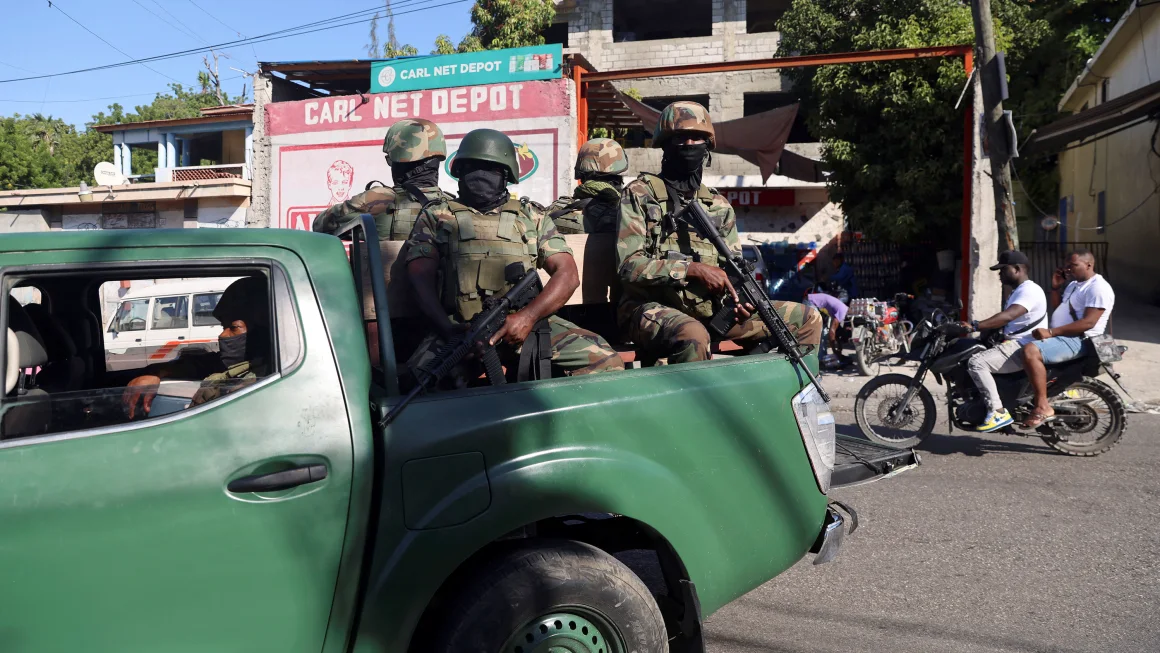
The United Nations Security Council voted Tuesday to dramatically expand international security operations in Haiti, approving the creation of a 5,550-member “Gang Suppression Force” (GSF) with broad new powers to detain suspects and conduct targeted counter-gang operations.
The resolution, co-sponsored by the United States and Panama, passed with 12 votes in favor and three abstentions from Russia, China, and Pakistan—avoiding a veto from any of the Council’s permanent members. Acting under Chapter VII of the UN Charter, which grants authority to address threats to international peace, the Council authorized the GSF to “take all necessary measures” to neutralize, isolate, and deter armed groups destabilizing Haiti.
This move marks a major escalation from the existing Kenya-led Multinational Security Support (MSS) mission, which has focused largely on training and advising Haiti’s National Police (HNP). Unlike its predecessor, the GSF will have explicit authority to detain suspected gang members, addressing a gap that has long frustrated efforts to reduce violence.
The newly authorized force will consist of up to 5,500 uniformed personnel—both military and police—alongside 50 civilian staff, more than doubling the MSS’s original 2,500-troop mandate. A new UN Support Office in Haiti (UNSOH) will provide logistics, including rations, fuel, medical supplies, and equipment reimbursements, while ensuring compliance with the UN’s Human Rights Due Diligence Policy. Funding will remain voluntary, relying on contributions from member states.
The mandate, set for an initial 12 months, also requires regular updates from UN Secretary-General António Guterres. Within nine months, the GSF’s appointed special representative must present a comprehensive strategy with benchmarks for success.
For Haiti, where armed gangs control much of Port-au-Prince and have paralyzed key infrastructure, the decision represents the strongest international intervention in years. Supporters argue the GSF could tip the balance in restoring order and creating conditions for long-delayed elections, while critics caution about the risks of mission overreach and long-term dependency.