




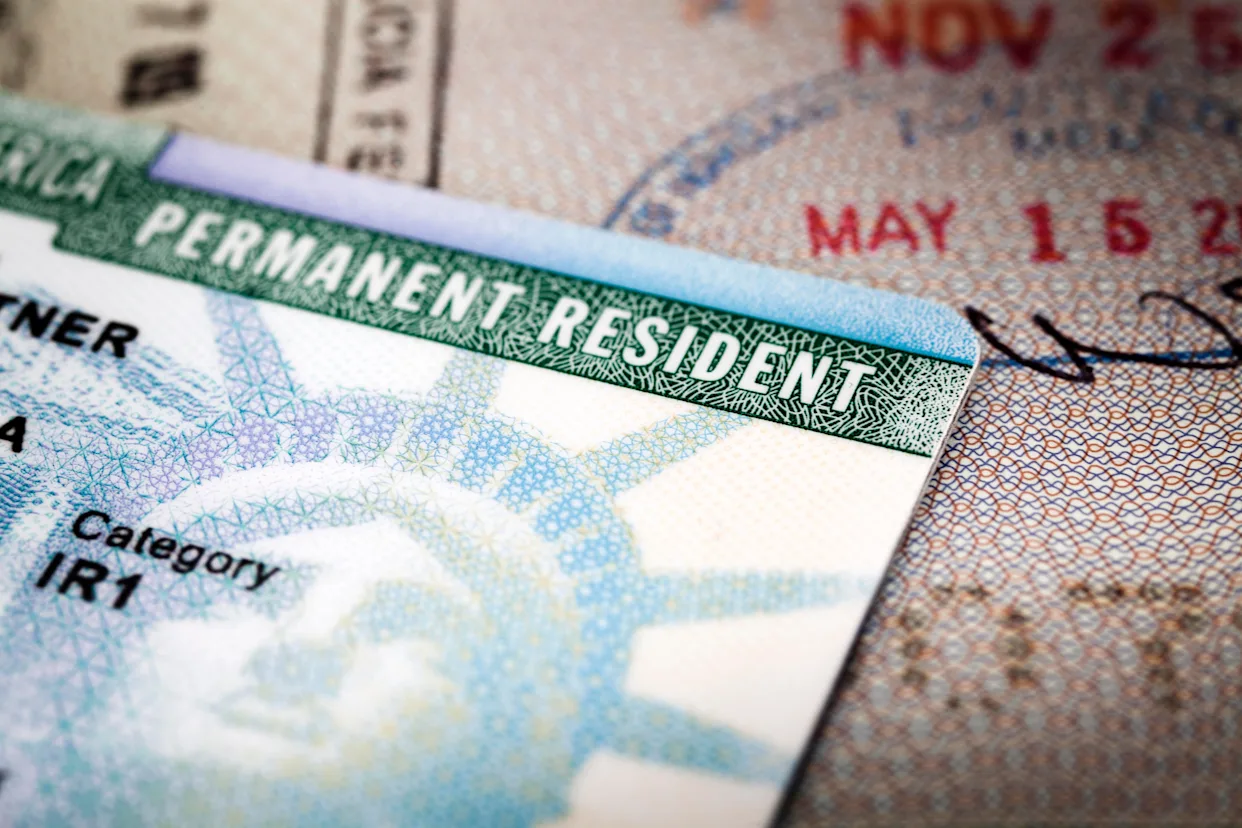
On Friday, May 22, 2026, U.S. Citizenship and Immigration Services (USCIS) issued a new policy memorandum significantly restricting the use of adjustment of status — the process that allows eligible individuals already in the United States to apply for a green card without leaving the country.
Under the new policy, adjustment of status will generally only be granted in “extraordinary circumstances.” Most green card applicants will now be required to return to their home countries and complete the process through consular processing at a U.S. embassy or consulate.
The policy applies to many categories of green card seekers, including those currently in the U.S. on temporary visas such as work (H-1B), student (F-1), and family-based visas. Applicants will now be expected to depart the United States during the application process, a shift that is expected to create major disruptions for hundreds of thousands of legal immigrants.
USCIS spokesperson Zach Kahler stated that exemptions will be reviewed on a case-by-case basis and granted only under extraordinary circumstances. While adjustment of status is not completely eliminated, it is now positioned as a rare form of discretionary relief rather than the standard pathway.
The Trump administration describes this change as a return to the original intent of U.S. immigration law. Officials argue the policy will strengthen vetting procedures, reduce the transition from temporary to permanent status, and better protect national security and public resources. This move aligns with broader 2025–2026 immigration enforcement efforts, including pauses on immigrant visas for nationals of 75 countries, including Haiti.
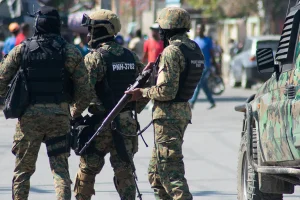
For the Haitian-American community, this policy creates significant new challenges. Forcing applicants to return to Haiti for consular processing introduces serious risks due to the country’s ongoing security crisis, lengthy delays at U.S. consular posts, and the potential for prolonged family separations.
Many families now face difficult decisions regarding employment, education, and long-term stability as they navigate this stricter immigration landscape.



![Grammy-winning producer and Haitian cultural ambassador Michaël Brun is bringing BAYO back to Miami’s Little Haiti on November 22, for a free block party celebrating the movement’s 10th anniversary, made possible through a major partnership with Rockstar Games.
Presented with support from Rockstar Games, the company behind the #GrandTheftAuto (https://www.instagram.com/explore/tags/grandtheftauto/) franchise, the event will welcome up to 7,500 attendees, the largest Little Haiti edition to date. Admission is free, with tickets distributed through a raffle and more than half reserved specifically for Florida residents and Haitian communities. Fans can sign up now at [bayotour.com]
In announcing the return, Brun said: “10 years ago, BAYO made its US debut as a free block party in Little Haiti celebrating Haitian and Caribbean culture. That show was the beginning of a beautiful journey across 12 cities, over 50,000 tickets sold, multiple arena and park shows and over 140 artist guests from around the world. I’m so proud to be bringing BAYO back to Little Haiti for our biggest show ever on November 22nd. New venue, huge surprises, our most iconic lineup of all time and FREE tickets courtesy of Rockstar Games.”
The timing adds another layer of visibility. Rockstar Games’ highly anticipated GTA VI is set for release on November 19, 2026, just three days before the BAYO celebration. The game’s fictional Vice City is famously inspired by Miami, placing the partnership and the Little Haiti event in the same cultural spotlight.
The Little Haiti return closes an anniversary run that already included Boston’s Agganis Arena and a sold-out three-night residency at Brooklyn Paramount. With Rockstar Games’ support making the celebration free and accessible, the 10th anniversary returns full circle to the neighborhood where BAYO began, bringing music, culture, and community together on a bigger stage.
#lunionsuite #haitianamerican](https://www.lunionsuite.com/wp-content/uploads/2015/04/857202981_18645558742023307_1930732005552624620_n-512x640.jpg)



![Grammy-winning producer and Haitian cultural ambassador Michaël Brun is bringing BAYO back to Miami’s Little Haiti on November 22, for a free block party celebrating the movement’s 10th anniversary, made possible through a major partnership with Rockstar Games.
Presented with support from Rockstar Games, the company behind the #GrandTheftAuto (https://www.instagram.com/explore/tags/grandtheftauto/) franchise, the event will welcome up to 7,500 attendees, the largest Little Haiti edition to date. Admission is free, with tickets distributed through a raffle and more than half reserved specifically for Florida residents and Haitian communities. Fans can sign up now at [bayotour.com]
In announcing the return, Brun said: “10 years ago, BAYO made its US debut as a free block party in Little Haiti celebrating Haitian and Caribbean culture. That show was the beginning of a beautiful journey across 12 cities, over 50,000 tickets sold, multiple arena and park shows and over 140 artist guests from around the world. I’m so proud to be bringing BAYO back to Little Haiti for our biggest show ever on November 22nd. New venue, huge surprises, our most iconic lineup of all time and FREE tickets courtesy of Rockstar Games.”
The timing adds another layer of visibility. Rockstar Games’ highly anticipated GTA VI is set for release on November 19, 2026, just three days before the BAYO celebration. The game’s fictional Vice City is famously inspired by Miami, placing the partnership and the Little Haiti event in the same cultural spotlight.
The Little Haiti return closes an anniversary run that already included Boston’s Agganis Arena and a sold-out three-night residency at Brooklyn Paramount. With Rockstar Games’ support making the celebration free and accessible, the 10th anniversary returns full circle to the neighborhood where BAYO began, bringing music, culture, and community together on a bigger stage.
#lunionsuite #haitianamerican](https://scontent-yyz1-1.cdninstagram.com/v/t51.82787-15/858197944_18645558700023307_686072295350904763_n.jpg?stp=dst-jpg_e35_tt6&_nc_cat=100&ccb=7-5&_nc_sid=18de74&efg=eyJlZmdfdGFnIjoiQ0FST1VTRUxfSVRFTS5iZXN0X2ltYWdlX3VybGdlbi5DMyJ9&_nc_ohc=bOQ5XMx_Z1YQ7kNvwGG7S4C&_nc_oc=AdpRGLfZNHddto393TLgTmmy4hfWc5JLTXDdw5hgJXVgYUpW7ZDy46ppArbX5fDarcg&_nc_zt=23&_nc_ht=scontent-yyz1-1.cdninstagram.com&edm=ANo9K5cEAAAA&_nc_gid=IjrD1n26WASdTbFx3uPZVA&_nc_tpa=Q5bMBQIdb0B-FcHr3ubOf5s_qLMbbunjaDo1PV4JA6meh9pbikQhVXYdXZsHywDWhDEUUE1oISm6-ls_&oh=00_AQMvOA4ePtnwiwl5OMsIT7Hvy2IuXpYnuL7A1t1YkqfPtQ&oe=6ADD8873)