






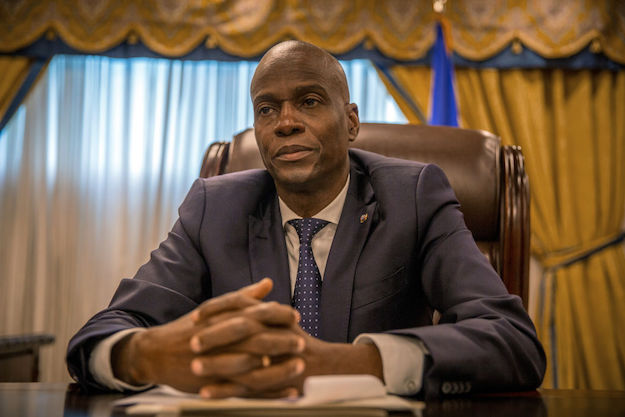
Jean Roger Noëlcius testifies warrant lacked legal authority, was backdated, and could not be executed by private individuals or foreigners
Miami, FL – February 21, 2026 A former Haitian investigating judge has acknowledged in sworn testimony that an arrest warrant he signed — cited by suspects as justification for the July 7, 2021, assassination of President Jovenel Moïse — was invalid and lacked any legal authority.
During a deposition in Miami federal court on Friday, February 20, Jean Roger Noëlcius admitted he signed the document, affixed an official seal, and backdated it to February 18, 2019. The warrant accused Moïse of “assassination” (or plotting murder). Noëlcius testified that under Haitian law, he had no authority to issue such a warrant against a sitting head of state, nor to effectuate his removal from office.
He further stated that neither private individuals nor foreigners could legally execute arrest warrants in Haiti — a role reserved exclusively for the Haitian National Police.
The warrant played a central role in the events surrounding Moïse’s death. Suspects in the assassination — including Colombian mercenaries and Haitian-American operatives who posed as U.S. Drug Enforcement Administration agents — repeatedly referenced the document (along with a related letter sent to then-U.S. Ambassador Michele Sison acknowledging its existence) as their stated reason for traveling to Haiti: to arrest Moïse rather than kill him. A crumpled copy of the warrant was later recovered from locations linked to the plotters.
The document had previously surfaced in an earlier, unsuccessful attempt to oust Moïse during a foiled coup attempt on February 7, 2021, amid disputes over the end of his presidential term (opponents claimed it expired that day, while the U.S. and others maintained it ran until February 7, 2022).
Noëlcius signed the warrant sometime in January 2021, weeks before the February coup attempt and months before the fatal July raid on Moïse’s private residence, where the president was shot multiple times. He reportedly fled Haiti shortly afterward, crossing into the Dominican Republic on February 11, 2021, and arriving in Canada by February 28, 2021.
This testimony, reported by the Miami Herald, adds a significant layer to the ongoing international probes into the assassination, including trials in Haiti, Colombia, and the United States. It raises new questions about the origins of the warrant, its circulation among plotters, and the role of Haitian judicial and political figures in the events leading to Moïse’s killing.
L’Union Suite will continue tracking developments in the Moïse assassination investigations and any further testimony or revelations from this deposition.
Justice for President Moïse and for Haiti remains unfinished.





Add Comment