






Written by Lawrence Gonzalez, CFE and Financial Literacy Educator Oooh Stats Based on the the Bureau of Labor Statistics, as of 2018, the average American...
Best online pharmacy with fast delivery order singulair online
order super cialis online



Instagram

![Republican U.S. Rep. Byron Donalds holds a 7-point lead over Democrat David Jolly in the race for Florida governor, according to a new NBC6/Telemundo Station Group poll conducted by Mason-Dixon Polling & Strategy.
The survey, released Tuesday and conducted Sept. 28 through Oct. 1 among 625 likely voters, found Donalds at 48%, Jolly at 41%, another candidate at 1%, and 10% undecided. The margin of error is ±4 percentage points.
Both candidates are seeking to succeed term-limited Gov. Ron DeSantis after eight years in office. Donalds, 47, has represented Southwest Florida in Congress since 2021 and is a close ally of President Donald Trump; if elected, he would become Florida’s first Black governor. Jolly, 53, served in Congress from 2014 to 2017 as a Republican before becoming an independent in 2018 and joining the Democratic Party last year.
Men favor Donalds 55% to 33%, while women back Jolly 49% to 41%. White voters support Donalds 59% to 30%; Black voters support Jolly 76% to 10%; and Hispanic voters narrowly prefer Donalds 48% to 43%.
By party, Donalds takes 87% of Republicans and Jolly takes 85% of Democrats. Independents favor Jolly 47% to 28%, with 24% undecided. Regionally, Donalds leads in North Florida (60%-33%), Central Florida (55%-33%), and Southwest Florida (57%-33%). Jolly leads in Tampa Bay (48%-42%) and Southeast Florida (52%-36%).
Younger voters (18-34 and 35-49) lean narrowly toward Jolly, while older voters (50-64 and 65+) favor Donalds more decisively.
Florida voters are evenly split on President Trump’s job performance: 48% approve, 48% disapprove, and 4% are unsure. Republicans hold a substantial registration advantage statewide (roughly 5.65 million to 4.1 million as of late August).
The 2026 general election is Tuesday, November 3, the outcome of this governor’s race and other contests will shape the direction of the state for years to come. Check your voter registration, confirm your polling location or mail-ballot status, and make a plan to vote early, by mail, or in person on November 3. Every ballot matters. Florida and the nation are counting on you to show up and decide the future.
🎥 Source: @NBC6
#lunionsuite]()
![Republican U.S. Rep. Byron Donalds holds a 7-point lead over Democrat David Jolly in the race for Florida governor, according to a new NBC6/Telemundo Station Group poll conducted by Mason-Dixon Polling & Strategy.
The survey, released Tuesday and conducted Sept. 28 through Oct. 1 among 625 likely voters, found Donalds at 48%, Jolly at 41%, another candidate at 1%, and 10% undecided. The margin of error is ±4 percentage points.
Both candidates are seeking to succeed term-limited Gov. Ron DeSantis after eight years in office. Donalds, 47, has represented Southwest Florida in Congress since 2021 and is a close ally of President Donald Trump; if elected, he would become Florida’s first Black governor. Jolly, 53, served in Congress from 2014 to 2017 as a Republican before becoming an independent in 2018 and joining the Democratic Party last year.
Men favor Donalds 55% to 33%, while women back Jolly 49% to 41%. White voters support Donalds 59% to 30%; Black voters support Jolly 76% to 10%; and Hispanic voters narrowly prefer Donalds 48% to 43%.
By party, Donalds takes 87% of Republicans and Jolly takes 85% of Democrats. Independents favor Jolly 47% to 28%, with 24% undecided. Regionally, Donalds leads in North Florida (60%-33%), Central Florida (55%-33%), and Southwest Florida (57%-33%). Jolly leads in Tampa Bay (48%-42%) and Southeast Florida (52%-36%).
Younger voters (18-34 and 35-49) lean narrowly toward Jolly, while older voters (50-64 and 65+) favor Donalds more decisively.
Florida voters are evenly split on President Trump’s job performance: 48% approve, 48% disapprove, and 4% are unsure. Republicans hold a substantial registration advantage statewide (roughly 5.65 million to 4.1 million as of late August).
The 2026 general election is Tuesday, November 3, the outcome of this governor’s race and other contests will shape the direction of the state for years to come. Check your voter registration, confirm your polling location or mail-ballot status, and make a plan to vote early, by mail, or in person on November 3. Every ballot matters. Florida and the nation are counting on you to show up and decide the future.
🎥 Source: @NBC6
#lunionsuite]()
![Let’s Get It!! 🤫😬👀🔥🙌🏾🇭🇹]()
![LET'S GO HAITI 🇭🇹
Haiti have advanced to the quarterfinals of the 2026/27 CONCACAF Nations League A and will meet the United States in a two-legged series next month, with a place in the Final Four and direct qualification for the 2027 Gold Cup on the line.
Les Grenadiers finished second in Group A with nine points from four matches (three wins, one loss) and a plus-four goal difference. They edged the Dominican Republic, which also finished on nine points, on goal differential. Curaçao won the group with 10 points.
Under new head coach David Badía, Haiti opened the group stage with a 3-2 comeback victory over Trinidad and Tobago at Sabina Park in Kingston, Jamaica. They followed with a 2-0 win over Costa Rica, also in Kingston, then defeated the Dominican Republic 4-1. Haiti closed the group with a 2-0 loss to Costa Rica but had already done enough to secure second place.
The United States, one of four pre-seeded teams that received a bye into the quarterfinals along with Mexico, Canada, and Panama, will face Haiti. The matchups were determined by CONCACAF rankings and final group standings, with the higher-ranked team hosting the second leg.
First leg: Saturday, November 14, 2026, at Sabina Park in Kingston, Jamaica. Kickoff is scheduled for 4:30 p.m. ET. Haiti will play its “home” leg at the neutral site in Jamaica due to ongoing security concerns in the country.
- Second leg: Tuesday, November 17, 2026, at TQL Stadium in Cincinnati.
The winner of the series will advance to the Nations League Final Four, scheduled for March 25–28, 2027, at SoFi Stadium in Los Angeles, and will qualify automatically for the 2027 CONCACAF Gold Cup. The loser will enter the Gold Cup preliminaries and must win a two-legged series in March 2027 to reach the tournament.
The United States hold a historical advantage in the series, and Haiti have not defeated the Americans since 1973. The November matches will be the first between the two teams in Nations League play.
For Haiti, the quarterfinal represents both a chance to build on their post-World Cup campaign and a significant test against one of CONCACAF’s top sides under Badía.
#lunionsuite #haitianamerican #haitian]()
![LET'S GO HAITI 🇭🇹
Haiti have advanced to the quarterfinals of the 2026/27 CONCACAF Nations League A and will meet the United States in a two-legged series next month, with a place in the Final Four and direct qualification for the 2027 Gold Cup on the line.
Les Grenadiers finished second in Group A with nine points from four matches (three wins, one loss) and a plus-four goal difference. They edged the Dominican Republic, which also finished on nine points, on goal differential. Curaçao won the group with 10 points.
Under new head coach David Badía, Haiti opened the group stage with a 3-2 comeback victory over Trinidad and Tobago at Sabina Park in Kingston, Jamaica. They followed with a 2-0 win over Costa Rica, also in Kingston, then defeated the Dominican Republic 4-1. Haiti closed the group with a 2-0 loss to Costa Rica but had already done enough to secure second place.
The United States, one of four pre-seeded teams that received a bye into the quarterfinals along with Mexico, Canada, and Panama, will face Haiti. The matchups were determined by CONCACAF rankings and final group standings, with the higher-ranked team hosting the second leg.
First leg: Saturday, November 14, 2026, at Sabina Park in Kingston, Jamaica. Kickoff is scheduled for 4:30 p.m. ET. Haiti will play its “home” leg at the neutral site in Jamaica due to ongoing security concerns in the country.
- Second leg: Tuesday, November 17, 2026, at TQL Stadium in Cincinnati.
The winner of the series will advance to the Nations League Final Four, scheduled for March 25–28, 2027, at SoFi Stadium in Los Angeles, and will qualify automatically for the 2027 CONCACAF Gold Cup. The loser will enter the Gold Cup preliminaries and must win a two-legged series in March 2027 to reach the tournament.
The United States hold a historical advantage in the series, and Haiti have not defeated the Americans since 1973. The November matches will be the first between the two teams in Nations League play.
For Haiti, the quarterfinal represents both a chance to build on their post-World Cup campaign and a significant test against one of CONCACAF’s top sides under Badía.
#lunionsuite #haitianamerican #haitian]()
![LET'S GO HAITI 🇭🇹
Haiti have advanced to the quarterfinals of the 2026/27 CONCACAF Nations League A and will meet the United States in a two-legged series next month, with a place in the Final Four and direct qualification for the 2027 Gold Cup on the line.
Les Grenadiers finished second in Group A with nine points from four matches (three wins, one loss) and a plus-four goal difference. They edged the Dominican Republic, which also finished on nine points, on goal differential. Curaçao won the group with 10 points.
Under new head coach David Badía, Haiti opened the group stage with a 3-2 comeback victory over Trinidad and Tobago at Sabina Park in Kingston, Jamaica. They followed with a 2-0 win over Costa Rica, also in Kingston, then defeated the Dominican Republic 4-1. Haiti closed the group with a 2-0 loss to Costa Rica but had already done enough to secure second place.
The United States, one of four pre-seeded teams that received a bye into the quarterfinals along with Mexico, Canada, and Panama, will face Haiti. The matchups were determined by CONCACAF rankings and final group standings, with the higher-ranked team hosting the second leg.
First leg: Saturday, November 14, 2026, at Sabina Park in Kingston, Jamaica. Kickoff is scheduled for 4:30 p.m. ET. Haiti will play its “home” leg at the neutral site in Jamaica due to ongoing security concerns in the country.
- Second leg: Tuesday, November 17, 2026, at TQL Stadium in Cincinnati.
The winner of the series will advance to the Nations League Final Four, scheduled for March 25–28, 2027, at SoFi Stadium in Los Angeles, and will qualify automatically for the 2027 CONCACAF Gold Cup. The loser will enter the Gold Cup preliminaries and must win a two-legged series in March 2027 to reach the tournament.
The United States hold a historical advantage in the series, and Haiti have not defeated the Americans since 1973. The November matches will be the first between the two teams in Nations League play.
For Haiti, the quarterfinal represents both a chance to build on their post-World Cup campaign and a significant test against one of CONCACAF’s top sides under Badía.
#lunionsuite #haitianamerican #haitian]()
![LET'S GO HAITI 🇭🇹
Haiti have advanced to the quarterfinals of the 2026/27 CONCACAF Nations League A and will meet the United States in a two-legged series next month, with a place in the Final Four and direct qualification for the 2027 Gold Cup on the line.
Les Grenadiers finished second in Group A with nine points from four matches (three wins, one loss) and a plus-four goal difference. They edged the Dominican Republic, which also finished on nine points, on goal differential. Curaçao won the group with 10 points.
Under new head coach David Badía, Haiti opened the group stage with a 3-2 comeback victory over Trinidad and Tobago at Sabina Park in Kingston, Jamaica. They followed with a 2-0 win over Costa Rica, also in Kingston, then defeated the Dominican Republic 4-1. Haiti closed the group with a 2-0 loss to Costa Rica but had already done enough to secure second place.
The United States, one of four pre-seeded teams that received a bye into the quarterfinals along with Mexico, Canada, and Panama, will face Haiti. The matchups were determined by CONCACAF rankings and final group standings, with the higher-ranked team hosting the second leg.
First leg: Saturday, November 14, 2026, at Sabina Park in Kingston, Jamaica. Kickoff is scheduled for 4:30 p.m. ET. Haiti will play its “home” leg at the neutral site in Jamaica due to ongoing security concerns in the country.
- Second leg: Tuesday, November 17, 2026, at TQL Stadium in Cincinnati.
The winner of the series will advance to the Nations League Final Four, scheduled for March 25–28, 2027, at SoFi Stadium in Los Angeles, and will qualify automatically for the 2027 CONCACAF Gold Cup. The loser will enter the Gold Cup preliminaries and must win a two-legged series in March 2027 to reach the tournament.
The United States hold a historical advantage in the series, and Haiti have not defeated the Americans since 1973. The November matches will be the first between the two teams in Nations League play.
For Haiti, the quarterfinal represents both a chance to build on their post-World Cup campaign and a significant test against one of CONCACAF’s top sides under Badía.
#lunionsuite #haitianamerican #haitian]()
![LET'S GO HAITI 🇭🇹
Haiti have advanced to the quarterfinals of the 2026/27 CONCACAF Nations League A and will meet the United States in a two-legged series next month, with a place in the Final Four and direct qualification for the 2027 Gold Cup on the line.
Les Grenadiers finished second in Group A with nine points from four matches (three wins, one loss) and a plus-four goal difference. They edged the Dominican Republic, which also finished on nine points, on goal differential. Curaçao won the group with 10 points.
Under new head coach David Badía, Haiti opened the group stage with a 3-2 comeback victory over Trinidad and Tobago at Sabina Park in Kingston, Jamaica. They followed with a 2-0 win over Costa Rica, also in Kingston, then defeated the Dominican Republic 4-1. Haiti closed the group with a 2-0 loss to Costa Rica but had already done enough to secure second place.
The United States, one of four pre-seeded teams that received a bye into the quarterfinals along with Mexico, Canada, and Panama, will face Haiti. The matchups were determined by CONCACAF rankings and final group standings, with the higher-ranked team hosting the second leg.
First leg: Saturday, November 14, 2026, at Sabina Park in Kingston, Jamaica. Kickoff is scheduled for 4:30 p.m. ET. Haiti will play its “home” leg at the neutral site in Jamaica due to ongoing security concerns in the country.
- Second leg: Tuesday, November 17, 2026, at TQL Stadium in Cincinnati.
The winner of the series will advance to the Nations League Final Four, scheduled for March 25–28, 2027, at SoFi Stadium in Los Angeles, and will qualify automatically for the 2027 CONCACAF Gold Cup. The loser will enter the Gold Cup preliminaries and must win a two-legged series in March 2027 to reach the tournament.
The United States hold a historical advantage in the series, and Haiti have not defeated the Americans since 1973. The November matches will be the first between the two teams in Nations League play.
For Haiti, the quarterfinal represents both a chance to build on their post-World Cup campaign and a significant test against one of CONCACAF’s top sides under Badía.
#lunionsuite #haitianamerican #haitian]()
![LET'S GO HAITI 🇭🇹
Haiti have advanced to the quarterfinals of the 2026/27 CONCACAF Nations League A and will meet the United States in a two-legged series next month, with a place in the Final Four and direct qualification for the 2027 Gold Cup on the line.
Les Grenadiers finished second in Group A with nine points from four matches (three wins, one loss) and a plus-four goal difference. They edged the Dominican Republic, which also finished on nine points, on goal differential. Curaçao won the group with 10 points.
Under new head coach David Badía, Haiti opened the group stage with a 3-2 comeback victory over Trinidad and Tobago at Sabina Park in Kingston, Jamaica. They followed with a 2-0 win over Costa Rica, also in Kingston, then defeated the Dominican Republic 4-1. Haiti closed the group with a 2-0 loss to Costa Rica but had already done enough to secure second place.
The United States, one of four pre-seeded teams that received a bye into the quarterfinals along with Mexico, Canada, and Panama, will face Haiti. The matchups were determined by CONCACAF rankings and final group standings, with the higher-ranked team hosting the second leg.
First leg: Saturday, November 14, 2026, at Sabina Park in Kingston, Jamaica. Kickoff is scheduled for 4:30 p.m. ET. Haiti will play its “home” leg at the neutral site in Jamaica due to ongoing security concerns in the country.
- Second leg: Tuesday, November 17, 2026, at TQL Stadium in Cincinnati.
The winner of the series will advance to the Nations League Final Four, scheduled for March 25–28, 2027, at SoFi Stadium in Los Angeles, and will qualify automatically for the 2027 CONCACAF Gold Cup. The loser will enter the Gold Cup preliminaries and must win a two-legged series in March 2027 to reach the tournament.
The United States hold a historical advantage in the series, and Haiti have not defeated the Americans since 1973. The November matches will be the first between the two teams in Nations League play.
For Haiti, the quarterfinal represents both a chance to build on their post-World Cup campaign and a significant test against one of CONCACAF’s top sides under Badía.
#lunionsuite #haitianamerican #haitian]()
![LET'S GO HAITI 🇭🇹
Haiti have advanced to the quarterfinals of the 2026/27 CONCACAF Nations League A and will meet the United States in a two-legged series next month, with a place in the Final Four and direct qualification for the 2027 Gold Cup on the line.
Les Grenadiers finished second in Group A with nine points from four matches (three wins, one loss) and a plus-four goal difference. They edged the Dominican Republic, which also finished on nine points, on goal differential. Curaçao won the group with 10 points.
Under new head coach David Badía, Haiti opened the group stage with a 3-2 comeback victory over Trinidad and Tobago at Sabina Park in Kingston, Jamaica. They followed with a 2-0 win over Costa Rica, also in Kingston, then defeated the Dominican Republic 4-1. Haiti closed the group with a 2-0 loss to Costa Rica but had already done enough to secure second place.
The United States, one of four pre-seeded teams that received a bye into the quarterfinals along with Mexico, Canada, and Panama, will face Haiti. The matchups were determined by CONCACAF rankings and final group standings, with the higher-ranked team hosting the second leg.
First leg: Saturday, November 14, 2026, at Sabina Park in Kingston, Jamaica. Kickoff is scheduled for 4:30 p.m. ET. Haiti will play its “home” leg at the neutral site in Jamaica due to ongoing security concerns in the country.
- Second leg: Tuesday, November 17, 2026, at TQL Stadium in Cincinnati.
The winner of the series will advance to the Nations League Final Four, scheduled for March 25–28, 2027, at SoFi Stadium in Los Angeles, and will qualify automatically for the 2027 CONCACAF Gold Cup. The loser will enter the Gold Cup preliminaries and must win a two-legged series in March 2027 to reach the tournament.
The United States hold a historical advantage in the series, and Haiti have not defeated the Americans since 1973. The November matches will be the first between the two teams in Nations League play.
For Haiti, the quarterfinal represents both a chance to build on their post-World Cup campaign and a significant test against one of CONCACAF’s top sides under Badía.
#lunionsuite #haitianamerican #haitian]()
![Prime Minister Alix Didier Fils-Aimé presided over the official operational launch of the Gang Repression Force (FRG / Force de répression des gangs) on October 8, during a flag-raising ceremony at the Vertières military base in Tabarre. The event marked what the government described as a new phase in efforts to confront armed groups and restore state authority across the country.
The ceremony brought together Haitian government officials, representatives of the six troop-contributing countries, members of the diplomatic corps, and United Nations representatives. Haitian Armed Forces (FAd’H) personnel also participated. In his address, Fils-Aimé framed the FRG’s deployment as a turning point in the security response to armed groups.
“The state must regain control of its territory,” the prime minister declared. He outlined the force’s mission as supporting the recapture of areas under gang control, protecting the civilian population, and restoring republican order and the rule of law. He emphasized that security operations alone would not be sufficient and must be accompanied by the return of justice, public services, and state institutions conditions he described as essential for holding free, transparent, and credible elections.
Guatemala, El Salvador, Chad, Mongolia, Jamaica, and Sri Lanka are contributing troops to the FRG, which operates in support of Haitian security forces, including the Haitian National Police and the Armed Forces of Haiti. Representatives of the contributing countries reaffirmed their commitment to the effort. Military demonstrations highlighting operational capabilities of the contingents also formed part of the ceremony at Vertières.
The FRG, authorized by the UN Security Council under Resolution 2793 (2025), succeeded the Multinational Security Support Mission (MSS). Its mandate was recently extended until March 31, 2027. The force is commanded by Mongolian Major General Erdenebat Batsuuri, with Jack Christofides serving as Special Representative. As of late summer 2026, roughly 1,200–1,500 personnel had been deployed, with further contingents expected in the months ahead toward an authorized strength of up to 5,500.
#lunionsuite]()
![Prime Minister Alix Didier Fils-Aimé presided over the official operational launch of the Gang Repression Force (FRG / Force de répression des gangs) on October 8, during a flag-raising ceremony at the Vertières military base in Tabarre. The event marked what the government described as a new phase in efforts to confront armed groups and restore state authority across the country.
The ceremony brought together Haitian government officials, representatives of the six troop-contributing countries, members of the diplomatic corps, and United Nations representatives. Haitian Armed Forces (FAd’H) personnel also participated. In his address, Fils-Aimé framed the FRG’s deployment as a turning point in the security response to armed groups.
“The state must regain control of its territory,” the prime minister declared. He outlined the force’s mission as supporting the recapture of areas under gang control, protecting the civilian population, and restoring republican order and the rule of law. He emphasized that security operations alone would not be sufficient and must be accompanied by the return of justice, public services, and state institutions conditions he described as essential for holding free, transparent, and credible elections.
Guatemala, El Salvador, Chad, Mongolia, Jamaica, and Sri Lanka are contributing troops to the FRG, which operates in support of Haitian security forces, including the Haitian National Police and the Armed Forces of Haiti. Representatives of the contributing countries reaffirmed their commitment to the effort. Military demonstrations highlighting operational capabilities of the contingents also formed part of the ceremony at Vertières.
The FRG, authorized by the UN Security Council under Resolution 2793 (2025), succeeded the Multinational Security Support Mission (MSS). Its mandate was recently extended until March 31, 2027. The force is commanded by Mongolian Major General Erdenebat Batsuuri, with Jack Christofides serving as Special Representative. As of late summer 2026, roughly 1,200–1,500 personnel had been deployed, with further contingents expected in the months ahead toward an authorized strength of up to 5,500.
#lunionsuite]()
![Prime Minister Alix Didier Fils-Aimé presided over the official operational launch of the Gang Repression Force (FRG / Force de répression des gangs) on October 8, during a flag-raising ceremony at the Vertières military base in Tabarre. The event marked what the government described as a new phase in efforts to confront armed groups and restore state authority across the country.
The ceremony brought together Haitian government officials, representatives of the six troop-contributing countries, members of the diplomatic corps, and United Nations representatives. Haitian Armed Forces (FAd’H) personnel also participated. In his address, Fils-Aimé framed the FRG’s deployment as a turning point in the security response to armed groups.
“The state must regain control of its territory,” the prime minister declared. He outlined the force’s mission as supporting the recapture of areas under gang control, protecting the civilian population, and restoring republican order and the rule of law. He emphasized that security operations alone would not be sufficient and must be accompanied by the return of justice, public services, and state institutions conditions he described as essential for holding free, transparent, and credible elections.
Guatemala, El Salvador, Chad, Mongolia, Jamaica, and Sri Lanka are contributing troops to the FRG, which operates in support of Haitian security forces, including the Haitian National Police and the Armed Forces of Haiti. Representatives of the contributing countries reaffirmed their commitment to the effort. Military demonstrations highlighting operational capabilities of the contingents also formed part of the ceremony at Vertières.
The FRG, authorized by the UN Security Council under Resolution 2793 (2025), succeeded the Multinational Security Support Mission (MSS). Its mandate was recently extended until March 31, 2027. The force is commanded by Mongolian Major General Erdenebat Batsuuri, with Jack Christofides serving as Special Representative. As of late summer 2026, roughly 1,200–1,500 personnel had been deployed, with further contingents expected in the months ahead toward an authorized strength of up to 5,500.
#lunionsuite]()
![Prime Minister Alix Didier Fils-Aimé presided over the official operational launch of the Gang Repression Force (FRG / Force de répression des gangs) on October 8, during a flag-raising ceremony at the Vertières military base in Tabarre. The event marked what the government described as a new phase in efforts to confront armed groups and restore state authority across the country.
The ceremony brought together Haitian government officials, representatives of the six troop-contributing countries, members of the diplomatic corps, and United Nations representatives. Haitian Armed Forces (FAd’H) personnel also participated. In his address, Fils-Aimé framed the FRG’s deployment as a turning point in the security response to armed groups.
“The state must regain control of its territory,” the prime minister declared. He outlined the force’s mission as supporting the recapture of areas under gang control, protecting the civilian population, and restoring republican order and the rule of law. He emphasized that security operations alone would not be sufficient and must be accompanied by the return of justice, public services, and state institutions conditions he described as essential for holding free, transparent, and credible elections.
Guatemala, El Salvador, Chad, Mongolia, Jamaica, and Sri Lanka are contributing troops to the FRG, which operates in support of Haitian security forces, including the Haitian National Police and the Armed Forces of Haiti. Representatives of the contributing countries reaffirmed their commitment to the effort. Military demonstrations highlighting operational capabilities of the contingents also formed part of the ceremony at Vertières.
The FRG, authorized by the UN Security Council under Resolution 2793 (2025), succeeded the Multinational Security Support Mission (MSS). Its mandate was recently extended until March 31, 2027. The force is commanded by Mongolian Major General Erdenebat Batsuuri, with Jack Christofides serving as Special Representative. As of late summer 2026, roughly 1,200–1,500 personnel had been deployed, with further contingents expected in the months ahead toward an authorized strength of up to 5,500.
#lunionsuite]()
![Prime Minister Alix Didier Fils-Aimé presided over the official operational launch of the Gang Repression Force (FRG / Force de répression des gangs) on October 8, during a flag-raising ceremony at the Vertières military base in Tabarre. The event marked what the government described as a new phase in efforts to confront armed groups and restore state authority across the country.
The ceremony brought together Haitian government officials, representatives of the six troop-contributing countries, members of the diplomatic corps, and United Nations representatives. Haitian Armed Forces (FAd’H) personnel also participated. In his address, Fils-Aimé framed the FRG’s deployment as a turning point in the security response to armed groups.
“The state must regain control of its territory,” the prime minister declared. He outlined the force’s mission as supporting the recapture of areas under gang control, protecting the civilian population, and restoring republican order and the rule of law. He emphasized that security operations alone would not be sufficient and must be accompanied by the return of justice, public services, and state institutions conditions he described as essential for holding free, transparent, and credible elections.
Guatemala, El Salvador, Chad, Mongolia, Jamaica, and Sri Lanka are contributing troops to the FRG, which operates in support of Haitian security forces, including the Haitian National Police and the Armed Forces of Haiti. Representatives of the contributing countries reaffirmed their commitment to the effort. Military demonstrations highlighting operational capabilities of the contingents also formed part of the ceremony at Vertières.
The FRG, authorized by the UN Security Council under Resolution 2793 (2025), succeeded the Multinational Security Support Mission (MSS). Its mandate was recently extended until March 31, 2027. The force is commanded by Mongolian Major General Erdenebat Batsuuri, with Jack Christofides serving as Special Representative. As of late summer 2026, roughly 1,200–1,500 personnel had been deployed, with further contingents expected in the months ahead toward an authorized strength of up to 5,500.
#lunionsuite]()
![Prime Minister Alix Didier Fils-Aimé presided over the official operational launch of the Gang Repression Force (FRG / Force de répression des gangs) on October 8, during a flag-raising ceremony at the Vertières military base in Tabarre. The event marked what the government described as a new phase in efforts to confront armed groups and restore state authority across the country.
The ceremony brought together Haitian government officials, representatives of the six troop-contributing countries, members of the diplomatic corps, and United Nations representatives. Haitian Armed Forces (FAd’H) personnel also participated. In his address, Fils-Aimé framed the FRG’s deployment as a turning point in the security response to armed groups.
“The state must regain control of its territory,” the prime minister declared. He outlined the force’s mission as supporting the recapture of areas under gang control, protecting the civilian population, and restoring republican order and the rule of law. He emphasized that security operations alone would not be sufficient and must be accompanied by the return of justice, public services, and state institutions conditions he described as essential for holding free, transparent, and credible elections.
Guatemala, El Salvador, Chad, Mongolia, Jamaica, and Sri Lanka are contributing troops to the FRG, which operates in support of Haitian security forces, including the Haitian National Police and the Armed Forces of Haiti. Representatives of the contributing countries reaffirmed their commitment to the effort. Military demonstrations highlighting operational capabilities of the contingents also formed part of the ceremony at Vertières.
The FRG, authorized by the UN Security Council under Resolution 2793 (2025), succeeded the Multinational Security Support Mission (MSS). Its mandate was recently extended until March 31, 2027. The force is commanded by Mongolian Major General Erdenebat Batsuuri, with Jack Christofides serving as Special Representative. As of late summer 2026, roughly 1,200–1,500 personnel had been deployed, with further contingents expected in the months ahead toward an authorized strength of up to 5,500.
#lunionsuite]()
![Prime Minister Alix Didier Fils-Aimé presided over the official operational launch of the Gang Repression Force (FRG / Force de répression des gangs) on October 8, during a flag-raising ceremony at the Vertières military base in Tabarre. The event marked what the government described as a new phase in efforts to confront armed groups and restore state authority across the country.
The ceremony brought together Haitian government officials, representatives of the six troop-contributing countries, members of the diplomatic corps, and United Nations representatives. Haitian Armed Forces (FAd’H) personnel also participated. In his address, Fils-Aimé framed the FRG’s deployment as a turning point in the security response to armed groups.
“The state must regain control of its territory,” the prime minister declared. He outlined the force’s mission as supporting the recapture of areas under gang control, protecting the civilian population, and restoring republican order and the rule of law. He emphasized that security operations alone would not be sufficient and must be accompanied by the return of justice, public services, and state institutions conditions he described as essential for holding free, transparent, and credible elections.
Guatemala, El Salvador, Chad, Mongolia, Jamaica, and Sri Lanka are contributing troops to the FRG, which operates in support of Haitian security forces, including the Haitian National Police and the Armed Forces of Haiti. Representatives of the contributing countries reaffirmed their commitment to the effort. Military demonstrations highlighting operational capabilities of the contingents also formed part of the ceremony at Vertières.
The FRG, authorized by the UN Security Council under Resolution 2793 (2025), succeeded the Multinational Security Support Mission (MSS). Its mandate was recently extended until March 31, 2027. The force is commanded by Mongolian Major General Erdenebat Batsuuri, with Jack Christofides serving as Special Representative. As of late summer 2026, roughly 1,200–1,500 personnel had been deployed, with further contingents expected in the months ahead toward an authorized strength of up to 5,500.
#lunionsuite]()
![Prime Minister Alix Didier Fils-Aimé presided over the official operational launch of the Gang Repression Force (FRG / Force de répression des gangs) on October 8, during a flag-raising ceremony at the Vertières military base in Tabarre. The event marked what the government described as a new phase in efforts to confront armed groups and restore state authority across the country.
The ceremony brought together Haitian government officials, representatives of the six troop-contributing countries, members of the diplomatic corps, and United Nations representatives. Haitian Armed Forces (FAd’H) personnel also participated. In his address, Fils-Aimé framed the FRG’s deployment as a turning point in the security response to armed groups.
“The state must regain control of its territory,” the prime minister declared. He outlined the force’s mission as supporting the recapture of areas under gang control, protecting the civilian population, and restoring republican order and the rule of law. He emphasized that security operations alone would not be sufficient and must be accompanied by the return of justice, public services, and state institutions conditions he described as essential for holding free, transparent, and credible elections.
Guatemala, El Salvador, Chad, Mongolia, Jamaica, and Sri Lanka are contributing troops to the FRG, which operates in support of Haitian security forces, including the Haitian National Police and the Armed Forces of Haiti. Representatives of the contributing countries reaffirmed their commitment to the effort. Military demonstrations highlighting operational capabilities of the contingents also formed part of the ceremony at Vertières.
The FRG, authorized by the UN Security Council under Resolution 2793 (2025), succeeded the Multinational Security Support Mission (MSS). Its mandate was recently extended until March 31, 2027. The force is commanded by Mongolian Major General Erdenebat Batsuuri, with Jack Christofides serving as Special Representative. As of late summer 2026, roughly 1,200–1,500 personnel had been deployed, with further contingents expected in the months ahead toward an authorized strength of up to 5,500.
#lunionsuite]()
![Prime Minister Alix Didier Fils-Aimé presided over the official operational launch of the Gang Repression Force (FRG / Force de répression des gangs) on October 8, during a flag-raising ceremony at the Vertières military base in Tabarre. The event marked what the government described as a new phase in efforts to confront armed groups and restore state authority across the country.
The ceremony brought together Haitian government officials, representatives of the six troop-contributing countries, members of the diplomatic corps, and United Nations representatives. Haitian Armed Forces (FAd’H) personnel also participated. In his address, Fils-Aimé framed the FRG’s deployment as a turning point in the security response to armed groups.
“The state must regain control of its territory,” the prime minister declared. He outlined the force’s mission as supporting the recapture of areas under gang control, protecting the civilian population, and restoring republican order and the rule of law. He emphasized that security operations alone would not be sufficient and must be accompanied by the return of justice, public services, and state institutions conditions he described as essential for holding free, transparent, and credible elections.
Guatemala, El Salvador, Chad, Mongolia, Jamaica, and Sri Lanka are contributing troops to the FRG, which operates in support of Haitian security forces, including the Haitian National Police and the Armed Forces of Haiti. Representatives of the contributing countries reaffirmed their commitment to the effort. Military demonstrations highlighting operational capabilities of the contingents also formed part of the ceremony at Vertières.
The FRG, authorized by the UN Security Council under Resolution 2793 (2025), succeeded the Multinational Security Support Mission (MSS). Its mandate was recently extended until March 31, 2027. The force is commanded by Mongolian Major General Erdenebat Batsuuri, with Jack Christofides serving as Special Representative. As of late summer 2026, roughly 1,200–1,500 personnel had been deployed, with further contingents expected in the months ahead toward an authorized strength of up to 5,500.
#lunionsuite]()
![Prime Minister Alix Didier Fils-Aimé presided over the official operational launch of the Gang Repression Force (FRG / Force de répression des gangs) on October 8, during a flag-raising ceremony at the Vertières military base in Tabarre. The event marked what the government described as a new phase in efforts to confront armed groups and restore state authority across the country.
The ceremony brought together Haitian government officials, representatives of the six troop-contributing countries, members of the diplomatic corps, and United Nations representatives. Haitian Armed Forces (FAd’H) personnel also participated. In his address, Fils-Aimé framed the FRG’s deployment as a turning point in the security response to armed groups.
“The state must regain control of its territory,” the prime minister declared. He outlined the force’s mission as supporting the recapture of areas under gang control, protecting the civilian population, and restoring republican order and the rule of law. He emphasized that security operations alone would not be sufficient and must be accompanied by the return of justice, public services, and state institutions conditions he described as essential for holding free, transparent, and credible elections.
Guatemala, El Salvador, Chad, Mongolia, Jamaica, and Sri Lanka are contributing troops to the FRG, which operates in support of Haitian security forces, including the Haitian National Police and the Armed Forces of Haiti. Representatives of the contributing countries reaffirmed their commitment to the effort. Military demonstrations highlighting operational capabilities of the contingents also formed part of the ceremony at Vertières.
The FRG, authorized by the UN Security Council under Resolution 2793 (2025), succeeded the Multinational Security Support Mission (MSS). Its mandate was recently extended until March 31, 2027. The force is commanded by Mongolian Major General Erdenebat Batsuuri, with Jack Christofides serving as Special Representative. As of late summer 2026, roughly 1,200–1,500 personnel had been deployed, with further contingents expected in the months ahead toward an authorized strength of up to 5,500.
#lunionsuite]()
![A United Nations Panel of Experts on Haiti has documented the diversion of 908,001 items, predominantly ammunition, from stockpiles of the Dominican National Police. Some of the materiel was transferred to Haiti.
The findings appear in the Panel’s final report (S/2026/714), transmitted in July, considered by the Security Council Committee on 3 September, and published as a Council document in early September. The report revisits an investigation that began in 2024 after Haitian authorities seized 5,000 rounds of ammunition from non-state actors in Mirebalais, in the Centre Department.
The Italian manufacturer Fiocchi Munizioni confirmed that the seized rounds were produced in 2022 and belonged to a batch of 500,000 cartridges delivered that year to the Dominican National Police. After the Panel shared the information, Dominican authorities conducted an inventory of police stockpiles in October 2024 and arrested several officers. That inventory, detailed in a prior Panel report, revealed the large-scale diversion of 908,001 items, mostly ammunition.
The diverted items included more than 489,000 rounds of 9mm cartridges, 230,000 rounds of 5.56×45mm, 26,000 rounds of 7.62×39mm, and 93,000 rounds of 12-gauge ammunition. Dominican security specialists told the Panel that the local market for 5.56×45mm and 7.62×39mm ammunition is very limited. Because these two calibers are widely used by Haitian armed groups, the specialists estimated it likely that most of this ammunition had been transferred to #Haiti.
During inspections of seizures in Port-au-Prince in 2026, the Panel found ammunition consistent with the diverted Dominican police stocks in use by the 400 Mawozo gang and several groups operating in Bel-Air. Multiple security sources in both Haiti and the Dominican Republic indicated that corrupt officers in the Dominican police and armed forces had been involved in diversions, including sales in border areas for onward transfer to Haiti. The Dominican Ministry of Defense has stated that it maintains investigations into how certain Dominican-origin ammunition reached Haiti.
#lunionsuite #haitianamerican]()
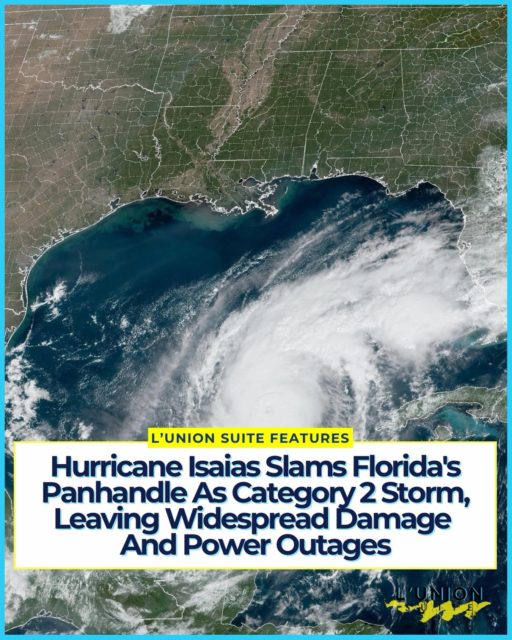
![Florida is beginning to assess the damage after Hurricane Isaias made landfall near Destin on Friday night, October 9, bringing powerful winds, heavy rain and dangerous flooding to the northern Gulf Coast.
The storm hit as a Category 2 hurricane with sustained winds of 105 mph, according to Florida officials. Strong winds knocked down trees and power lines, while flooding and debris made several roads dangerous to travel.
By Saturday, nearly 900,000 homes and businesses across Florida, Alabama and Georgia had reportedly lost electricity at some point during the storm. Thousands of residents had evacuated coastal communities ahead of landfall.
Isaias has since weakened into a post-tropical cyclone as it moves inland through Alabama, but the danger is not over. Heavy rainfall, flash flooding and damaging winds remain concerns for parts of the Southeast, including Georgia and the Carolinas.
Authorities have also reported two storm-related deaths, one in Florida and another in Alabama, as recovery efforts continue.
Two Other Storms Being Monitored
While Florida deals with the aftermath of Isaias, forecasters are also tracking two storms in the eastern Pacific.
Hurricane Simon has strengthened into a powerful Category 4 hurricane with sustained winds near 150 mph. The storm is approaching Mexico’s Pacific coast, where officials are warning of dangerous winds, flooding and mudslides.
Tropical Storm Rachel, meanwhile, is moving toward Mexico’s Baja California Peninsula with sustained winds near 60 mph. Its path could also bring heavy rain and flooding concerns to parts of the southwestern United States.
These two storms are in the Pacific Ocean, not the Atlantic, and neither is forecast to hit Florida.
Residents in affected areas should continue following local emergency officials and the latest updates from the
National Hurricane Center
#lunionsuite #haitianamerican]()
![Some of America’s most familiar snacks, cereals and drinks could soon look a little different.
The U.S. Food and Drug Administration (FDA) is working to phase out certain petroleum-based artificial food dyes as part of a broader effort to change how foods sold across the country are made.
The dyes are commonly used to give candy, breakfast cereals, sports drinks and other packaged foods their bright colors. The changes are pushing manufacturers to explore alternatives, including colors made from fruits, vegetables and other natural sources.
But there’s an important distinction: the government has not banned every artificial food dye, and not every company is required to remove them immediately.
The FDA’s goal is to phase out six commonly used synthetic dyes, including Red No. 40, Yellow No. 5 and Yellow No. 6, by the end of 2027. The agency also previously revoked approval for Red No. 3, with the ban taking effect in most foods in January 2027.
Major companies are already responding. General Mills has committed to removing certified artificial colors from its U.S. cereals and school foods, while Kraft Heinz plans to remove them from products such as Kool-Aid, Jell-O and Crystal Light by the end of 2027. PepsiCo is also changing selected Gatorade products and introducing dye-free snack options.
For shoppers, that means some familiar products may eventually have different colors or updated ingredient labels, even if the flavors remain recognizable.
#lunionsuite #haitianamerican]()
![A federal immigration officer shot and wounded a man Thursday afternoon in Marble Hill while the man’s 5-year-old son sat in the back seat, city and federal officials said.
The shooting happened around 4 p.m. on Marble Hill Avenue near West 225th Street. The man, identified by the NYPD as 28-year-old Oscar Belgal, was struck below his left ear. Officials said the wound was not life-threatening. He was taken to NewYork-Presbyterian Allen Hospital conscious and in stable condition, then moved by ICE to a detention facility outside New York. The child was not hurt and was placed with a relative.
NYPD Commissioner Jessica Tisch said Belgal was pulling into a parking space in a gray Honda when a plainclothes federal officer approached the driver’s side with a gun drawn, followed by a second officer who was also not in uniform. The car began to move forward and out of camera view. At least one officer then fired seven rounds, Tisch said. An NYPD camera recorded the approach but not the shooting. City police were not part of the operation and responded after hearing the shots.
Mayor Zohran Mamdani said the agents wore construction vests and face coverings and that there was no clear way to identify them as ICE. He called the shooting unconscionable and said he spent hours Thursday night on the phone with President Donald Trump and Homeland Security Secretary Markwayne Mullin seeking Belgal’s release. Those talks failed. Gov. Kathy Hochul said the presence of a 5-year-old in the car meant the incident could have ended in tragedy, and both she and Mamdani urged the administration to halt ICE enforcement in the city. Protesters gathered at the scene. Four people were later arrested outside the hospital.
The Department of Homeland Security said officers were conducting a targeted arrest of a Dominican national it described as being in the country illegally. DHS cited a grand larceny conviction that resulted in five years’ probation in April 2025, plus prior arrests for assault, robbery, drug possession, and weapons possession, and alleged ties to the Trinitarios gang.
Source: @goodmorningamerica @nycpublicadvocate
#lunionsuite #haitianamerican #haitian]()
![Estephanie Charles did not walk into Miss Grand International 2026 as a name on a roster. She walked in wearing Haiti.
At the national costume show on October 7, Haiti’s representative took the MGI Hall stage in a custom piece built around the choublak, the hibiscus widely embraced as the country’s national flower. More than 200 hours of work went into it: zari thread, stones, and crystals set into an embellished bodice, a sculptural bloom opening behind her, and a trail cut to move. Red and gold. Built for the stage. On presentation, the costume was read as Haiti itself radiant, resilient, and still standing.
The woman inside it has been building toward this room for years. Charles, also known as Steph Charles, comes to Bangkok by way of Miss Latina Haïti, Miss Earth Haïti, and Miss Haïti Caraïbes, and she works as a flight attendant. Charles advanced to the Top 40 and was drawn into Group D with delegates from Costa Rica, Venezuela, Spain, India, and Vietnam. The Best National Costume title is still unawarded. Three winners social media, the Miss Grand website, and the judges will be named on coronation night, which leaves Haiti’s choublak in the conversation until the last broadcast.
Her platform sits next to the costume, not behind it. On her official profile, Charles calls “Stop the War and Violence” a demand for peace aimed at families, women, and children, drawn from what she has seen coming out of Haiti. The flower does a version of the same work. In Haitian life the choublak keeps opening. On Charles, that idea became something a global audience could see in one walk: beauty, strength, and a country that refuses to fold.
Saturday night is the rest of the story. Charles goes in having already cleared a public vote, finished the preliminary rounds, and put Haiti’s flower on an international stage. The crown is still ahead. The statement has already been made.
Source: @thedesignman @haitiangoddess31
#lunionsuite #haitianamerican #haitian]()
![Estephanie Charles did not walk into Miss Grand International 2026 as a name on a roster. She walked in wearing Haiti.
At the national costume show on October 7, Haiti’s representative took the MGI Hall stage in a custom piece built around the choublak, the hibiscus widely embraced as the country’s national flower. More than 200 hours of work went into it: zari thread, stones, and crystals set into an embellished bodice, a sculptural bloom opening behind her, and a trail cut to move. Red and gold. Built for the stage. On presentation, the costume was read as Haiti itself radiant, resilient, and still standing.
The woman inside it has been building toward this room for years. Charles, also known as Steph Charles, comes to Bangkok by way of Miss Latina Haïti, Miss Earth Haïti, and Miss Haïti Caraïbes, and she works as a flight attendant. Charles advanced to the Top 40 and was drawn into Group D with delegates from Costa Rica, Venezuela, Spain, India, and Vietnam. The Best National Costume title is still unawarded. Three winners social media, the Miss Grand website, and the judges will be named on coronation night, which leaves Haiti’s choublak in the conversation until the last broadcast.
Her platform sits next to the costume, not behind it. On her official profile, Charles calls “Stop the War and Violence” a demand for peace aimed at families, women, and children, drawn from what she has seen coming out of Haiti. The flower does a version of the same work. In Haitian life the choublak keeps opening. On Charles, that idea became something a global audience could see in one walk: beauty, strength, and a country that refuses to fold.
Saturday night is the rest of the story. Charles goes in having already cleared a public vote, finished the preliminary rounds, and put Haiti’s flower on an international stage. The crown is still ahead. The statement has already been made.
Source: @thedesignman @haitiangoddess31
#lunionsuite #haitianamerican #haitian]()
![Estephanie Charles did not walk into Miss Grand International 2026 as a name on a roster. She walked in wearing Haiti.
At the national costume show on October 7, Haiti’s representative took the MGI Hall stage in a custom piece built around the choublak, the hibiscus widely embraced as the country’s national flower. More than 200 hours of work went into it: zari thread, stones, and crystals set into an embellished bodice, a sculptural bloom opening behind her, and a trail cut to move. Red and gold. Built for the stage. On presentation, the costume was read as Haiti itself radiant, resilient, and still standing.
The woman inside it has been building toward this room for years. Charles, also known as Steph Charles, comes to Bangkok by way of Miss Latina Haïti, Miss Earth Haïti, and Miss Haïti Caraïbes, and she works as a flight attendant. Charles advanced to the Top 40 and was drawn into Group D with delegates from Costa Rica, Venezuela, Spain, India, and Vietnam. The Best National Costume title is still unawarded. Three winners social media, the Miss Grand website, and the judges will be named on coronation night, which leaves Haiti’s choublak in the conversation until the last broadcast.
Her platform sits next to the costume, not behind it. On her official profile, Charles calls “Stop the War and Violence” a demand for peace aimed at families, women, and children, drawn from what she has seen coming out of Haiti. The flower does a version of the same work. In Haitian life the choublak keeps opening. On Charles, that idea became something a global audience could see in one walk: beauty, strength, and a country that refuses to fold.
Saturday night is the rest of the story. Charles goes in having already cleared a public vote, finished the preliminary rounds, and put Haiti’s flower on an international stage. The crown is still ahead. The statement has already been made.
Source: @thedesignman @haitiangoddess31
#lunionsuite #haitianamerican #haitian]()
![Estephanie Charles did not walk into Miss Grand International 2026 as a name on a roster. She walked in wearing Haiti.
At the national costume show on October 7, Haiti’s representative took the MGI Hall stage in a custom piece built around the choublak, the hibiscus widely embraced as the country’s national flower. More than 200 hours of work went into it: zari thread, stones, and crystals set into an embellished bodice, a sculptural bloom opening behind her, and a trail cut to move. Red and gold. Built for the stage. On presentation, the costume was read as Haiti itself radiant, resilient, and still standing.
The woman inside it has been building toward this room for years. Charles, also known as Steph Charles, comes to Bangkok by way of Miss Latina Haïti, Miss Earth Haïti, and Miss Haïti Caraïbes, and she works as a flight attendant. Charles advanced to the Top 40 and was drawn into Group D with delegates from Costa Rica, Venezuela, Spain, India, and Vietnam. The Best National Costume title is still unawarded. Three winners social media, the Miss Grand website, and the judges will be named on coronation night, which leaves Haiti’s choublak in the conversation until the last broadcast.
Her platform sits next to the costume, not behind it. On her official profile, Charles calls “Stop the War and Violence” a demand for peace aimed at families, women, and children, drawn from what she has seen coming out of Haiti. The flower does a version of the same work. In Haitian life the choublak keeps opening. On Charles, that idea became something a global audience could see in one walk: beauty, strength, and a country that refuses to fold.
Saturday night is the rest of the story. Charles goes in having already cleared a public vote, finished the preliminary rounds, and put Haiti’s flower on an international stage. The crown is still ahead. The statement has already been made.
Source: @thedesignman @haitiangoddess31
#lunionsuite #haitianamerican #haitian]()
![@RoadToRestoration has released BELIEVE, a 15-track gospel album that puts faith, family, and Haitian heritage at the center of a sound built for both the church and the culture.
Running just under an hour, BELIEVE moves between English and Kreyòl, pairing worship with R&B and soul. The collective, founded by brothers Jean LeBlanc and Francis “Fridayy” LeBlanc, is rooted in Philadelphia and shaped by Haitian roots. It first found its voice in church. Their music is aimed at believers and at anyone who feels far from God, with a simple through-line: grace and restoration are still within reach.
In the album’s own framing, belief is where the road back starts. “Sometimes all you have left is belief. And sometimes belief is the very thing God uses to begin your restoration,” the group said ahead of the release. They describe the record as real testimonies and real prayers, a soundtrack for anyone learning to trust God again.
The tracklist reflects that mix of voices. It opens with “I Believe” featuring Vincena, then “The Truth” with Fridayy, “Pi Pre” with Leo, “Only You” with Anthny, “Ou Fidel” with Alyx Andre, “Yahweh” with SAINT, and “Peace,” again with Vincena. The second half includes “Tande Kri Mwen” with Harold St. Louis, “Faithfulness” and “Kem Di Hallelujah” with Ryan Ofei, “Hallelujah,” “Beni Non w” with Ashley Louis and Frantz LeBlanc, “Lord I Need Your Presence” with El-Fatih Chase, “LINYP (Reprise),” and “Ala Yon Zanmi” with Herica and Sami Paul.
Jean LeBlanc helped bring collaborators onto the project, including production support on “Yahweh.” The group’s catalog also includes Road to Restoration 2.0 (2018), Running To You (2020), and Road to Restoration Live Worship (2023).
For a diaspora audience, the bilingual tracklist is the point. Titles like “Pi Pre,” “Ou Fidel,” “Tande Kri Mwen,” “Kem Di Hallelujah,” “Beni Non w,” and “Ala Yon Zanmi” sit next to “I Believe,” “Peace,” and “Lord I Need Your Presence” without treating either language as a side note. It is worship that sounds like the rooms many Haitian families already pray in.
#lunionsuite #haitianamerican]()
![@RoadToRestoration has released BELIEVE, a 15-track gospel album that puts faith, family, and Haitian heritage at the center of a sound built for both the church and the culture.
Running just under an hour, BELIEVE moves between English and Kreyòl, pairing worship with R&B and soul. The collective, founded by brothers Jean LeBlanc and Francis “Fridayy” LeBlanc, is rooted in Philadelphia and shaped by Haitian roots. It first found its voice in church. Their music is aimed at believers and at anyone who feels far from God, with a simple through-line: grace and restoration are still within reach.
In the album’s own framing, belief is where the road back starts. “Sometimes all you have left is belief. And sometimes belief is the very thing God uses to begin your restoration,” the group said ahead of the release. They describe the record as real testimonies and real prayers, a soundtrack for anyone learning to trust God again.
The tracklist reflects that mix of voices. It opens with “I Believe” featuring Vincena, then “The Truth” with Fridayy, “Pi Pre” with Leo, “Only You” with Anthny, “Ou Fidel” with Alyx Andre, “Yahweh” with SAINT, and “Peace,” again with Vincena. The second half includes “Tande Kri Mwen” with Harold St. Louis, “Faithfulness” and “Kem Di Hallelujah” with Ryan Ofei, “Hallelujah,” “Beni Non w” with Ashley Louis and Frantz LeBlanc, “Lord I Need Your Presence” with El-Fatih Chase, “LINYP (Reprise),” and “Ala Yon Zanmi” with Herica and Sami Paul.
Jean LeBlanc helped bring collaborators onto the project, including production support on “Yahweh.” The group’s catalog also includes Road to Restoration 2.0 (2018), Running To You (2020), and Road to Restoration Live Worship (2023).
For a diaspora audience, the bilingual tracklist is the point. Titles like “Pi Pre,” “Ou Fidel,” “Tande Kri Mwen,” “Kem Di Hallelujah,” “Beni Non w,” and “Ala Yon Zanmi” sit next to “I Believe,” “Peace,” and “Lord I Need Your Presence” without treating either language as a side note. It is worship that sounds like the rooms many Haitian families already pray in.
#lunionsuite #haitianamerican]()
![@RoadToRestoration has released BELIEVE, a 15-track gospel album that puts faith, family, and Haitian heritage at the center of a sound built for both the church and the culture.
Running just under an hour, BELIEVE moves between English and Kreyòl, pairing worship with R&B and soul. The collective, founded by brothers Jean LeBlanc and Francis “Fridayy” LeBlanc, is rooted in Philadelphia and shaped by Haitian roots. It first found its voice in church. Their music is aimed at believers and at anyone who feels far from God, with a simple through-line: grace and restoration are still within reach.
In the album’s own framing, belief is where the road back starts. “Sometimes all you have left is belief. And sometimes belief is the very thing God uses to begin your restoration,” the group said ahead of the release. They describe the record as real testimonies and real prayers, a soundtrack for anyone learning to trust God again.
The tracklist reflects that mix of voices. It opens with “I Believe” featuring Vincena, then “The Truth” with Fridayy, “Pi Pre” with Leo, “Only You” with Anthny, “Ou Fidel” with Alyx Andre, “Yahweh” with SAINT, and “Peace,” again with Vincena. The second half includes “Tande Kri Mwen” with Harold St. Louis, “Faithfulness” and “Kem Di Hallelujah” with Ryan Ofei, “Hallelujah,” “Beni Non w” with Ashley Louis and Frantz LeBlanc, “Lord I Need Your Presence” with El-Fatih Chase, “LINYP (Reprise),” and “Ala Yon Zanmi” with Herica and Sami Paul.
Jean LeBlanc helped bring collaborators onto the project, including production support on “Yahweh.” The group’s catalog also includes Road to Restoration 2.0 (2018), Running To You (2020), and Road to Restoration Live Worship (2023).
For a diaspora audience, the bilingual tracklist is the point. Titles like “Pi Pre,” “Ou Fidel,” “Tande Kri Mwen,” “Kem Di Hallelujah,” “Beni Non w,” and “Ala Yon Zanmi” sit next to “I Believe,” “Peace,” and “Lord I Need Your Presence” without treating either language as a side note. It is worship that sounds like the rooms many Haitian families already pray in.
#lunionsuite #haitianamerican]()
![Haitian-American actor, writer and director @JeanElie is back with a project he built himself: Living Practical, a new original vertical comedy series about love, cohabitation and the absurdity of having powers that still cannot fix an ordinary relationship.
The logline is simple. Moving in together is easy. Living together is something else.
Created and directed by Elie, the series follows a young couple navigating work, home and the slow work of growing together, with one complication: they have powers. A disagreement that should stay in the kitchen can turn into something much stranger once superhuman abilities enter the equation. Living Practical uses those powers to heighten the everyday, turning familiar relationship problems into short, unexpected comic adventures.
The series stars Elie and CJ Obilom, with Tristen Winger and Keyla McNeely in supporting roles. It is built for the vertical format, with short-form episodes meant to move fast and stay character-driven, while keeping the visual world of a traditional scripted series.
For audiences who know Elie from HBO’s Insecure, where he played Issa Rae’s brother Ahmal Dee, the new series is another step in a career he has increasingly steered himself. The Brockton, Massachusetts native, raised in a Haitian-American household, co-created and starred in the AMC/ALLBLK comedy Send Help and has appeared in Rap Sh!t and The Rookie. He also served as a Haitian cultural consultant on Marvel’s Wonder Man.
Living Practical continues that pattern: a story he created, directed and stars in. At its center, the show asks a question that has nothing to do with saving the world. What happens when superpowers do not make life any easier? Living Practical is scheduled to premiere on Patreon and Share, with additional release details to be announced.
#lunionsuite #haitianamerican #haitian ]()
![Haitian-American actor, writer and director @JeanElie is back with a project he built himself: Living Practical, a new original vertical comedy series about love, cohabitation and the absurdity of having powers that still cannot fix an ordinary relationship.
The logline is simple. Moving in together is easy. Living together is something else.
Created and directed by Elie, the series follows a young couple navigating work, home and the slow work of growing together, with one complication: they have powers. A disagreement that should stay in the kitchen can turn into something much stranger once superhuman abilities enter the equation. Living Practical uses those powers to heighten the everyday, turning familiar relationship problems into short, unexpected comic adventures.
The series stars Elie and CJ Obilom, with Tristen Winger and Keyla McNeely in supporting roles. It is built for the vertical format, with short-form episodes meant to move fast and stay character-driven, while keeping the visual world of a traditional scripted series.
For audiences who know Elie from HBO’s Insecure, where he played Issa Rae’s brother Ahmal Dee, the new series is another step in a career he has increasingly steered himself. The Brockton, Massachusetts native, raised in a Haitian-American household, co-created and starred in the AMC/ALLBLK comedy Send Help and has appeared in Rap Sh!t and The Rookie. He also served as a Haitian cultural consultant on Marvel’s Wonder Man.
Living Practical continues that pattern: a story he created, directed and stars in. At its center, the show asks a question that has nothing to do with saving the world. What happens when superpowers do not make life any easier? Living Practical is scheduled to premiere on Patreon and Share, with additional release details to be announced.
#lunionsuite #haitianamerican #haitian ]()
![Republican senators are warning that President Trump has fumbled immigration, an issue that helped GOP candidates in 2024 and is now becoming a political liability as the party defends its Senate majority.
Several GOP senators told The Hill that the administration’s mass-deportation campaign has been too aggressive, overshadowing what they describe as a major border-security win: illegal crossings down more than 90 percent since former President Biden left office. They say the enforcement is costing Republicans support among suburban and Hispanic voters weeks before the midterms.
“Once you start deporting people who have otherwise been here without incident for 15, 20 years, that’s a gray zone that I think where you find a lot of division of opinion,” Sen. John Cornyn (R-Texas) said. “I always thought that this idea of mass deportations sent the wrong message.”
Cornyn pointed to a campaign ad from Rep. María Elvira Salazar (R-Fla.), who told the president that some enforcement “has gone too far” and that Hispanic voters who helped elect him in 2024 “feel betrayed.”
Sen. Mike Rounds (R-S.D.), who is running for reelection, said most Americans want Immigration and Customs Enforcement focused on people who have committed crimes beyond unlawful presence.
“Most Americans are saying we are a nation of laws, but with as many people here illegally as we’ve got, let’s make darn sure that our focus is on getting those individuals that have violated our laws with regard to other things other than being here illegally,” Rounds said. He urged the administration to ease off people who “are here and that have a court determination that [says] they can be here,” and to “refocus on those individuals that are actually causing harm within society today.”
Sen. Thom Tillis (R-N.C.) was blunter. “I would rather have 100 illegally present people go free than have that innocent person caught,” he said. Of sweeps that have swept up citizens and green-card holders.
#lunionsuite #haitianamerican]()
![Republican senators are warning that President Trump has fumbled immigration, an issue that helped GOP candidates in 2024 and is now becoming a political liability as the party defends its Senate majority.
Several GOP senators told The Hill that the administration’s mass-deportation campaign has been too aggressive, overshadowing what they describe as a major border-security win: illegal crossings down more than 90 percent since former President Biden left office. They say the enforcement is costing Republicans support among suburban and Hispanic voters weeks before the midterms.
“Once you start deporting people who have otherwise been here without incident for 15, 20 years, that’s a gray zone that I think where you find a lot of division of opinion,” Sen. John Cornyn (R-Texas) said. “I always thought that this idea of mass deportations sent the wrong message.”
Cornyn pointed to a campaign ad from Rep. María Elvira Salazar (R-Fla.), who told the president that some enforcement “has gone too far” and that Hispanic voters who helped elect him in 2024 “feel betrayed.”
Sen. Mike Rounds (R-S.D.), who is running for reelection, said most Americans want Immigration and Customs Enforcement focused on people who have committed crimes beyond unlawful presence.
“Most Americans are saying we are a nation of laws, but with as many people here illegally as we’ve got, let’s make darn sure that our focus is on getting those individuals that have violated our laws with regard to other things other than being here illegally,” Rounds said. He urged the administration to ease off people who “are here and that have a court determination that [says] they can be here,” and to “refocus on those individuals that are actually causing harm within society today.”
Sen. Thom Tillis (R-N.C.) was blunter. “I would rather have 100 illegally present people go free than have that innocent person caught,” he said. Of sweeps that have swept up citizens and green-card holders.
#lunionsuite #haitianamerican]()
![Republican senators are warning that President Trump has fumbled immigration, an issue that helped GOP candidates in 2024 and is now becoming a political liability as the party defends its Senate majority.
Several GOP senators told The Hill that the administration’s mass-deportation campaign has been too aggressive, overshadowing what they describe as a major border-security win: illegal crossings down more than 90 percent since former President Biden left office. They say the enforcement is costing Republicans support among suburban and Hispanic voters weeks before the midterms.
“Once you start deporting people who have otherwise been here without incident for 15, 20 years, that’s a gray zone that I think where you find a lot of division of opinion,” Sen. John Cornyn (R-Texas) said. “I always thought that this idea of mass deportations sent the wrong message.”
Cornyn pointed to a campaign ad from Rep. María Elvira Salazar (R-Fla.), who told the president that some enforcement “has gone too far” and that Hispanic voters who helped elect him in 2024 “feel betrayed.”
Sen. Mike Rounds (R-S.D.), who is running for reelection, said most Americans want Immigration and Customs Enforcement focused on people who have committed crimes beyond unlawful presence.
“Most Americans are saying we are a nation of laws, but with as many people here illegally as we’ve got, let’s make darn sure that our focus is on getting those individuals that have violated our laws with regard to other things other than being here illegally,” Rounds said. He urged the administration to ease off people who “are here and that have a court determination that [says] they can be here,” and to “refocus on those individuals that are actually causing harm within society today.”
Sen. Thom Tillis (R-N.C.) was blunter. “I would rather have 100 illegally present people go free than have that innocent person caught,” he said. Of sweeps that have swept up citizens and green-card holders.
#lunionsuite #haitianamerican]()
 order synthroid online
order xifaxan online New online drugstore with no prescription
order synthroid online
order xifaxan online New online drugstore with no prescription
Tag - financial literacy
Getting Ahead of the Affluent Millennials Written by Lawrence Gonzalez, CFE and Financial Literacy Educator We are living in the age of the nouveau rich, Black...
ADVERTISE WITH US
Featured In:












![Republican senators are warning that President Trump has fumbled immigration, an issue that helped GOP candidates in 2024 and is now becoming a political liability as the party defends its Senate majority.
Several GOP senators told The Hill that the administration’s mass-deportation campaign has been too aggressive, overshadowing what they describe as a major border-security win: illegal crossings down more than 90 percent since former President Biden left office. They say the enforcement is costing Republicans support among suburban and Hispanic voters weeks before the midterms.
“Once you start deporting people who have otherwise been here without incident for 15, 20 years, that’s a gray zone that I think where you find a lot of division of opinion,” Sen. John Cornyn (R-Texas) said. “I always thought that this idea of mass deportations sent the wrong message.”
Cornyn pointed to a campaign ad from Rep. María Elvira Salazar (R-Fla.), who told the president that some enforcement “has gone too far” and that Hispanic voters who helped elect him in 2024 “feel betrayed.”
Sen. Mike Rounds (R-S.D.), who is running for reelection, said most Americans want Immigration and Customs Enforcement focused on people who have committed crimes beyond unlawful presence.
“Most Americans are saying we are a nation of laws, but with as many people here illegally as we’ve got, let’s make darn sure that our focus is on getting those individuals that have violated our laws with regard to other things other than being here illegally,” Rounds said. He urged the administration to ease off people who “are here and that have a court determination that [says] they can be here,” and to “refocus on those individuals that are actually causing harm within society today.”
Sen. Thom Tillis (R-N.C.) was blunter. “I would rather have 100 illegally present people go free than have that innocent person caught,” he said. Of sweeps that have swept up citizens and green-card holders.
#lunionsuite #haitianamerican](https://www.lunionsuite.com/wp-content/uploads/2015/08/840991051_18641085889023307_7642861791848397517_n-512x640.jpg)


Republican U.S. Rep. Byron Donalds holds a 7-point lead over Democrat David Jolly in the race for Florida governor, according to a new NBC6/Telemundo Station Group poll conducted by Mason-Dixon Polling & Strategy.
The survey, released Tuesday and conducted Sept. 28 through Oct. 1 among 625 likely voters, found Donalds at 48%, Jolly at 41%, another candidate at 1%, and 10% undecided. The margin of error is ±4 percentage points.
Both candidates are seeking to succeed term-limited Gov. Ron DeSantis after eight years in office. Donalds, 47, has represented Southwest Florida in Congress since 2021 and is a close ally of President Donald Trump; if elected, he would become Florida’s first Black governor. Jolly, 53, served in Congress from 2014 to 2017 as a Republican before becoming an independent in 2018 and joining the Democratic Party last year.
Men favor Donalds 55% to 33%, while women back Jolly 49% to 41%. White voters support Donalds 59% to 30%; Black voters support Jolly 76% to 10%; and Hispanic voters narrowly prefer Donalds 48% to 43%.
By party, Donalds takes 87% of Republicans and Jolly takes 85% of Democrats. Independents favor Jolly 47% to 28%, with 24% undecided. Regionally, Donalds leads in North Florida (60%-33%), Central Florida (55%-33%), and Southwest Florida (57%-33%). Jolly leads in Tampa Bay (48%-42%) and Southeast Florida (52%-36%).
Younger voters (18-34 and 35-49) lean narrowly toward Jolly, while older voters (50-64 and 65+) favor Donalds more decisively.
Florida voters are evenly split on President Trump’s job performance: 48% approve, 48% disapprove, and 4% are unsure. Republicans hold a substantial registration advantage statewide (roughly 5.65 million to 4.1 million as of late August).
The 2026 general election is Tuesday, November 3, the outcome of this governor’s race and other contests will shape the direction of the state for years to come. Check your voter registration, confirm your polling location or mail-ballot status, and make a plan to vote early, by mail, or in person on November 3. Every ballot matters. Florida and the nation are counting on you to show up and decide the future.
🎥 Source: @NBC6
#lunionsuite
2 hours ago



LET'S GO HAITI 🇭🇹
Haiti have advanced to the quarterfinals of the 2026/27 CONCACAF Nations League A and will meet the United States in a two-legged series next month, with a place in the Final Four and direct qualification for the 2027 Gold Cup on the line.
Les Grenadiers finished second in Group A with nine points from four matches (three wins, one loss) and a plus-four goal difference. They edged the Dominican Republic, which also finished on nine points, on goal differential. Curaçao won the group with 10 points.
Under new head coach David Badía, Haiti opened the group stage with a 3-2 comeback victory over Trinidad and Tobago at Sabina Park in Kingston, Jamaica. They followed with a 2-0 win over Costa Rica, also in Kingston, then defeated the Dominican Republic 4-1. Haiti closed the group with a 2-0 loss to Costa Rica but had already done enough to secure second place.
The United States, one of four pre-seeded teams that received a bye into the quarterfinals along with Mexico, Canada, and Panama, will face Haiti. The matchups were determined by CONCACAF rankings and final group standings, with the higher-ranked team hosting the second leg.
First leg: Saturday, November 14, 2026, at Sabina Park in Kingston, Jamaica. Kickoff is scheduled for 4:30 p.m. ET. Haiti will play its “home” leg at the neutral site in Jamaica due to ongoing security concerns in the country.
- Second leg: Tuesday, November 17, 2026, at TQL Stadium in Cincinnati.
The winner of the series will advance to the Nations League Final Four, scheduled for March 25–28, 2027, at SoFi Stadium in Los Angeles, and will qualify automatically for the 2027 CONCACAF Gold Cup. The loser will enter the Gold Cup preliminaries and must win a two-legged series in March 2027 to reach the tournament.
The United States hold a historical advantage in the series, and Haiti have not defeated the Americans since 1973. The November matches will be the first between the two teams in Nations League play.
For Haiti, the quarterfinal represents both a chance to build on their post-World Cup campaign and a significant test against one of CONCACAF’s top sides under Badía.
#lunionsuite #haitianamerican #haitian
4 hours ago


Prime Minister Alix Didier Fils-Aimé presided over the official operational launch of the Gang Repression Force (FRG / Force de répression des gangs) on October 8, during a flag-raising ceremony at the Vertières military base in Tabarre. The event marked what the government described as a new phase in efforts to confront armed groups and restore state authority across the country.
The ceremony brought together Haitian government officials, representatives of the six troop-contributing countries, members of the diplomatic corps, and United Nations representatives. Haitian Armed Forces (FAd’H) personnel also participated. In his address, Fils-Aimé framed the FRG’s deployment as a turning point in the security response to armed groups.
“The state must regain control of its territory,” the prime minister declared. He outlined the force’s mission as supporting the recapture of areas under gang control, protecting the civilian population, and restoring republican order and the rule of law. He emphasized that security operations alone would not be sufficient and must be accompanied by the return of justice, public services, and state institutions conditions he described as essential for holding free, transparent, and credible elections.
Guatemala, El Salvador, Chad, Mongolia, Jamaica, and Sri Lanka are contributing troops to the FRG, which operates in support of Haitian security forces, including the Haitian National Police and the Armed Forces of Haiti. Representatives of the contributing countries reaffirmed their commitment to the effort. Military demonstrations highlighting operational capabilities of the contingents also formed part of the ceremony at Vertières.
The FRG, authorized by the UN Security Council under Resolution 2793 (2025), succeeded the Multinational Security Support Mission (MSS). Its mandate was recently extended until March 31, 2027. The force is commanded by Mongolian Major General Erdenebat Batsuuri, with Jack Christofides serving as Special Representative. As of late summer 2026, roughly 1,200–1,500 personnel had been deployed, with further contingents expected in the months ahead toward an authorized strength of up to 5,500.
#lunionsuite
5 hours ago

A United Nations Panel of Experts on Haiti has documented the diversion of 908,001 items, predominantly ammunition, from stockpiles of the Dominican National Police. Some of the materiel was transferred to Haiti.
The findings appear in the Panel’s final report (S/2026/714), transmitted in July, considered by the Security Council Committee on 3 September, and published as a Council document in early September. The report revisits an investigation that began in 2024 after Haitian authorities seized 5,000 rounds of ammunition from non-state actors in Mirebalais, in the Centre Department.
The Italian manufacturer Fiocchi Munizioni confirmed that the seized rounds were produced in 2022 and belonged to a batch of 500,000 cartridges delivered that year to the Dominican National Police. After the Panel shared the information, Dominican authorities conducted an inventory of police stockpiles in October 2024 and arrested several officers. That inventory, detailed in a prior Panel report, revealed the large-scale diversion of 908,001 items, mostly ammunition.
The diverted items included more than 489,000 rounds of 9mm cartridges, 230,000 rounds of 5.56×45mm, 26,000 rounds of 7.62×39mm, and 93,000 rounds of 12-gauge ammunition. Dominican security specialists told the Panel that the local market for 5.56×45mm and 7.62×39mm ammunition is very limited. Because these two calibers are widely used by Haitian armed groups, the specialists estimated it likely that most of this ammunition had been transferred to #Haiti.
During inspections of seizures in Port-au-Prince in 2026, the Panel found ammunition consistent with the diverted Dominican police stocks in use by the 400 Mawozo gang and several groups operating in Bel-Air. Multiple security sources in both Haiti and the Dominican Republic indicated that corrupt officers in the Dominican police and armed forces had been involved in diversions, including sales in border areas for onward transfer to Haiti. The Dominican Ministry of Defense has stated that it maintains investigations into how certain Dominican-origin ammunition reached Haiti.
#lunionsuite #haitianamerican
6 hours ago

Florida is beginning to assess the damage after Hurricane Isaias made landfall near Destin on Friday night, October 9, bringing powerful winds, heavy rain and dangerous flooding to the northern Gulf Coast.
The storm hit as a Category 2 hurricane with sustained winds of 105 mph, according to Florida officials. Strong winds knocked down trees and power lines, while flooding and debris made several roads dangerous to travel.
By Saturday, nearly 900,000 homes and businesses across Florida, Alabama and Georgia had reportedly lost electricity at some point during the storm. Thousands of residents had evacuated coastal communities ahead of landfall.
Isaias has since weakened into a post-tropical cyclone as it moves inland through Alabama, but the danger is not over. Heavy rainfall, flash flooding and damaging winds remain concerns for parts of the Southeast, including Georgia and the Carolinas.
Authorities have also reported two storm-related deaths, one in Florida and another in Alabama, as recovery efforts continue.
Two Other Storms Being Monitored
While Florida deals with the aftermath of Isaias, forecasters are also tracking two storms in the eastern Pacific.
Hurricane Simon has strengthened into a powerful Category 4 hurricane with sustained winds near 150 mph. The storm is approaching Mexico’s Pacific coast, where officials are warning of dangerous winds, flooding and mudslides.
Tropical Storm Rachel, meanwhile, is moving toward Mexico’s Baja California Peninsula with sustained winds near 60 mph. Its path could also bring heavy rain and flooding concerns to parts of the southwestern United States.
These two storms are in the Pacific Ocean, not the Atlantic, and neither is forecast to hit Florida.
Residents in affected areas should continue following local emergency officials and the latest updates from the
National Hurricane Center
#lunionsuite #haitianamerican
1 day ago

Some of America’s most familiar snacks, cereals and drinks could soon look a little different.
The U.S. Food and Drug Administration (FDA) is working to phase out certain petroleum-based artificial food dyes as part of a broader effort to change how foods sold across the country are made.
The dyes are commonly used to give candy, breakfast cereals, sports drinks and other packaged foods their bright colors. The changes are pushing manufacturers to explore alternatives, including colors made from fruits, vegetables and other natural sources.
But there’s an important distinction: the government has not banned every artificial food dye, and not every company is required to remove them immediately.
The FDA’s goal is to phase out six commonly used synthetic dyes, including Red No. 40, Yellow No. 5 and Yellow No. 6, by the end of 2027. The agency also previously revoked approval for Red No. 3, with the ban taking effect in most foods in January 2027.
Major companies are already responding. General Mills has committed to removing certified artificial colors from its U.S. cereals and school foods, while Kraft Heinz plans to remove them from products such as Kool-Aid, Jell-O and Crystal Light by the end of 2027. PepsiCo is also changing selected Gatorade products and introducing dye-free snack options.
For shoppers, that means some familiar products may eventually have different colors or updated ingredient labels, even if the flavors remain recognizable.
#lunionsuite #haitianamerican
2 days ago

A federal immigration officer shot and wounded a man Thursday afternoon in Marble Hill while the man’s 5-year-old son sat in the back seat, city and federal officials said.
The shooting happened around 4 p.m. on Marble Hill Avenue near West 225th Street. The man, identified by the NYPD as 28-year-old Oscar Belgal, was struck below his left ear. Officials said the wound was not life-threatening. He was taken to NewYork-Presbyterian Allen Hospital conscious and in stable condition, then moved by ICE to a detention facility outside New York. The child was not hurt and was placed with a relative.
NYPD Commissioner Jessica Tisch said Belgal was pulling into a parking space in a gray Honda when a plainclothes federal officer approached the driver’s side with a gun drawn, followed by a second officer who was also not in uniform. The car began to move forward and out of camera view. At least one officer then fired seven rounds, Tisch said. An NYPD camera recorded the approach but not the shooting. City police were not part of the operation and responded after hearing the shots.
Mayor Zohran Mamdani said the agents wore construction vests and face coverings and that there was no clear way to identify them as ICE. He called the shooting unconscionable and said he spent hours Thursday night on the phone with President Donald Trump and Homeland Security Secretary Markwayne Mullin seeking Belgal’s release. Those talks failed. Gov. Kathy Hochul said the presence of a 5-year-old in the car meant the incident could have ended in tragedy, and both she and Mamdani urged the administration to halt ICE enforcement in the city. Protesters gathered at the scene. Four people were later arrested outside the hospital.
The Department of Homeland Security said officers were conducting a targeted arrest of a Dominican national it described as being in the country illegally. DHS cited a grand larceny conviction that resulted in five years’ probation in April 2025, plus prior arrests for assault, robbery, drug possession, and weapons possession, and alleged ties to the Trinitarios gang.
Source: @goodmorningamerica @nycpublicadvocate
#lunionsuite #haitianamerican #haitian
2 days ago


Estephanie Charles did not walk into Miss Grand International 2026 as a name on a roster. She walked in wearing Haiti.
At the national costume show on October 7, Haiti’s representative took the MGI Hall stage in a custom piece built around the choublak, the hibiscus widely embraced as the country’s national flower. More than 200 hours of work went into it: zari thread, stones, and crystals set into an embellished bodice, a sculptural bloom opening behind her, and a trail cut to move. Red and gold. Built for the stage. On presentation, the costume was read as Haiti itself radiant, resilient, and still standing.
The woman inside it has been building toward this room for years. Charles, also known as Steph Charles, comes to Bangkok by way of Miss Latina Haïti, Miss Earth Haïti, and Miss Haïti Caraïbes, and she works as a flight attendant. Charles advanced to the Top 40 and was drawn into Group D with delegates from Costa Rica, Venezuela, Spain, India, and Vietnam. The Best National Costume title is still unawarded. Three winners social media, the Miss Grand website, and the judges will be named on coronation night, which leaves Haiti’s choublak in the conversation until the last broadcast.
Her platform sits next to the costume, not behind it. On her official profile, Charles calls “Stop the War and Violence” a demand for peace aimed at families, women, and children, drawn from what she has seen coming out of Haiti. The flower does a version of the same work. In Haitian life the choublak keeps opening. On Charles, that idea became something a global audience could see in one walk: beauty, strength, and a country that refuses to fold.
Saturday night is the rest of the story. Charles goes in having already cleared a public vote, finished the preliminary rounds, and put Haiti’s flower on an international stage. The crown is still ahead. The statement has already been made.
Source: @thedesignman @haitiangoddess31
#lunionsuite #haitianamerican #haitian
2 days ago


@RoadToRestoration has released BELIEVE, a 15-track gospel album that puts faith, family, and Haitian heritage at the center of a sound built for both the church and the culture.
Running just under an hour, BELIEVE moves between English and Kreyòl, pairing worship with R&B and soul. The collective, founded by brothers Jean LeBlanc and Francis “Fridayy” LeBlanc, is rooted in Philadelphia and shaped by Haitian roots. It first found its voice in church. Their music is aimed at believers and at anyone who feels far from God, with a simple through-line: grace and restoration are still within reach.
In the album’s own framing, belief is where the road back starts. “Sometimes all you have left is belief. And sometimes belief is the very thing God uses to begin your restoration,” the group said ahead of the release. They describe the record as real testimonies and real prayers, a soundtrack for anyone learning to trust God again.
The tracklist reflects that mix of voices. It opens with “I Believe” featuring Vincena, then “The Truth” with Fridayy, “Pi Pre” with Leo, “Only You” with Anthny, “Ou Fidel” with Alyx Andre, “Yahweh” with SAINT, and “Peace,” again with Vincena. The second half includes “Tande Kri Mwen” with Harold St. Louis, “Faithfulness” and “Kem Di Hallelujah” with Ryan Ofei, “Hallelujah,” “Beni Non w” with Ashley Louis and Frantz LeBlanc, “Lord I Need Your Presence” with El-Fatih Chase, “LINYP (Reprise),” and “Ala Yon Zanmi” with Herica and Sami Paul.
Jean LeBlanc helped bring collaborators onto the project, including production support on “Yahweh.” The group’s catalog also includes Road to Restoration 2.0 (2018), Running To You (2020), and Road to Restoration Live Worship (2023).
For a diaspora audience, the bilingual tracklist is the point. Titles like “Pi Pre,” “Ou Fidel,” “Tande Kri Mwen,” “Kem Di Hallelujah,” “Beni Non w,” and “Ala Yon Zanmi” sit next to “I Believe,” “Peace,” and “Lord I Need Your Presence” without treating either language as a side note. It is worship that sounds like the rooms many Haitian families already pray in.
#lunionsuite #haitianamerican
3 days ago


Haitian-American actor, writer and director @JeanElie is back with a project he built himself: Living Practical, a new original vertical comedy series about love, cohabitation and the absurdity of having powers that still cannot fix an ordinary relationship.
The logline is simple. Moving in together is easy. Living together is something else.
Created and directed by Elie, the series follows a young couple navigating work, home and the slow work of growing together, with one complication: they have powers. A disagreement that should stay in the kitchen can turn into something much stranger once superhuman abilities enter the equation. Living Practical uses those powers to heighten the everyday, turning familiar relationship problems into short, unexpected comic adventures.
The series stars Elie and CJ Obilom, with Tristen Winger and Keyla McNeely in supporting roles. It is built for the vertical format, with short-form episodes meant to move fast and stay character-driven, while keeping the visual world of a traditional scripted series.
For audiences who know Elie from HBO’s Insecure, where he played Issa Rae’s brother Ahmal Dee, the new series is another step in a career he has increasingly steered himself. The Brockton, Massachusetts native, raised in a Haitian-American household, co-created and starred in the AMC/ALLBLK comedy Send Help and has appeared in Rap Sh!t and The Rookie. He also served as a Haitian cultural consultant on Marvel’s Wonder Man.
Living Practical continues that pattern: a story he created, directed and stars in. At its center, the show asks a question that has nothing to do with saving the world. What happens when superpowers do not make life any easier? Living Practical is scheduled to premiere on Patreon and Share, with additional release details to be announced.
#lunionsuite #haitianamerican #haitian
3 days ago
![Republican senators are warning that President Trump has fumbled immigration, an issue that helped GOP candidates in 2024 and is now becoming a political liability as the party defends its Senate majority.
Several GOP senators told The Hill that the administration’s mass-deportation campaign has been too aggressive, overshadowing what they describe as a major border-security win: illegal crossings down more than 90 percent since former President Biden left office. They say the enforcement is costing Republicans support among suburban and Hispanic voters weeks before the midterms.
“Once you start deporting people who have otherwise been here without incident for 15, 20 years, that’s a gray zone that I think where you find a lot of division of opinion,” Sen. John Cornyn (R-Texas) said. “I always thought that this idea of mass deportations sent the wrong message.”
Cornyn pointed to a campaign ad from Rep. María Elvira Salazar (R-Fla.), who told the president that some enforcement “has gone too far” and that Hispanic voters who helped elect him in 2024 “feel betrayed.”
Sen. Mike Rounds (R-S.D.), who is running for reelection, said most Americans want Immigration and Customs Enforcement focused on people who have committed crimes beyond unlawful presence.
“Most Americans are saying we are a nation of laws, but with as many people here illegally as we’ve got, let’s make darn sure that our focus is on getting those individuals that have violated our laws with regard to other things other than being here illegally,” Rounds said. He urged the administration to ease off people who “are here and that have a court determination that [says] they can be here,” and to “refocus on those individuals that are actually causing harm within society today.”
Sen. Thom Tillis (R-N.C.) was blunter. “I would rather have 100 illegally present people go free than have that innocent person caught,” he said. Of sweeps that have swept up citizens and green-card holders.
#lunionsuite #haitianamerican](https://scontent-yyz1-1.cdninstagram.com/v/t51.82787-15/840991051_18641085889023307_7642861791848397517_n.jpg?stp=dst-jpg_e35_tt6&_nc_cat=104&ccb=7-5&_nc_sid=18de74&efg=eyJlZmdfdGFnIjoiQ0FST1VTRUxfSVRFTS5iZXN0X2ltYWdlX3VybGdlbi5DMyJ9&_nc_ohc=70T7ckHhF9wQ7kNvwFqmM5X&_nc_oc=AdrfzHi0RxaXzySEibBtd028-9N9V5wILDrPU5dNmfPcfGB4w5QkXFs2itzQg4O2-y0&_nc_zt=23&_nc_ht=scontent-yyz1-1.cdninstagram.com&edm=ANo9K5cEAAAA&_nc_gid=0Eh7rLNSS2QV-wltaQcZBg&_nc_tpa=Q5bMBQIdwICWk3Fu-hVQ6cBGRs3elRgUjkewD31r_ETO_1tVFrziAxXW0xXv6c668HjBCAXz28yK-8s5&oh=00_AQOnXkCWVcwq7VIH6I7svq2kFCj4ProbvPBevNEto6AtiA&oe=6AD1C718)
![Republican senators are warning that President Trump has fumbled immigration, an issue that helped GOP candidates in 2024 and is now becoming a political liability as the party defends its Senate majority.
Several GOP senators told The Hill that the administration’s mass-deportation campaign has been too aggressive, overshadowing what they describe as a major border-security win: illegal crossings down more than 90 percent since former President Biden left office. They say the enforcement is costing Republicans support among suburban and Hispanic voters weeks before the midterms.
“Once you start deporting people who have otherwise been here without incident for 15, 20 years, that’s a gray zone that I think where you find a lot of division of opinion,” Sen. John Cornyn (R-Texas) said. “I always thought that this idea of mass deportations sent the wrong message.”
Cornyn pointed to a campaign ad from Rep. María Elvira Salazar (R-Fla.), who told the president that some enforcement “has gone too far” and that Hispanic voters who helped elect him in 2024 “feel betrayed.”
Sen. Mike Rounds (R-S.D.), who is running for reelection, said most Americans want Immigration and Customs Enforcement focused on people who have committed crimes beyond unlawful presence.
“Most Americans are saying we are a nation of laws, but with as many people here illegally as we’ve got, let’s make darn sure that our focus is on getting those individuals that have violated our laws with regard to other things other than being here illegally,” Rounds said. He urged the administration to ease off people who “are here and that have a court determination that [says] they can be here,” and to “refocus on those individuals that are actually causing harm within society today.”
Sen. Thom Tillis (R-N.C.) was blunter. “I would rather have 100 illegally present people go free than have that innocent person caught,” he said. Of sweeps that have swept up citizens and green-card holders.
#lunionsuite #haitianamerican](https://scontent-yyz1-1.cdninstagram.com/v/t51.82787-15/839766226_18641085904023307_2948675116117924112_n.jpg?stp=dst-jpg_e35_tt6&_nc_cat=102&ccb=7-5&_nc_sid=18de74&efg=eyJlZmdfdGFnIjoiQ0FST1VTRUxfSVRFTS5iZXN0X2ltYWdlX3VybGdlbi5DMyJ9&_nc_ohc=EIPPc5Ck2PAQ7kNvwEnR75G&_nc_oc=Adq6yRBvqDfgp2RRFmiLUNWocTWBYd_9XPVPSZyIYFU3CfJBA1I32Jpm2Q9vIRXne_k&_nc_zt=23&_nc_ht=scontent-yyz1-1.cdninstagram.com&edm=ANo9K5cEAAAA&_nc_gid=0Eh7rLNSS2QV-wltaQcZBg&_nc_tpa=Q5bMBQLeOGfOdou9t9Uc8QtloZXZEznX5SjxL-IpNrf46OMfgvrNZ2oU-LNG44UayBFUiHixGd502WQP&oh=00_AQP-pN1_1AHK8IRaZtEx-krBfI6php9FolkYcXAuLFwZdA&oe=6AD1DB18)
![Republican senators are warning that President Trump has fumbled immigration, an issue that helped GOP candidates in 2024 and is now becoming a political liability as the party defends its Senate majority.
Several GOP senators told The Hill that the administration’s mass-deportation campaign has been too aggressive, overshadowing what they describe as a major border-security win: illegal crossings down more than 90 percent since former President Biden left office. They say the enforcement is costing Republicans support among suburban and Hispanic voters weeks before the midterms.
“Once you start deporting people who have otherwise been here without incident for 15, 20 years, that’s a gray zone that I think where you find a lot of division of opinion,” Sen. John Cornyn (R-Texas) said. “I always thought that this idea of mass deportations sent the wrong message.”
Cornyn pointed to a campaign ad from Rep. María Elvira Salazar (R-Fla.), who told the president that some enforcement “has gone too far” and that Hispanic voters who helped elect him in 2024 “feel betrayed.”
Sen. Mike Rounds (R-S.D.), who is running for reelection, said most Americans want Immigration and Customs Enforcement focused on people who have committed crimes beyond unlawful presence.
“Most Americans are saying we are a nation of laws, but with as many people here illegally as we’ve got, let’s make darn sure that our focus is on getting those individuals that have violated our laws with regard to other things other than being here illegally,” Rounds said. He urged the administration to ease off people who “are here and that have a court determination that [says] they can be here,” and to “refocus on those individuals that are actually causing harm within society today.”
Sen. Thom Tillis (R-N.C.) was blunter. “I would rather have 100 illegally present people go free than have that innocent person caught,” he said. Of sweeps that have swept up citizens and green-card holders.
#lunionsuite #haitianamerican](https://scontent-yyz1-1.cdninstagram.com/v/t51.82787-15/842191576_18641085880023307_6000724888231376659_n.jpg?stp=dst-jpg_e35_tt6&_nc_cat=107&ccb=7-5&_nc_sid=18de74&efg=eyJlZmdfdGFnIjoiQ0FST1VTRUxfSVRFTS5iZXN0X2ltYWdlX3VybGdlbi5DMyJ9&_nc_ohc=xtZvFe7RaVYQ7kNvwG4OWwN&_nc_oc=AdovbRSSo7-bJB-h4BjOGp3hCPdXOFQnOzD9Azrpx2vu_gAxIR8ITx7lo-GmhavkZsA&_nc_zt=23&_nc_ht=scontent-yyz1-1.cdninstagram.com&edm=ANo9K5cEAAAA&_nc_gid=0Eh7rLNSS2QV-wltaQcZBg&_nc_tpa=Q5bMBQK376bhJkF-8iRDopcGMOmhwohV3PFFQ-HJ5r8JWLN4jW4JoCBinDT2FvK9B3fHDvtJeo5CB4AR&oh=00_AQPC-46YVc-bM5DD7Gw1Ovn-HSLSeqIITkyHpJSK47gbNw&oe=6AD1E676)
Republican senators are warning that President Trump has fumbled immigration, an issue that helped GOP candidates in 2024 and is now becoming a political liability as the party defends its Senate majority.
Several GOP senators told The Hill that the administration’s mass-deportation campaign has been too aggressive, overshadowing what they describe as a major border-security win: illegal crossings down more than 90 percent since former President Biden left office. They say the enforcement is costing Republicans support among suburban and Hispanic voters weeks before the midterms.
“Once you start deporting people who have otherwise been here without incident for 15, 20 years, that’s a gray zone that I think where you find a lot of division of opinion,” Sen. John Cornyn (R-Texas) said. “I always thought that this idea of mass deportations sent the wrong message.”
Cornyn pointed to a campaign ad from Rep. María Elvira Salazar (R-Fla.), who told the president that some enforcement “has gone too far” and that Hispanic voters who helped elect him in 2024 “feel betrayed.”
Sen. Mike Rounds (R-S.D.), who is running for reelection, said most Americans want Immigration and Customs Enforcement focused on people who have committed crimes beyond unlawful presence.
“Most Americans are saying we are a nation of laws, but with as many people here illegally as we’ve got, let’s make darn sure that our focus is on getting those individuals that have violated our laws with regard to other things other than being here illegally,” Rounds said. He urged the administration to ease off people who “are here and that have a court determination that [says] they can be here,” and to “refocus on those individuals that are actually causing harm within society today.”
Sen. Thom Tillis (R-N.C.) was blunter. “I would rather have 100 illegally present people go free than have that innocent person caught,” he said. Of sweeps that have swept up citizens and green-card holders.
#lunionsuite #haitianamerican
4 days ago