





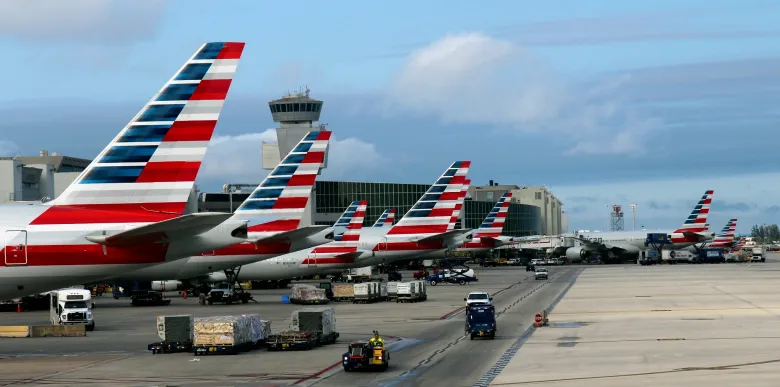
American Airlines is bringing back daily nonstop flights between Miami and Cap-Haïtien beginning Sunday, November 1, 2026, giving Haitian families, business travelers and members of the diaspora another direct connection between the United States and Haiti.
The new service will operate from Miami International Airport (MIA) to Hugo Chávez International Airport (CAP) in Cap-Haïtien using Boeing 737 aircraft. It marks the return of a major U.S. airline to Haiti after commercial service was suspended in late 2024 because of security concerns.
According to American Airlines, the route will operate every day, connecting South Florida directly with northern Haiti. The scheduled departure from Miami is approximately 10:15 a.m., with the return flight leaving Cap-Haïtien at approximately 1:15 p.m. Flight schedules can vary, so passengers should confirm their departure and arrival times with the airline before traveling.
The return of the route is especially important for South Florida, home to a large Haitian-American community. For families who regularly travel to Haiti to visit relatives, attend family events or handle business, the direct flight offers another option without having to rely on connecting flights or smaller operators.
Travelers from other U.S. cities may also be able to connect through Miami, making Cap-Haïtien more accessible to members of the Haitian diaspora living outside Florida.
American Airlines announced the route in June as part of its expansion across Mexico, the Caribbean and Latin America. With Cap-Haïtien joining its network, the airline reaches 100 destinations across those regions.
The return is also significant for northern Haiti, where Cap-Haïtien serves as an important gateway for surrounding communities and travelers heading to destinations across the North, Northeast and Northwest departments.
The service comes as U.S. flights to Port-au-Prince remain restricted because of security threats to commercial aircraft. In November 2024, gunfire struck several aircraft near the Haitian capital, prompting U.S. airlines to suspend service.
The Federal Aviation Administration’s restrictions have prevented U.S. carriers from operating in the affected airspace around Port-au-Prince, while Cap-Haïtien remains outside the restricted area and available for commercial service.
American Airlines previously served Cap-Haïtien before suspending its Haiti operations in 2020. The November 1 launch brings the northern city back into the airline’s network during the winter travel season.
For many Haitian families, the return of a daily American Airlines flight is more than a new route. It means another direct way to travel between South Florida and northern Haiti, reconnect with loved ones and support business and tourism activity in the region.
As the first flight prepares to depart Miami on Sunday, attention will be on whether the restored service can provide a reliable connection for travelers who have faced limited U.S. airline options since 2024.














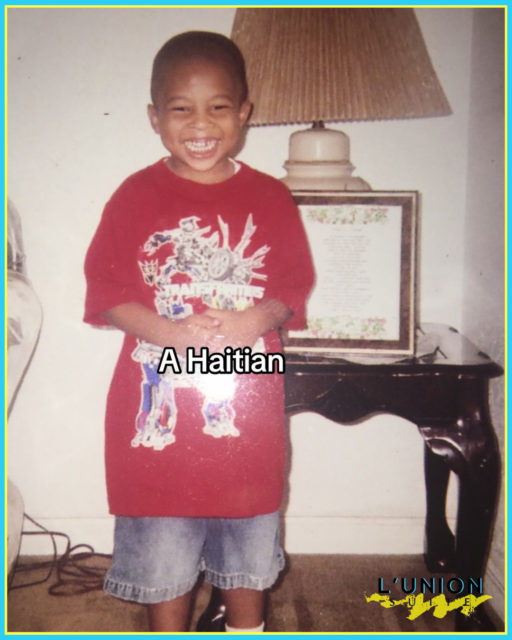



![Haitian-American actor Da’Vinchi sat down with The Breakfast Club this week to address the intense backlash he received after comments made during an October appearance on Cam Newton’s Funky Friday podcast. The original remarks, touching on American work ethic, the Black diaspora, and the idea of “moving on” from slavery went viral, leading to widespread criticism and accusations of dismissing the unique nature of the transatlantic slave trade.

On Tuesday’s episode, Da’Vinchi directly confronted the fallout. He noted that he is not heavily active on social media and only fully grasped the reaction after people began calling him. He firmly rejected the notion that Black Americans treat slavery as an excuse for present-day conditions.
A central theme of the appearance was his repeated insistence that “moving forward doesn’t mean forgetting.” He discussed the lasting impact of trauma, referencing ideas from Dr. Bruce Lipton’s The Biology of Belief around epigenetic and cellular memory, he concept that ancestral experiences can be felt on a cellular level today.
The conversation also covered systemic oppression in Black America and personal relationships. Da’Vinchi argued that everyone is entitled to their own dating preferences, but noted that fear of cultural backlash has led some people to keep interracial relationships private.
Haiti was raised as a direct parallel during the discussion. Charlamagne tha God pointed out that Haiti is “a nation whose history [is] profoundly shaped by slavery, colonialism, foreign intervention, [and] exploitation of its economics,” then asked whether Da’Vinchi would tell Haitian people to simply move on from that history.
Da’Vinchi responded by citing Jean-Baptiste Point du Sable, the Haitian-born pioneer widely recognized as the founder of Chicago. He said he would encourage Haitians to “move forward the same way” du Sable did when he left Saint-Domingue and established a thriving trading post that became the foundation of one of America’s major cities.
The appearance has continued to generate discussion across the diaspora about history, identity, and accountability.
🎥 @breakfastclubam
#lunionsuite #haitianamerican](https://www.lunionsuite.com/wp-content/uploads/2012/07/869770525_18648825085023307_7422511773279890723_n-512x640.jpg)


![Haitian-American actor Da’Vinchi sat down with The Breakfast Club this week to address the intense backlash he received after comments made during an October appearance on Cam Newton’s Funky Friday podcast. The original remarks, touching on American work ethic, the Black diaspora, and the idea of “moving on” from slavery went viral, leading to widespread criticism and accusations of dismissing the unique nature of the transatlantic slave trade.
On Tuesday’s episode, Da’Vinchi directly confronted the fallout. He noted that he is not heavily active on social media and only fully grasped the reaction after people began calling him. He firmly rejected the notion that Black Americans treat slavery as an excuse for present-day conditions.
A central theme of the appearance was his repeated insistence that “moving forward doesn’t mean forgetting.” He discussed the lasting impact of trauma, referencing ideas from Dr. Bruce Lipton’s The Biology of Belief around epigenetic and cellular memory, he concept that ancestral experiences can be felt on a cellular level today.
The conversation also covered systemic oppression in Black America and personal relationships. Da’Vinchi argued that everyone is entitled to their own dating preferences, but noted that fear of cultural backlash has led some people to keep interracial relationships private.
Haiti was raised as a direct parallel during the discussion. Charlamagne tha God pointed out that Haiti is “a nation whose history [is] profoundly shaped by slavery, colonialism, foreign intervention, [and] exploitation of its economics,” then asked whether Da’Vinchi would tell Haitian people to simply move on from that history.
Da’Vinchi responded by citing Jean-Baptiste Point du Sable, the Haitian-born pioneer widely recognized as the founder of Chicago. He said he would encourage Haitians to “move forward the same way” du Sable did when he left Saint-Domingue and established a thriving trading post that became the foundation of one of America’s major cities.
The appearance has continued to generate discussion across the diaspora about history, identity, and accountability.
🎥 @breakfastclubam
#lunionsuite #haitianamerican](https://scontent-yyz1-1.cdninstagram.com/v/t51.82787-15/869770525_18648825085023307_7422511773279890723_n.jpg?stp=dst-jpg_e35_tt6&_nc_cat=110&ccb=7-5&_nc_sid=18de74&efg=eyJlZmdfdGFnIjoiQ0FST1VTRUxfSVRFTS5iZXN0X2ltYWdlX3VybGdlbi5DMyJ9&_nc_ohc=fw5lnXrS2zIQ7kNvwG_4__Q&_nc_oc=Adr3sB5vD33H92MvpDBCie5grklthP1Hs_RXk7jE1hE9Qj_4S25Tn7B97WXag4eogn8&_nc_zt=23&_nc_ht=scontent-yyz1-1.cdninstagram.com&edm=ANo9K5cEAAAA&_nc_gid=JuvujS0jKp7XoTDxCoG81A&_nc_tpa=Q5bMBQKGeMqMNX1OTd3Lt4PyRq1UAgNIvDq1SifAoJUdWUsxJ9YX2nKRNnhsqpC6iwXVhjSa7M65TNp-&oh=00_AQR224awlpJGzS4wiM40CUqe8UesvMcF7tgfP3eDvmU6jQ&oe=6AEC1055)

Add Comment