




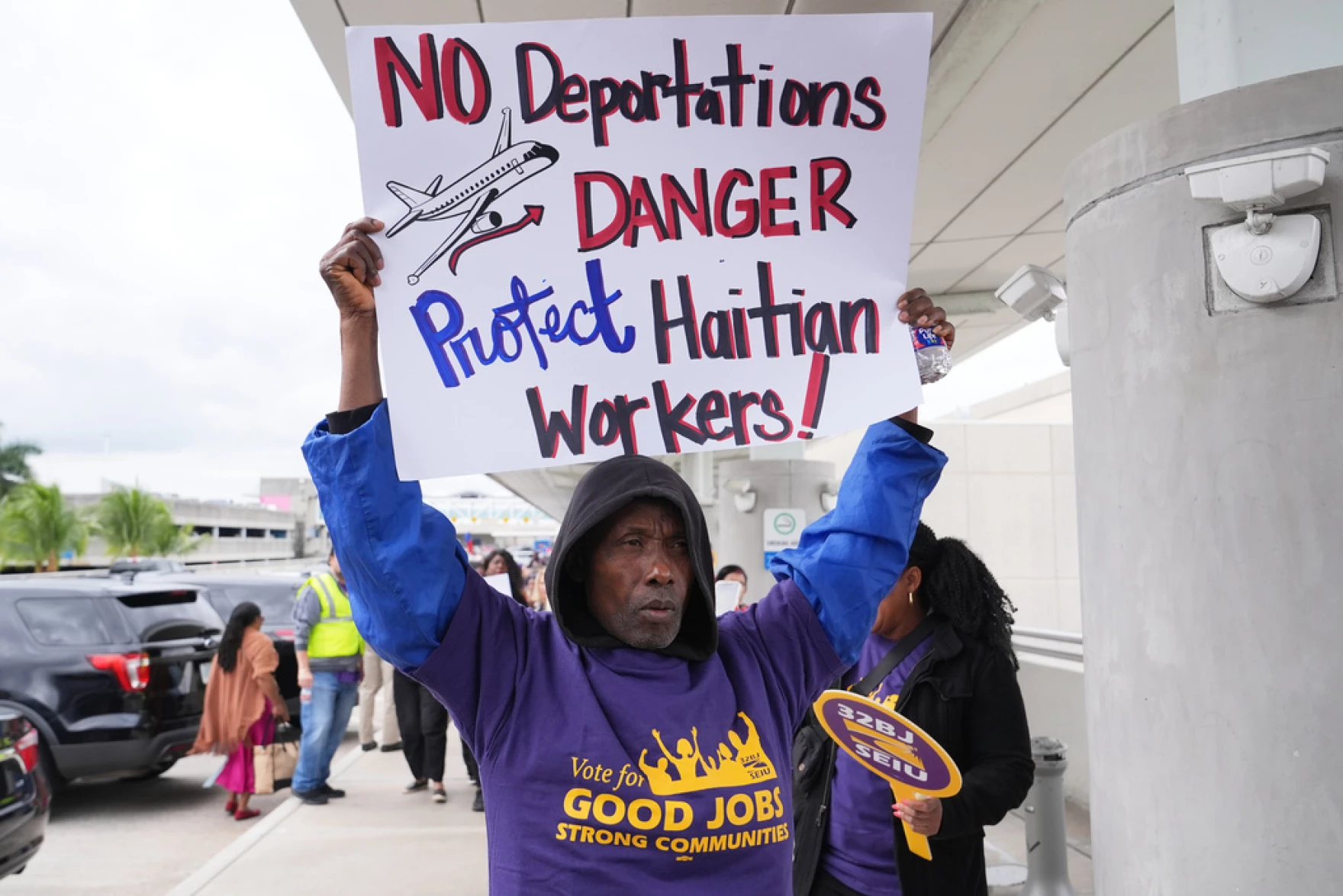
Florida’s hospitality industry is asking the federal government for more time and clearer guidance as thousands of workers face uncertainty following the latest legal developments surrounding Temporary Protected Status for Haitians and Syrians.
The Florida Restaurant & Lodging Association has joined hospitality and restaurant industry groups in calling for a 90-to-120-day transition period before affected TPS workers lose employment authorization. The groups are also seeking clear federal instructions on employment reverification, E-Verify requirements and protections for businesses trying to comply with changing rules.
The request comes after the U.S. Supreme Court cleared the way for the Trump administration to move forward with ending TPS protections for hundreds of thousands of Haitians and several thousand Syrians.
For Florida’s hotels and restaurants, the concern goes beyond immigration paperwork. Industry leaders say many TPS holders are longtime, legally authorized employees who play important roles in daily operations. Losing experienced workers with little notice, they warn, could create sudden staffing shortages and disrupt businesses across one of the state’s most important industries.
According to the Florida Restaurant & Lodging Association, the ruling could affect an estimated 93,000 workers in Florida. The association also says TPS holders contribute approximately $2.6 billion annually to the state’s economy.
“Many affected employees are long-serving, legally authorized workers who are central to restaurant operations,” industry groups wrote in their request for federal guidance, warning that states with large Haitian TPS populations could lose a significant share of their hospitality workforce in a short period.
The issue carries particular weight in Florida, home to one of the largest Haitian communities in the United States. Haitian workers are part of the state’s hospitality, healthcare, construction and other essential industries, while many have spent years building families and contributing to local communities.
The debate has also drawn political opposition from both parties. Florida Republican Rep. Carlos Giménez recently said deporting Haitians currently protected by TPS back to Haiti would be a “huge mistake,” pointing to the country’s severe security crisis.
For Haitian families, the stakes are deeply personal. Losing work authorization could mean losing jobs, income and the ability to support loved ones in both the United States and Haiti. For Florida businesses, it could mean losing trained and experienced employees with little time to prepare.
The hospitality industry is now asking for what it calls an “orderly runway” — more time for workers and employers to understand what comes next and adjust to the changing legal landscape.
As the future of Haitian TPS remains uncertain, one question is becoming harder for Florida to ignore: what happens to the state’s economy when thousands of workers who have helped keep it running are suddenly pushed out of the legal workforce?



![Grammy-winning producer and Haitian cultural ambassador Michaël Brun is bringing BAYO back to Miami’s Little Haiti on November 22, for a free block party celebrating the movement’s 10th anniversary, made possible through a major partnership with Rockstar Games.
Presented with support from Rockstar Games, the company behind the #GrandTheftAuto (https://www.instagram.com/explore/tags/grandtheftauto/) franchise, the event will welcome up to 7,500 attendees, the largest Little Haiti edition to date. Admission is free, with tickets distributed through a raffle and more than half reserved specifically for Florida residents and Haitian communities. Fans can sign up now at [bayotour.com]
In announcing the return, Brun said: “10 years ago, BAYO made its US debut as a free block party in Little Haiti celebrating Haitian and Caribbean culture. That show was the beginning of a beautiful journey across 12 cities, over 50,000 tickets sold, multiple arena and park shows and over 140 artist guests from around the world. I’m so proud to be bringing BAYO back to Little Haiti for our biggest show ever on November 22nd. New venue, huge surprises, our most iconic lineup of all time and FREE tickets courtesy of Rockstar Games.”
The timing adds another layer of visibility. Rockstar Games’ highly anticipated GTA VI is set for release on November 19, 2026, just three days before the BAYO celebration. The game’s fictional Vice City is famously inspired by Miami, placing the partnership and the Little Haiti event in the same cultural spotlight.
The Little Haiti return closes an anniversary run that already included Boston’s Agganis Arena and a sold-out three-night residency at Brooklyn Paramount. With Rockstar Games’ support making the celebration free and accessible, the 10th anniversary returns full circle to the neighborhood where BAYO began, bringing music, culture, and community together on a bigger stage.
#lunionsuite #haitianamerican](https://www.lunionsuite.com/wp-content/uploads/2015/04/857202981_18645558742023307_1930732005552624620_n-512x640.jpg)



![Grammy-winning producer and Haitian cultural ambassador Michaël Brun is bringing BAYO back to Miami’s Little Haiti on November 22, for a free block party celebrating the movement’s 10th anniversary, made possible through a major partnership with Rockstar Games.
Presented with support from Rockstar Games, the company behind the #GrandTheftAuto (https://www.instagram.com/explore/tags/grandtheftauto/) franchise, the event will welcome up to 7,500 attendees, the largest Little Haiti edition to date. Admission is free, with tickets distributed through a raffle and more than half reserved specifically for Florida residents and Haitian communities. Fans can sign up now at [bayotour.com]
In announcing the return, Brun said: “10 years ago, BAYO made its US debut as a free block party in Little Haiti celebrating Haitian and Caribbean culture. That show was the beginning of a beautiful journey across 12 cities, over 50,000 tickets sold, multiple arena and park shows and over 140 artist guests from around the world. I’m so proud to be bringing BAYO back to Little Haiti for our biggest show ever on November 22nd. New venue, huge surprises, our most iconic lineup of all time and FREE tickets courtesy of Rockstar Games.”
The timing adds another layer of visibility. Rockstar Games’ highly anticipated GTA VI is set for release on November 19, 2026, just three days before the BAYO celebration. The game’s fictional Vice City is famously inspired by Miami, placing the partnership and the Little Haiti event in the same cultural spotlight.
The Little Haiti return closes an anniversary run that already included Boston’s Agganis Arena and a sold-out three-night residency at Brooklyn Paramount. With Rockstar Games’ support making the celebration free and accessible, the 10th anniversary returns full circle to the neighborhood where BAYO began, bringing music, culture, and community together on a bigger stage.
#lunionsuite #haitianamerican](https://scontent-yyz1-1.cdninstagram.com/v/t51.82787-15/858197944_18645558700023307_686072295350904763_n.jpg?stp=dst-jpg_e35_tt6&_nc_cat=100&ccb=7-5&_nc_sid=18de74&efg=eyJlZmdfdGFnIjoiQ0FST1VTRUxfSVRFTS5iZXN0X2ltYWdlX3VybGdlbi5DMyJ9&_nc_ohc=bOQ5XMx_Z1YQ7kNvwGG7S4C&_nc_oc=AdpRGLfZNHddto393TLgTmmy4hfWc5JLTXDdw5hgJXVgYUpW7ZDy46ppArbX5fDarcg&_nc_zt=23&_nc_ht=scontent-yyz1-1.cdninstagram.com&edm=ANo9K5cEAAAA&_nc_gid=mq65anTJvbtIjGTqLlD80A&_nc_tpa=Q5bMBQKe45SIwQKG3YiqBkvjD0dTp07rD7uu1DcA6dHCyruRFG2Ev8NCBVSFokFIEJ9V1ewvlYkFqIT9&oh=00_AQOftVSsE-G2Ggb9FIv4kTknd8mxAhdmbXMDulTvTHqBaw&oe=6ADD5033)