




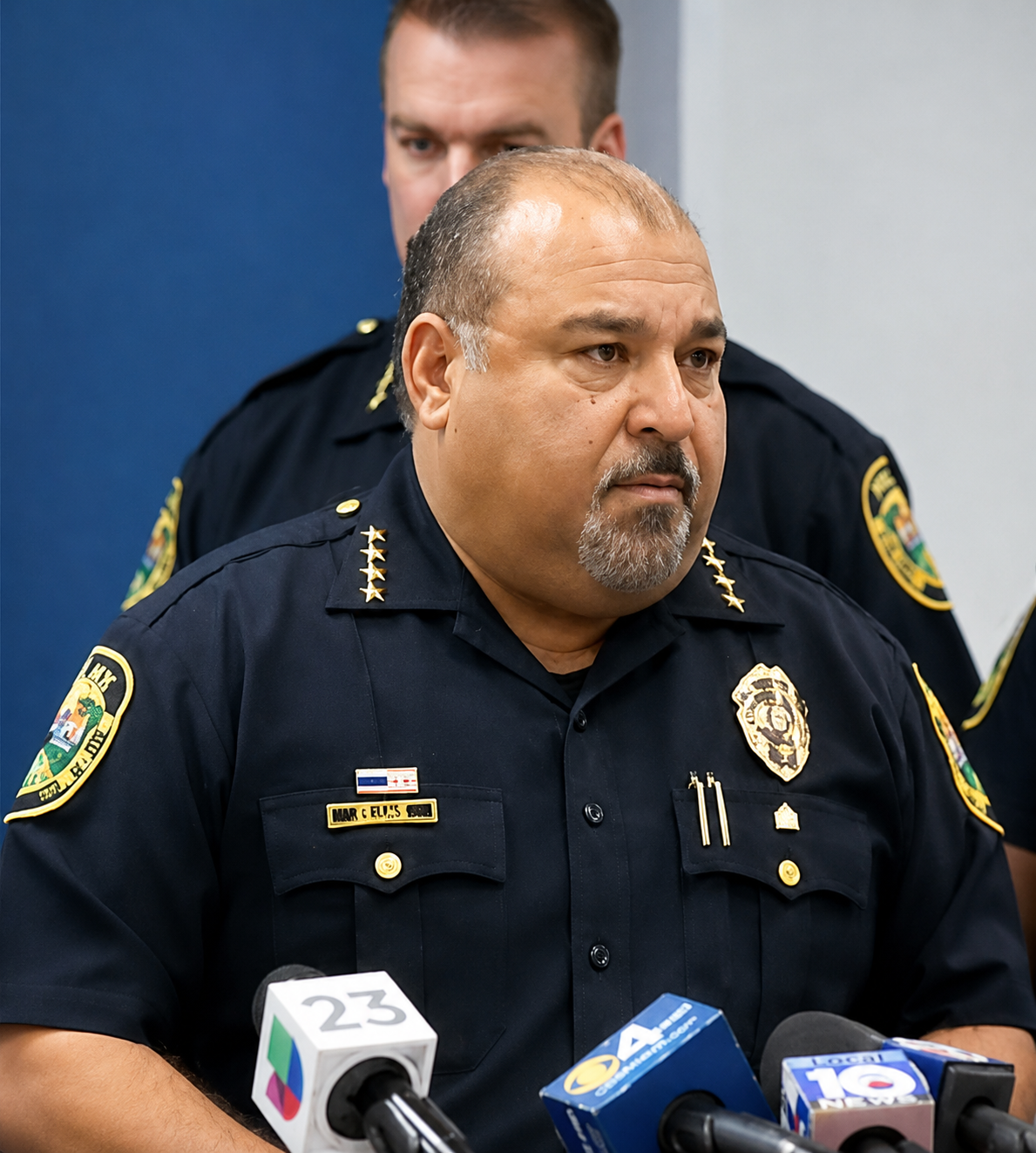
Former North Miami Police Chief Marc Elias Jr., a Haitian-American law enforcement leader who broke barriers in South Florida, has died in Haiti at the age of 64.
Elias died Thursday night, August 20, in Port-au-Prince after becoming seriously ill and being taken to a hospital. His family has confirmed his death. The exact cause has not been officially confirmed, although early reports have pointed to possible food poisoning.
Elias was in Haiti assisting a family member with security matters connected to a Toyota dealership as the country continues to face serious security challenges.
Born in Miragoâne, Haiti, Elias moved to the United States in 1982. He attended Collège Roger Anglade in Port-au-Prince before earning a degree in criminal justice administration from Columbia Southern University in Alabama.
He went on to build a long career in South Florida law enforcement, including time with the Miami Police Department. In 1999, Elias became police chief of Florida City, making him one of the early Haitian-American leaders to hold a police chief position in Miami-Dade County.
His career later brought him to North Miami. Elias joined the North Miami Police Department as assistant chief in 2010 and was promoted to chief in 2011. His appointment made him the first Haitian-American to lead the North Miami Police Department, a significant milestone in a city with a large Haitian-American population.
During his time as chief, Elias worked to strengthen relationships between South Florida law enforcement and the Haitian National Police. He made several trips to Haiti to share knowledge and experience in areas including community policing.
Elias stepped down as North Miami police chief in February 2014 after reaching an agreement with the city that was described at the time as an amicable conclusion to his service. His departure came after scrutiny surrounding expenses related to trips to Haiti.
Following news of his death, the North Miami Police Department expressed its condolences to Elias’ family and loved ones, honoring his years of service to the city and its community.
For many in South Florida’s Haitian-American community, Elias’ legacy goes beyond his rank. He was a trailblazer who broke through barriers in law enforcement and became an example of what was possible for Haitian-Americans in public service.
His death leaves behind a legacy that reaches from South Florida to Haiti—a life spent serving communities on both sides of the water.