






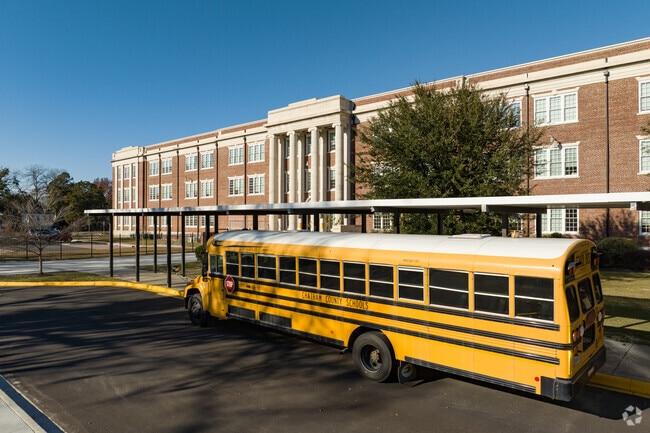
Public school closures are on the rise across the United States, according to newly released federal data, as districts continue to grapple with declining student enrollment and the end of pandemic-era funding that helped keep many schools open.
Data released by the National Center for Education Statistics (NCES) shows that more than 1,000 public schools closed during the 2025–26 school year, marking the fourth consecutive year that school closures have increased nationwide. By comparison, 755 public schools closed during the 2021–22 school year, representing a 35% increase over four years.
Education experts say the trend is being driven by a combination of factors, including lower birth rates, fewer students enrolling in public schools, and the expiration of billions of dollars in federal COVID-19 relief funding that temporarily helped school districts cover operating costs.
“We call it the big shrink,” said Marguerite Roza, director of Georgetown University’s Edunomics Lab. “Enrollment at public schools is declining, partly because there are fewer kids in the U.S.”
During the COVID-19 pandemic, many school districts delayed difficult budget decisions by relying on emergency federal relief funds. Those funds have now expired, leaving many districts to adjust to smaller student populations and tighter budgets. Because state funding is often based on enrollment, fewer students can mean significantly less funding for school systems.
As a result, districts across the country are consolidating campuses, closing underused schools, and reorganizing resources in an effort to reduce operating expenses.
The trend is affecting communities nationwide. School districts in Houston, Philadelphia, Pittsburgh, and Broward County, Florida, are among those planning additional school closures as they respond to declining enrollment and financial pressures.
For families, school closures can bring significant changes. Students may be reassigned to new campuses, face longer commutes, or lose access to neighborhood schools that have served their communities for decades. Educators and parents have also expressed concern about larger class sizes and the impact closures may have on students’ academic and emotional well-being.
While some education leaders argue that consolidating schools is necessary to keep districts financially stable, others worry the closures could disproportionately affect underserved communities and neighborhoods where schools often serve as important community centers.
The newly released federal data highlights a growing challenge facing public education across the country. As enrollment continues to decline and financial pressures mount, many school districts are expected to make difficult decisions about staffing, budgets, and whether additional schools will need to close in the years ahead.