






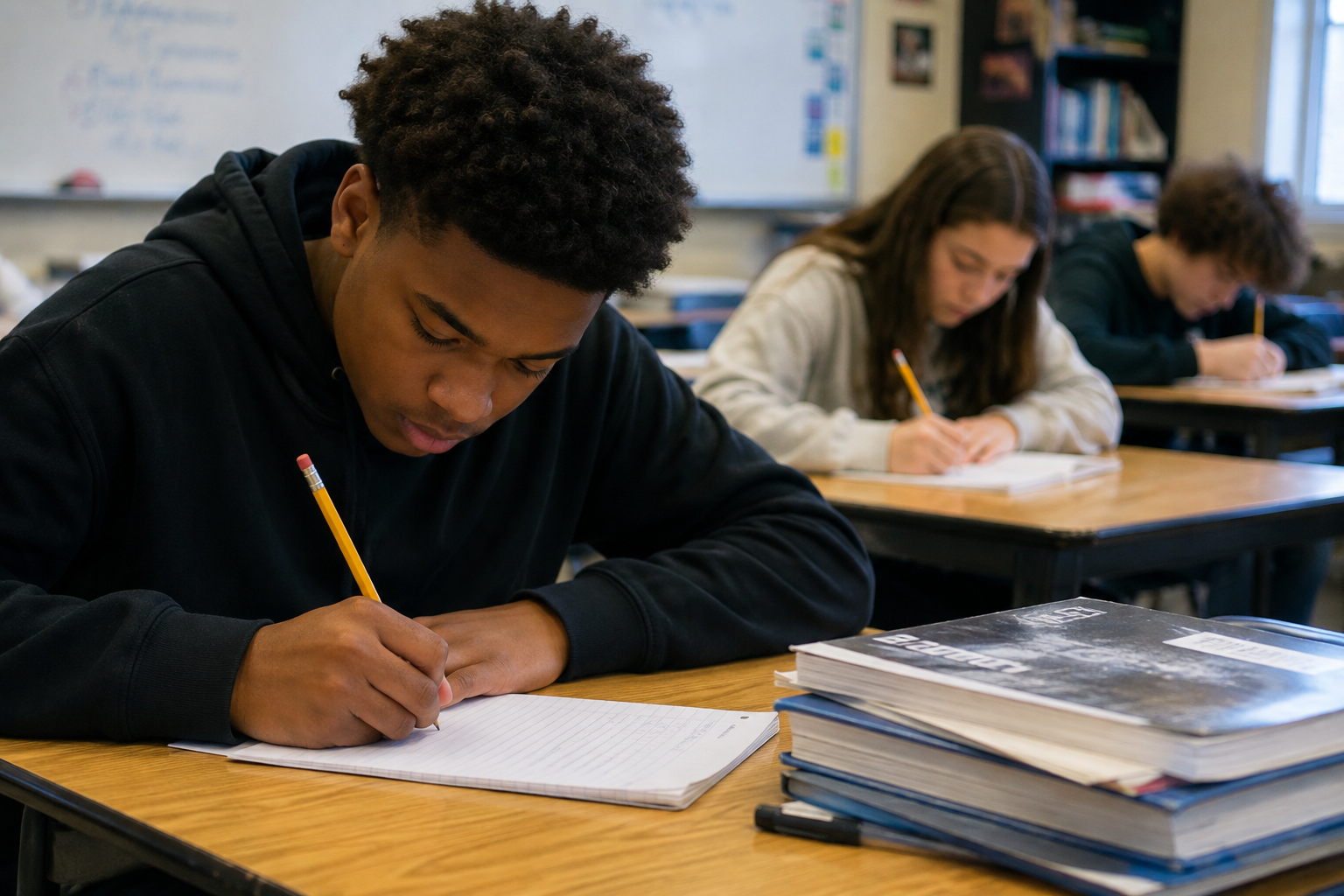
AI has quickly become part of everyday life for students. Now, some educators are turning back to something much older: pen and paper.
As schools and colleges deal with students using AI tools to complete assignments, educators are changing how they test and evaluate students. Some are bringing back handwritten exams, supervised writing and technology-free assignments to get a clearer picture of what students can do without an AI chatbot doing the work for them.
The concern is widespread. A Pew Research Center survey found that 59% of U.S. teens say students at their school use AI chatbots to cheat at least somewhat often. The survey also found that about one in 10 teens say they use chatbots to do all or most of their schoolwork.
Some schools are responding by limiting technology during certain assignments rather than removing computers from the classroom altogether. Teachers may ask students to complete essays by hand, take exams in person or work without phones and laptops so they can better understand a student’s own thinking and writing ability.
The shift is not necessarily about rejecting technology. For many educators, it’s about finding a balance between using AI as a learning tool and making sure students still develop the skills they are expected to learn themselves.
Internationally, some education systems are also experimenting with stricter measures. In Denmark, for example, schools have increased supervised written work and introduced oral defenses for some assignments as educators respond to concerns about AI-assisted cheating.
AI is not disappearing from education anytime soon. But as schools figure out how to use it responsibly, the classroom may look a little more familiar again — with students putting away their screens, picking up a pencil and showing what they know on their own.
The question now is simple: Can schools teach students to use AI without letting AI do the learning for them?