



News • Politics

American Missionary Accused of Sexually Abusing Children at Unauthorized Orphanage in Northern Haiti

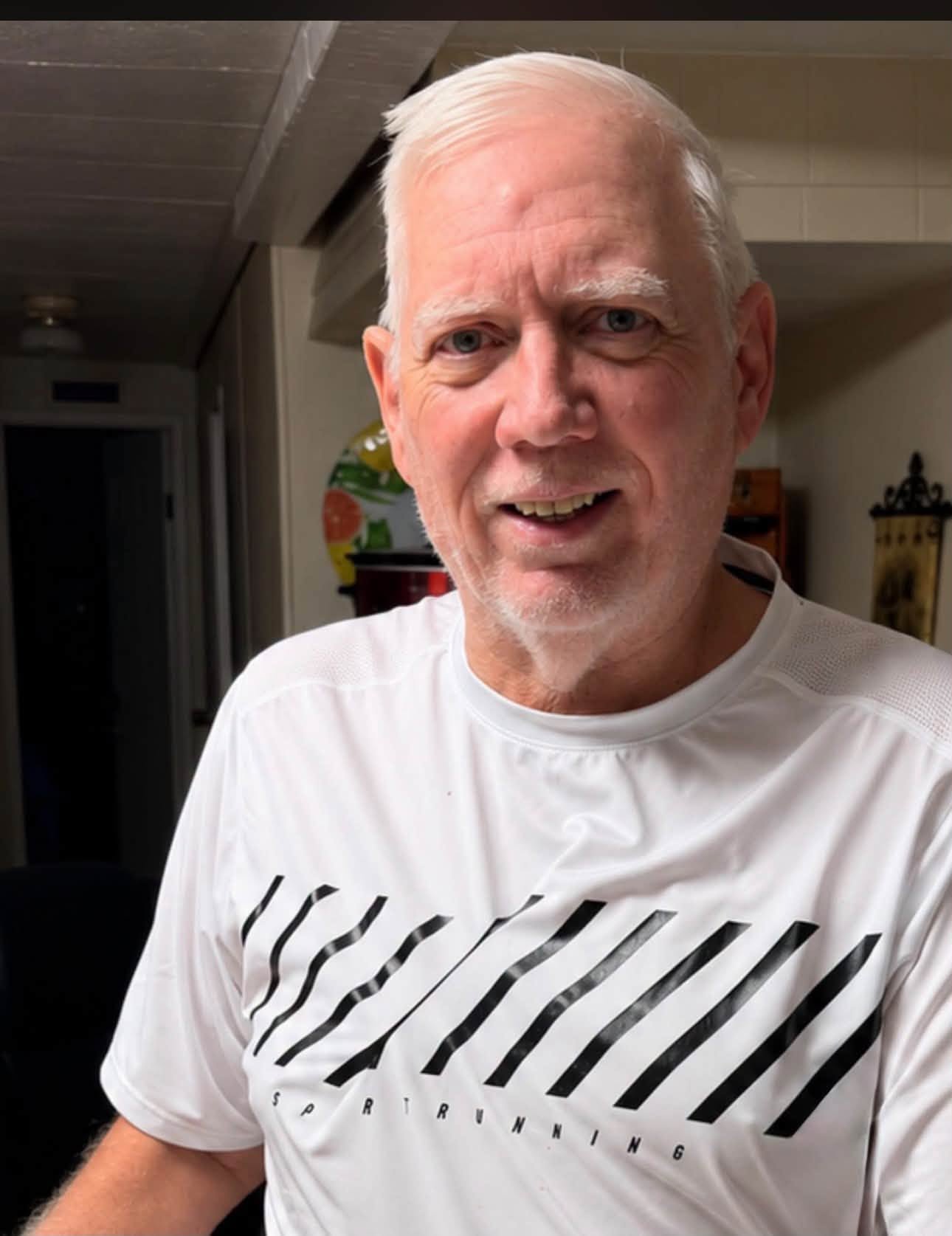
An American missionary who spent more than 20 years working with children in Haiti is under investigation following allegations of sexual abuse involving minors at an orphanage in Cap-Haïtien.

Thomas “Tom” Osbeck, who has been involved in Christian missionary work in Haiti for decades, was arrested on September 30, 2026, according to Haitian police.

The allegations involve an orphanage Osbeck reportedly operated in Morne Rouge, an area near Cap-Haïtien in northern Haiti.

Authorities say the facility was operating without the required authorization, raising additional questions about how it was able to house children without proper oversight.

How the Investigation Began

According to reporting by the Associated Press, members of the public brought Osbeck to the attention of local authorities after allegations involving children at the orphanage surfaced.

Cap-Haïtien police spokesperson Arold Jean said U.S. authorities arrested Osbeck on September 30.

During the investigation, Haitian authorities inspected the orphanage and discovered at least 12 minors living at the facility.

Police also examined Osbeck’s cellphone and reported finding sexually explicit messages allegedly sent to children.

Twelve children, including 11 girls between the ages of 7 and 17, underwent medical examinations as part of the investigation.

Authorities have not publicly released the results of those examinations.

The children involved are minors, and their identities have not been disclosed.

Authorities Investigate Unauthorized Orphanage

Investigators determined that the orphanage did not have the required authorization to operate.

In Haiti, residential facilities caring for children are subject to government oversight, including requirements intended to protect minors and ensure appropriate living conditions.

The discovery of an unauthorized orphanage has raised concerns about supervision and the safeguards available to children living in such facilities.

Police have not publicly explained how long the orphanage had been operating without authorization or whether previous complaints had been filed against it.

Possible Extradition to the United States

Haitian police spokesperson Arold Jean said he expects Osbeck to be extradited to the United States.

However, an expected extradition is not the same as a completed extradition, and no confirmed transfer date has been publicly announced in the information available.

As of the reporting provided, no formal U.S. charging documents or Justice Department statement identifying specific criminal counts against Osbeck had been released.

It is also unclear whether Osbeck has retained an attorney or issued a public response to the allegations.

The accusations remain allegations, and Osbeck has not been reported convicted in connection with this case.

Osbeck’s History of Missionary Work in Haiti

Osbeck has been publicly associated with Jesus in Haiti Ministries, a Christian nonprofit based in Fort Wayne, Indiana.

The organization traces its beginnings to 2003, and historical records identify Osbeck as a former executive director. He has also been linked to Ignite Your Faith Ministries.

However, the orphanage now under investigation in Cap-Haïtien should not be confused with the earlier ministry’s work. The allegations against Osbeck do not establish wrongdoing by Jesus in Haiti Ministries or its current leadership.

Le Floridien.com

Other Cases Involving American Missionaries in Haiti

Osbeck’s detention follows other criminal cases involving allegations of sexual abuse of Haitian children by American missionaries.

In September 2026, U.S. federal authorities charged Maylon Foshee, 23, of Louisiana, with offenses related to alleged sexual abuse of minors during missionary trips to Gonaïves.

In a separate case, Michael Geilenfeld, an American who operated an orphanage in Port-au-Prince, was convicted by a federal jury in Miami in 2025 of sexually abusing boys in his care.

AP News

These are separate cases, and there is no reported evidence that the individuals were working together.

Questions Remain About Child Protection and Oversight

The investigation has brought renewed attention to the safety of children living in residential facilities and the importance of proper oversight.

Among the unanswered questions are how long the Morne Rouge orphanage operated without authorization, whether authorities had received earlier complaints, and what arrangements have been made to protect the children involved.

For now, the case remains under investigation, and the reported findings must be assessed through the appropriate legal process.

The priority for authorities is ensuring that the children receive protection, medical attention and any additional support they may need.

Facebook Comments

Add Comment

Click here to post a comment

Add a Comment

ADVERTISE WITH US

Categories

Featured In:


Instagram

@lunionsuite
#1 Haitian-American Platform®️

@lunionsuite

🇭🇹𝗖𝗼𝘂𝗻𝘁𝗿𝘆.𝗣𝗲𝗼𝗽𝗹𝗲.𝗖𝘂𝗹𝘁𝘂𝗿𝗲 👩🏽‍💻𝗘𝘀𝘁 2011 𝗯𝘆:@mrswanda ⌨️𝗙𝗕𝗼𝗼𝗸:#TheHaitianAmerican 𝗙𝗲𝗮𝘁:@forbes @bet @blackenterprise @nbcnews @nytimes @miamiherald +
  • New White House Press Secretary Katie Zacharia appeared completely lost for words and visibly fumbling on her first day at the podium Tuesday, reading awkwardly from a script during a brief, heavily scripted debut that drew immediate criticism for its lack of command.
Zacharia, a conservative commentator and former senior communications adviser to Trump Media & Technology Group, succeeded Karoline Leavitt and stepped to the lectern in the James Brady Press Briefing Room for the first time. The entire appearance lasted roughly 14 minutes. She spent most of it looking down at prepared remarks, speaking slowly and stiffly while praising President Trump’s record, midterm campaign efforts, and administration claims. Observers noted she rarely made sustained eye contact and appeared nervous as she worked through the notes.
The performance included a clear verbal stumble. When a reporter asked how she would balance the demanding job with her four children, Zacharia said, “So my president — excuse me, my husband,” before recovering with “That’s a good one.” The moment prompted laughter in the room. She also struggled to answer a question about U.S. intelligence sharing with Ukraine, saying she would have to get back to the reporter. After taking questions from just three outlets — Breitbart, Fox News, and the Daily Mail — she abruptly ended the briefing, telling reporters they could ask Trump their questions as he prepared to leave for a campaign trip to Alaska.
Critics described the debut as amateurish and unprepared. Journalists and commentators highlighted the heavy reliance on notes, the halting delivery, and the early exit. Former Biden press secretary Jen Psaki called it “basically an SNL skit.” Independent journalist Aaron Rupar said Zacharia “makes Karoline Leavitt seem like Winston Churchill.” Other assessments labeled it “brutal,” and “a train wreck.”
President Trump, asked about the briefing before boarding Marine One, said, “I thought she was very good.” White House communications director Steven Cheung called it a “tremendous start” and said she “commanded the room.” 
Sources: @scrippsnews 
@davidpakmanshow @headquarters
#lunionsuite #haitianamerican
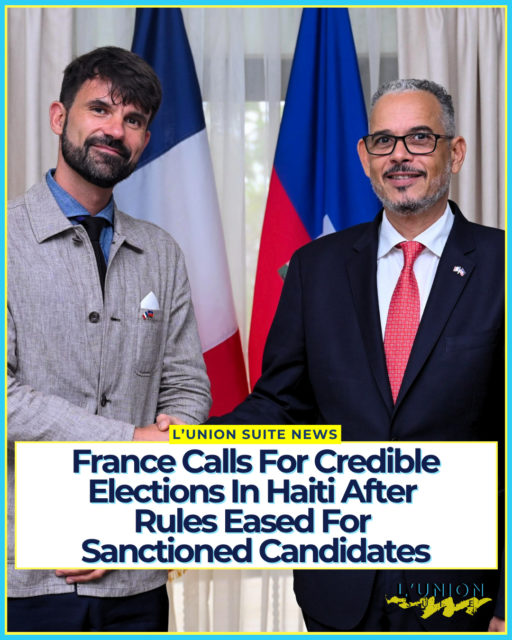
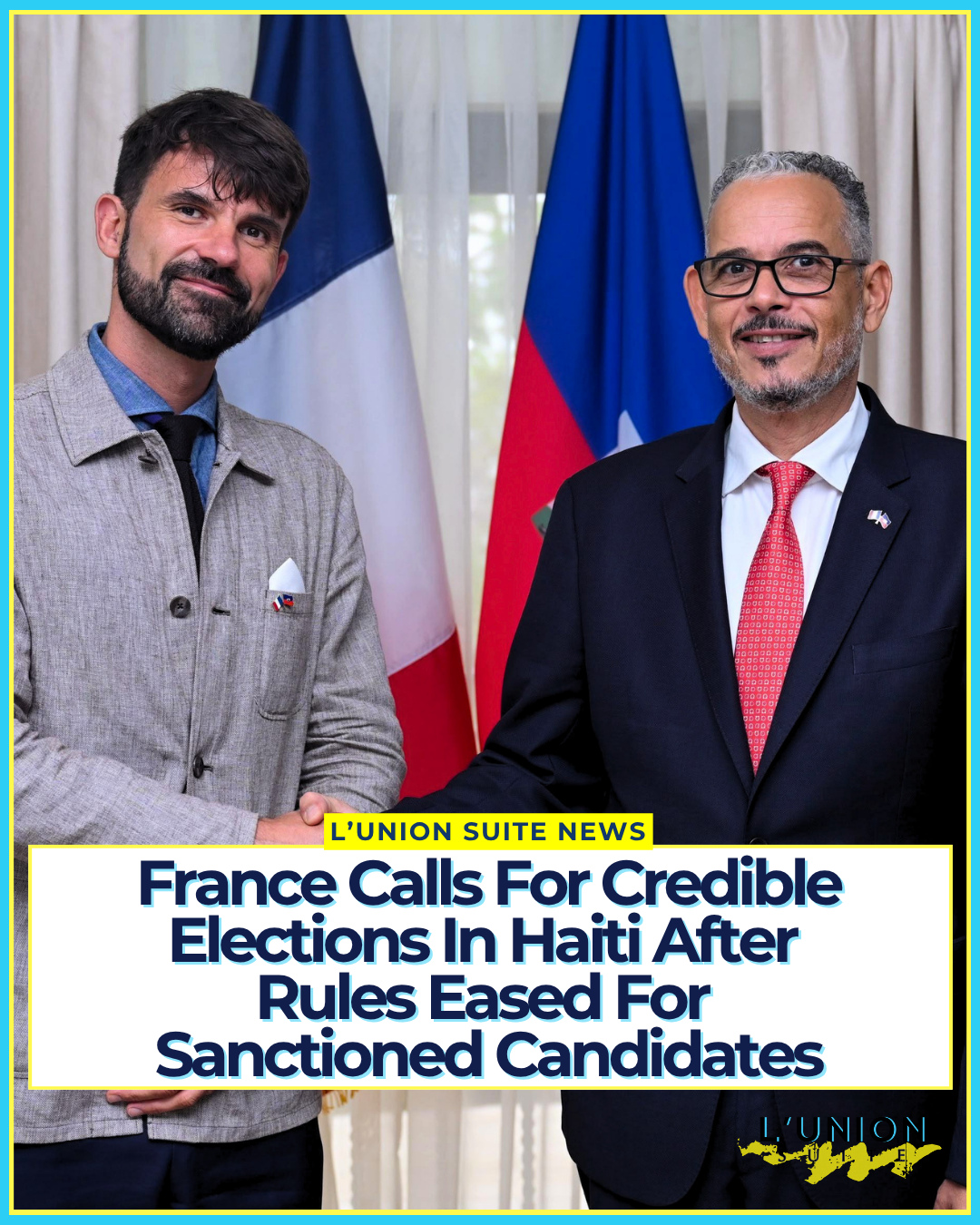
  • France is pressing for a credible electoral process in Haiti after transitional authorities removed requirements that had made it harder for individuals under sanctions from the European Union, Canada, and the United States, as well as people owing money to the government, to seek office.⁠
⁠
The changes came in a third revision of the electoral decree, published in early October 2026 by the office of Prime Minister Alix Didier Fils-Aimé. Under the previous rules, candidates had to submit a certificate from the Banque de la République d’Haïti (Haiti’s central bank) confirming they were not insolvent debtors, bankrupt, or barred from using checkbooks. That requirement functioned as a practical barrier for people who had lost access to banking services because of bilateral sanctions. It has been eliminated.⁠
⁠
The revised decree also loosens financial standards for future lawmakers and the next president. Candidates no longer need to prove they paid taxes every year for the past five years or show they have no outstanding debt to the national pension fund (ONA). They now only need to demonstrate current tax compliance. Certificates related to debts with the Industrial Development Fund were also dropped.⁠
⁠
The decree continues to bar individuals sanctioned by the United Nations Security Council from running for president, Parliament, or local offices. The UN list primarily includes gang leaders, along with one former lawmaker. It does not automatically disqualify those sanctioned only by individual governments or the European Union.⁠
⁠
On October 8, French Ambassador Gautier Lekens met with Prime Minister Fils-Aimé. Lekens said he reaffirmed France’s commitment to “a credible electoral process that allows Haitians to freely choose their leaders, with candidates who meet the integrity standards essential for a free and democratic election.” He added that Haiti’s future president “must be able to represent the country with dignity, defend its interests, and act in the best interests of its people both within Haiti and on the international stage.”⁠
⁠
#lunionsuite #haitianamerican
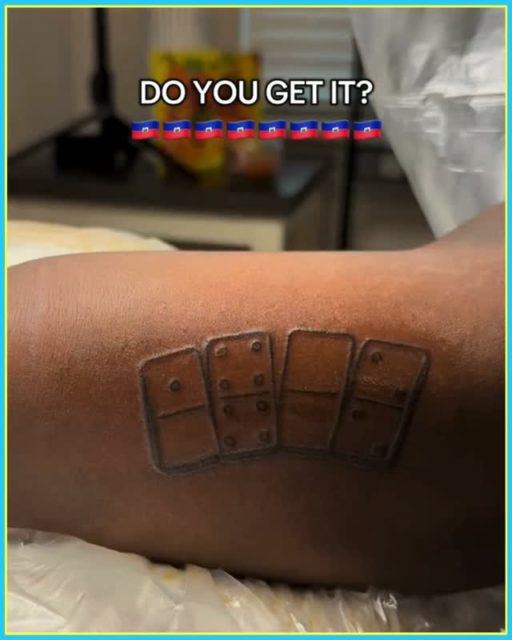
  • Oh Ya'll creative!!! 🤔🇭🇹 ⁠
🎥 @Realistinkstudio⁠
#lunionsuite #haitianamerican #haitian #haiti
  • Thomas “Tom” Osbeck, a longtime American missionary who spent more than two decades working with children in Haiti, faces allegations of sexual abuse involving minors at an unauthorized orphanage he operated in the Morne Rouge area of Cap-Haïtien.⁠
⁠
Haitian police say members of the public brought Osbeck to local authorities amid the claims. Cap-Haïtien police spokesperson Arold Jean told the Associated Press that U.S. authorities arrested him there on Sept. 30. Investigators determined the orphanage lacked the required operating authorization. At the site, Haitian authorities found at least 12 minors. A review of Osbeck’s cellphone revealed sexually explicit messages sent to children, Jean said. Twelve children, including 11 girls between the ages of 7 and 17, underwent medical examinations. ⁠
⁠
Jean has said he expects Osbeck to be extradited to the United States. No formal charging documents or U.S. Justice Department statement naming specific counts against him have been released. It is not clear whether he has legal representation.⁠
⁠
Osbeck has long been publicly identified as a founder and former executive director of Jesus in Haiti Ministries, a Fort Wayne, Indiana-based Christian nonprofit. In a recorded church talk he described first traveling to Haiti around 1998, returning, and naming the ministry after that experience. The organization’s own history places its formal start in 2003.  The Cap-Haïtien orphanage now under investigation is separate from that earlier work, according to available reporting. He's also linked to an organization called Ignite Your Faith Ministries.⁠
⁠
The case arrives amid other recent prosecutions involving American missionaries and Haitian children. Maylon Foshee, 23, of Mansfield, Louisiana, was charged in U.S. federal court in September with illicit sexual conduct with minors during trips to Gonaïves. Jeriah Mast, a former worker with Christian Aid Ministries, pleaded guilty the same month to federal counts tied to abuse in Haiti. In a separate matter, Michael Geilenfeld was convicted last year in Miami of sexually abusing boys at an orphanage he founded in Port-au-Prince.⁠
⁠
#lunionsuite #haitianamerican
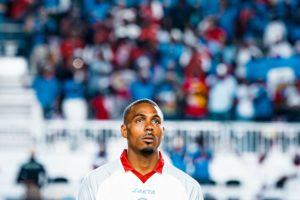
  • Haiti is exploring the possibility of building a modern, FIFA standard football stadium in Les Cayes as the country looks for a long term solution to the lack of suitable venues for its national teams to host international matches on home soil.
On Saturday, October 10, Minister of Youth and Sports Pythagore Dumas and Ministry Director General Wilfince Mombrun conducted a second inspection visit to Parc Larco in Les Cayes. The visit was part of the government’s efforts to determine whether the site could accommodate a stadium that would allow both the men’s national team, Les Grenadiers, and the women’s national team, Les Grenadières, to play official home matches in Haiti.
According to reports on the visit, the Ministry of Youth, Sports, and Civic Action (MJSAC) plans to have its sports infrastructure experts conduct a feasibility study to assess the project. Officials are considering the possibility of constructing a new, modern stadium rather than simply renovating the existing park.
However, a land dispute that has reportedly hindered the park’s proper use for more than a decade remains a significant obstacle. Minister Dumas said Prime Minister Alix Didier Fils-Aimé is involved in efforts to resolve the dispute.
The government has not yet released a construction timeline, project budget or financing plan. The proposal remains under evaluation, and the feasibility study will help determine whether the project can move forward.
The search for a suitable home venue has taken on added urgency following Haiti’s October 1 football match against the Dominican Republic. The match was followed by tensions surrounding crowd behavior at the stadium and Isidor’s post-match declaration. On October 2, Dominican Sports Minister Cruz announced that Haiti would no longer be allowed to use the Dominican Republic’s sports venues. President Abinader backed the decision.
Haiti’s difficulties hosting international matches predate the latest dispute. Insecurity in Port-au-Prince has prevented the national teams from using the capital’s principal football facilities, forcing them to play home-designated matches abroad or at neutral venues.
#lunionsuite #haitianamerican
  • Before saying “I do,” have you taken the time to ask yourself why you want to get married?⁠
⁠
Author, public speaker and writing strategist @VencheleSaintDic is encouraging people to have that conversation with themselves through her book, Why Do I Want to Get Married?: A Guided Journal for Clarity Before Commitment.⁠
⁠
The journal goes beyond finding the right partner. It encourages readers to look at their own expectations, emotional readiness, past relationship experiences and personal values before making a lifelong commitment.⁠
⁠
Saint Dic is also the founder of Pathway Coach Writing and the author of Journey to Redemption. She brings her background in public health leadership, writing and personal development into conversations about relationships, resilience and making intentional life choices.⁠
⁠
Whether someone is single, dating, divorced or simply questioning what marriage means to them, the journal offers prompts designed to help them better understand themselves and what they want from a relationship.⁠
⁠
Her message is simple: Before focusing on finding the right person, take time to understand yourself.⁠
⁠
📖 Learn more: Pathway Coach Writing⁠
Amazon: https://a.co/d/08JQ3F6c⁠
Website: https://www.pathwaycoachwriting.com⁠
⁠
#AD #lunionsuite #haitianamerican
  • Haiti’s Estephanie Charles brought elegance and cultural pride to Miss Grand International 2026 in Bangkok. Tanzania’s Jihan Mohin Dimachk was crowned the winner, becoming the first African and first Tanzanian titleholder in the pageant’s history. ⁠
⁠
Estephanie Charles, Miss Grand Haiti 2026, stood out with a striking national costume inspired by the hibiscus flower, a symbol closely connected to Haitian identity. Dominated by vibrant red and gold with a large floral detail, the design drew attention during the national costume presentation. She advanced in early voting rounds, including the Country’s Power of the Year competition, and reached the Top 15 in the national costume contest through website voting. Charles, known for her skills in fashion design, sewing, and styling, used her platform to speak about peace, empathy, and community. Her participation highlighted Haitian creativity and presence on the international pageant stage.⁠
⁠
Jihan Mohin Dimachk, a 30-year-old Tanzanian-Lebanese model and fashion entrepreneur, secured the crown after advancing through the Top 25 and Top 11. She also won the Miss Popular Vote award. Ecuador’s Shyare Andrade finished as first runner-up, followed by the Netherlands, Guatemala, and Vietnam in the top five. Côte d’Ivoire’s Marlène Kany Kouassi placed among the fifth runners-up and won Best in Swimsuit.⁠
⁠
Charles’s journey remains a proud moment of the 2026 edition, celebrating culture, style, and representation on the world stage.⁠
⁠
📸 @missgrandinternational⁠
#lunionsuite #haitianamerican #haitian #misshaiti
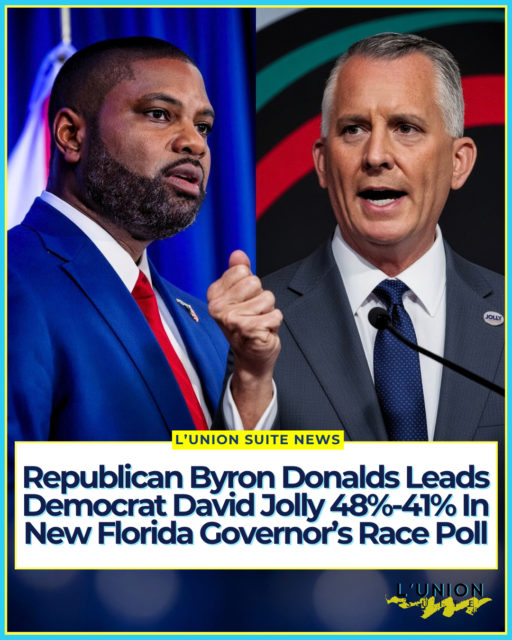
  • Republican U.S. Rep. Byron Donalds holds a 7-point lead over Democrat David Jolly in the race for Florida governor, according to a new NBC6/Telemundo Station Group poll conducted by Mason-Dixon Polling & Strategy.
The survey, released Tuesday and conducted Sept. 28 through Oct. 1 among 625 likely voters, found Donalds at 48%, Jolly at 41%, another candidate at 1%, and 10% undecided. The margin of error is ±4 percentage points. 
Both candidates are seeking to succeed term-limited Gov. Ron DeSantis after eight years in office. Donalds, 47, has represented Southwest Florida in Congress since 2021 and is a close ally of President Donald Trump; if elected, he would become Florida’s first Black governor. Jolly, 53, served in Congress from 2014 to 2017 as a Republican before becoming an independent in 2018 and joining the Democratic Party last year.
Men favor Donalds 55% to 33%, while women back Jolly 49% to 41%. White voters support Donalds 59% to 30%; Black voters support Jolly 76% to 10%; and Hispanic voters narrowly prefer Donalds 48% to 43%.
By party, Donalds takes 87% of Republicans and Jolly takes 85% of Democrats. Independents favor Jolly 47% to 28%, with 24% undecided. Regionally, Donalds leads in North Florida (60%-33%), Central Florida (55%-33%), and Southwest Florida (57%-33%). Jolly leads in Tampa Bay (48%-42%) and Southeast Florida (52%-36%).
Younger voters (18-34 and 35-49) lean narrowly toward Jolly, while older voters (50-64 and 65+) favor Donalds more decisively.
Florida voters are evenly split on President Trump’s job performance: 48% approve, 48% disapprove, and 4% are unsure. Republicans hold a substantial registration advantage statewide (roughly 5.65 million to 4.1 million as of late August). 
The 2026 general election is Tuesday, November 3, the outcome of this governor’s race and other contests will shape the direction of the state for years to come. Check your voter registration, confirm your polling location or mail-ballot status, and make a plan to vote early, by mail, or in person on November 3. Every ballot matters. Florida and the nation are counting on you to show up and decide the future.
🎥 Source: @NBC6
#lunionsuite
  • LET'S GO HAITI 🇭🇹
Haiti have advanced to the quarterfinals of the 2026/27 CONCACAF Nations League A and will meet the United States in a two-legged series next month, with a place in the Final Four and direct qualification for the 2027 Gold Cup on the line.
Les Grenadiers finished second in Group A with nine points from four matches (three wins, one loss) and a plus-four goal difference. They edged the Dominican Republic, which also finished on nine points, on goal differential. Curaçao won the group with 10 points.
Under new head coach David Badía, Haiti opened the group stage with a 3-2 comeback victory over Trinidad and Tobago at Sabina Park in Kingston, Jamaica. They followed with a 2-0 win over Costa Rica, also in Kingston, then defeated the Dominican Republic 4-1. Haiti closed the group with a 2-0 loss to Costa Rica but had already done enough to secure second place.
The United States, one of four pre-seeded teams that received a bye into the quarterfinals along with Mexico, Canada, and Panama, will face Haiti. The matchups were determined by CONCACAF rankings and final group standings, with the higher-ranked team hosting the second leg.
First leg: Saturday, November 14, 2026, at Sabina Park in Kingston, Jamaica. Kickoff is scheduled for 4:30 p.m. ET. Haiti will play its “home” leg at the neutral site in Jamaica due to ongoing security concerns in the country.
- Second leg: Tuesday, November 17, 2026, at TQL Stadium in Cincinnati.
The winner of the series will advance to the Nations League Final Four, scheduled for March 25–28, 2027, at SoFi Stadium in Los Angeles, and will qualify automatically for the 2027 CONCACAF Gold Cup. The loser will enter the Gold Cup preliminaries and must win a two-legged series in March 2027 to reach the tournament.
The United States hold a historical advantage in the series, and Haiti have not defeated the Americans since 1973. The November matches will be the first between the two teams in Nations League play.
For Haiti, the quarterfinal represents both a chance to build on their post-World Cup campaign and a significant test against one of CONCACAF’s top sides under Badía.
#lunionsuite #haitianamerican #haitian
  • Prime Minister Alix Didier Fils-Aimé presided over the official operational launch of the Gang Repression Force (FRG / Force de répression des gangs) on October 8, during a flag-raising ceremony at the Vertières military base in Tabarre. The event marked what the government described as a new phase in efforts to confront armed groups and restore state authority across the country.
The ceremony brought together Haitian government officials, representatives of the six troop-contributing countries, members of the diplomatic corps, and United Nations representatives. Haitian Armed Forces (FAd’H) personnel also participated. In his address, Fils-Aimé framed the FRG’s deployment as a turning point in the security response to armed groups.
“The state must regain control of its territory,” the prime minister declared. He outlined the force’s mission as supporting the recapture of areas under gang control, protecting the civilian population, and restoring republican order and the rule of law. He emphasized that security operations alone would not be sufficient and must be accompanied by the return of justice, public services, and state institutions conditions he described as essential for holding free, transparent, and credible elections.
Guatemala, El Salvador, Chad, Mongolia, Jamaica, and Sri Lanka are contributing troops to the FRG, which operates in support of Haitian security forces, including the Haitian National Police and the Armed Forces of Haiti. Representatives of the contributing countries reaffirmed their commitment to the effort. Military demonstrations highlighting operational capabilities of the contingents also formed part of the ceremony at Vertières.
The FRG, authorized by the UN Security Council under Resolution 2793 (2025), succeeded the Multinational Security Support Mission (MSS). Its mandate was recently extended until March 31, 2027. The force is commanded by Mongolian Major General Erdenebat Batsuuri, with Jack Christofides serving as Special Representative. As of late summer 2026, roughly 1,200–1,500 personnel had been deployed, with further contingents expected in the months ahead toward an authorized strength of up to 5,500.
#lunionsuite
  • A United Nations Panel of Experts on Haiti has documented the diversion of 908,001 items, predominantly ammunition, from stockpiles of the Dominican National Police. Some of the materiel was transferred to Haiti.⁠
⁠
The findings appear in the Panel’s final report (S/2026/714), transmitted in July, considered by the Security Council Committee on 3 September, and published as a Council document in early September. The report revisits an investigation that began in 2024 after Haitian authorities seized 5,000 rounds of ammunition from non-state actors in Mirebalais, in the Centre Department.⁠
⁠
The Italian manufacturer Fiocchi Munizioni confirmed that the seized rounds were produced in 2022 and belonged to a batch of 500,000 cartridges delivered that year to the Dominican National Police. After the Panel shared the information, Dominican authorities conducted an inventory of police stockpiles in October 2024 and arrested several officers. That inventory, detailed in a prior Panel report, revealed the large-scale diversion of 908,001 items, mostly ammunition.⁠
⁠
The diverted items included more than 489,000 rounds of 9mm cartridges, 230,000 rounds of 5.56×45mm, 26,000 rounds of 7.62×39mm, and 93,000 rounds of 12-gauge ammunition. Dominican security specialists told the Panel that the local market for 5.56×45mm and 7.62×39mm ammunition is very limited. Because these two calibers are widely used by Haitian armed groups, the specialists estimated it likely that most of this ammunition had been transferred to #Haiti.⁠
⁠
During inspections of seizures in Port-au-Prince in 2026, the Panel found ammunition consistent with the diverted Dominican police stocks in use by the 400 Mawozo gang and several groups operating in Bel-Air. Multiple security sources in both Haiti and the Dominican Republic indicated that corrupt officers in the Dominican police and armed forces had been involved in diversions, including sales in border areas for onward transfer to Haiti. The Dominican Ministry of Defense has stated that it maintains investigations into how certain Dominican-origin ammunition reached Haiti.⁠
⁠
#lunionsuite #haitianamerican
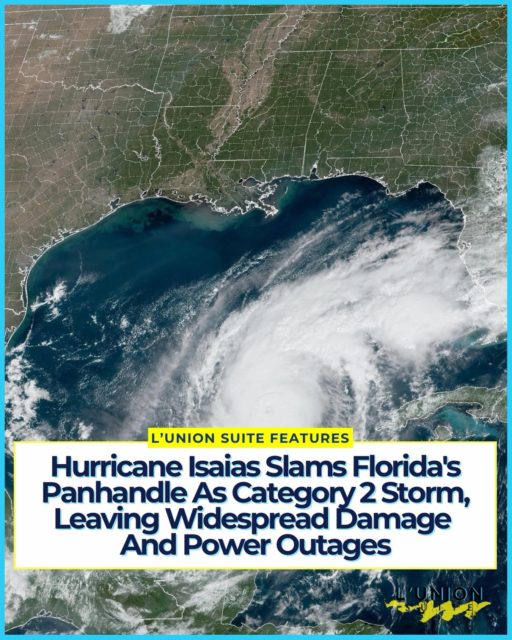
  • Florida is beginning to assess the damage after Hurricane Isaias made landfall near Destin on Friday night, October 9, bringing powerful winds, heavy rain and dangerous flooding to the northern Gulf Coast.
The storm hit as a Category 2 hurricane with sustained winds of 105 mph, according to Florida officials. Strong winds knocked down trees and power lines, while flooding and debris made several roads dangerous to travel.
By Saturday, nearly 900,000 homes and businesses across Florida, Alabama and Georgia had reportedly lost electricity at some point during the storm. Thousands of residents had evacuated coastal communities ahead of landfall.
Isaias has since weakened into a post-tropical cyclone as it moves inland through Alabama, but the danger is not over. Heavy rainfall, flash flooding and damaging winds remain concerns for parts of the Southeast, including Georgia and the Carolinas.
Authorities have also reported two storm-related deaths, one in Florida and another in Alabama, as recovery efforts continue. 
Two Other Storms Being Monitored
While Florida deals with the aftermath of Isaias, forecasters are also tracking two storms in the eastern Pacific.
Hurricane Simon has strengthened into a powerful Category 4 hurricane with sustained winds near 150 mph. The storm is approaching Mexico’s Pacific coast, where officials are warning of dangerous winds, flooding and mudslides.
Tropical Storm Rachel, meanwhile, is moving toward Mexico’s Baja California Peninsula with sustained winds near 60 mph. Its path could also bring heavy rain and flooding concerns to parts of the southwestern United States.
These two storms are in the Pacific Ocean, not the Atlantic, and neither is forecast to hit Florida.
Residents in affected areas should continue following local emergency officials and the latest updates from the 
National Hurricane Center
#lunionsuite #haitianamerican
New White House Press Secretary Katie Zacharia appeared completely lost for words and visibly fumbling on her first day at the podium Tuesday, reading awkwardly from a script during a brief, heavily scripted debut that drew immediate criticism for its lack of command.
Zacharia, a conservative commentator and former senior communications adviser to Trump Media & Technology Group, succeeded Karoline Leavitt and stepped to the lectern in the James Brady Press Briefing Room for the first time. The entire appearance lasted roughly 14 minutes. She spent most of it looking down at prepared remarks, speaking slowly and stiffly while praising President Trump’s record, midterm campaign efforts, and administration claims. Observers noted she rarely made sustained eye contact and appeared nervous as she worked through the notes.
The performance included a clear verbal stumble. When a reporter asked how she would balance the demanding job with her four children, Zacharia said, “So my president — excuse me, my husband,” before recovering with “That’s a good one.” The moment prompted laughter in the room. She also struggled to answer a question about U.S. intelligence sharing with Ukraine, saying she would have to get back to the reporter. After taking questions from just three outlets — Breitbart, Fox News, and the Daily Mail — she abruptly ended the briefing, telling reporters they could ask Trump their questions as he prepared to leave for a campaign trip to Alaska.
Critics described the debut as amateurish and unprepared. Journalists and commentators highlighted the heavy reliance on notes, the halting delivery, and the early exit. Former Biden press secretary Jen Psaki called it “basically an SNL skit.” Independent journalist Aaron Rupar said Zacharia “makes Karoline Leavitt seem like Winston Churchill.” Other assessments labeled it “brutal,” and “a train wreck.”
President Trump, asked about the briefing before boarding Marine One, said, “I thought she was very good.” White House communications director Steven Cheung called it a “tremendous start” and said she “commanded the room.” 
Sources: @scrippsnews 
@davidpakmanshow @headquarters
#lunionsuite #haitianamerican
New White House Press Secretary Katie Zacharia appeared completely lost for words and visibly fumbling on her first day at the podium Tuesday, reading awkwardly from a script during a brief, heavily scripted debut that drew immediate criticism for its lack of command. Zacharia, a conservative commentator and former senior communications adviser to Trump Media & Technology Group, succeeded Karoline Leavitt and stepped to the lectern in the James Brady Press Briefing Room for the first time. The entire appearance lasted roughly 14 minutes. She spent most of it looking down at prepared remarks, speaking slowly and stiffly while praising President Trump’s record, midterm campaign efforts, and administration claims. Observers noted she rarely made sustained eye contact and appeared nervous as she worked through the notes. The performance included a clear verbal stumble. When a reporter asked how she would balance the demanding job with her four children, Zacharia said, “So my president — excuse me, my husband,” before recovering with “That’s a good one.” The moment prompted laughter in the room. She also struggled to answer a question about U.S. intelligence sharing with Ukraine, saying she would have to get back to the reporter. After taking questions from just three outlets — Breitbart, Fox News, and the Daily Mail — she abruptly ended the briefing, telling reporters they could ask Trump their questions as he prepared to leave for a campaign trip to Alaska. Critics described the debut as amateurish and unprepared. Journalists and commentators highlighted the heavy reliance on notes, the halting delivery, and the early exit. Former Biden press secretary Jen Psaki called it “basically an SNL skit.” Independent journalist Aaron Rupar said Zacharia “makes Karoline Leavitt seem like Winston Churchill.” Other assessments labeled it “brutal,” and “a train wreck.” President Trump, asked about the briefing before boarding Marine One, said, “I thought she was very good.” White House communications director Steven Cheung called it a “tremendous start” and said she “commanded the room.” Sources: @scrippsnews @davidpakmanshow @headquarters #lunionsuite #haitianamerican
3 hours ago
View on Instagram |
1/12
France is pressing for a credible electoral process in Haiti after transitional authorities removed requirements that had made it harder for individuals under sanctions from the European Union, Canada, and the United States, as well as people owing money to the government, to seek office.⁠
⁠
The changes came in a third revision of the electoral decree, published in early October 2026 by the office of Prime Minister Alix Didier Fils-Aimé. Under the previous rules, candidates had to submit a certificate from the Banque de la République d’Haïti (Haiti’s central bank) confirming they were not insolvent debtors, bankrupt, or barred from using checkbooks. That requirement functioned as a practical barrier for people who had lost access to banking services because of bilateral sanctions. It has been eliminated.⁠
⁠
The revised decree also loosens financial standards for future lawmakers and the next president. Candidates no longer need to prove they paid taxes every year for the past five years or show they have no outstanding debt to the national pension fund (ONA). They now only need to demonstrate current tax compliance. Certificates related to debts with the Industrial Development Fund were also dropped.⁠
⁠
The decree continues to bar individuals sanctioned by the United Nations Security Council from running for president, Parliament, or local offices. The UN list primarily includes gang leaders, along with one former lawmaker. It does not automatically disqualify those sanctioned only by individual governments or the European Union.⁠
⁠
On October 8, French Ambassador Gautier Lekens met with Prime Minister Fils-Aimé. Lekens said he reaffirmed France’s commitment to “a credible electoral process that allows Haitians to freely choose their leaders, with candidates who meet the integrity standards essential for a free and democratic election.” He added that Haiti’s future president “must be able to represent the country with dignity, defend its interests, and act in the best interests of its people both within Haiti and on the international stage.”⁠
⁠
#lunionsuite #haitianamerican
France is pressing for a credible electoral process in Haiti after transitional authorities removed requirements that had made it harder for individuals under sanctions from the European Union, Canada, and the United States, as well as people owing money to the government, to seek office.⁠ ⁠ The changes came in a third revision of the electoral decree, published in early October 2026 by the office of Prime Minister Alix Didier Fils-Aimé. Under the previous rules, candidates had to submit a certificate from the Banque de la République d’Haïti (Haiti’s central bank) confirming they were not insolvent debtors, bankrupt, or barred from using checkbooks. That requirement functioned as a practical barrier for people who had lost access to banking services because of bilateral sanctions. It has been eliminated.⁠ ⁠ The revised decree also loosens financial standards for future lawmakers and the next president. Candidates no longer need to prove they paid taxes every year for the past five years or show they have no outstanding debt to the national pension fund (ONA). They now only need to demonstrate current tax compliance. Certificates related to debts with the Industrial Development Fund were also dropped.⁠ ⁠ The decree continues to bar individuals sanctioned by the United Nations Security Council from running for president, Parliament, or local offices. The UN list primarily includes gang leaders, along with one former lawmaker. It does not automatically disqualify those sanctioned only by individual governments or the European Union.⁠ ⁠ On October 8, French Ambassador Gautier Lekens met with Prime Minister Fils-Aimé. Lekens said he reaffirmed France’s commitment to “a credible electoral process that allows Haitians to freely choose their leaders, with candidates who meet the integrity standards essential for a free and democratic election.” He added that Haiti’s future president “must be able to represent the country with dignity, defend its interests, and act in the best interests of its people both within Haiti and on the international stage.”⁠ ⁠ #lunionsuite #haitianamerican
3 hours ago
View on Instagram |
2/12
Oh Ya'll creative!!! 🤔🇭🇹 ⁠ 🎥 @Realistinkstudio⁠ #lunionsuite #haitianamerican #haitian #haiti
5 hours ago
View on Instagram |
3/12
Thomas “Tom” Osbeck, a longtime American missionary who spent more than two decades working with children in Haiti, faces allegations of sexual abuse involving minors at an unauthorized orphanage he operated in the Morne Rouge area of Cap-Haïtien.⁠
⁠
Haitian police say members of the public brought Osbeck to local authorities amid the claims. Cap-Haïtien police spokesperson Arold Jean told the Associated Press that U.S. authorities arrested him there on Sept. 30. Investigators determined the orphanage lacked the required operating authorization. At the site, Haitian authorities found at least 12 minors. A review of Osbeck’s cellphone revealed sexually explicit messages sent to children, Jean said. Twelve children, including 11 girls between the ages of 7 and 17, underwent medical examinations. ⁠
⁠
Jean has said he expects Osbeck to be extradited to the United States. No formal charging documents or U.S. Justice Department statement naming specific counts against him have been released. It is not clear whether he has legal representation.⁠
⁠
Osbeck has long been publicly identified as a founder and former executive director of Jesus in Haiti Ministries, a Fort Wayne, Indiana-based Christian nonprofit. In a recorded church talk he described first traveling to Haiti around 1998, returning, and naming the ministry after that experience. The organization’s own history places its formal start in 2003.  The Cap-Haïtien orphanage now under investigation is separate from that earlier work, according to available reporting. He's also linked to an organization called Ignite Your Faith Ministries.⁠
⁠
The case arrives amid other recent prosecutions involving American missionaries and Haitian children. Maylon Foshee, 23, of Mansfield, Louisiana, was charged in U.S. federal court in September with illicit sexual conduct with minors during trips to Gonaïves. Jeriah Mast, a former worker with Christian Aid Ministries, pleaded guilty the same month to federal counts tied to abuse in Haiti. In a separate matter, Michael Geilenfeld was convicted last year in Miami of sexually abusing boys at an orphanage he founded in Port-au-Prince.⁠
⁠
#lunionsuite #haitianamerican
Thomas “Tom” Osbeck, a longtime American missionary who spent more than two decades working with children in Haiti, faces allegations of sexual abuse involving minors at an unauthorized orphanage he operated in the Morne Rouge area of Cap-Haïtien.⁠
⁠
Haitian police say members of the public brought Osbeck to local authorities amid the claims. Cap-Haïtien police spokesperson Arold Jean told the Associated Press that U.S. authorities arrested him there on Sept. 30. Investigators determined the orphanage lacked the required operating authorization. At the site, Haitian authorities found at least 12 minors. A review of Osbeck’s cellphone revealed sexually explicit messages sent to children, Jean said. Twelve children, including 11 girls between the ages of 7 and 17, underwent medical examinations. ⁠
⁠
Jean has said he expects Osbeck to be extradited to the United States. No formal charging documents or U.S. Justice Department statement naming specific counts against him have been released. It is not clear whether he has legal representation.⁠
⁠
Osbeck has long been publicly identified as a founder and former executive director of Jesus in Haiti Ministries, a Fort Wayne, Indiana-based Christian nonprofit. In a recorded church talk he described first traveling to Haiti around 1998, returning, and naming the ministry after that experience. The organization’s own history places its formal start in 2003.  The Cap-Haïtien orphanage now under investigation is separate from that earlier work, according to available reporting. He's also linked to an organization called Ignite Your Faith Ministries.⁠
⁠
The case arrives amid other recent prosecutions involving American missionaries and Haitian children. Maylon Foshee, 23, of Mansfield, Louisiana, was charged in U.S. federal court in September with illicit sexual conduct with minors during trips to Gonaïves. Jeriah Mast, a former worker with Christian Aid Ministries, pleaded guilty the same month to federal counts tied to abuse in Haiti. In a separate matter, Michael Geilenfeld was convicted last year in Miami of sexually abusing boys at an orphanage he founded in Port-au-Prince.⁠
⁠
#lunionsuite #haitianamerican
Thomas “Tom” Osbeck, a longtime American missionary who spent more than two decades working with children in Haiti, faces allegations of sexual abuse involving minors at an unauthorized orphanage he operated in the Morne Rouge area of Cap-Haïtien.⁠
⁠
Haitian police say members of the public brought Osbeck to local authorities amid the claims. Cap-Haïtien police spokesperson Arold Jean told the Associated Press that U.S. authorities arrested him there on Sept. 30. Investigators determined the orphanage lacked the required operating authorization. At the site, Haitian authorities found at least 12 minors. A review of Osbeck’s cellphone revealed sexually explicit messages sent to children, Jean said. Twelve children, including 11 girls between the ages of 7 and 17, underwent medical examinations. ⁠
⁠
Jean has said he expects Osbeck to be extradited to the United States. No formal charging documents or U.S. Justice Department statement naming specific counts against him have been released. It is not clear whether he has legal representation.⁠
⁠
Osbeck has long been publicly identified as a founder and former executive director of Jesus in Haiti Ministries, a Fort Wayne, Indiana-based Christian nonprofit. In a recorded church talk he described first traveling to Haiti around 1998, returning, and naming the ministry after that experience. The organization’s own history places its formal start in 2003.  The Cap-Haïtien orphanage now under investigation is separate from that earlier work, according to available reporting. He's also linked to an organization called Ignite Your Faith Ministries.⁠
⁠
The case arrives amid other recent prosecutions involving American missionaries and Haitian children. Maylon Foshee, 23, of Mansfield, Louisiana, was charged in U.S. federal court in September with illicit sexual conduct with minors during trips to Gonaïves. Jeriah Mast, a former worker with Christian Aid Ministries, pleaded guilty the same month to federal counts tied to abuse in Haiti. In a separate matter, Michael Geilenfeld was convicted last year in Miami of sexually abusing boys at an orphanage he founded in Port-au-Prince.⁠
⁠
#lunionsuite #haitianamerican
Thomas “Tom” Osbeck, a longtime American missionary who spent more than two decades working with children in Haiti, faces allegations of sexual abuse involving minors at an unauthorized orphanage he operated in the Morne Rouge area of Cap-Haïtien.⁠
⁠
Haitian police say members of the public brought Osbeck to local authorities amid the claims. Cap-Haïtien police spokesperson Arold Jean told the Associated Press that U.S. authorities arrested him there on Sept. 30. Investigators determined the orphanage lacked the required operating authorization. At the site, Haitian authorities found at least 12 minors. A review of Osbeck’s cellphone revealed sexually explicit messages sent to children, Jean said. Twelve children, including 11 girls between the ages of 7 and 17, underwent medical examinations. ⁠
⁠
Jean has said he expects Osbeck to be extradited to the United States. No formal charging documents or U.S. Justice Department statement naming specific counts against him have been released. It is not clear whether he has legal representation.⁠
⁠
Osbeck has long been publicly identified as a founder and former executive director of Jesus in Haiti Ministries, a Fort Wayne, Indiana-based Christian nonprofit. In a recorded church talk he described first traveling to Haiti around 1998, returning, and naming the ministry after that experience. The organization’s own history places its formal start in 2003.  The Cap-Haïtien orphanage now under investigation is separate from that earlier work, according to available reporting. He's also linked to an organization called Ignite Your Faith Ministries.⁠
⁠
The case arrives amid other recent prosecutions involving American missionaries and Haitian children. Maylon Foshee, 23, of Mansfield, Louisiana, was charged in U.S. federal court in September with illicit sexual conduct with minors during trips to Gonaïves. Jeriah Mast, a former worker with Christian Aid Ministries, pleaded guilty the same month to federal counts tied to abuse in Haiti. In a separate matter, Michael Geilenfeld was convicted last year in Miami of sexually abusing boys at an orphanage he founded in Port-au-Prince.⁠
⁠
#lunionsuite #haitianamerican
Thomas “Tom” Osbeck, a longtime American missionary who spent more than two decades working with children in Haiti, faces allegations of sexual abuse involving minors at an unauthorized orphanage he operated in the Morne Rouge area of Cap-Haïtien.⁠
⁠
Haitian police say members of the public brought Osbeck to local authorities amid the claims. Cap-Haïtien police spokesperson Arold Jean told the Associated Press that U.S. authorities arrested him there on Sept. 30. Investigators determined the orphanage lacked the required operating authorization. At the site, Haitian authorities found at least 12 minors. A review of Osbeck’s cellphone revealed sexually explicit messages sent to children, Jean said. Twelve children, including 11 girls between the ages of 7 and 17, underwent medical examinations. ⁠
⁠
Jean has said he expects Osbeck to be extradited to the United States. No formal charging documents or U.S. Justice Department statement naming specific counts against him have been released. It is not clear whether he has legal representation.⁠
⁠
Osbeck has long been publicly identified as a founder and former executive director of Jesus in Haiti Ministries, a Fort Wayne, Indiana-based Christian nonprofit. In a recorded church talk he described first traveling to Haiti around 1998, returning, and naming the ministry after that experience. The organization’s own history places its formal start in 2003.  The Cap-Haïtien orphanage now under investigation is separate from that earlier work, according to available reporting. He's also linked to an organization called Ignite Your Faith Ministries.⁠
⁠
The case arrives amid other recent prosecutions involving American missionaries and Haitian children. Maylon Foshee, 23, of Mansfield, Louisiana, was charged in U.S. federal court in September with illicit sexual conduct with minors during trips to Gonaïves. Jeriah Mast, a former worker with Christian Aid Ministries, pleaded guilty the same month to federal counts tied to abuse in Haiti. In a separate matter, Michael Geilenfeld was convicted last year in Miami of sexually abusing boys at an orphanage he founded in Port-au-Prince.⁠
⁠
#lunionsuite #haitianamerican
Thomas “Tom” Osbeck, a longtime American missionary who spent more than two decades working with children in Haiti, faces allegations of sexual abuse involving minors at an unauthorized orphanage he operated in the Morne Rouge area of Cap-Haïtien.⁠
⁠
Haitian police say members of the public brought Osbeck to local authorities amid the claims. Cap-Haïtien police spokesperson Arold Jean told the Associated Press that U.S. authorities arrested him there on Sept. 30. Investigators determined the orphanage lacked the required operating authorization. At the site, Haitian authorities found at least 12 minors. A review of Osbeck’s cellphone revealed sexually explicit messages sent to children, Jean said. Twelve children, including 11 girls between the ages of 7 and 17, underwent medical examinations. ⁠
⁠
Jean has said he expects Osbeck to be extradited to the United States. No formal charging documents or U.S. Justice Department statement naming specific counts against him have been released. It is not clear whether he has legal representation.⁠
⁠
Osbeck has long been publicly identified as a founder and former executive director of Jesus in Haiti Ministries, a Fort Wayne, Indiana-based Christian nonprofit. In a recorded church talk he described first traveling to Haiti around 1998, returning, and naming the ministry after that experience. The organization’s own history places its formal start in 2003.  The Cap-Haïtien orphanage now under investigation is separate from that earlier work, according to available reporting. He's also linked to an organization called Ignite Your Faith Ministries.⁠
⁠
The case arrives amid other recent prosecutions involving American missionaries and Haitian children. Maylon Foshee, 23, of Mansfield, Louisiana, was charged in U.S. federal court in September with illicit sexual conduct with minors during trips to Gonaïves. Jeriah Mast, a former worker with Christian Aid Ministries, pleaded guilty the same month to federal counts tied to abuse in Haiti. In a separate matter, Michael Geilenfeld was convicted last year in Miami of sexually abusing boys at an orphanage he founded in Port-au-Prince.⁠
⁠
#lunionsuite #haitianamerican
Thomas “Tom” Osbeck, a longtime American missionary who spent more than two decades working with children in Haiti, faces allegations of sexual abuse involving minors at an unauthorized orphanage he operated in the Morne Rouge area of Cap-Haïtien.⁠ ⁠ Haitian police say members of the public brought Osbeck to local authorities amid the claims. Cap-Haïtien police spokesperson Arold Jean told the Associated Press that U.S. authorities arrested him there on Sept. 30. Investigators determined the orphanage lacked the required operating authorization. At the site, Haitian authorities found at least 12 minors. A review of Osbeck’s cellphone revealed sexually explicit messages sent to children, Jean said. Twelve children, including 11 girls between the ages of 7 and 17, underwent medical examinations. ⁠ ⁠ Jean has said he expects Osbeck to be extradited to the United States. No formal charging documents or U.S. Justice Department statement naming specific counts against him have been released. It is not clear whether he has legal representation.⁠ ⁠ Osbeck has long been publicly identified as a founder and former executive director of Jesus in Haiti Ministries, a Fort Wayne, Indiana-based Christian nonprofit. In a recorded church talk he described first traveling to Haiti around 1998, returning, and naming the ministry after that experience. The organization’s own history places its formal start in 2003. The Cap-Haïtien orphanage now under investigation is separate from that earlier work, according to available reporting. He's also linked to an organization called Ignite Your Faith Ministries.⁠ ⁠ The case arrives amid other recent prosecutions involving American missionaries and Haitian children. Maylon Foshee, 23, of Mansfield, Louisiana, was charged in U.S. federal court in September with illicit sexual conduct with minors during trips to Gonaïves. Jeriah Mast, a former worker with Christian Aid Ministries, pleaded guilty the same month to federal counts tied to abuse in Haiti. In a separate matter, Michael Geilenfeld was convicted last year in Miami of sexually abusing boys at an orphanage he founded in Port-au-Prince.⁠ ⁠ #lunionsuite #haitianamerican
6 hours ago
View on Instagram |
4/12
Haiti is exploring the possibility of building a modern, FIFA standard football stadium in Les Cayes as the country looks for a long term solution to the lack of suitable venues for its national teams to host international matches on home soil.
On Saturday, October 10, Minister of Youth and Sports Pythagore Dumas and Ministry Director General Wilfince Mombrun conducted a second inspection visit to Parc Larco in Les Cayes. The visit was part of the government’s efforts to determine whether the site could accommodate a stadium that would allow both the men’s national team, Les Grenadiers, and the women’s national team, Les Grenadières, to play official home matches in Haiti.
According to reports on the visit, the Ministry of Youth, Sports, and Civic Action (MJSAC) plans to have its sports infrastructure experts conduct a feasibility study to assess the project. Officials are considering the possibility of constructing a new, modern stadium rather than simply renovating the existing park.
However, a land dispute that has reportedly hindered the park’s proper use for more than a decade remains a significant obstacle. Minister Dumas said Prime Minister Alix Didier Fils-Aimé is involved in efforts to resolve the dispute.
The government has not yet released a construction timeline, project budget or financing plan. The proposal remains under evaluation, and the feasibility study will help determine whether the project can move forward.
The search for a suitable home venue has taken on added urgency following Haiti’s October 1 football match against the Dominican Republic. The match was followed by tensions surrounding crowd behavior at the stadium and Isidor’s post-match declaration. On October 2, Dominican Sports Minister Cruz announced that Haiti would no longer be allowed to use the Dominican Republic’s sports venues. President Abinader backed the decision.
Haiti’s difficulties hosting international matches predate the latest dispute. Insecurity in Port-au-Prince has prevented the national teams from using the capital’s principal football facilities, forcing them to play home-designated matches abroad or at neutral venues.
#lunionsuite #haitianamerican
Haiti is exploring the possibility of building a modern, FIFA standard football stadium in Les Cayes as the country looks for a long term solution to the lack of suitable venues for its national teams to host international matches on home soil.
On Saturday, October 10, Minister of Youth and Sports Pythagore Dumas and Ministry Director General Wilfince Mombrun conducted a second inspection visit to Parc Larco in Les Cayes. The visit was part of the government’s efforts to determine whether the site could accommodate a stadium that would allow both the men’s national team, Les Grenadiers, and the women’s national team, Les Grenadières, to play official home matches in Haiti.
According to reports on the visit, the Ministry of Youth, Sports, and Civic Action (MJSAC) plans to have its sports infrastructure experts conduct a feasibility study to assess the project. Officials are considering the possibility of constructing a new, modern stadium rather than simply renovating the existing park.
However, a land dispute that has reportedly hindered the park’s proper use for more than a decade remains a significant obstacle. Minister Dumas said Prime Minister Alix Didier Fils-Aimé is involved in efforts to resolve the dispute.
The government has not yet released a construction timeline, project budget or financing plan. The proposal remains under evaluation, and the feasibility study will help determine whether the project can move forward.
The search for a suitable home venue has taken on added urgency following Haiti’s October 1 football match against the Dominican Republic. The match was followed by tensions surrounding crowd behavior at the stadium and Isidor’s post-match declaration. On October 2, Dominican Sports Minister Cruz announced that Haiti would no longer be allowed to use the Dominican Republic’s sports venues. President Abinader backed the decision.
Haiti’s difficulties hosting international matches predate the latest dispute. Insecurity in Port-au-Prince has prevented the national teams from using the capital’s principal football facilities, forcing them to play home-designated matches abroad or at neutral venues.
#lunionsuite #haitianamerican
Haiti is exploring the possibility of building a modern, FIFA standard football stadium in Les Cayes as the country looks for a long term solution to the lack of suitable venues for its national teams to host international matches on home soil.
On Saturday, October 10, Minister of Youth and Sports Pythagore Dumas and Ministry Director General Wilfince Mombrun conducted a second inspection visit to Parc Larco in Les Cayes. The visit was part of the government’s efforts to determine whether the site could accommodate a stadium that would allow both the men’s national team, Les Grenadiers, and the women’s national team, Les Grenadières, to play official home matches in Haiti.
According to reports on the visit, the Ministry of Youth, Sports, and Civic Action (MJSAC) plans to have its sports infrastructure experts conduct a feasibility study to assess the project. Officials are considering the possibility of constructing a new, modern stadium rather than simply renovating the existing park.
However, a land dispute that has reportedly hindered the park’s proper use for more than a decade remains a significant obstacle. Minister Dumas said Prime Minister Alix Didier Fils-Aimé is involved in efforts to resolve the dispute.
The government has not yet released a construction timeline, project budget or financing plan. The proposal remains under evaluation, and the feasibility study will help determine whether the project can move forward.
The search for a suitable home venue has taken on added urgency following Haiti’s October 1 football match against the Dominican Republic. The match was followed by tensions surrounding crowd behavior at the stadium and Isidor’s post-match declaration. On October 2, Dominican Sports Minister Cruz announced that Haiti would no longer be allowed to use the Dominican Republic’s sports venues. President Abinader backed the decision.
Haiti’s difficulties hosting international matches predate the latest dispute. Insecurity in Port-au-Prince has prevented the national teams from using the capital’s principal football facilities, forcing them to play home-designated matches abroad or at neutral venues.
#lunionsuite #haitianamerican
Haiti is exploring the possibility of building a modern, FIFA standard football stadium in Les Cayes as the country looks for a long term solution to the lack of suitable venues for its national teams to host international matches on home soil.
On Saturday, October 10, Minister of Youth and Sports Pythagore Dumas and Ministry Director General Wilfince Mombrun conducted a second inspection visit to Parc Larco in Les Cayes. The visit was part of the government’s efforts to determine whether the site could accommodate a stadium that would allow both the men’s national team, Les Grenadiers, and the women’s national team, Les Grenadières, to play official home matches in Haiti.
According to reports on the visit, the Ministry of Youth, Sports, and Civic Action (MJSAC) plans to have its sports infrastructure experts conduct a feasibility study to assess the project. Officials are considering the possibility of constructing a new, modern stadium rather than simply renovating the existing park.
However, a land dispute that has reportedly hindered the park’s proper use for more than a decade remains a significant obstacle. Minister Dumas said Prime Minister Alix Didier Fils-Aimé is involved in efforts to resolve the dispute.
The government has not yet released a construction timeline, project budget or financing plan. The proposal remains under evaluation, and the feasibility study will help determine whether the project can move forward.
The search for a suitable home venue has taken on added urgency following Haiti’s October 1 football match against the Dominican Republic. The match was followed by tensions surrounding crowd behavior at the stadium and Isidor’s post-match declaration. On October 2, Dominican Sports Minister Cruz announced that Haiti would no longer be allowed to use the Dominican Republic’s sports venues. President Abinader backed the decision.
Haiti’s difficulties hosting international matches predate the latest dispute. Insecurity in Port-au-Prince has prevented the national teams from using the capital’s principal football facilities, forcing them to play home-designated matches abroad or at neutral venues.
#lunionsuite #haitianamerican
Haiti is exploring the possibility of building a modern, FIFA standard football stadium in Les Cayes as the country looks for a long term solution to the lack of suitable venues for its national teams to host international matches on home soil. On Saturday, October 10, Minister of Youth and Sports Pythagore Dumas and Ministry Director General Wilfince Mombrun conducted a second inspection visit to Parc Larco in Les Cayes. The visit was part of the government’s efforts to determine whether the site could accommodate a stadium that would allow both the men’s national team, Les Grenadiers, and the women’s national team, Les Grenadières, to play official home matches in Haiti. According to reports on the visit, the Ministry of Youth, Sports, and Civic Action (MJSAC) plans to have its sports infrastructure experts conduct a feasibility study to assess the project. Officials are considering the possibility of constructing a new, modern stadium rather than simply renovating the existing park. However, a land dispute that has reportedly hindered the park’s proper use for more than a decade remains a significant obstacle. Minister Dumas said Prime Minister Alix Didier Fils-Aimé is involved in efforts to resolve the dispute. The government has not yet released a construction timeline, project budget or financing plan. The proposal remains under evaluation, and the feasibility study will help determine whether the project can move forward. The search for a suitable home venue has taken on added urgency following Haiti’s October 1 football match against the Dominican Republic. The match was followed by tensions surrounding crowd behavior at the stadium and Isidor’s post-match declaration. On October 2, Dominican Sports Minister Cruz announced that Haiti would no longer be allowed to use the Dominican Republic’s sports venues. President Abinader backed the decision. Haiti’s difficulties hosting international matches predate the latest dispute. Insecurity in Port-au-Prince has prevented the national teams from using the capital’s principal football facilities, forcing them to play home-designated matches abroad or at neutral venues. #lunionsuite #haitianamerican
1 day ago
View on Instagram |
5/12
Before saying “I do,” have you taken the time to ask yourself why you want to get married?⁠
⁠
Author, public speaker and writing strategist @VencheleSaintDic is encouraging people to have that conversation with themselves through her book, Why Do I Want to Get Married?: A Guided Journal for Clarity Before Commitment.⁠
⁠
The journal goes beyond finding the right partner. It encourages readers to look at their own expectations, emotional readiness, past relationship experiences and personal values before making a lifelong commitment.⁠
⁠
Saint Dic is also the founder of Pathway Coach Writing and the author of Journey to Redemption. She brings her background in public health leadership, writing and personal development into conversations about relationships, resilience and making intentional life choices.⁠
⁠
Whether someone is single, dating, divorced or simply questioning what marriage means to them, the journal offers prompts designed to help them better understand themselves and what they want from a relationship.⁠
⁠
Her message is simple: Before focusing on finding the right person, take time to understand yourself.⁠
⁠
📖 Learn more: Pathway Coach Writing⁠
Amazon: https://a.co/d/08JQ3F6c⁠
Website: https://www.pathwaycoachwriting.com⁠
⁠
#AD #lunionsuite #haitianamerican
Before saying “I do,” have you taken the time to ask yourself why you want to get married?⁠
⁠
Author, public speaker and writing strategist @VencheleSaintDic is encouraging people to have that conversation with themselves through her book, Why Do I Want to Get Married?: A Guided Journal for Clarity Before Commitment.⁠
⁠
The journal goes beyond finding the right partner. It encourages readers to look at their own expectations, emotional readiness, past relationship experiences and personal values before making a lifelong commitment.⁠
⁠
Saint Dic is also the founder of Pathway Coach Writing and the author of Journey to Redemption. She brings her background in public health leadership, writing and personal development into conversations about relationships, resilience and making intentional life choices.⁠
⁠
Whether someone is single, dating, divorced or simply questioning what marriage means to them, the journal offers prompts designed to help them better understand themselves and what they want from a relationship.⁠
⁠
Her message is simple: Before focusing on finding the right person, take time to understand yourself.⁠
⁠
📖 Learn more: Pathway Coach Writing⁠
Amazon: https://a.co/d/08JQ3F6c⁠
Website: https://www.pathwaycoachwriting.com⁠
⁠
#AD #lunionsuite #haitianamerican
Before saying “I do,” have you taken the time to ask yourself why you want to get married?⁠
⁠
Author, public speaker and writing strategist @VencheleSaintDic is encouraging people to have that conversation with themselves through her book, Why Do I Want to Get Married?: A Guided Journal for Clarity Before Commitment.⁠
⁠
The journal goes beyond finding the right partner. It encourages readers to look at their own expectations, emotional readiness, past relationship experiences and personal values before making a lifelong commitment.⁠
⁠
Saint Dic is also the founder of Pathway Coach Writing and the author of Journey to Redemption. She brings her background in public health leadership, writing and personal development into conversations about relationships, resilience and making intentional life choices.⁠
⁠
Whether someone is single, dating, divorced or simply questioning what marriage means to them, the journal offers prompts designed to help them better understand themselves and what they want from a relationship.⁠
⁠
Her message is simple: Before focusing on finding the right person, take time to understand yourself.⁠
⁠
📖 Learn more: Pathway Coach Writing⁠
Amazon: https://a.co/d/08JQ3F6c⁠
Website: https://www.pathwaycoachwriting.com⁠
⁠
#AD #lunionsuite #haitianamerican
Before saying “I do,” have you taken the time to ask yourself why you want to get married?⁠ ⁠ Author, public speaker and writing strategist @VencheleSaintDic is encouraging people to have that conversation with themselves through her book, Why Do I Want to Get Married?: A Guided Journal for Clarity Before Commitment.⁠ ⁠ The journal goes beyond finding the right partner. It encourages readers to look at their own expectations, emotional readiness, past relationship experiences and personal values before making a lifelong commitment.⁠ ⁠ Saint Dic is also the founder of Pathway Coach Writing and the author of Journey to Redemption. She brings her background in public health leadership, writing and personal development into conversations about relationships, resilience and making intentional life choices.⁠ ⁠ Whether someone is single, dating, divorced or simply questioning what marriage means to them, the journal offers prompts designed to help them better understand themselves and what they want from a relationship.⁠ ⁠ Her message is simple: Before focusing on finding the right person, take time to understand yourself.⁠ ⁠ 📖 Learn more: Pathway Coach Writing⁠ Amazon: https://a.co/d/08JQ3F6c⁠ Website: https://www.pathwaycoachwriting.com⁠ ⁠ #AD #lunionsuite #haitianamerican
1 day ago
View on Instagram |
6/12
Haiti’s Estephanie Charles brought elegance and cultural pride to Miss Grand International 2026 in Bangkok. Tanzania’s Jihan Mohin Dimachk was crowned the winner, becoming the first African and first Tanzanian titleholder in the pageant’s history. ⁠
⁠
Estephanie Charles, Miss Grand Haiti 2026, stood out with a striking national costume inspired by the hibiscus flower, a symbol closely connected to Haitian identity. Dominated by vibrant red and gold with a large floral detail, the design drew attention during the national costume presentation. She advanced in early voting rounds, including the Country’s Power of the Year competition, and reached the Top 15 in the national costume contest through website voting. Charles, known for her skills in fashion design, sewing, and styling, used her platform to speak about peace, empathy, and community. Her participation highlighted Haitian creativity and presence on the international pageant stage.⁠
⁠
Jihan Mohin Dimachk, a 30-year-old Tanzanian-Lebanese model and fashion entrepreneur, secured the crown after advancing through the Top 25 and Top 11. She also won the Miss Popular Vote award. Ecuador’s Shyare Andrade finished as first runner-up, followed by the Netherlands, Guatemala, and Vietnam in the top five. Côte d’Ivoire’s Marlène Kany Kouassi placed among the fifth runners-up and won Best in Swimsuit.⁠
⁠
Charles’s journey remains a proud moment of the 2026 edition, celebrating culture, style, and representation on the world stage.⁠
⁠
📸 @missgrandinternational⁠
#lunionsuite #haitianamerican #haitian #misshaiti
Haiti’s Estephanie Charles brought elegance and cultural pride to Miss Grand International 2026 in Bangkok. Tanzania’s Jihan Mohin Dimachk was crowned the winner, becoming the first African and first Tanzanian titleholder in the pageant’s history. ⁠
⁠
Estephanie Charles, Miss Grand Haiti 2026, stood out with a striking national costume inspired by the hibiscus flower, a symbol closely connected to Haitian identity. Dominated by vibrant red and gold with a large floral detail, the design drew attention during the national costume presentation. She advanced in early voting rounds, including the Country’s Power of the Year competition, and reached the Top 15 in the national costume contest through website voting. Charles, known for her skills in fashion design, sewing, and styling, used her platform to speak about peace, empathy, and community. Her participation highlighted Haitian creativity and presence on the international pageant stage.⁠
⁠
Jihan Mohin Dimachk, a 30-year-old Tanzanian-Lebanese model and fashion entrepreneur, secured the crown after advancing through the Top 25 and Top 11. She also won the Miss Popular Vote award. Ecuador’s Shyare Andrade finished as first runner-up, followed by the Netherlands, Guatemala, and Vietnam in the top five. Côte d’Ivoire’s Marlène Kany Kouassi placed among the fifth runners-up and won Best in Swimsuit.⁠
⁠
Charles’s journey remains a proud moment of the 2026 edition, celebrating culture, style, and representation on the world stage.⁠
⁠
📸 @missgrandinternational⁠
#lunionsuite #haitianamerican #haitian #misshaiti
Haiti’s Estephanie Charles brought elegance and cultural pride to Miss Grand International 2026 in Bangkok. Tanzania’s Jihan Mohin Dimachk was crowned the winner, becoming the first African and first Tanzanian titleholder in the pageant’s history. ⁠
⁠
Estephanie Charles, Miss Grand Haiti 2026, stood out with a striking national costume inspired by the hibiscus flower, a symbol closely connected to Haitian identity. Dominated by vibrant red and gold with a large floral detail, the design drew attention during the national costume presentation. She advanced in early voting rounds, including the Country’s Power of the Year competition, and reached the Top 15 in the national costume contest through website voting. Charles, known for her skills in fashion design, sewing, and styling, used her platform to speak about peace, empathy, and community. Her participation highlighted Haitian creativity and presence on the international pageant stage.⁠
⁠
Jihan Mohin Dimachk, a 30-year-old Tanzanian-Lebanese model and fashion entrepreneur, secured the crown after advancing through the Top 25 and Top 11. She also won the Miss Popular Vote award. Ecuador’s Shyare Andrade finished as first runner-up, followed by the Netherlands, Guatemala, and Vietnam in the top five. Côte d’Ivoire’s Marlène Kany Kouassi placed among the fifth runners-up and won Best in Swimsuit.⁠
⁠
Charles’s journey remains a proud moment of the 2026 edition, celebrating culture, style, and representation on the world stage.⁠
⁠
📸 @missgrandinternational⁠
#lunionsuite #haitianamerican #haitian #misshaiti
Haiti’s Estephanie Charles brought elegance and cultural pride to Miss Grand International 2026 in Bangkok. Tanzania’s Jihan Mohin Dimachk was crowned the winner, becoming the first African and first Tanzanian titleholder in the pageant’s history. ⁠
⁠
Estephanie Charles, Miss Grand Haiti 2026, stood out with a striking national costume inspired by the hibiscus flower, a symbol closely connected to Haitian identity. Dominated by vibrant red and gold with a large floral detail, the design drew attention during the national costume presentation. She advanced in early voting rounds, including the Country’s Power of the Year competition, and reached the Top 15 in the national costume contest through website voting. Charles, known for her skills in fashion design, sewing, and styling, used her platform to speak about peace, empathy, and community. Her participation highlighted Haitian creativity and presence on the international pageant stage.⁠
⁠
Jihan Mohin Dimachk, a 30-year-old Tanzanian-Lebanese model and fashion entrepreneur, secured the crown after advancing through the Top 25 and Top 11. She also won the Miss Popular Vote award. Ecuador’s Shyare Andrade finished as first runner-up, followed by the Netherlands, Guatemala, and Vietnam in the top five. Côte d’Ivoire’s Marlène Kany Kouassi placed among the fifth runners-up and won Best in Swimsuit.⁠
⁠
Charles’s journey remains a proud moment of the 2026 edition, celebrating culture, style, and representation on the world stage.⁠
⁠
📸 @missgrandinternational⁠
#lunionsuite #haitianamerican #haitian #misshaiti
Haiti’s Estephanie Charles brought elegance and cultural pride to Miss Grand International 2026 in Bangkok. Tanzania’s Jihan Mohin Dimachk was crowned the winner, becoming the first African and first Tanzanian titleholder in the pageant’s history. ⁠
⁠
Estephanie Charles, Miss Grand Haiti 2026, stood out with a striking national costume inspired by the hibiscus flower, a symbol closely connected to Haitian identity. Dominated by vibrant red and gold with a large floral detail, the design drew attention during the national costume presentation. She advanced in early voting rounds, including the Country’s Power of the Year competition, and reached the Top 15 in the national costume contest through website voting. Charles, known for her skills in fashion design, sewing, and styling, used her platform to speak about peace, empathy, and community. Her participation highlighted Haitian creativity and presence on the international pageant stage.⁠
⁠
Jihan Mohin Dimachk, a 30-year-old Tanzanian-Lebanese model and fashion entrepreneur, secured the crown after advancing through the Top 25 and Top 11. She also won the Miss Popular Vote award. Ecuador’s Shyare Andrade finished as first runner-up, followed by the Netherlands, Guatemala, and Vietnam in the top five. Côte d’Ivoire’s Marlène Kany Kouassi placed among the fifth runners-up and won Best in Swimsuit.⁠
⁠
Charles’s journey remains a proud moment of the 2026 edition, celebrating culture, style, and representation on the world stage.⁠
⁠
📸 @missgrandinternational⁠
#lunionsuite #haitianamerican #haitian #misshaiti
Haiti’s Estephanie Charles brought elegance and cultural pride to Miss Grand International 2026 in Bangkok. Tanzania’s Jihan Mohin Dimachk was crowned the winner, becoming the first African and first Tanzanian titleholder in the pageant’s history. ⁠
⁠
Estephanie Charles, Miss Grand Haiti 2026, stood out with a striking national costume inspired by the hibiscus flower, a symbol closely connected to Haitian identity. Dominated by vibrant red and gold with a large floral detail, the design drew attention during the national costume presentation. She advanced in early voting rounds, including the Country’s Power of the Year competition, and reached the Top 15 in the national costume contest through website voting. Charles, known for her skills in fashion design, sewing, and styling, used her platform to speak about peace, empathy, and community. Her participation highlighted Haitian creativity and presence on the international pageant stage.⁠
⁠
Jihan Mohin Dimachk, a 30-year-old Tanzanian-Lebanese model and fashion entrepreneur, secured the crown after advancing through the Top 25 and Top 11. She also won the Miss Popular Vote award. Ecuador’s Shyare Andrade finished as first runner-up, followed by the Netherlands, Guatemala, and Vietnam in the top five. Côte d’Ivoire’s Marlène Kany Kouassi placed among the fifth runners-up and won Best in Swimsuit.⁠
⁠
Charles’s journey remains a proud moment of the 2026 edition, celebrating culture, style, and representation on the world stage.⁠
⁠
📸 @missgrandinternational⁠
#lunionsuite #haitianamerican #haitian #misshaiti
Haiti’s Estephanie Charles brought elegance and cultural pride to Miss Grand International 2026 in Bangkok. Tanzania’s Jihan Mohin Dimachk was crowned the winner, becoming the first African and first Tanzanian titleholder in the pageant’s history. ⁠
⁠
Estephanie Charles, Miss Grand Haiti 2026, stood out with a striking national costume inspired by the hibiscus flower, a symbol closely connected to Haitian identity. Dominated by vibrant red and gold with a large floral detail, the design drew attention during the national costume presentation. She advanced in early voting rounds, including the Country’s Power of the Year competition, and reached the Top 15 in the national costume contest through website voting. Charles, known for her skills in fashion design, sewing, and styling, used her platform to speak about peace, empathy, and community. Her participation highlighted Haitian creativity and presence on the international pageant stage.⁠
⁠
Jihan Mohin Dimachk, a 30-year-old Tanzanian-Lebanese model and fashion entrepreneur, secured the crown after advancing through the Top 25 and Top 11. She also won the Miss Popular Vote award. Ecuador’s Shyare Andrade finished as first runner-up, followed by the Netherlands, Guatemala, and Vietnam in the top five. Côte d’Ivoire’s Marlène Kany Kouassi placed among the fifth runners-up and won Best in Swimsuit.⁠
⁠
Charles’s journey remains a proud moment of the 2026 edition, celebrating culture, style, and representation on the world stage.⁠
⁠
📸 @missgrandinternational⁠
#lunionsuite #haitianamerican #haitian #misshaiti
Haiti’s Estephanie Charles brought elegance and cultural pride to Miss Grand International 2026 in Bangkok. Tanzania’s Jihan Mohin Dimachk was crowned the winner, becoming the first African and first Tanzanian titleholder in the pageant’s history. ⁠
⁠
Estephanie Charles, Miss Grand Haiti 2026, stood out with a striking national costume inspired by the hibiscus flower, a symbol closely connected to Haitian identity. Dominated by vibrant red and gold with a large floral detail, the design drew attention during the national costume presentation. She advanced in early voting rounds, including the Country’s Power of the Year competition, and reached the Top 15 in the national costume contest through website voting. Charles, known for her skills in fashion design, sewing, and styling, used her platform to speak about peace, empathy, and community. Her participation highlighted Haitian creativity and presence on the international pageant stage.⁠
⁠
Jihan Mohin Dimachk, a 30-year-old Tanzanian-Lebanese model and fashion entrepreneur, secured the crown after advancing through the Top 25 and Top 11. She also won the Miss Popular Vote award. Ecuador’s Shyare Andrade finished as first runner-up, followed by the Netherlands, Guatemala, and Vietnam in the top five. Côte d’Ivoire’s Marlène Kany Kouassi placed among the fifth runners-up and won Best in Swimsuit.⁠
⁠
Charles’s journey remains a proud moment of the 2026 edition, celebrating culture, style, and representation on the world stage.⁠
⁠
📸 @missgrandinternational⁠
#lunionsuite #haitianamerican #haitian #misshaiti
Haiti’s Estephanie Charles brought elegance and cultural pride to Miss Grand International 2026 in Bangkok. Tanzania’s Jihan Mohin Dimachk was crowned the winner, becoming the first African and first Tanzanian titleholder in the pageant’s history. ⁠
⁠
Estephanie Charles, Miss Grand Haiti 2026, stood out with a striking national costume inspired by the hibiscus flower, a symbol closely connected to Haitian identity. Dominated by vibrant red and gold with a large floral detail, the design drew attention during the national costume presentation. She advanced in early voting rounds, including the Country’s Power of the Year competition, and reached the Top 15 in the national costume contest through website voting. Charles, known for her skills in fashion design, sewing, and styling, used her platform to speak about peace, empathy, and community. Her participation highlighted Haitian creativity and presence on the international pageant stage.⁠
⁠
Jihan Mohin Dimachk, a 30-year-old Tanzanian-Lebanese model and fashion entrepreneur, secured the crown after advancing through the Top 25 and Top 11. She also won the Miss Popular Vote award. Ecuador’s Shyare Andrade finished as first runner-up, followed by the Netherlands, Guatemala, and Vietnam in the top five. Côte d’Ivoire’s Marlène Kany Kouassi placed among the fifth runners-up and won Best in Swimsuit.⁠
⁠
Charles’s journey remains a proud moment of the 2026 edition, celebrating culture, style, and representation on the world stage.⁠
⁠
📸 @missgrandinternational⁠
#lunionsuite #haitianamerican #haitian #misshaiti
Haiti’s Estephanie Charles brought elegance and cultural pride to Miss Grand International 2026 in Bangkok. Tanzania’s Jihan Mohin Dimachk was crowned the winner, becoming the first African and first Tanzanian titleholder in the pageant’s history. ⁠
⁠
Estephanie Charles, Miss Grand Haiti 2026, stood out with a striking national costume inspired by the hibiscus flower, a symbol closely connected to Haitian identity. Dominated by vibrant red and gold with a large floral detail, the design drew attention during the national costume presentation. She advanced in early voting rounds, including the Country’s Power of the Year competition, and reached the Top 15 in the national costume contest through website voting. Charles, known for her skills in fashion design, sewing, and styling, used her platform to speak about peace, empathy, and community. Her participation highlighted Haitian creativity and presence on the international pageant stage.⁠
⁠
Jihan Mohin Dimachk, a 30-year-old Tanzanian-Lebanese model and fashion entrepreneur, secured the crown after advancing through the Top 25 and Top 11. She also won the Miss Popular Vote award. Ecuador’s Shyare Andrade finished as first runner-up, followed by the Netherlands, Guatemala, and Vietnam in the top five. Côte d’Ivoire’s Marlène Kany Kouassi placed among the fifth runners-up and won Best in Swimsuit.⁠
⁠
Charles’s journey remains a proud moment of the 2026 edition, celebrating culture, style, and representation on the world stage.⁠
⁠
📸 @missgrandinternational⁠
#lunionsuite #haitianamerican #haitian #misshaiti
Haiti’s Estephanie Charles brought elegance and cultural pride to Miss Grand International 2026 in Bangkok. Tanzania’s Jihan Mohin Dimachk was crowned the winner, becoming the first African and first Tanzanian titleholder in the pageant’s history. ⁠ ⁠ Estephanie Charles, Miss Grand Haiti 2026, stood out with a striking national costume inspired by the hibiscus flower, a symbol closely connected to Haitian identity. Dominated by vibrant red and gold with a large floral detail, the design drew attention during the national costume presentation. She advanced in early voting rounds, including the Country’s Power of the Year competition, and reached the Top 15 in the national costume contest through website voting. Charles, known for her skills in fashion design, sewing, and styling, used her platform to speak about peace, empathy, and community. Her participation highlighted Haitian creativity and presence on the international pageant stage.⁠ ⁠ Jihan Mohin Dimachk, a 30-year-old Tanzanian-Lebanese model and fashion entrepreneur, secured the crown after advancing through the Top 25 and Top 11. She also won the Miss Popular Vote award. Ecuador’s Shyare Andrade finished as first runner-up, followed by the Netherlands, Guatemala, and Vietnam in the top five. Côte d’Ivoire’s Marlène Kany Kouassi placed among the fifth runners-up and won Best in Swimsuit.⁠ ⁠ Charles’s journey remains a proud moment of the 2026 edition, celebrating culture, style, and representation on the world stage.⁠ ⁠ 📸 @missgrandinternational⁠ #lunionsuite #haitianamerican #haitian #misshaiti
1 day ago
View on Instagram |
7/12
Republican U.S. Rep. Byron Donalds holds a 7-point lead over Democrat David Jolly in the race for Florida governor, according to a new NBC6/Telemundo Station Group poll conducted by Mason-Dixon Polling & Strategy.
The survey, released Tuesday and conducted Sept. 28 through Oct. 1 among 625 likely voters, found Donalds at 48%, Jolly at 41%, another candidate at 1%, and 10% undecided. The margin of error is ±4 percentage points. 
Both candidates are seeking to succeed term-limited Gov. Ron DeSantis after eight years in office. Donalds, 47, has represented Southwest Florida in Congress since 2021 and is a close ally of President Donald Trump; if elected, he would become Florida’s first Black governor. Jolly, 53, served in Congress from 2014 to 2017 as a Republican before becoming an independent in 2018 and joining the Democratic Party last year.
Men favor Donalds 55% to 33%, while women back Jolly 49% to 41%. White voters support Donalds 59% to 30%; Black voters support Jolly 76% to 10%; and Hispanic voters narrowly prefer Donalds 48% to 43%.
By party, Donalds takes 87% of Republicans and Jolly takes 85% of Democrats. Independents favor Jolly 47% to 28%, with 24% undecided. Regionally, Donalds leads in North Florida (60%-33%), Central Florida (55%-33%), and Southwest Florida (57%-33%). Jolly leads in Tampa Bay (48%-42%) and Southeast Florida (52%-36%).
Younger voters (18-34 and 35-49) lean narrowly toward Jolly, while older voters (50-64 and 65+) favor Donalds more decisively.
Florida voters are evenly split on President Trump’s job performance: 48% approve, 48% disapprove, and 4% are unsure. Republicans hold a substantial registration advantage statewide (roughly 5.65 million to 4.1 million as of late August). 
The 2026 general election is Tuesday, November 3, the outcome of this governor’s race and other contests will shape the direction of the state for years to come. Check your voter registration, confirm your polling location or mail-ballot status, and make a plan to vote early, by mail, or in person on November 3. Every ballot matters. Florida and the nation are counting on you to show up and decide the future.
🎥 Source: @NBC6
#lunionsuite
Republican U.S. Rep. Byron Donalds holds a 7-point lead over Democrat David Jolly in the race for Florida governor, according to a new NBC6/Telemundo Station Group poll conducted by Mason-Dixon Polling & Strategy.
The survey, released Tuesday and conducted Sept. 28 through Oct. 1 among 625 likely voters, found Donalds at 48%, Jolly at 41%, another candidate at 1%, and 10% undecided. The margin of error is ±4 percentage points. 
Both candidates are seeking to succeed term-limited Gov. Ron DeSantis after eight years in office. Donalds, 47, has represented Southwest Florida in Congress since 2021 and is a close ally of President Donald Trump; if elected, he would become Florida’s first Black governor. Jolly, 53, served in Congress from 2014 to 2017 as a Republican before becoming an independent in 2018 and joining the Democratic Party last year.
Men favor Donalds 55% to 33%, while women back Jolly 49% to 41%. White voters support Donalds 59% to 30%; Black voters support Jolly 76% to 10%; and Hispanic voters narrowly prefer Donalds 48% to 43%.
By party, Donalds takes 87% of Republicans and Jolly takes 85% of Democrats. Independents favor Jolly 47% to 28%, with 24% undecided. Regionally, Donalds leads in North Florida (60%-33%), Central Florida (55%-33%), and Southwest Florida (57%-33%). Jolly leads in Tampa Bay (48%-42%) and Southeast Florida (52%-36%).
Younger voters (18-34 and 35-49) lean narrowly toward Jolly, while older voters (50-64 and 65+) favor Donalds more decisively.
Florida voters are evenly split on President Trump’s job performance: 48% approve, 48% disapprove, and 4% are unsure. Republicans hold a substantial registration advantage statewide (roughly 5.65 million to 4.1 million as of late August). 
The 2026 general election is Tuesday, November 3, the outcome of this governor’s race and other contests will shape the direction of the state for years to come. Check your voter registration, confirm your polling location or mail-ballot status, and make a plan to vote early, by mail, or in person on November 3. Every ballot matters. Florida and the nation are counting on you to show up and decide the future.
🎥 Source: @NBC6
#lunionsuite
Republican U.S. Rep. Byron Donalds holds a 7-point lead over Democrat David Jolly in the race for Florida governor, according to a new NBC6/Telemundo Station Group poll conducted by Mason-Dixon Polling & Strategy. The survey, released Tuesday and conducted Sept. 28 through Oct. 1 among 625 likely voters, found Donalds at 48%, Jolly at 41%, another candidate at 1%, and 10% undecided. The margin of error is ±4 percentage points. Both candidates are seeking to succeed term-limited Gov. Ron DeSantis after eight years in office. Donalds, 47, has represented Southwest Florida in Congress since 2021 and is a close ally of President Donald Trump; if elected, he would become Florida’s first Black governor. Jolly, 53, served in Congress from 2014 to 2017 as a Republican before becoming an independent in 2018 and joining the Democratic Party last year. Men favor Donalds 55% to 33%, while women back Jolly 49% to 41%. White voters support Donalds 59% to 30%; Black voters support Jolly 76% to 10%; and Hispanic voters narrowly prefer Donalds 48% to 43%. By party, Donalds takes 87% of Republicans and Jolly takes 85% of Democrats. Independents favor Jolly 47% to 28%, with 24% undecided. Regionally, Donalds leads in North Florida (60%-33%), Central Florida (55%-33%), and Southwest Florida (57%-33%). Jolly leads in Tampa Bay (48%-42%) and Southeast Florida (52%-36%). Younger voters (18-34 and 35-49) lean narrowly toward Jolly, while older voters (50-64 and 65+) favor Donalds more decisively. Florida voters are evenly split on President Trump’s job performance: 48% approve, 48% disapprove, and 4% are unsure. Republicans hold a substantial registration advantage statewide (roughly 5.65 million to 4.1 million as of late August). The 2026 general election is Tuesday, November 3, the outcome of this governor’s race and other contests will shape the direction of the state for years to come. Check your voter registration, confirm your polling location or mail-ballot status, and make a plan to vote early, by mail, or in person on November 3. Every ballot matters. Florida and the nation are counting on you to show up and decide the future. 🎥 Source: @NBC6 #lunionsuite
2 days ago
View on Instagram |
8/12
LET'S GO HAITI 🇭🇹
Haiti have advanced to the quarterfinals of the 2026/27 CONCACAF Nations League A and will meet the United States in a two-legged series next month, with a place in the Final Four and direct qualification for the 2027 Gold Cup on the line.
Les Grenadiers finished second in Group A with nine points from four matches (three wins, one loss) and a plus-four goal difference. They edged the Dominican Republic, which also finished on nine points, on goal differential. Curaçao won the group with 10 points.
Under new head coach David Badía, Haiti opened the group stage with a 3-2 comeback victory over Trinidad and Tobago at Sabina Park in Kingston, Jamaica. They followed with a 2-0 win over Costa Rica, also in Kingston, then defeated the Dominican Republic 4-1. Haiti closed the group with a 2-0 loss to Costa Rica but had already done enough to secure second place.
The United States, one of four pre-seeded teams that received a bye into the quarterfinals along with Mexico, Canada, and Panama, will face Haiti. The matchups were determined by CONCACAF rankings and final group standings, with the higher-ranked team hosting the second leg.
First leg: Saturday, November 14, 2026, at Sabina Park in Kingston, Jamaica. Kickoff is scheduled for 4:30 p.m. ET. Haiti will play its “home” leg at the neutral site in Jamaica due to ongoing security concerns in the country.
- Second leg: Tuesday, November 17, 2026, at TQL Stadium in Cincinnati.
The winner of the series will advance to the Nations League Final Four, scheduled for March 25–28, 2027, at SoFi Stadium in Los Angeles, and will qualify automatically for the 2027 CONCACAF Gold Cup. The loser will enter the Gold Cup preliminaries and must win a two-legged series in March 2027 to reach the tournament.
The United States hold a historical advantage in the series, and Haiti have not defeated the Americans since 1973. The November matches will be the first between the two teams in Nations League play.
For Haiti, the quarterfinal represents both a chance to build on their post-World Cup campaign and a significant test against one of CONCACAF’s top sides under Badía.
#lunionsuite #haitianamerican #haitian
LET'S GO HAITI 🇭🇹
Haiti have advanced to the quarterfinals of the 2026/27 CONCACAF Nations League A and will meet the United States in a two-legged series next month, with a place in the Final Four and direct qualification for the 2027 Gold Cup on the line.
Les Grenadiers finished second in Group A with nine points from four matches (three wins, one loss) and a plus-four goal difference. They edged the Dominican Republic, which also finished on nine points, on goal differential. Curaçao won the group with 10 points.
Under new head coach David Badía, Haiti opened the group stage with a 3-2 comeback victory over Trinidad and Tobago at Sabina Park in Kingston, Jamaica. They followed with a 2-0 win over Costa Rica, also in Kingston, then defeated the Dominican Republic 4-1. Haiti closed the group with a 2-0 loss to Costa Rica but had already done enough to secure second place.
The United States, one of four pre-seeded teams that received a bye into the quarterfinals along with Mexico, Canada, and Panama, will face Haiti. The matchups were determined by CONCACAF rankings and final group standings, with the higher-ranked team hosting the second leg.
First leg: Saturday, November 14, 2026, at Sabina Park in Kingston, Jamaica. Kickoff is scheduled for 4:30 p.m. ET. Haiti will play its “home” leg at the neutral site in Jamaica due to ongoing security concerns in the country.
- Second leg: Tuesday, November 17, 2026, at TQL Stadium in Cincinnati.
The winner of the series will advance to the Nations League Final Four, scheduled for March 25–28, 2027, at SoFi Stadium in Los Angeles, and will qualify automatically for the 2027 CONCACAF Gold Cup. The loser will enter the Gold Cup preliminaries and must win a two-legged series in March 2027 to reach the tournament.
The United States hold a historical advantage in the series, and Haiti have not defeated the Americans since 1973. The November matches will be the first between the two teams in Nations League play.
For Haiti, the quarterfinal represents both a chance to build on their post-World Cup campaign and a significant test against one of CONCACAF’s top sides under Badía.
#lunionsuite #haitianamerican #haitian
LET'S GO HAITI 🇭🇹
Haiti have advanced to the quarterfinals of the 2026/27 CONCACAF Nations League A and will meet the United States in a two-legged series next month, with a place in the Final Four and direct qualification for the 2027 Gold Cup on the line.
Les Grenadiers finished second in Group A with nine points from four matches (three wins, one loss) and a plus-four goal difference. They edged the Dominican Republic, which also finished on nine points, on goal differential. Curaçao won the group with 10 points.
Under new head coach David Badía, Haiti opened the group stage with a 3-2 comeback victory over Trinidad and Tobago at Sabina Park in Kingston, Jamaica. They followed with a 2-0 win over Costa Rica, also in Kingston, then defeated the Dominican Republic 4-1. Haiti closed the group with a 2-0 loss to Costa Rica but had already done enough to secure second place.
The United States, one of four pre-seeded teams that received a bye into the quarterfinals along with Mexico, Canada, and Panama, will face Haiti. The matchups were determined by CONCACAF rankings and final group standings, with the higher-ranked team hosting the second leg.
First leg: Saturday, November 14, 2026, at Sabina Park in Kingston, Jamaica. Kickoff is scheduled for 4:30 p.m. ET. Haiti will play its “home” leg at the neutral site in Jamaica due to ongoing security concerns in the country.
- Second leg: Tuesday, November 17, 2026, at TQL Stadium in Cincinnati.
The winner of the series will advance to the Nations League Final Four, scheduled for March 25–28, 2027, at SoFi Stadium in Los Angeles, and will qualify automatically for the 2027 CONCACAF Gold Cup. The loser will enter the Gold Cup preliminaries and must win a two-legged series in March 2027 to reach the tournament.
The United States hold a historical advantage in the series, and Haiti have not defeated the Americans since 1973. The November matches will be the first between the two teams in Nations League play.
For Haiti, the quarterfinal represents both a chance to build on their post-World Cup campaign and a significant test against one of CONCACAF’s top sides under Badía.
#lunionsuite #haitianamerican #haitian
LET'S GO HAITI 🇭🇹
Haiti have advanced to the quarterfinals of the 2026/27 CONCACAF Nations League A and will meet the United States in a two-legged series next month, with a place in the Final Four and direct qualification for the 2027 Gold Cup on the line.
Les Grenadiers finished second in Group A with nine points from four matches (three wins, one loss) and a plus-four goal difference. They edged the Dominican Republic, which also finished on nine points, on goal differential. Curaçao won the group with 10 points.
Under new head coach David Badía, Haiti opened the group stage with a 3-2 comeback victory over Trinidad and Tobago at Sabina Park in Kingston, Jamaica. They followed with a 2-0 win over Costa Rica, also in Kingston, then defeated the Dominican Republic 4-1. Haiti closed the group with a 2-0 loss to Costa Rica but had already done enough to secure second place.
The United States, one of four pre-seeded teams that received a bye into the quarterfinals along with Mexico, Canada, and Panama, will face Haiti. The matchups were determined by CONCACAF rankings and final group standings, with the higher-ranked team hosting the second leg.
First leg: Saturday, November 14, 2026, at Sabina Park in Kingston, Jamaica. Kickoff is scheduled for 4:30 p.m. ET. Haiti will play its “home” leg at the neutral site in Jamaica due to ongoing security concerns in the country.
- Second leg: Tuesday, November 17, 2026, at TQL Stadium in Cincinnati.
The winner of the series will advance to the Nations League Final Four, scheduled for March 25–28, 2027, at SoFi Stadium in Los Angeles, and will qualify automatically for the 2027 CONCACAF Gold Cup. The loser will enter the Gold Cup preliminaries and must win a two-legged series in March 2027 to reach the tournament.
The United States hold a historical advantage in the series, and Haiti have not defeated the Americans since 1973. The November matches will be the first between the two teams in Nations League play.
For Haiti, the quarterfinal represents both a chance to build on their post-World Cup campaign and a significant test against one of CONCACAF’s top sides under Badía.
#lunionsuite #haitianamerican #haitian
LET'S GO HAITI 🇭🇹
Haiti have advanced to the quarterfinals of the 2026/27 CONCACAF Nations League A and will meet the United States in a two-legged series next month, with a place in the Final Four and direct qualification for the 2027 Gold Cup on the line.
Les Grenadiers finished second in Group A with nine points from four matches (three wins, one loss) and a plus-four goal difference. They edged the Dominican Republic, which also finished on nine points, on goal differential. Curaçao won the group with 10 points.
Under new head coach David Badía, Haiti opened the group stage with a 3-2 comeback victory over Trinidad and Tobago at Sabina Park in Kingston, Jamaica. They followed with a 2-0 win over Costa Rica, also in Kingston, then defeated the Dominican Republic 4-1. Haiti closed the group with a 2-0 loss to Costa Rica but had already done enough to secure second place.
The United States, one of four pre-seeded teams that received a bye into the quarterfinals along with Mexico, Canada, and Panama, will face Haiti. The matchups were determined by CONCACAF rankings and final group standings, with the higher-ranked team hosting the second leg.
First leg: Saturday, November 14, 2026, at Sabina Park in Kingston, Jamaica. Kickoff is scheduled for 4:30 p.m. ET. Haiti will play its “home” leg at the neutral site in Jamaica due to ongoing security concerns in the country.
- Second leg: Tuesday, November 17, 2026, at TQL Stadium in Cincinnati.
The winner of the series will advance to the Nations League Final Four, scheduled for March 25–28, 2027, at SoFi Stadium in Los Angeles, and will qualify automatically for the 2027 CONCACAF Gold Cup. The loser will enter the Gold Cup preliminaries and must win a two-legged series in March 2027 to reach the tournament.
The United States hold a historical advantage in the series, and Haiti have not defeated the Americans since 1973. The November matches will be the first between the two teams in Nations League play.
For Haiti, the quarterfinal represents both a chance to build on their post-World Cup campaign and a significant test against one of CONCACAF’s top sides under Badía.
#lunionsuite #haitianamerican #haitian
LET'S GO HAITI 🇭🇹
Haiti have advanced to the quarterfinals of the 2026/27 CONCACAF Nations League A and will meet the United States in a two-legged series next month, with a place in the Final Four and direct qualification for the 2027 Gold Cup on the line.
Les Grenadiers finished second in Group A with nine points from four matches (three wins, one loss) and a plus-four goal difference. They edged the Dominican Republic, which also finished on nine points, on goal differential. Curaçao won the group with 10 points.
Under new head coach David Badía, Haiti opened the group stage with a 3-2 comeback victory over Trinidad and Tobago at Sabina Park in Kingston, Jamaica. They followed with a 2-0 win over Costa Rica, also in Kingston, then defeated the Dominican Republic 4-1. Haiti closed the group with a 2-0 loss to Costa Rica but had already done enough to secure second place.
The United States, one of four pre-seeded teams that received a bye into the quarterfinals along with Mexico, Canada, and Panama, will face Haiti. The matchups were determined by CONCACAF rankings and final group standings, with the higher-ranked team hosting the second leg.
First leg: Saturday, November 14, 2026, at Sabina Park in Kingston, Jamaica. Kickoff is scheduled for 4:30 p.m. ET. Haiti will play its “home” leg at the neutral site in Jamaica due to ongoing security concerns in the country.
- Second leg: Tuesday, November 17, 2026, at TQL Stadium in Cincinnati.
The winner of the series will advance to the Nations League Final Four, scheduled for March 25–28, 2027, at SoFi Stadium in Los Angeles, and will qualify automatically for the 2027 CONCACAF Gold Cup. The loser will enter the Gold Cup preliminaries and must win a two-legged series in March 2027 to reach the tournament.
The United States hold a historical advantage in the series, and Haiti have not defeated the Americans since 1973. The November matches will be the first between the two teams in Nations League play.
For Haiti, the quarterfinal represents both a chance to build on their post-World Cup campaign and a significant test against one of CONCACAF’s top sides under Badía.
#lunionsuite #haitianamerican #haitian
LET'S GO HAITI 🇭🇹
Haiti have advanced to the quarterfinals of the 2026/27 CONCACAF Nations League A and will meet the United States in a two-legged series next month, with a place in the Final Four and direct qualification for the 2027 Gold Cup on the line.
Les Grenadiers finished second in Group A with nine points from four matches (three wins, one loss) and a plus-four goal difference. They edged the Dominican Republic, which also finished on nine points, on goal differential. Curaçao won the group with 10 points.
Under new head coach David Badía, Haiti opened the group stage with a 3-2 comeback victory over Trinidad and Tobago at Sabina Park in Kingston, Jamaica. They followed with a 2-0 win over Costa Rica, also in Kingston, then defeated the Dominican Republic 4-1. Haiti closed the group with a 2-0 loss to Costa Rica but had already done enough to secure second place.
The United States, one of four pre-seeded teams that received a bye into the quarterfinals along with Mexico, Canada, and Panama, will face Haiti. The matchups were determined by CONCACAF rankings and final group standings, with the higher-ranked team hosting the second leg.
First leg: Saturday, November 14, 2026, at Sabina Park in Kingston, Jamaica. Kickoff is scheduled for 4:30 p.m. ET. Haiti will play its “home” leg at the neutral site in Jamaica due to ongoing security concerns in the country.
- Second leg: Tuesday, November 17, 2026, at TQL Stadium in Cincinnati.
The winner of the series will advance to the Nations League Final Four, scheduled for March 25–28, 2027, at SoFi Stadium in Los Angeles, and will qualify automatically for the 2027 CONCACAF Gold Cup. The loser will enter the Gold Cup preliminaries and must win a two-legged series in March 2027 to reach the tournament.
The United States hold a historical advantage in the series, and Haiti have not defeated the Americans since 1973. The November matches will be the first between the two teams in Nations League play.
For Haiti, the quarterfinal represents both a chance to build on their post-World Cup campaign and a significant test against one of CONCACAF’s top sides under Badía.
#lunionsuite #haitianamerican #haitian
LET'S GO HAITI 🇭🇹 Haiti have advanced to the quarterfinals of the 2026/27 CONCACAF Nations League A and will meet the United States in a two-legged series next month, with a place in the Final Four and direct qualification for the 2027 Gold Cup on the line. Les Grenadiers finished second in Group A with nine points from four matches (three wins, one loss) and a plus-four goal difference. They edged the Dominican Republic, which also finished on nine points, on goal differential. Curaçao won the group with 10 points. Under new head coach David Badía, Haiti opened the group stage with a 3-2 comeback victory over Trinidad and Tobago at Sabina Park in Kingston, Jamaica. They followed with a 2-0 win over Costa Rica, also in Kingston, then defeated the Dominican Republic 4-1. Haiti closed the group with a 2-0 loss to Costa Rica but had already done enough to secure second place. The United States, one of four pre-seeded teams that received a bye into the quarterfinals along with Mexico, Canada, and Panama, will face Haiti. The matchups were determined by CONCACAF rankings and final group standings, with the higher-ranked team hosting the second leg. First leg: Saturday, November 14, 2026, at Sabina Park in Kingston, Jamaica. Kickoff is scheduled for 4:30 p.m. ET. Haiti will play its “home” leg at the neutral site in Jamaica due to ongoing security concerns in the country. - Second leg: Tuesday, November 17, 2026, at TQL Stadium in Cincinnati. The winner of the series will advance to the Nations League Final Four, scheduled for March 25–28, 2027, at SoFi Stadium in Los Angeles, and will qualify automatically for the 2027 CONCACAF Gold Cup. The loser will enter the Gold Cup preliminaries and must win a two-legged series in March 2027 to reach the tournament. The United States hold a historical advantage in the series, and Haiti have not defeated the Americans since 1973. The November matches will be the first between the two teams in Nations League play. For Haiti, the quarterfinal represents both a chance to build on their post-World Cup campaign and a significant test against one of CONCACAF’s top sides under Badía. #lunionsuite #haitianamerican #haitian
2 days ago
View on Instagram |
9/12
Prime Minister Alix Didier Fils-Aimé presided over the official operational launch of the Gang Repression Force (FRG / Force de répression des gangs) on October 8, during a flag-raising ceremony at the Vertières military base in Tabarre. The event marked what the government described as a new phase in efforts to confront armed groups and restore state authority across the country.
The ceremony brought together Haitian government officials, representatives of the six troop-contributing countries, members of the diplomatic corps, and United Nations representatives. Haitian Armed Forces (FAd’H) personnel also participated. In his address, Fils-Aimé framed the FRG’s deployment as a turning point in the security response to armed groups.
“The state must regain control of its territory,” the prime minister declared. He outlined the force’s mission as supporting the recapture of areas under gang control, protecting the civilian population, and restoring republican order and the rule of law. He emphasized that security operations alone would not be sufficient and must be accompanied by the return of justice, public services, and state institutions conditions he described as essential for holding free, transparent, and credible elections.
Guatemala, El Salvador, Chad, Mongolia, Jamaica, and Sri Lanka are contributing troops to the FRG, which operates in support of Haitian security forces, including the Haitian National Police and the Armed Forces of Haiti. Representatives of the contributing countries reaffirmed their commitment to the effort. Military demonstrations highlighting operational capabilities of the contingents also formed part of the ceremony at Vertières.
The FRG, authorized by the UN Security Council under Resolution 2793 (2025), succeeded the Multinational Security Support Mission (MSS). Its mandate was recently extended until March 31, 2027. The force is commanded by Mongolian Major General Erdenebat Batsuuri, with Jack Christofides serving as Special Representative. As of late summer 2026, roughly 1,200–1,500 personnel had been deployed, with further contingents expected in the months ahead toward an authorized strength of up to 5,500.
#lunionsuite
Prime Minister Alix Didier Fils-Aimé presided over the official operational launch of the Gang Repression Force (FRG / Force de répression des gangs) on October 8, during a flag-raising ceremony at the Vertières military base in Tabarre. The event marked what the government described as a new phase in efforts to confront armed groups and restore state authority across the country.
The ceremony brought together Haitian government officials, representatives of the six troop-contributing countries, members of the diplomatic corps, and United Nations representatives. Haitian Armed Forces (FAd’H) personnel also participated. In his address, Fils-Aimé framed the FRG’s deployment as a turning point in the security response to armed groups.
“The state must regain control of its territory,” the prime minister declared. He outlined the force’s mission as supporting the recapture of areas under gang control, protecting the civilian population, and restoring republican order and the rule of law. He emphasized that security operations alone would not be sufficient and must be accompanied by the return of justice, public services, and state institutions conditions he described as essential for holding free, transparent, and credible elections.
Guatemala, El Salvador, Chad, Mongolia, Jamaica, and Sri Lanka are contributing troops to the FRG, which operates in support of Haitian security forces, including the Haitian National Police and the Armed Forces of Haiti. Representatives of the contributing countries reaffirmed their commitment to the effort. Military demonstrations highlighting operational capabilities of the contingents also formed part of the ceremony at Vertières.
The FRG, authorized by the UN Security Council under Resolution 2793 (2025), succeeded the Multinational Security Support Mission (MSS). Its mandate was recently extended until March 31, 2027. The force is commanded by Mongolian Major General Erdenebat Batsuuri, with Jack Christofides serving as Special Representative. As of late summer 2026, roughly 1,200–1,500 personnel had been deployed, with further contingents expected in the months ahead toward an authorized strength of up to 5,500.
#lunionsuite
Prime Minister Alix Didier Fils-Aimé presided over the official operational launch of the Gang Repression Force (FRG / Force de répression des gangs) on October 8, during a flag-raising ceremony at the Vertières military base in Tabarre. The event marked what the government described as a new phase in efforts to confront armed groups and restore state authority across the country.
The ceremony brought together Haitian government officials, representatives of the six troop-contributing countries, members of the diplomatic corps, and United Nations representatives. Haitian Armed Forces (FAd’H) personnel also participated. In his address, Fils-Aimé framed the FRG’s deployment as a turning point in the security response to armed groups.
“The state must regain control of its territory,” the prime minister declared. He outlined the force’s mission as supporting the recapture of areas under gang control, protecting the civilian population, and restoring republican order and the rule of law. He emphasized that security operations alone would not be sufficient and must be accompanied by the return of justice, public services, and state institutions conditions he described as essential for holding free, transparent, and credible elections.
Guatemala, El Salvador, Chad, Mongolia, Jamaica, and Sri Lanka are contributing troops to the FRG, which operates in support of Haitian security forces, including the Haitian National Police and the Armed Forces of Haiti. Representatives of the contributing countries reaffirmed their commitment to the effort. Military demonstrations highlighting operational capabilities of the contingents also formed part of the ceremony at Vertières.
The FRG, authorized by the UN Security Council under Resolution 2793 (2025), succeeded the Multinational Security Support Mission (MSS). Its mandate was recently extended until March 31, 2027. The force is commanded by Mongolian Major General Erdenebat Batsuuri, with Jack Christofides serving as Special Representative. As of late summer 2026, roughly 1,200–1,500 personnel had been deployed, with further contingents expected in the months ahead toward an authorized strength of up to 5,500.
#lunionsuite
Prime Minister Alix Didier Fils-Aimé presided over the official operational launch of the Gang Repression Force (FRG / Force de répression des gangs) on October 8, during a flag-raising ceremony at the Vertières military base in Tabarre. The event marked what the government described as a new phase in efforts to confront armed groups and restore state authority across the country.
The ceremony brought together Haitian government officials, representatives of the six troop-contributing countries, members of the diplomatic corps, and United Nations representatives. Haitian Armed Forces (FAd’H) personnel also participated. In his address, Fils-Aimé framed the FRG’s deployment as a turning point in the security response to armed groups.
“The state must regain control of its territory,” the prime minister declared. He outlined the force’s mission as supporting the recapture of areas under gang control, protecting the civilian population, and restoring republican order and the rule of law. He emphasized that security operations alone would not be sufficient and must be accompanied by the return of justice, public services, and state institutions conditions he described as essential for holding free, transparent, and credible elections.
Guatemala, El Salvador, Chad, Mongolia, Jamaica, and Sri Lanka are contributing troops to the FRG, which operates in support of Haitian security forces, including the Haitian National Police and the Armed Forces of Haiti. Representatives of the contributing countries reaffirmed their commitment to the effort. Military demonstrations highlighting operational capabilities of the contingents also formed part of the ceremony at Vertières.
The FRG, authorized by the UN Security Council under Resolution 2793 (2025), succeeded the Multinational Security Support Mission (MSS). Its mandate was recently extended until March 31, 2027. The force is commanded by Mongolian Major General Erdenebat Batsuuri, with Jack Christofides serving as Special Representative. As of late summer 2026, roughly 1,200–1,500 personnel had been deployed, with further contingents expected in the months ahead toward an authorized strength of up to 5,500.
#lunionsuite
Prime Minister Alix Didier Fils-Aimé presided over the official operational launch of the Gang Repression Force (FRG / Force de répression des gangs) on October 8, during a flag-raising ceremony at the Vertières military base in Tabarre. The event marked what the government described as a new phase in efforts to confront armed groups and restore state authority across the country.
The ceremony brought together Haitian government officials, representatives of the six troop-contributing countries, members of the diplomatic corps, and United Nations representatives. Haitian Armed Forces (FAd’H) personnel also participated. In his address, Fils-Aimé framed the FRG’s deployment as a turning point in the security response to armed groups.
“The state must regain control of its territory,” the prime minister declared. He outlined the force’s mission as supporting the recapture of areas under gang control, protecting the civilian population, and restoring republican order and the rule of law. He emphasized that security operations alone would not be sufficient and must be accompanied by the return of justice, public services, and state institutions conditions he described as essential for holding free, transparent, and credible elections.
Guatemala, El Salvador, Chad, Mongolia, Jamaica, and Sri Lanka are contributing troops to the FRG, which operates in support of Haitian security forces, including the Haitian National Police and the Armed Forces of Haiti. Representatives of the contributing countries reaffirmed their commitment to the effort. Military demonstrations highlighting operational capabilities of the contingents also formed part of the ceremony at Vertières.
The FRG, authorized by the UN Security Council under Resolution 2793 (2025), succeeded the Multinational Security Support Mission (MSS). Its mandate was recently extended until March 31, 2027. The force is commanded by Mongolian Major General Erdenebat Batsuuri, with Jack Christofides serving as Special Representative. As of late summer 2026, roughly 1,200–1,500 personnel had been deployed, with further contingents expected in the months ahead toward an authorized strength of up to 5,500.
#lunionsuite
Prime Minister Alix Didier Fils-Aimé presided over the official operational launch of the Gang Repression Force (FRG / Force de répression des gangs) on October 8, during a flag-raising ceremony at the Vertières military base in Tabarre. The event marked what the government described as a new phase in efforts to confront armed groups and restore state authority across the country.
The ceremony brought together Haitian government officials, representatives of the six troop-contributing countries, members of the diplomatic corps, and United Nations representatives. Haitian Armed Forces (FAd’H) personnel also participated. In his address, Fils-Aimé framed the FRG’s deployment as a turning point in the security response to armed groups.
“The state must regain control of its territory,” the prime minister declared. He outlined the force’s mission as supporting the recapture of areas under gang control, protecting the civilian population, and restoring republican order and the rule of law. He emphasized that security operations alone would not be sufficient and must be accompanied by the return of justice, public services, and state institutions conditions he described as essential for holding free, transparent, and credible elections.
Guatemala, El Salvador, Chad, Mongolia, Jamaica, and Sri Lanka are contributing troops to the FRG, which operates in support of Haitian security forces, including the Haitian National Police and the Armed Forces of Haiti. Representatives of the contributing countries reaffirmed their commitment to the effort. Military demonstrations highlighting operational capabilities of the contingents also formed part of the ceremony at Vertières.
The FRG, authorized by the UN Security Council under Resolution 2793 (2025), succeeded the Multinational Security Support Mission (MSS). Its mandate was recently extended until March 31, 2027. The force is commanded by Mongolian Major General Erdenebat Batsuuri, with Jack Christofides serving as Special Representative. As of late summer 2026, roughly 1,200–1,500 personnel had been deployed, with further contingents expected in the months ahead toward an authorized strength of up to 5,500.
#lunionsuite
Prime Minister Alix Didier Fils-Aimé presided over the official operational launch of the Gang Repression Force (FRG / Force de répression des gangs) on October 8, during a flag-raising ceremony at the Vertières military base in Tabarre. The event marked what the government described as a new phase in efforts to confront armed groups and restore state authority across the country.
The ceremony brought together Haitian government officials, representatives of the six troop-contributing countries, members of the diplomatic corps, and United Nations representatives. Haitian Armed Forces (FAd’H) personnel also participated. In his address, Fils-Aimé framed the FRG’s deployment as a turning point in the security response to armed groups.
“The state must regain control of its territory,” the prime minister declared. He outlined the force’s mission as supporting the recapture of areas under gang control, protecting the civilian population, and restoring republican order and the rule of law. He emphasized that security operations alone would not be sufficient and must be accompanied by the return of justice, public services, and state institutions conditions he described as essential for holding free, transparent, and credible elections.
Guatemala, El Salvador, Chad, Mongolia, Jamaica, and Sri Lanka are contributing troops to the FRG, which operates in support of Haitian security forces, including the Haitian National Police and the Armed Forces of Haiti. Representatives of the contributing countries reaffirmed their commitment to the effort. Military demonstrations highlighting operational capabilities of the contingents also formed part of the ceremony at Vertières.
The FRG, authorized by the UN Security Council under Resolution 2793 (2025), succeeded the Multinational Security Support Mission (MSS). Its mandate was recently extended until March 31, 2027. The force is commanded by Mongolian Major General Erdenebat Batsuuri, with Jack Christofides serving as Special Representative. As of late summer 2026, roughly 1,200–1,500 personnel had been deployed, with further contingents expected in the months ahead toward an authorized strength of up to 5,500.
#lunionsuite
Prime Minister Alix Didier Fils-Aimé presided over the official operational launch of the Gang Repression Force (FRG / Force de répression des gangs) on October 8, during a flag-raising ceremony at the Vertières military base in Tabarre. The event marked what the government described as a new phase in efforts to confront armed groups and restore state authority across the country.
The ceremony brought together Haitian government officials, representatives of the six troop-contributing countries, members of the diplomatic corps, and United Nations representatives. Haitian Armed Forces (FAd’H) personnel also participated. In his address, Fils-Aimé framed the FRG’s deployment as a turning point in the security response to armed groups.
“The state must regain control of its territory,” the prime minister declared. He outlined the force’s mission as supporting the recapture of areas under gang control, protecting the civilian population, and restoring republican order and the rule of law. He emphasized that security operations alone would not be sufficient and must be accompanied by the return of justice, public services, and state institutions conditions he described as essential for holding free, transparent, and credible elections.
Guatemala, El Salvador, Chad, Mongolia, Jamaica, and Sri Lanka are contributing troops to the FRG, which operates in support of Haitian security forces, including the Haitian National Police and the Armed Forces of Haiti. Representatives of the contributing countries reaffirmed their commitment to the effort. Military demonstrations highlighting operational capabilities of the contingents also formed part of the ceremony at Vertières.
The FRG, authorized by the UN Security Council under Resolution 2793 (2025), succeeded the Multinational Security Support Mission (MSS). Its mandate was recently extended until March 31, 2027. The force is commanded by Mongolian Major General Erdenebat Batsuuri, with Jack Christofides serving as Special Representative. As of late summer 2026, roughly 1,200–1,500 personnel had been deployed, with further contingents expected in the months ahead toward an authorized strength of up to 5,500.
#lunionsuite
Prime Minister Alix Didier Fils-Aimé presided over the official operational launch of the Gang Repression Force (FRG / Force de répression des gangs) on October 8, during a flag-raising ceremony at the Vertières military base in Tabarre. The event marked what the government described as a new phase in efforts to confront armed groups and restore state authority across the country.
The ceremony brought together Haitian government officials, representatives of the six troop-contributing countries, members of the diplomatic corps, and United Nations representatives. Haitian Armed Forces (FAd’H) personnel also participated. In his address, Fils-Aimé framed the FRG’s deployment as a turning point in the security response to armed groups.
“The state must regain control of its territory,” the prime minister declared. He outlined the force’s mission as supporting the recapture of areas under gang control, protecting the civilian population, and restoring republican order and the rule of law. He emphasized that security operations alone would not be sufficient and must be accompanied by the return of justice, public services, and state institutions conditions he described as essential for holding free, transparent, and credible elections.
Guatemala, El Salvador, Chad, Mongolia, Jamaica, and Sri Lanka are contributing troops to the FRG, which operates in support of Haitian security forces, including the Haitian National Police and the Armed Forces of Haiti. Representatives of the contributing countries reaffirmed their commitment to the effort. Military demonstrations highlighting operational capabilities of the contingents also formed part of the ceremony at Vertières.
The FRG, authorized by the UN Security Council under Resolution 2793 (2025), succeeded the Multinational Security Support Mission (MSS). Its mandate was recently extended until March 31, 2027. The force is commanded by Mongolian Major General Erdenebat Batsuuri, with Jack Christofides serving as Special Representative. As of late summer 2026, roughly 1,200–1,500 personnel had been deployed, with further contingents expected in the months ahead toward an authorized strength of up to 5,500.
#lunionsuite
Prime Minister Alix Didier Fils-Aimé presided over the official operational launch of the Gang Repression Force (FRG / Force de répression des gangs) on October 8, during a flag-raising ceremony at the Vertières military base in Tabarre. The event marked what the government described as a new phase in efforts to confront armed groups and restore state authority across the country.
The ceremony brought together Haitian government officials, representatives of the six troop-contributing countries, members of the diplomatic corps, and United Nations representatives. Haitian Armed Forces (FAd’H) personnel also participated. In his address, Fils-Aimé framed the FRG’s deployment as a turning point in the security response to armed groups.
“The state must regain control of its territory,” the prime minister declared. He outlined the force’s mission as supporting the recapture of areas under gang control, protecting the civilian population, and restoring republican order and the rule of law. He emphasized that security operations alone would not be sufficient and must be accompanied by the return of justice, public services, and state institutions conditions he described as essential for holding free, transparent, and credible elections.
Guatemala, El Salvador, Chad, Mongolia, Jamaica, and Sri Lanka are contributing troops to the FRG, which operates in support of Haitian security forces, including the Haitian National Police and the Armed Forces of Haiti. Representatives of the contributing countries reaffirmed their commitment to the effort. Military demonstrations highlighting operational capabilities of the contingents also formed part of the ceremony at Vertières.
The FRG, authorized by the UN Security Council under Resolution 2793 (2025), succeeded the Multinational Security Support Mission (MSS). Its mandate was recently extended until March 31, 2027. The force is commanded by Mongolian Major General Erdenebat Batsuuri, with Jack Christofides serving as Special Representative. As of late summer 2026, roughly 1,200–1,500 personnel had been deployed, with further contingents expected in the months ahead toward an authorized strength of up to 5,500.
#lunionsuite
Prime Minister Alix Didier Fils-Aimé presided over the official operational launch of the Gang Repression Force (FRG / Force de répression des gangs) on October 8, during a flag-raising ceremony at the Vertières military base in Tabarre. The event marked what the government described as a new phase in efforts to confront armed groups and restore state authority across the country. The ceremony brought together Haitian government officials, representatives of the six troop-contributing countries, members of the diplomatic corps, and United Nations representatives. Haitian Armed Forces (FAd’H) personnel also participated. In his address, Fils-Aimé framed the FRG’s deployment as a turning point in the security response to armed groups. “The state must regain control of its territory,” the prime minister declared. He outlined the force’s mission as supporting the recapture of areas under gang control, protecting the civilian population, and restoring republican order and the rule of law. He emphasized that security operations alone would not be sufficient and must be accompanied by the return of justice, public services, and state institutions conditions he described as essential for holding free, transparent, and credible elections. Guatemala, El Salvador, Chad, Mongolia, Jamaica, and Sri Lanka are contributing troops to the FRG, which operates in support of Haitian security forces, including the Haitian National Police and the Armed Forces of Haiti. Representatives of the contributing countries reaffirmed their commitment to the effort. Military demonstrations highlighting operational capabilities of the contingents also formed part of the ceremony at Vertières. The FRG, authorized by the UN Security Council under Resolution 2793 (2025), succeeded the Multinational Security Support Mission (MSS). Its mandate was recently extended until March 31, 2027. The force is commanded by Mongolian Major General Erdenebat Batsuuri, with Jack Christofides serving as Special Representative. As of late summer 2026, roughly 1,200–1,500 personnel had been deployed, with further contingents expected in the months ahead toward an authorized strength of up to 5,500. #lunionsuite
2 days ago
View on Instagram |
10/12
A United Nations Panel of Experts on Haiti has documented the diversion of 908,001 items, predominantly ammunition, from stockpiles of the Dominican National Police. Some of the materiel was transferred to Haiti.⁠
⁠
The findings appear in the Panel’s final report (S/2026/714), transmitted in July, considered by the Security Council Committee on 3 September, and published as a Council document in early September. The report revisits an investigation that began in 2024 after Haitian authorities seized 5,000 rounds of ammunition from non-state actors in Mirebalais, in the Centre Department.⁠
⁠
The Italian manufacturer Fiocchi Munizioni confirmed that the seized rounds were produced in 2022 and belonged to a batch of 500,000 cartridges delivered that year to the Dominican National Police. After the Panel shared the information, Dominican authorities conducted an inventory of police stockpiles in October 2024 and arrested several officers. That inventory, detailed in a prior Panel report, revealed the large-scale diversion of 908,001 items, mostly ammunition.⁠
⁠
The diverted items included more than 489,000 rounds of 9mm cartridges, 230,000 rounds of 5.56×45mm, 26,000 rounds of 7.62×39mm, and 93,000 rounds of 12-gauge ammunition. Dominican security specialists told the Panel that the local market for 5.56×45mm and 7.62×39mm ammunition is very limited. Because these two calibers are widely used by Haitian armed groups, the specialists estimated it likely that most of this ammunition had been transferred to #Haiti.⁠
⁠
During inspections of seizures in Port-au-Prince in 2026, the Panel found ammunition consistent with the diverted Dominican police stocks in use by the 400 Mawozo gang and several groups operating in Bel-Air. Multiple security sources in both Haiti and the Dominican Republic indicated that corrupt officers in the Dominican police and armed forces had been involved in diversions, including sales in border areas for onward transfer to Haiti. The Dominican Ministry of Defense has stated that it maintains investigations into how certain Dominican-origin ammunition reached Haiti.⁠
⁠
#lunionsuite #haitianamerican
A United Nations Panel of Experts on Haiti has documented the diversion of 908,001 items, predominantly ammunition, from stockpiles of the Dominican National Police. Some of the materiel was transferred to Haiti.⁠ ⁠ The findings appear in the Panel’s final report (S/2026/714), transmitted in July, considered by the Security Council Committee on 3 September, and published as a Council document in early September. The report revisits an investigation that began in 2024 after Haitian authorities seized 5,000 rounds of ammunition from non-state actors in Mirebalais, in the Centre Department.⁠ ⁠ The Italian manufacturer Fiocchi Munizioni confirmed that the seized rounds were produced in 2022 and belonged to a batch of 500,000 cartridges delivered that year to the Dominican National Police. After the Panel shared the information, Dominican authorities conducted an inventory of police stockpiles in October 2024 and arrested several officers. That inventory, detailed in a prior Panel report, revealed the large-scale diversion of 908,001 items, mostly ammunition.⁠ ⁠ The diverted items included more than 489,000 rounds of 9mm cartridges, 230,000 rounds of 5.56×45mm, 26,000 rounds of 7.62×39mm, and 93,000 rounds of 12-gauge ammunition. Dominican security specialists told the Panel that the local market for 5.56×45mm and 7.62×39mm ammunition is very limited. Because these two calibers are widely used by Haitian armed groups, the specialists estimated it likely that most of this ammunition had been transferred to #Haiti.⁠ ⁠ During inspections of seizures in Port-au-Prince in 2026, the Panel found ammunition consistent with the diverted Dominican police stocks in use by the 400 Mawozo gang and several groups operating in Bel-Air. Multiple security sources in both Haiti and the Dominican Republic indicated that corrupt officers in the Dominican police and armed forces had been involved in diversions, including sales in border areas for onward transfer to Haiti. The Dominican Ministry of Defense has stated that it maintains investigations into how certain Dominican-origin ammunition reached Haiti.⁠ ⁠ #lunionsuite #haitianamerican
2 days ago
View on Instagram |
11/12
Florida is beginning to assess the damage after Hurricane Isaias made landfall near Destin on Friday night, October 9, bringing powerful winds, heavy rain and dangerous flooding to the northern Gulf Coast.
The storm hit as a Category 2 hurricane with sustained winds of 105 mph, according to Florida officials. Strong winds knocked down trees and power lines, while flooding and debris made several roads dangerous to travel.
By Saturday, nearly 900,000 homes and businesses across Florida, Alabama and Georgia had reportedly lost electricity at some point during the storm. Thousands of residents had evacuated coastal communities ahead of landfall.
Isaias has since weakened into a post-tropical cyclone as it moves inland through Alabama, but the danger is not over. Heavy rainfall, flash flooding and damaging winds remain concerns for parts of the Southeast, including Georgia and the Carolinas.
Authorities have also reported two storm-related deaths, one in Florida and another in Alabama, as recovery efforts continue. 
Two Other Storms Being Monitored
While Florida deals with the aftermath of Isaias, forecasters are also tracking two storms in the eastern Pacific.
Hurricane Simon has strengthened into a powerful Category 4 hurricane with sustained winds near 150 mph. The storm is approaching Mexico’s Pacific coast, where officials are warning of dangerous winds, flooding and mudslides.
Tropical Storm Rachel, meanwhile, is moving toward Mexico’s Baja California Peninsula with sustained winds near 60 mph. Its path could also bring heavy rain and flooding concerns to parts of the southwestern United States.
These two storms are in the Pacific Ocean, not the Atlantic, and neither is forecast to hit Florida.
Residents in affected areas should continue following local emergency officials and the latest updates from the 
National Hurricane Center
#lunionsuite #haitianamerican
Florida is beginning to assess the damage after Hurricane Isaias made landfall near Destin on Friday night, October 9, bringing powerful winds, heavy rain and dangerous flooding to the northern Gulf Coast. The storm hit as a Category 2 hurricane with sustained winds of 105 mph, according to Florida officials. Strong winds knocked down trees and power lines, while flooding and debris made several roads dangerous to travel. By Saturday, nearly 900,000 homes and businesses across Florida, Alabama and Georgia had reportedly lost electricity at some point during the storm. Thousands of residents had evacuated coastal communities ahead of landfall. Isaias has since weakened into a post-tropical cyclone as it moves inland through Alabama, but the danger is not over. Heavy rainfall, flash flooding and damaging winds remain concerns for parts of the Southeast, including Georgia and the Carolinas. Authorities have also reported two storm-related deaths, one in Florida and another in Alabama, as recovery efforts continue. Two Other Storms Being Monitored While Florida deals with the aftermath of Isaias, forecasters are also tracking two storms in the eastern Pacific. Hurricane Simon has strengthened into a powerful Category 4 hurricane with sustained winds near 150 mph. The storm is approaching Mexico’s Pacific coast, where officials are warning of dangerous winds, flooding and mudslides. Tropical Storm Rachel, meanwhile, is moving toward Mexico’s Baja California Peninsula with sustained winds near 60 mph. Its path could also bring heavy rain and flooding concerns to parts of the southwestern United States. These two storms are in the Pacific Ocean, not the Atlantic, and neither is forecast to hit Florida. Residents in affected areas should continue following local emergency officials and the latest updates from the National Hurricane Center #lunionsuite #haitianamerican
3 days ago
View on Instagram |
12/12