



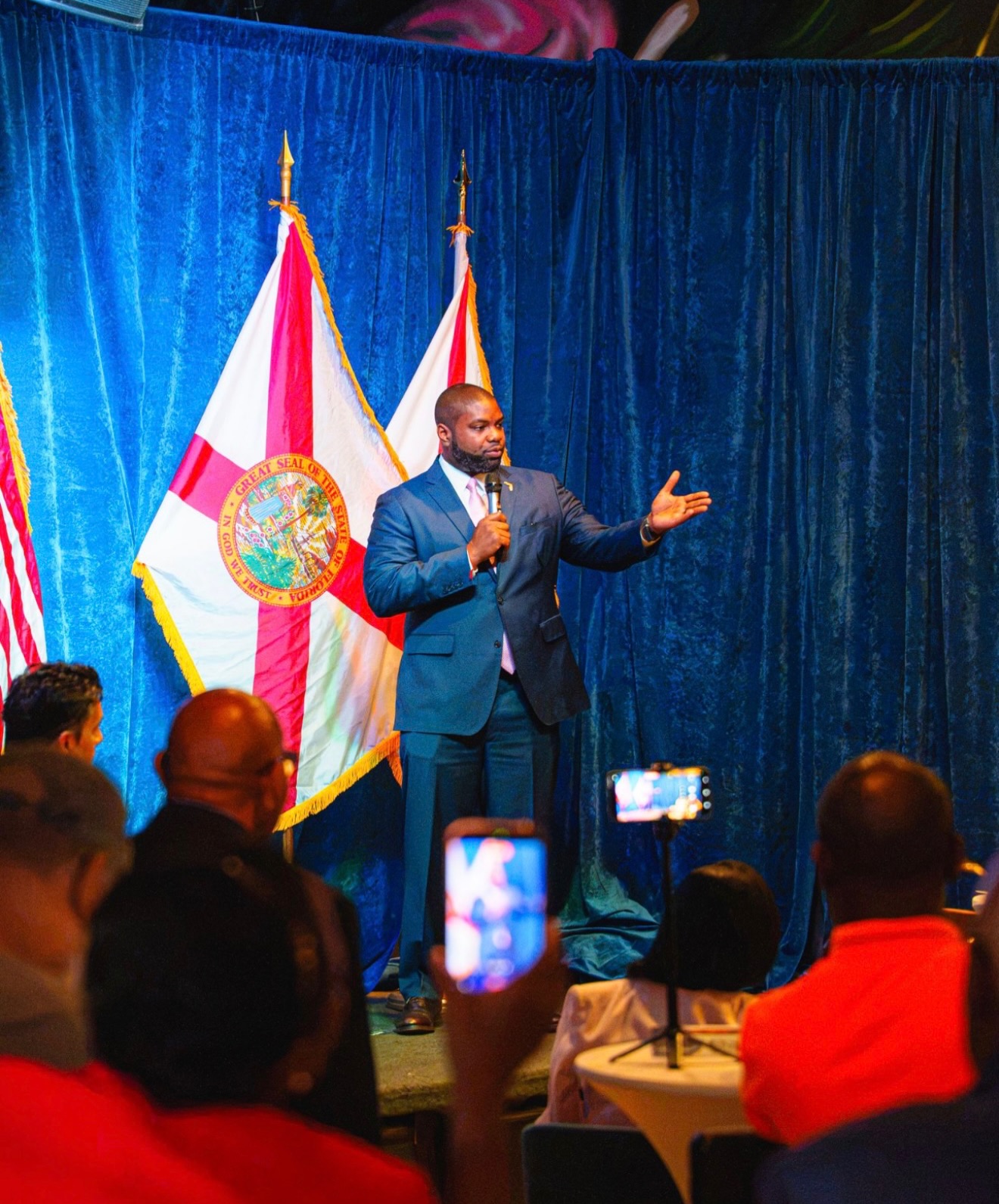
Republican nominee for Florida governor Byron Donalds met with members of South Florida’s Haitian community in North Miami on Saturday, September 12, as his campaign continues its outreach ahead of Florida’s November election.
Donalds shared photos from the visit the following day, describing Florida’s Haitian community as “resilient,” “faithful” and “hardworking.” He said it was a privilege to meet with Floridians he hopes to serve. His social-media post confirms the North Miami outreach.
The gathering came at an important time for Haitian Floridians, particularly as immigration and the future of Temporary Protected Status remain major concerns for many families in South Florida.
Donalds Recently Defended Ending Haiti TPS
Just three weeks before the North Miami visit, Donalds appeared on CBS’ Face the Nation, where he was questioned about the Trump administration’s decision to end TPS for Haitians.
During the August 23 interview, host Margaret Brennan noted that approximately 158,000 Haitian TPS holders were living in Florida, the largest concentration in the country. She questioned Donalds about ending the protection while Haiti continues to face serious security and humanitarian problems.
Donalds defended the administration’s position, arguing that TPS was created to be temporary.
“The Trump administration, in my view, making sure that it’s a temporary program is correct,” Donalds said. He also argued that allowing temporary immigration programs to continue indefinitely could create what he described as “the wrong incentives” for people to return home and for Haiti to stabilize.
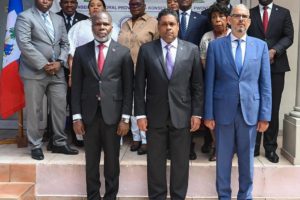
At the same time, Donalds acknowledged that stabilizing Haiti would take time. He said he had met with members of Haiti’s transitional government and its ambassador and discussed efforts to improve security in the country. His claims about how much Haitian territory security forces control were his own characterization during the interview and should not be presented as independently established fact.
His Congressional Vote on Haiti TPS
Donalds’ position is also reflected in his congressional voting record.
On April 16, he voted against H.R. 1689, legislation that would have required the Department of Homeland Security to designate Haiti for Temporary Protected Status. The bill nevertheless passed the House 224–204. Official House records confirm Donalds voted “Nay.”
Other Florida Republicans have taken a different position. Rep. María Elvira Salazar voted for the legislation and said ending TPS while Haiti remains unstable could affect both Haitian families and Florida’s workforce, particularly industries such as health care.
During Donalds’ Face the Nation interview, Brennan also cited Republican Rep. Carlos Giménez’s opposition to deporting Haitians who had been protected by TPS. Donalds responded by emphasizing workforce training for Floridians and the need for what he described as consistent immigration policies.
Haitian Floridians and the Governor’s Race
The North Miami appearance comes as Donalds campaigns for governor after winning Florida’s Republican primary in August. He is running with state Sen. Bryan Avila. Democrat David Jolly, running with Gwen Graham, won the Democratic nomination. Florida’s official election records confirm both tickets have qualified for the November 3 general election. Other qualified candidates will also appear on the ballot.
For Haitian Floridians, Donalds’ visit puts two parts of his campaign in the same conversation: his effort to engage the Haitian community in South Florida and his support for ending Haiti’s Temporary Protected Status.
As the governor’s race continues, immigration, Haiti policy and the economic impact of TPS are likely to remain issues of particular interest to Florida’s large Haitian community.






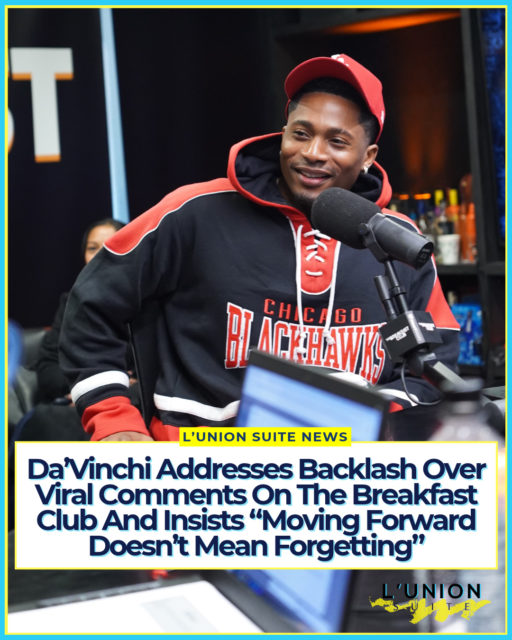


![Haitian-American actor Da’Vinchi sat down with The Breakfast Club this week to address the intense backlash he received after comments made during an October appearance on Cam Newton’s Funky Friday podcast. The original remarks, touching on American work ethic, the Black diaspora, and the idea of “moving on” from slavery went viral, leading to widespread criticism and accusations of dismissing the unique nature of the transatlantic slave trade.
On Tuesday’s episode, Da’Vinchi directly confronted the fallout. He noted that he is not heavily active on social media and only fully grasped the reaction after people began calling him. He firmly rejected the notion that Black Americans treat slavery as an excuse for present-day conditions.
A central theme of the appearance was his repeated insistence that “moving forward doesn’t mean forgetting.” He discussed the lasting impact of trauma, referencing ideas from Dr. Bruce Lipton’s The Biology of Belief around epigenetic and cellular memory, he concept that ancestral experiences can be felt on a cellular level today.
The conversation also covered systemic oppression in Black America and personal relationships. Da’Vinchi argued that everyone is entitled to their own dating preferences, but noted that fear of cultural backlash has led some people to keep interracial relationships private.
Haiti was raised as a direct parallel during the discussion. Charlamagne tha God pointed out that Haiti is “a nation whose history [is] profoundly shaped by slavery, colonialism, foreign intervention, [and] exploitation of its economics,” then asked whether Da’Vinchi would tell Haitian people to simply move on from that history.
Da’Vinchi responded by citing Jean-Baptiste Point du Sable, the Haitian-born pioneer widely recognized as the founder of Chicago. He said he would encourage Haitians to “move forward the same way” du Sable did when he left Saint-Domingue and established a thriving trading post that became the foundation of one of America’s major cities.
The appearance has continued to generate discussion across the diaspora about history, identity, and accountability.
🎥 @breakfastclubam
#lunionsuite #haitianamerican](https://www.lunionsuite.com/wp-content/uploads/2012/07/869770525_18648825085023307_7422511773279890723_n-512x640.jpg)


![Haitian-American actor Da’Vinchi sat down with The Breakfast Club this week to address the intense backlash he received after comments made during an October appearance on Cam Newton’s Funky Friday podcast. The original remarks, touching on American work ethic, the Black diaspora, and the idea of “moving on” from slavery went viral, leading to widespread criticism and accusations of dismissing the unique nature of the transatlantic slave trade.
On Tuesday’s episode, Da’Vinchi directly confronted the fallout. He noted that he is not heavily active on social media and only fully grasped the reaction after people began calling him. He firmly rejected the notion that Black Americans treat slavery as an excuse for present-day conditions.
A central theme of the appearance was his repeated insistence that “moving forward doesn’t mean forgetting.” He discussed the lasting impact of trauma, referencing ideas from Dr. Bruce Lipton’s The Biology of Belief around epigenetic and cellular memory, he concept that ancestral experiences can be felt on a cellular level today.
The conversation also covered systemic oppression in Black America and personal relationships. Da’Vinchi argued that everyone is entitled to their own dating preferences, but noted that fear of cultural backlash has led some people to keep interracial relationships private.
Haiti was raised as a direct parallel during the discussion. Charlamagne tha God pointed out that Haiti is “a nation whose history [is] profoundly shaped by slavery, colonialism, foreign intervention, [and] exploitation of its economics,” then asked whether Da’Vinchi would tell Haitian people to simply move on from that history.
Da’Vinchi responded by citing Jean-Baptiste Point du Sable, the Haitian-born pioneer widely recognized as the founder of Chicago. He said he would encourage Haitians to “move forward the same way” du Sable did when he left Saint-Domingue and established a thriving trading post that became the foundation of one of America’s major cities.
The appearance has continued to generate discussion across the diaspora about history, identity, and accountability.
🎥 @breakfastclubam
#lunionsuite #haitianamerican](https://scontent-yyz1-1.cdninstagram.com/v/t51.82787-15/869770525_18648825085023307_7422511773279890723_n.jpg?stp=dst-jpg_e35_tt6&_nc_cat=110&ccb=7-5&_nc_sid=18de74&efg=eyJlZmdfdGFnIjoiQ0FST1VTRUxfSVRFTS5iZXN0X2ltYWdlX3VybGdlbi5DMyJ9&_nc_ohc=fw5lnXrS2zIQ7kNvwG_4__Q&_nc_oc=Adr3sB5vD33H92MvpDBCie5grklthP1Hs_RXk7jE1hE9Qj_4S25Tn7B97WXag4eogn8&_nc_zt=23&_nc_ht=scontent-yyz1-1.cdninstagram.com&edm=ANo9K5cEAAAA&_nc_gid=JuvujS0jKp7XoTDxCoG81A&_nc_tpa=Q5bMBQKGeMqMNX1OTd3Lt4PyRq1UAgNIvDq1SifAoJUdWUsxJ9YX2nKRNnhsqpC6iwXVhjSa7M65TNp-&oh=00_AQR224awlpJGzS4wiM40CUqe8UesvMcF7tgfP3eDvmU6jQ&oe=6AEC1055)

They have to be the dumbest immigrants in the country to talk to this gu, all skin folk aren’t kinfolk.