






Best online pharmacy with fast delivery order singulair online
order super cialis online




Instagram

![Miami's Haitian community will have a chance to celebrate its history, language, and culture this Sunday, November 22, as ReadCaribbean 2026 brings three Haitian-focused discussions to the Miami Book Fair.
Taking place at Miami Dade College's Wolfson Campus in downtown Miami, the free event will explore everything from Haitian family history and identity to Vodou traditions, journalism, and the importance of telling our own stories.
The day begins at 11 a.m. with “What We Carry,” a conversation about Haitian history, family memories, and the experiences passed down from one generation to the next.
At 1 p.m., “Beyond the Veil” will explore Haitian spirituality, including Vodou, dreams, and ancestral beliefs.
The final discussion, “Ayiti nan Nouvèl,” begins at 3 p.m. and turns the conversation toward Haitian journalism and media representation. One of the central questions is simple but important: Kilès ki gen dwa rakonte istwa nou? Who gets to tell our stories?
And Haitian Creole won't just be part of the conversation. It will be one of the main languages spoken throughout the day.
The 11 a.m. discussion will be held in English with Haitian Creole interpretation, while the two afternoon sessions will take place in Haitian Creole with English interpretation.
For Haitian families, students, writers, and anyone interested in Caribbean culture, Sunday's program offers an opportunity to hear different perspectives on Haiti's past, present, and future.
📅 Sunday, November 22, 2026
📍 Miami Dade College, Wolfson Campus, Downtown Miami
🕚 11 a.m., 1 p.m., and 3 p.m.
🎟️ Free admission
🇭🇹 Lang nou. Kilti nou. Istwa nou.
Will you be attending Miami Book Fair this Sunday?
#lunionsuite #haitianamerican]()
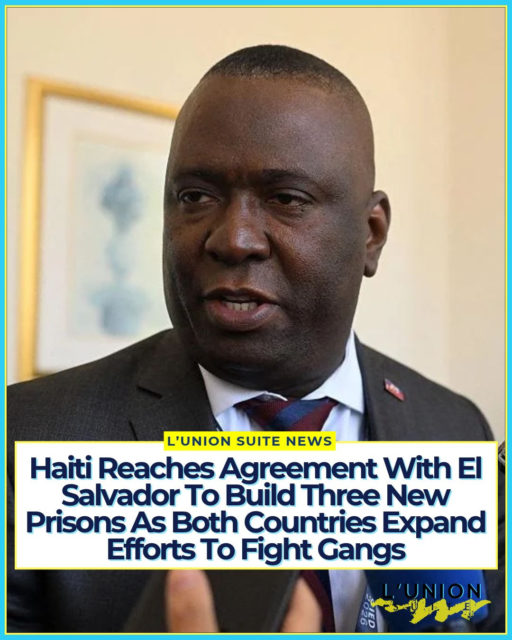
![Haiti is preparing to build three new prisons with help from El Salvador as both countries strengthen their partnership in the fight against armed gangs.
The announcement came Friday, November 20, following a visit to El Salvador by Haiti's Minister of Justice and Public Security, Patrick Pélissier.
According to the Associated Press, a Salvadoran company will work alongside a Haitian company to construct the three facilities. Pélissier said construction of the first prison is expected to begin soon, with instructions from Haiti's prime minister to move the project forward quickly.
The agreement comes at a time when Haiti is struggling with both gang violence and a prison system that has been in crisis for years.
In 2024, armed gangs attacked two of Haiti's largest prisons, allowing thousands of inmates to escape. Since then, the country has continued to face serious challenges with overcrowding, poor detention conditions, and limited space to hold people arrested during security operations.
During his visit to El Salvador, Pélissier also toured CECOT, the country's massive maximum-security prison built under President Nayib Bukele's crackdown on gangs.
The facility has drawn international attention for its strict security measures, but it has also faced criticism over detention conditions and allegations of human rights abuses.
The prison agreement is another sign of growing cooperation between Haiti and El Salvador, following the deployment of Salvadoran troops to assist with security operations against armed gangs.
However, several important questions remain unanswered.
Haitian authorities have not disclosed how much the three prisons will cost, where they will be built, who will finance them, or whether El Salvador will have any role in managing the facilities.
For now, the agreement marks another step in Haiti's efforts to strengthen its security system. Whether the new prisons will help address the country's long-standing detention problems will depend on how the project is carried out.
#lunionsuite #haitianamerican]()
![Javits Badu Nkansah Frimpong was 15. Quiet, hardworking, and full of plans. He had left Ghana in October 2025 to live with his father, Thomas Frimpong, in the Bronx. Exactly one year and one day later, on the morning of October 29, he was walking to DreamYard Preparatory School when three young people approached him. He ran, dropped his backpack, and was shot in the stomach. He died at St. Barnabas Hospital. A 17-year-old has been charged with murder; two others are still being sought.
On Friday, November 20, his family and a packed church at New Covenant Christian Ministries on Boston Road gathered for his homegoing. The space overflowed. Sobs and cries filled the sanctuary as people looked at the blue casket, heavy with flowers, that held the boy who had wanted to serve in the military and become a doctor. He was later laid to rest at Kensico Cemetery in Valhalla.
His mother, Doris Adu Gyamfi, who had flown from Ghana after receiving an emergency visa, could not finish her words. A loved one read them for her. She called Javits her “greatest treasure.” She remembered the little boy who held her hand and shared his dreams, the son who told her he would study hard, become a doctor, and one day return to take care of her. 'If love could defeat death, you would still be here.” She wore a stole that read “Justice for Javits.”
His father, a taxi driver who named him Javits because he was dropping off a fare at the Javits Center when he learned of the birth, spoke through a family member, a Ghanaian custom in moments of deep grief. He would have given anything, he added, to hear his son’s voice or see his face one more time.
Classmates, relatives, and community members described a joking, friendly teenager who left his phone at home so he could focus on school, a boy who wanted to make life better for his mother and be a blessing to others. Many wore traditional Ghanaian clothing. Mayor Zohran Mamdani, Attorney Ben Crump, Rev. Al Sharpton, and other leaders were in attendance. The church prayed. People laid hands on the casket. And the Frimpong family left with the same request they have carried since October 29: justice for their only child.
#lunionsuite]()
![Two Salvadoran soldiers were killed and two others injured following an explosion at a military camp in Haiti, El Salvador’s Armed Forces confirmed Friday, November 20, 2026.
According to the official military statement, the four personnel were working with explosive materials at one of their camps when a detonation occurred. Two lost their lives, while the other two sustained injuries and are receiving medical treatment. The Armed Forces expressed condolences and solidarity with the families of those who died.
The military has not disclosed the exact location of the camp, the identities of those involved, the cause of the explosion, or when the incident occurred. A Salvadoran government spokesperson said additional details were not immediately available.
The deaths come amid an expanded Salvadoran military deployment in Haiti. President Nayib Bukele sent more than 2,000 troops in late October after four Salvadoran members of a UN-backed force went missing following an ambush on October 18 in Croix-des-Bouquets. The troops have since participated in operations against armed gangs alongside Haitian security forces.
This incident is separate from the October 18 ambush, in which the four Salvadoran personnel remain unaccounted for. Multiple reports describe the November 20 deaths as the first officially confirmed fatalities among the large Salvadoran contingent deployed since late October.
Information remains limited as of the military’s Friday statement, which was labeled as developing.
#lunionsuite #haitianamerican #haitian #haiti]()
![The inaugural Haitian American Comedy Fest is now on sale, inviting the community to a three-day celebration that goes beyond stand-up. Taking place February 19–21, 2027, at The Plaza Live in Orlando, the festival is designed as a complete cultural experience, whether you’re planning a girls’ night out, a family outing, or a weekend with friends.
Alongside comedy, the weekend will feature food trucks, live DJs, and nonstop energy, creating space for connection through humor, culture, and shared moments. Organizers describe it as more than a series of shows: it’s an immersive gathering that brings people together around Haitian and Haitian American storytelling.
Tickets are available now at HaitianAmericanComedyFest.com, with a 10% discount on all categories, including VIP Meet & Greet packages, when using the code EARLYBIRD.
The festival unfolds across three distinct nights:
Follow : @haitianamericancomedyfest
- Friday, February 19 — Kreyol Comedy Night
- Saturday, February 20 — For the Culture (two shows)
- Sunday, February 21 — She Got Jokes: Ladies Night (two shows)
Powered by Crash Relief Solutions, the Haitian American Comedy Fest aims to establish a dedicated platform for Haitian comedy on a major stage. With early-bird pricing active and the full experience now taking shape, organizers are urging the community to secure tickets ahead of the lineup drop.
#lunionsuite #haitianamerican #haitian]()
![For The Culture 🇭🇹🇭🇹
When Grand Theft Auto VI launched on November 19, Haitian and Haitian-American players celebrated something more intentional than surface-level representation in La Perle, Vice City’s version of Little Haiti. The neighborhood doesn’t just borrow the name La Perle des Antilles. It carries the cultural identity of the real place through flags, murals featuring the map of Haiti and the national coat of arms, Creole text such as “Ayisyen fyè,” and businesses that echo the Caribbean Marketplace, cultural centers, and everyday spots that define Little Haiti.
That authenticity extends into how the world sounds and who helped shape it. Haitian-American rapper Kodak Black appears as himself and hosts the unlockable playlist The Sniper of La Perle. Haitian producer and DJ Michaël Brun presented and helped curate the program, which spans generations of Haitian music, konpa classics from artists like Alan Cavé, Carimi, and Emeline Michel alongside contemporary voices, Haitian rap, and tracks from Kodak’s own catalog, including his collaboration with Brun. Brun has described the project as years in the making, aimed at giving players a genuine feel for the culture rather than a generic Caribbean mix. Rockstar also supported the real-world side by funding the free BAYO 10th-anniversary event in actual Little Haiti.
Haitian influence shows up in performance as well. Kreyol appears in ambient dialogue across the neighborhood, and Haitian and Haitian-American creative talent contributed to the game’s voices and music. The result is a neighborhood that feels considered rather than observed from the outside. Earlier entries in the series sometimes leaned on stereotypes that frustrated the community. La Perle lands differently because the cultural details, the soundtrack, and the involvement of Haitian creators run deeper than decoration.
For Haitian gamers, the excitement comes from that distinction. It’s not only that Little Haiti exists in one of the biggest games in the world. It’s that the version of it players encounter was shaped with Haitian voices, music, and the lived texture of the place.
#lunionsuite #haitianamerican #littlehaiti #GTA6]()
![Haitian police say at least 34 suspected gang members were killed Thursday, November 19, during a major security operation in Martissant, an area of Port-au-Prince that has been under gang control for more than five years.
According to Reuters and the Associated Press, the Haitian National Police (PNH), working alongside a government anti-gang task force, launched the operation as part of efforts to regain control of the area and reopen one of Haiti’s most important roads.
Police say the operation targeted a hideout linked to Renel Destina, better known as Ti Lapli, leader of the Grand Ravine gang.
Footage released by the PNH shows armored vehicles moving through Martissant and a building collapsing following a large explosion. Reuters independently verified that the footage was filmed in Martissant.
Police reported that no officers or civilians were injured during the operation. However, the reported death toll and the absence of civilian casualties have not been independently verified.
Martissant is more than just another neighborhood affected by gang violence. It sits along National Route 2, a major road connecting Port-au-Prince to southern Haiti.
Since armed groups took control of the area in 2021, thousands of residents have been forced from their homes. Travelers have faced shootings, illegal toll checkpoints, and dangerous road conditions, making it difficult for families, businesses, and goods to move between the capital and the south.
The operation comes as Haitian authorities continue efforts to push armed groups out of communities and restore access to important roads.
Although police have reported significant casualties among suspected gang members, officials have not confirmed that Martissant has been fully secured or that National Route 2 has reopened.
For the thousands of Haitians who depend on this road, the hope is that these operations will eventually bring back something many have been without for years: the freedom to travel safely.
#lunionsuite #haitianamerican]()
![Elon Musk is distancing himself from the MAGA movement and expressing regret over his massive political spending after Republicans suffered heavy losses in the 2026 midterm elections.
Speaking via video from China at the New York Times DealBook Summit on November 18, Musk told interviewer Andrew Ross Sorkin, “I’m not MAGA.” He added, “I’m not sure what MAGA means, but if that means sort of blind adherence to a set of policies by the Republican Party, then I certainly don’t have that.”
The comments mark a sharp contrast with Musk’s earlier posture. In 2024 he repeatedly called himself “dark MAGA” or “dark, gothic MAGA,” wore MAGA hats on the campaign trail, and spent hundreds of millions of dollars helping Donald Trump win reelection. He later ran the Department of Government Efficiency (DOGE) in the Trump administration.
On his midterm spending, Musk was direct: “I feel pretty foolish about having spent so much money and not seeing much for it.” He said that if he could rewind the clock he would have spent less, while noting that elections “are not just about money” and that the outcome might have been worse for Republicans without his contributions.
Musk was the cycle’s largest individual donor, contributing roughly $446–474 million (reports vary slightly) to Republican candidates and groups, including heavy spending in Texas races such as the Senate contest won by Democrat James Talarico over Republican Ken Paxton. Democrats captured both the House and Senate in a broad blue wave.
Musk described his goal as preserving some checks and balances rather than securing a Republican supermajority, and he portrayed himself as “ideologically quite moderate” with “positives and negatives in both parties.” The remarks have drawn widespread attention and skepticism given his well-documented history of supporting Trump and the MAGA movement. The interview took place while Musk was accompanying President Trump on a trip to Asia for the APEC summit.
\Video Source: @NYTImes
#lunionsuite #haitianamerican #haitian]()
![A piece of Haitian history that has been out of public view for more than a century is finally getting the attention it deserves.
The Yale Peabody Museum in New Haven, Connecticut, has opened a new exhibition featuring historic portraits of the men who helped shape Haiti's independence and its early years as a nation.
The exhibition, titled “Haiti in the Age of Revolutions: Lafargue Rigaud’s Portraits of Independence,” opened November 10, 2026. It features paintings created between 1877 and 1881 by Haitian artist Faustin Lafargue Rigaud.
Among the historical figures represented are Jean-Jacques Dessalines, Toussaint Louverture, Henri Christophe, Alexandre Pétion, and Jean-Pierre Boyer.
What makes this exhibition especially meaningful is the journey these paintings have taken.
The portraits were last publicly exhibited at the World's Industrial and Cotton Centennial in New Orleans in 1884–1885. Instead of returning to Haiti, they eventually became part of the Smithsonian Institution's collection before being transferred to Yale.
For decades, these important pieces of Haitian history remained largely unseen. At one point, Smithsonian curators even dismissed them as having no artistic or cultural value.
Following Haiti's devastating 2010 earthquake, preservation specialists worked alongside Haitian conservators to restore the paintings and protect an important part of the country's cultural heritage.
Now, more than 140 years after their last public exhibition, the portraits are being introduced to a new generation.
The exhibition tells a story that goes beyond Haiti's revolution. It shows how Haitian leaders wanted their country to be recognized as a strong, independent nation at a time when much of the world still practiced slavery.
For Haitians at home and throughout the diaspora, this is another opportunity to see our history represented beyond the headlines about violence, poverty, and political instability.
Our history is also one of leadership, art, independence, and people who changed the world.
Source: Yale Peabody Museum
#lunionsuite #haitianamerican]()
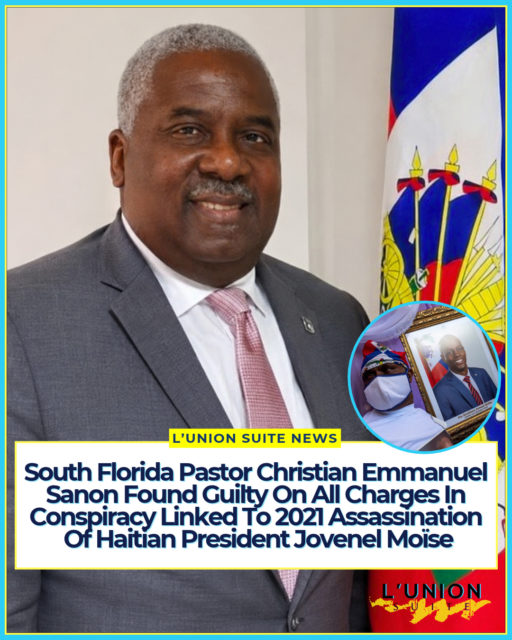
![A federal jury in Miami convicted Haitian-American pastor Christian Emmanuel Sanon on Wednesday of all eight charges arising from the 2021 assassination of Haitian President Jovenel Moïse. The nearly 8-week trial ended with a guilty verdict after one day of deliberations, making Sanon the fifth defendant convicted in the sprawling U.S. case.
Sanon, a dual Haitian-U.S. citizen in his late 60s who described himself as a doctor and pastor and who worked with churches in Haitian communities in Florida and the Midwest, faces a possible life sentence. Sentencing is scheduled for February 10. He remains in federal custody. His attorneys said they were disappointed, that he maintains his innocence, and that they plan to seek a new trial and appeal.
Federal prosecutors described South Florida as a central hub for planning and financing the plot to remove Moïse and install a successor chosen by the conspirators. They said Sanon was the group’s initial candidate to replace the president. According to the government, he helped raise money for the operation, arranged travel and lodging in Haiti, and remained involved even after others decided he lacked the constitutional qualifications and popular support needed. Prosecutors also linked the plot to Florida-based security companies whose owners and associates were convicted in May, and to financing that included pandemic-related funds. Colombian former soldiers were hired and later carried out the attack.
Moïse was killed in the early hours of July 7, 2021, when armed men, mostly retired Colombian soldiers, raided his home near Port-au-Prince. U.S. authorities have charged more than 40 people in connection with the case; earlier convictions include four South Florida men tied to CTU and financing.
In his own testimony, Sanon acknowledged communicating with people who wanted to replace Moïse but said the group had already shifted to another candidate long before the killing and that he had no knowledge of any plan to assassinate the president. Defense lawyers argued he was not part of a conspiracy to kill or kidnap Moïse and did not provide material support for such a plan.
#lunionsuite #haitianamerican]()
 order synthroid online
order xifaxan online New online drugstore with no prescription
Food
ADVERTISE WITH US
Featured In:












Miami's Haitian community will have a chance to celebrate its history, language, and culture this Sunday, November 22, as ReadCaribbean 2026 brings three Haitian-focused discussions to the Miami Book Fair.
Taking place at Miami Dade College's Wolfson Campus in downtown Miami, the free event will explore everything from Haitian family history and identity to Vodou traditions, journalism, and the importance of telling our own stories.
The day begins at 11 a.m. with “What We Carry,” a conversation about Haitian history, family memories, and the experiences passed down from one generation to the next.
At 1 p.m., “Beyond the Veil” will explore Haitian spirituality, including Vodou, dreams, and ancestral beliefs.
The final discussion, “Ayiti nan Nouvèl,” begins at 3 p.m. and turns the conversation toward Haitian journalism and media representation. One of the central questions is simple but important: Kilès ki gen dwa rakonte istwa nou? Who gets to tell our stories?
And Haitian Creole won't just be part of the conversation. It will be one of the main languages spoken throughout the day.
The 11 a.m. discussion will be held in English with Haitian Creole interpretation, while the two afternoon sessions will take place in Haitian Creole with English interpretation.
For Haitian families, students, writers, and anyone interested in Caribbean culture, Sunday's program offers an opportunity to hear different perspectives on Haiti's past, present, and future.
📅 Sunday, November 22, 2026
📍 Miami Dade College, Wolfson Campus, Downtown Miami
🕚 11 a.m., 1 p.m., and 3 p.m.
🎟️ Free admission
🇭🇹 Lang nou. Kilti nou. Istwa nou.
Will you be attending Miami Book Fair this Sunday?
#lunionsuite #haitianamerican
21 hours ago
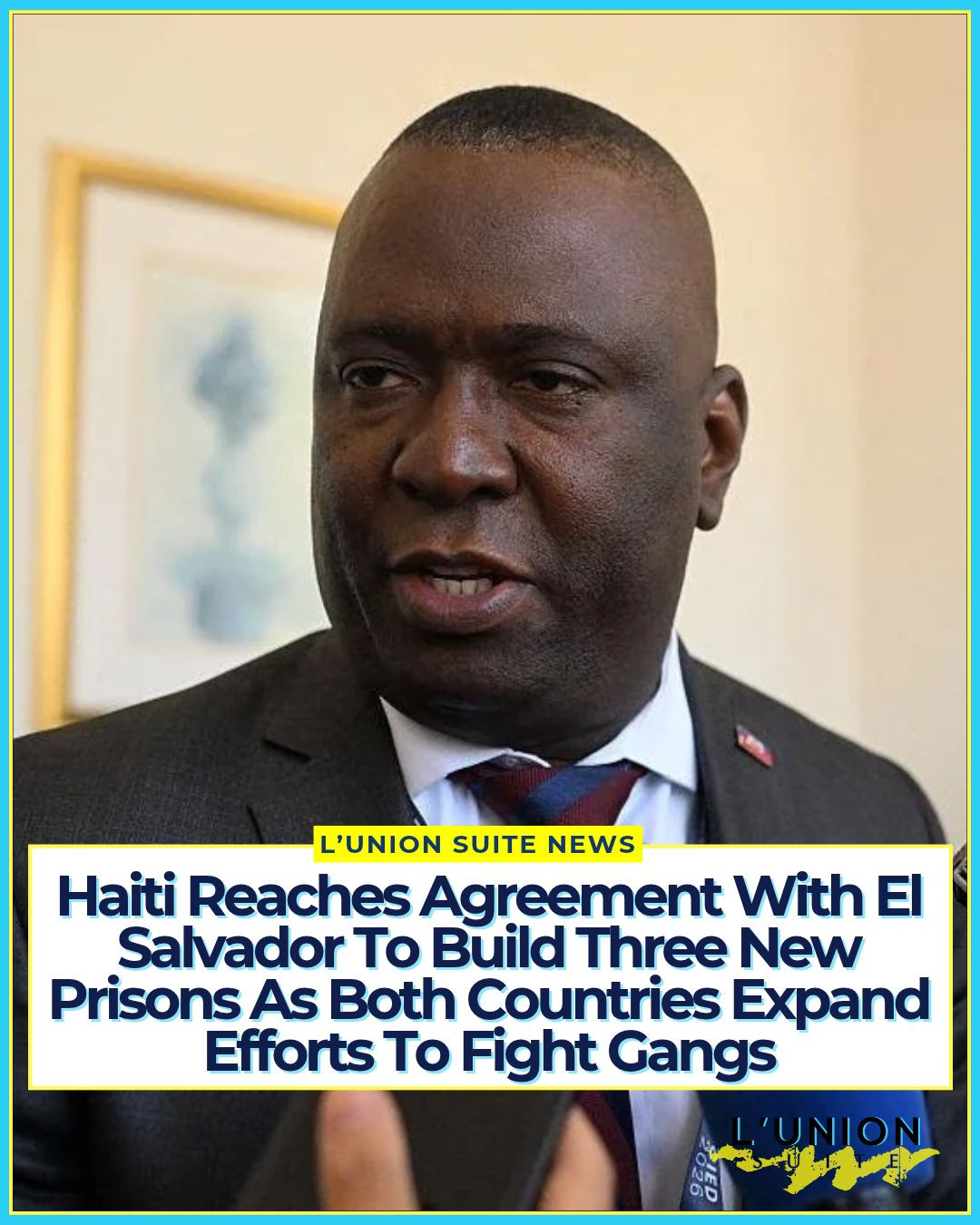
Haiti is preparing to build three new prisons with help from El Salvador as both countries strengthen their partnership in the fight against armed gangs.
The announcement came Friday, November 20, following a visit to El Salvador by Haiti's Minister of Justice and Public Security, Patrick Pélissier.
According to the Associated Press, a Salvadoran company will work alongside a Haitian company to construct the three facilities. Pélissier said construction of the first prison is expected to begin soon, with instructions from Haiti's prime minister to move the project forward quickly.
The agreement comes at a time when Haiti is struggling with both gang violence and a prison system that has been in crisis for years.
In 2024, armed gangs attacked two of Haiti's largest prisons, allowing thousands of inmates to escape. Since then, the country has continued to face serious challenges with overcrowding, poor detention conditions, and limited space to hold people arrested during security operations.
During his visit to El Salvador, Pélissier also toured CECOT, the country's massive maximum-security prison built under President Nayib Bukele's crackdown on gangs.
The facility has drawn international attention for its strict security measures, but it has also faced criticism over detention conditions and allegations of human rights abuses.
The prison agreement is another sign of growing cooperation between Haiti and El Salvador, following the deployment of Salvadoran troops to assist with security operations against armed gangs.
However, several important questions remain unanswered.
Haitian authorities have not disclosed how much the three prisons will cost, where they will be built, who will finance them, or whether El Salvador will have any role in managing the facilities.
For now, the agreement marks another step in Haiti's efforts to strengthen its security system. Whether the new prisons will help address the country's long-standing detention problems will depend on how the project is carried out.
#lunionsuite #haitianamerican
22 hours ago


Javits Badu Nkansah Frimpong was 15. Quiet, hardworking, and full of plans. He had left Ghana in October 2025 to live with his father, Thomas Frimpong, in the Bronx. Exactly one year and one day later, on the morning of October 29, he was walking to DreamYard Preparatory School when three young people approached him. He ran, dropped his backpack, and was shot in the stomach. He died at St. Barnabas Hospital. A 17-year-old has been charged with murder; two others are still being sought.
On Friday, November 20, his family and a packed church at New Covenant Christian Ministries on Boston Road gathered for his homegoing. The space overflowed. Sobs and cries filled the sanctuary as people looked at the blue casket, heavy with flowers, that held the boy who had wanted to serve in the military and become a doctor. He was later laid to rest at Kensico Cemetery in Valhalla.
His mother, Doris Adu Gyamfi, who had flown from Ghana after receiving an emergency visa, could not finish her words. A loved one read them for her. She called Javits her “greatest treasure.” She remembered the little boy who held her hand and shared his dreams, the son who told her he would study hard, become a doctor, and one day return to take care of her. 'If love could defeat death, you would still be here.” She wore a stole that read “Justice for Javits.”
His father, a taxi driver who named him Javits because he was dropping off a fare at the Javits Center when he learned of the birth, spoke through a family member, a Ghanaian custom in moments of deep grief. He would have given anything, he added, to hear his son’s voice or see his face one more time.
Classmates, relatives, and community members described a joking, friendly teenager who left his phone at home so he could focus on school, a boy who wanted to make life better for his mother and be a blessing to others. Many wore traditional Ghanaian clothing. Mayor Zohran Mamdani, Attorney Ben Crump, Rev. Al Sharpton, and other leaders were in attendance. The church prayed. People laid hands on the casket. And the Frimpong family left with the same request they have carried since October 29: justice for their only child.
#lunionsuite
2 days ago
At a press briefing Friday, President Trump praised his new White House Chief of Staff Stephen Miller after he delivered his first public remarks since taking up the role.
Miller, who has served across both Trump administrations, used his time at the podium to praise Trump and said the president had achieved more in two years than any president in history. He called Trump the first president to achieve net deregulation (removing 10 regulations for every one added), pointed to a fully secured southern border, record deportations, record-low crime and murder rates, record fossil fuel and coal production, the first new nuclear reactors since the 1970s, and what he described as the strongest economy and fastest wage growth in American history. He closed by declaring that the next two years under Trump will be “the greatest two years in American history” and that he was proud to serve as chief of staff.
Once Miller wrapped up, Trump immediately jumped in. “We have breaking news,” the president said. “He was better than these two guys,” he quipped, pointing at Vice President JD Vance and Secretary of State Marco Rubio, who stood nearby. Trump then turned to Miller and asked, “Do you want to run for president?” The exchange drew laughter in the room.
Earlier in the briefing, Trump had introduced Miller as “the most powerful man in the world” before handing him the podium.
The moment came days after Miller replaced Susie Wiles as chief of staff following Republican midterm losses, and just after Trump’s return from Asia. It instantly fueled fresh speculation about the 2028 Republican field, with Vance and Rubio long viewed as the leading potential contenders, neither of whom has formally entered the race.
#lunionsuite #haitianamerican #haitian
2 days ago


Two Salvadoran soldiers were killed and two others injured following an explosion at a military camp in Haiti, El Salvador’s Armed Forces confirmed Friday, November 20, 2026.
According to the official military statement, the four personnel were working with explosive materials at one of their camps when a detonation occurred. Two lost their lives, while the other two sustained injuries and are receiving medical treatment. The Armed Forces expressed condolences and solidarity with the families of those who died.
The military has not disclosed the exact location of the camp, the identities of those involved, the cause of the explosion, or when the incident occurred. A Salvadoran government spokesperson said additional details were not immediately available.
The deaths come amid an expanded Salvadoran military deployment in Haiti. President Nayib Bukele sent more than 2,000 troops in late October after four Salvadoran members of a UN-backed force went missing following an ambush on October 18 in Croix-des-Bouquets. The troops have since participated in operations against armed gangs alongside Haitian security forces.
This incident is separate from the October 18 ambush, in which the four Salvadoran personnel remain unaccounted for. Multiple reports describe the November 20 deaths as the first officially confirmed fatalities among the large Salvadoran contingent deployed since late October.
Information remains limited as of the military’s Friday statement, which was labeled as developing.
#lunionsuite #haitianamerican #haitian #haiti
2 days ago


The inaugural Haitian American Comedy Fest is now on sale, inviting the community to a three-day celebration that goes beyond stand-up. Taking place February 19–21, 2027, at The Plaza Live in Orlando, the festival is designed as a complete cultural experience, whether you’re planning a girls’ night out, a family outing, or a weekend with friends.
Alongside comedy, the weekend will feature food trucks, live DJs, and nonstop energy, creating space for connection through humor, culture, and shared moments. Organizers describe it as more than a series of shows: it’s an immersive gathering that brings people together around Haitian and Haitian American storytelling.
Tickets are available now at HaitianAmericanComedyFest.com, with a 10% discount on all categories, including VIP Meet & Greet packages, when using the code EARLYBIRD.
The festival unfolds across three distinct nights:
Follow : @haitianamericancomedyfest
- Friday, February 19 — Kreyol Comedy Night
- Saturday, February 20 — For the Culture (two shows)
- Sunday, February 21 — She Got Jokes: Ladies Night (two shows)
Powered by Crash Relief Solutions, the Haitian American Comedy Fest aims to establish a dedicated platform for Haitian comedy on a major stage. With early-bird pricing active and the full experience now taking shape, organizers are urging the community to secure tickets ahead of the lineup drop.
#lunionsuite #haitianamerican #haitian
2 days ago


For The Culture 🇭🇹🇭🇹
When Grand Theft Auto VI launched on November 19, Haitian and Haitian-American players celebrated something more intentional than surface-level representation in La Perle, Vice City’s version of Little Haiti. The neighborhood doesn’t just borrow the name La Perle des Antilles. It carries the cultural identity of the real place through flags, murals featuring the map of Haiti and the national coat of arms, Creole text such as “Ayisyen fyè,” and businesses that echo the Caribbean Marketplace, cultural centers, and everyday spots that define Little Haiti.
That authenticity extends into how the world sounds and who helped shape it. Haitian-American rapper Kodak Black appears as himself and hosts the unlockable playlist The Sniper of La Perle. Haitian producer and DJ Michaël Brun presented and helped curate the program, which spans generations of Haitian music, konpa classics from artists like Alan Cavé, Carimi, and Emeline Michel alongside contemporary voices, Haitian rap, and tracks from Kodak’s own catalog, including his collaboration with Brun. Brun has described the project as years in the making, aimed at giving players a genuine feel for the culture rather than a generic Caribbean mix. Rockstar also supported the real-world side by funding the free BAYO 10th-anniversary event in actual Little Haiti.
Haitian influence shows up in performance as well. Kreyol appears in ambient dialogue across the neighborhood, and Haitian and Haitian-American creative talent contributed to the game’s voices and music. The result is a neighborhood that feels considered rather than observed from the outside. Earlier entries in the series sometimes leaned on stereotypes that frustrated the community. La Perle lands differently because the cultural details, the soundtrack, and the involvement of Haitian creators run deeper than decoration.
For Haitian gamers, the excitement comes from that distinction. It’s not only that Little Haiti exists in one of the biggest games in the world. It’s that the version of it players encounter was shaped with Haitian voices, music, and the lived texture of the place.
#lunionsuite #haitianamerican #littlehaiti #GTA6
2 days ago

Haitian police say at least 34 suspected gang members were killed Thursday, November 19, during a major security operation in Martissant, an area of Port-au-Prince that has been under gang control for more than five years.
According to Reuters and the Associated Press, the Haitian National Police (PNH), working alongside a government anti-gang task force, launched the operation as part of efforts to regain control of the area and reopen one of Haiti’s most important roads.
Police say the operation targeted a hideout linked to Renel Destina, better known as Ti Lapli, leader of the Grand Ravine gang.
Footage released by the PNH shows armored vehicles moving through Martissant and a building collapsing following a large explosion. Reuters independently verified that the footage was filmed in Martissant.
Police reported that no officers or civilians were injured during the operation. However, the reported death toll and the absence of civilian casualties have not been independently verified.
Martissant is more than just another neighborhood affected by gang violence. It sits along National Route 2, a major road connecting Port-au-Prince to southern Haiti.
Since armed groups took control of the area in 2021, thousands of residents have been forced from their homes. Travelers have faced shootings, illegal toll checkpoints, and dangerous road conditions, making it difficult for families, businesses, and goods to move between the capital and the south.
The operation comes as Haitian authorities continue efforts to push armed groups out of communities and restore access to important roads.
Although police have reported significant casualties among suspected gang members, officials have not confirmed that Martissant has been fully secured or that National Route 2 has reopened.
For the thousands of Haitians who depend on this road, the hope is that these operations will eventually bring back something many have been without for years: the freedom to travel safely.
#lunionsuite #haitianamerican
2 days ago


Elon Musk is distancing himself from the MAGA movement and expressing regret over his massive political spending after Republicans suffered heavy losses in the 2026 midterm elections.
Speaking via video from China at the New York Times DealBook Summit on November 18, Musk told interviewer Andrew Ross Sorkin, “I’m not MAGA.” He added, “I’m not sure what MAGA means, but if that means sort of blind adherence to a set of policies by the Republican Party, then I certainly don’t have that.”
The comments mark a sharp contrast with Musk’s earlier posture. In 2024 he repeatedly called himself “dark MAGA” or “dark, gothic MAGA,” wore MAGA hats on the campaign trail, and spent hundreds of millions of dollars helping Donald Trump win reelection. He later ran the Department of Government Efficiency (DOGE) in the Trump administration.
On his midterm spending, Musk was direct: “I feel pretty foolish about having spent so much money and not seeing much for it.” He said that if he could rewind the clock he would have spent less, while noting that elections “are not just about money” and that the outcome might have been worse for Republicans without his contributions.
Musk was the cycle’s largest individual donor, contributing roughly $446–474 million (reports vary slightly) to Republican candidates and groups, including heavy spending in Texas races such as the Senate contest won by Democrat James Talarico over Republican Ken Paxton. Democrats captured both the House and Senate in a broad blue wave.
Musk described his goal as preserving some checks and balances rather than securing a Republican supermajority, and he portrayed himself as “ideologically quite moderate” with “positives and negatives in both parties.” The remarks have drawn widespread attention and skepticism given his well-documented history of supporting Trump and the MAGA movement. The interview took place while Musk was accompanying President Trump on a trip to Asia for the APEC summit.
\Video Source: @NYTImes
#lunionsuite #haitianamerican #haitian
2 days ago


A piece of Haitian history that has been out of public view for more than a century is finally getting the attention it deserves.
The Yale Peabody Museum in New Haven, Connecticut, has opened a new exhibition featuring historic portraits of the men who helped shape Haiti's independence and its early years as a nation.
The exhibition, titled “Haiti in the Age of Revolutions: Lafargue Rigaud’s Portraits of Independence,” opened November 10, 2026. It features paintings created between 1877 and 1881 by Haitian artist Faustin Lafargue Rigaud.
Among the historical figures represented are Jean-Jacques Dessalines, Toussaint Louverture, Henri Christophe, Alexandre Pétion, and Jean-Pierre Boyer.
What makes this exhibition especially meaningful is the journey these paintings have taken.
The portraits were last publicly exhibited at the World's Industrial and Cotton Centennial in New Orleans in 1884–1885. Instead of returning to Haiti, they eventually became part of the Smithsonian Institution's collection before being transferred to Yale.
For decades, these important pieces of Haitian history remained largely unseen. At one point, Smithsonian curators even dismissed them as having no artistic or cultural value.
Following Haiti's devastating 2010 earthquake, preservation specialists worked alongside Haitian conservators to restore the paintings and protect an important part of the country's cultural heritage.
Now, more than 140 years after their last public exhibition, the portraits are being introduced to a new generation.
The exhibition tells a story that goes beyond Haiti's revolution. It shows how Haitian leaders wanted their country to be recognized as a strong, independent nation at a time when much of the world still practiced slavery.
For Haitians at home and throughout the diaspora, this is another opportunity to see our history represented beyond the headlines about violence, poverty, and political instability.
Our history is also one of leadership, art, independence, and people who changed the world.
Source: Yale Peabody Museum
#lunionsuite #haitianamerican
2 days ago


A federal jury in Miami convicted Haitian-American pastor Christian Emmanuel Sanon on Wednesday of all eight charges arising from the 2021 assassination of Haitian President Jovenel Moïse. The nearly 8-week trial ended with a guilty verdict after one day of deliberations, making Sanon the fifth defendant convicted in the sprawling U.S. case.
Sanon, a dual Haitian-U.S. citizen in his late 60s who described himself as a doctor and pastor and who worked with churches in Haitian communities in Florida and the Midwest, faces a possible life sentence. Sentencing is scheduled for February 10. He remains in federal custody. His attorneys said they were disappointed, that he maintains his innocence, and that they plan to seek a new trial and appeal.
Federal prosecutors described South Florida as a central hub for planning and financing the plot to remove Moïse and install a successor chosen by the conspirators. They said Sanon was the group’s initial candidate to replace the president. According to the government, he helped raise money for the operation, arranged travel and lodging in Haiti, and remained involved even after others decided he lacked the constitutional qualifications and popular support needed. Prosecutors also linked the plot to Florida-based security companies whose owners and associates were convicted in May, and to financing that included pandemic-related funds. Colombian former soldiers were hired and later carried out the attack.
Moïse was killed in the early hours of July 7, 2021, when armed men, mostly retired Colombian soldiers, raided his home near Port-au-Prince. U.S. authorities have charged more than 40 people in connection with the case; earlier convictions include four South Florida men tied to CTU and financing.
In his own testimony, Sanon acknowledged communicating with people who wanted to replace Moïse but said the group had already shifted to another candidate long before the killing and that he had no knowledge of any plan to assassinate the president. Defense lawyers argued he was not part of a conspiracy to kill or kidnap Moïse and did not provide material support for such a plan.
#lunionsuite #haitianamerican
3 days ago
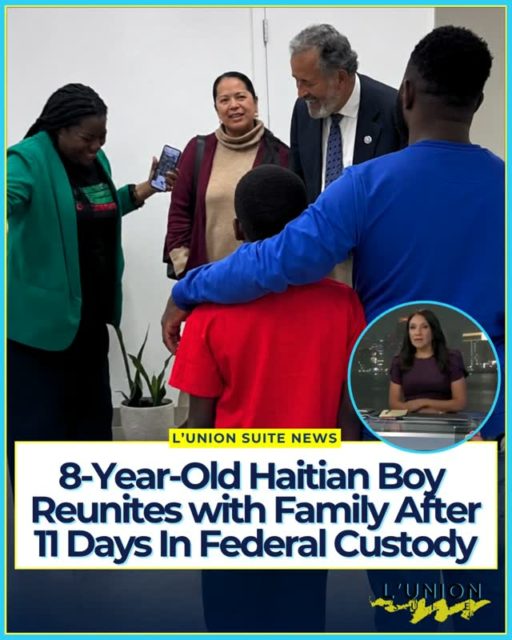
An 8-year-old Haitian boy is finally home. Nearly two weeks after he was taken into federal custody during a routine immigration check-in in San Diego, the third-grader has been reunited with his family, according to the Haitian Bridge Alliance.
The boy, a student at Fay Elementary School in City Heights, was taken into ICE custody on November 4 while attending the appointment with his uncle. He had been living with his uncle and cousins since his father was deported to Mexico in March 2025. Federal officials said the uncle could not immediately prove legal guardianship under the Trafficking Victims Protection Reauthorization Act, so ICE designated the child an unaccompanied minor and transferred him to Office of Refugee Resettlement care in Texas “out of an abundance of caution.”
After 11 days, he was released on November 16 once guardianship was established. The Haitian Bridge Alliance, which worked closely with the family and advocates to secure his return, confirmed the reunion. New “welcome home” signs now decorate the organization’s office.
The boy, his family, and the advocates who supported them all expressed relief and happiness after the difficult separation. Speaking with NBC 7, the boy shared that he loves Haitian food and hoped to have it for dinner the night he returned home. He also said he’s looking forward to going back to school this week, his favorite class is P.E.
Guerline Jozef, executive director of the Haitian Bridge Alliance, previously stated that an eight-year-old “belongs in a classroom, on a playground and surrounded by love, not in immigration detention,” adding that no child should face such trauma. Rep. Juan Vargas, who met the family during the reunion, described the emotional moment of pure joy as the boy and his relatives embraced.
While the family is grateful to have him home, advocates continue to call for answers about how the case was handled and for stronger protections so no other child endures a similar experience.
For now, one little boy is back where he belongs, with his family, looking forward to Haitian food, school, and simply being a kid again.
Video Source: @nbcsandiego
#lunionsuite #haitianamerican #haitian
3 days ago