




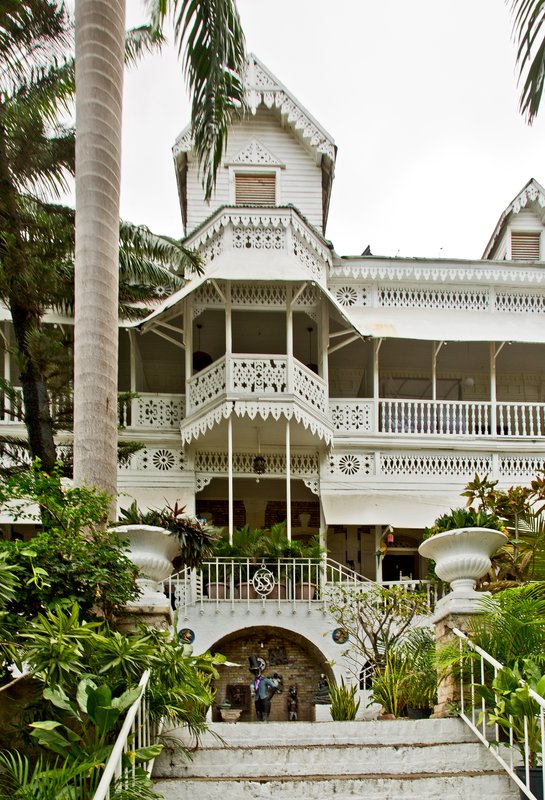
The Grand Hôtel Oloffson, one of Haiti’s most treasured architectural and cultural landmarks, was destroyed by fire over the weekend of July 5–6 following an attack by armed gangs. The historic Gothic gingerbread mansion in the Pacot neighborhood of Port-au-Prince, which stood as a symbol of resilience through decades of political upheaval, is now reduced to ashes—marking a profound loss for the nation’s cultural heritage.
Originally built in 1886 as a private residence by then-Haitian President Simon Sam, the mansion later served as a presidential summer palace and a U.S. Marine Corps hospital during the American occupation. In the 1930s, it was transformed into a hotel by a Swedish sea captain and eventually gained international acclaim as a vibrant cultural hub and sanctuary for artists, writers, and travelers.
Over the decades, the Oloffson hosted international icons such as Mick Jagger, Jacqueline Onassis, and Jean-Claude Van Damme, and was immortalized in Graham Greene’s novel The Comedians as the fictional “Hotel Trianon.” Its whimsical turrets, ornate latticework, and lush gardens made it one of the most rec
ognizable examples of Haiti’s endangered gingerbread architecture.
The hotel’s longtime manager and bandleader Richard Morse confirmed the building’s destruction in a statement on X (formerly Twitter). He managed the Oloffson for nearly 30 years, until it was forced to close in 2022 due to increasing gang violence in the area. “Yes, the Oloffson has been burned down,” Morse wrote, while also noting the wider tragedy unfolding in the country, where lives are being lost daily amid chaos and insecurity.
Witnesses report the attack began late Saturday, July 5, when gangs clashed with police forces in the neighborhood. James Jean-Louis, a resident living above the hotel, told The Associated Press that he saw the building engulfed in flames as he fled amid the sound of heavy gunfire. Due to the gang control of the area, journalists hav
e been unable to access the site to independently verify the extent of the damage, though Patrick Durandis of Haiti’s Institute for the Protection of National Heritage has confirmed the fire occurred.
For many, the Oloffson was more than just a hotel. It was a living, breathing cultural space that nurtured Haiti’s artistic soul. Richard Morse’s daughter, Isabelle Morse, described it as their family home and a sanctuary for artists, intellectuals, and Vodou practitioners. It was most famously known for RAM’s electrifying Thursday night performances and the annual Fèt Gede celebrations, which drew crowds from all over the world.
The destruction of the Oloffson adds to a growing list of cultural and institutional sites under attack in Haiti. In recent months, gang violence has also devastated Radio Télévision Caraïbes and the State University Hospital of Haiti.
online pharmacy order zydena online with best prices today in the USA
As Haiti continues to grapple with deepening instability, the loss of the Oloffson is a painful reminder of how the country’s rich history and cultural legacy are increasingly under threat.